
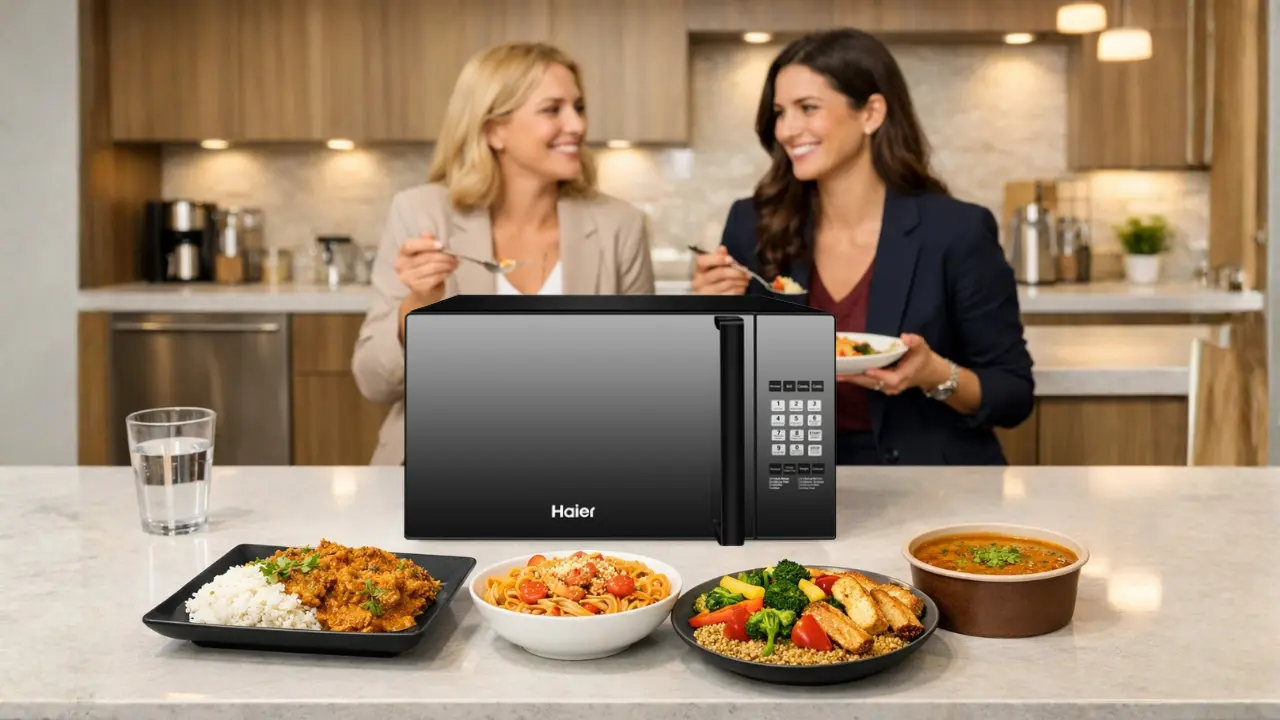

January office lunches feel sad because they show up cold, rushed, and emotionally flat at a time when the body and brain need warmth the most.
A modern convection microwave changes that by restoring heat, texture, and intention. It turns leftovers into real meals again. In winter, that warmth is not comfort food. It is functional energy.
January is when office lunches stop pretending
By the second week of January, the pattern is clear.
The calendar is new.
The workload is not.
The weather is unforgiving.
Lunch becomes a quiet casualty.
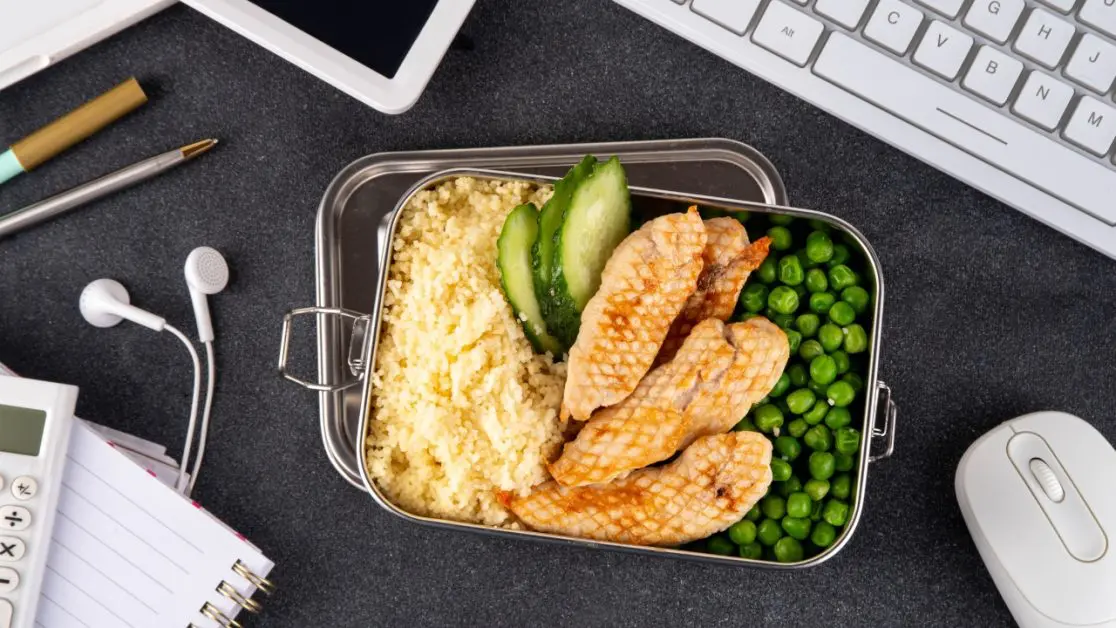
You open your lunchbox at your desk.
The roti is stiff.
The sabzi smells familiar but tastes tired.
The rice feels like it has given up.
This is not about cooking skills.
It is about what happens between home and 1:30 pm.
Cold food in winter does something subtle but powerful.
It lowers momentum without announcing itself.
That is the hidden system most offices ignore.
Why winter lunches hit harder than summer ones
Food is not just fuel.
It is regulation.
In colder months, the body expends more energy maintaining warmth. Warm meals help digestion, improve satiety, and support stable energy levels through the afternoon.
Nutrition research consistently shows that hot meals feel more filling and satisfying than cold ones, even when calories are the same.
Now layer January on top.
- Less sunlight affects alertness
- Post holiday workloads peak
- Commutes feel heavier and longer
Lunch is supposed to reset the system.
Instead, cold food reinforces fatigue.
That is why January lunches feel sad. Not because the food is bad. Because the system around it is broken.
The microwave is not about convenience. It is about restoration
Most people think reheating only increases temperature.
That is incomplete.
Good reheating restores:
- Aroma that triggers appetite
- Texture that signals freshness
- Moisture balance that prevents dryness
- Familiarity that feels like care
A warm rajma tastes like planning.
A cold one tastes like obligation.
This difference shapes how the rest of the workday feels.
Microwaves fix a structural problem, not a culinary one.
Three predictable reasons office lunches fail
Let us break it down simply.
1. Time compression
Food cooked at night is eaten six to eight hours later. Oils settle. Gravies thicken. Flavours mute.
Controlled reheating reverses part of this natural decline.
2. Texture collapse
Rotis harden. Rice clumps. Paneer stiffens.
Microwaves with adjustable power levels prevent over drying and uneven heating.
3. Choice fatigue
People stop packing food they actually enjoy because it does not reheat well.
When reheating becomes reliable, food variety returns.
This is where modern convection microwaves quietly change behaviour.
From survival lunch to satisfying lunch
Most offices already have a microwave.
Few people use it well.
That gap matters.
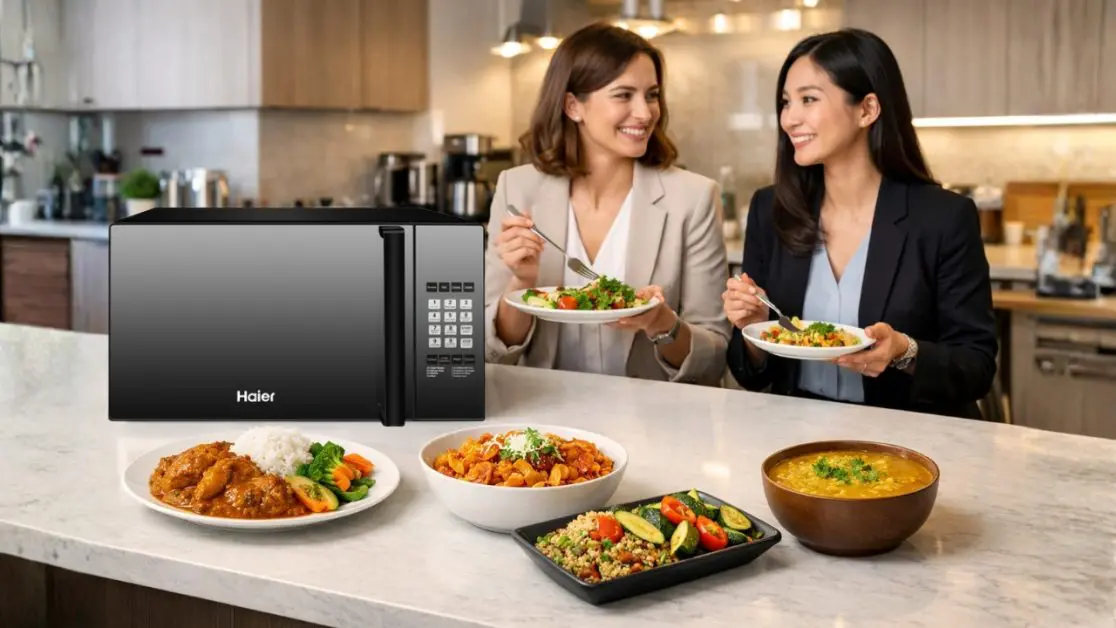
Modern convection microwaves are designed for Indian food formats, not just quick Western reheats. For example, the Haier HIL2501CBSH 25L Convection Microwave Oven is built around everyday Indian cooking realities rather than edge cases.
It includes:
- Multiple power levels to protect rotis and rice
- Over 300 auto cook menus calibrated for Indian dishes
- Stainless steel cavity for even heat distribution
- Combination modes that balance speed and moisture
These are not premium extras. They are structural features that preserve food quality.
What actually improves office lunches in winter
This is not complicated. It is about small corrections.
Option one: Reheat smarter, not hotter
High power reheating dries food.
Medium power for slightly longer restores moisture and flavour better, especially for rice and dals.
Option two: Cover food while reheating
Steam retention matters.
Covered reheating prevents edges from drying while the centre warms evenly.
Option three: Pack food that benefits from reheating
Some dishes improve after resting overnight.
Examples:
- Rajma, chole, dal makhani
- Vegetable pulao and khichdi
- Paneer based gravies
A convection microwave makes these choices predictable, not risky.
Bread is the first thing winter lunches destroy
Indian breads suffer the most.
Roti becomes rigid.
Paratha loses softness.
Naan turns chewy.
This is why bread focused reheating modes matter.
The Haier HIL2501CBSH 25L Convection Microwave Oven includes a dedicated bread basket program designed for Indian breads like naan, kulcha, paratha, and tandoori roti. It reheats without dehydrating, which keeps texture intact hours after packing.
That is not indulgence. That is preservation.
Lunch quality shapes afternoon productivity more than we admit
Here is an uncomfortable truth.
Cold lunches cost energy.
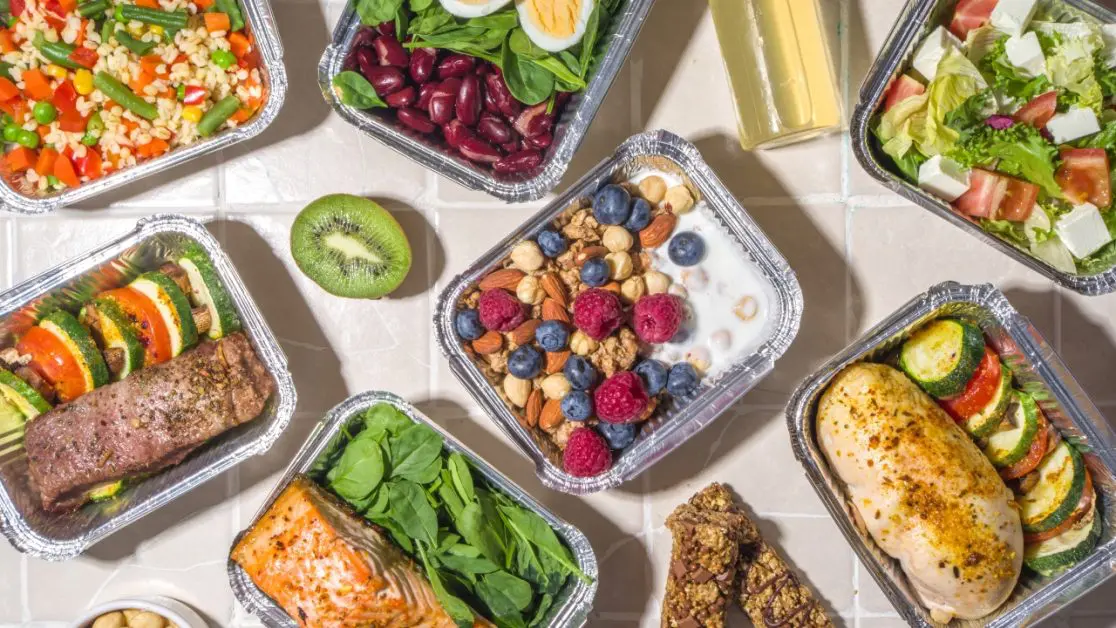
Workplace wellness studies consistently show that warm meals improve perceived alertness and reduce post lunch sluggishness compared to cold meals.
In Indian offices, where most lunches are homemade, the microwave becomes the bridge between home effort and office reality.
It allows people to bring real food again.
That matters more than motivational posters.
For solo professionals, the microwave is emotional infrastructure
Working professionals living alone feel this shift sharply.
You cook once.
You eat multiple times.
Leftovers are unavoidable.
Without proper reheating, food becomes repetitive punishment.
With reliable reheating, leftovers become planned.
Microwaves like the Haier HIL2501CBSH 25L Convection Microwave Oven support that rhythm by maintaining consistency across meals, not just speed.
That reduces food waste.
It reduces ordering out.
It increases nutritional stability.
This is a system upgrade, not a gadget purchase.
Why January is the right moment to rethink lunch systems
January removes buffers.
No festivals.
No long weekends.
No indulgence excuses.
What survives January usually survives the year.
Office lunch habits that rely on cold compromise collapse fast. Lunch systems that include reliable reheating hold steady.
Microwaves support resilience quietly.
No learning curve.
No behavioural push.
Just warm food when it matters.
The microwave is not about speed. It is about care.
Speed is incidental.
What people actually need in January is care that fits real schedules.
Care looks like:
- Warm dal at 2 pm
- Soft roti instead of forced compromise
- Lunch that feels intentional even on busy days
Microwaves deliver that without asking for extra time or attention.
That is why they matter more than we say out loud.
What this means for modern Indian work life
Workdays are denser.
Boundaries are thinner.
Energy management matters more than motivation.
Small systems decide whether days feel manageable or draining.
Lunch is one of those systems.
A well used microwave fixes it quietly.
And the best tools always do their work without becoming the story.
The insight worth remembering
Cold food drains more than hunger.
Warm food restores more than calories.
January office lunches feel sad because warmth disappears from the system.
Microwaves bring it back.
And once warmth returns, the rest of the day feels easier to carry.
Frequently Asked Questions
Why do my office lunches feel especially depressing in January?
January strips away buffers, festivals, holidays, indulgence. When lunch arrives cold and lifeless, it doesn’t just fail nutritionally, it fails emotionally. Warm food usually acts as a mid-day reset. Cold food quietly removes that reset.
Is it normal to feel more tired after lunch in winter?
Yes. Cold meals require more energy to digest and don’t trigger the same satiety or alertness signals as warm food. The result feels like mental fog, not hunger.
I pack good food, why does it feel like an obligation by lunchtime?
Because temperature changes perception. A warm rajma tastes intentional. A cold one tastes like compromise. The food didn’t change, your sensory experience did.
Should I always reheat on full power?
No. Medium power for slightly longer preserves moisture and restores flavour better, especially for dals, rice, and gravies.
Does covering food while reheating really matter?
Yes. Steam retention prevents edge-drying and ensures even heating. Covered reheating is one of the simplest upgrades people ignore.
Why do Indian foods need different microwave settings?
Indian meals rely on gravies, starches, and breads that react poorly to aggressive heat. Adjustable power levels and combination modes are essential.