
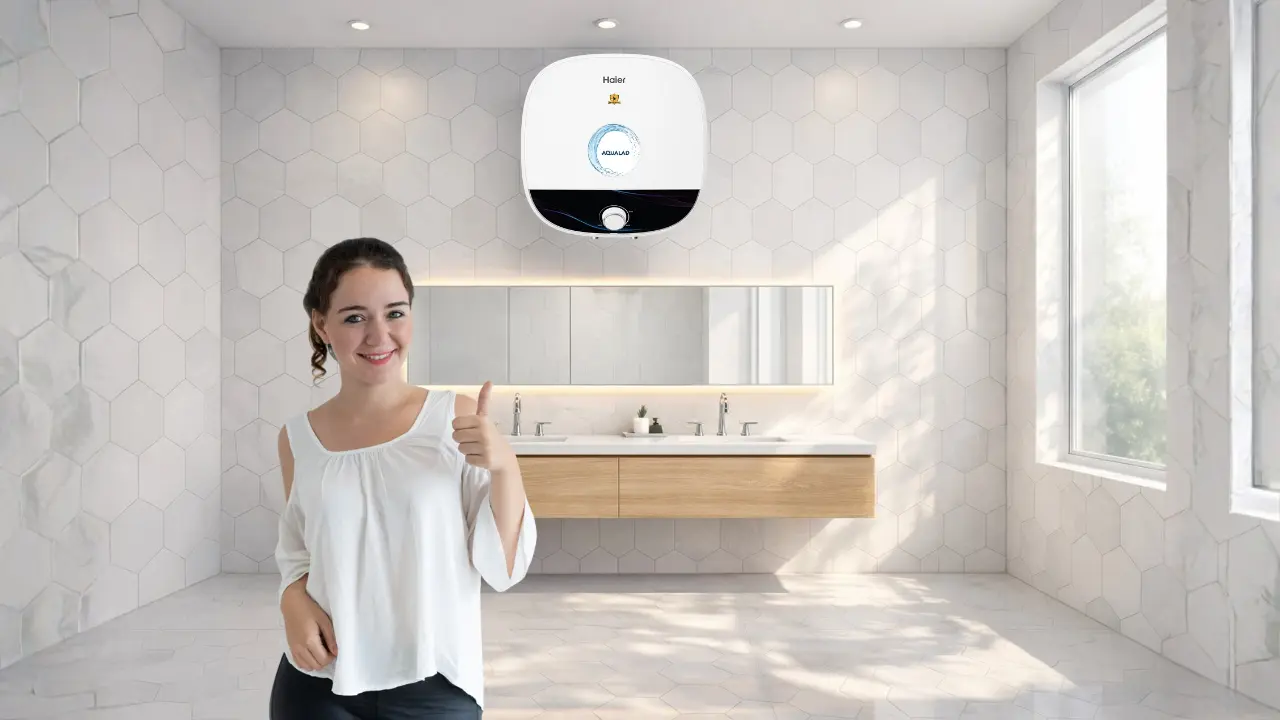

Because cold inlet water, long pipe runs, low pressure on upper floors, and ageing heating elements slow down the entire system.
Older units are not built for the 8 bar pressure demands of tall buildings, nor for the colder temperatures North and Central India see in early winter. Modern systems are designed to handle these loads efficiently.
The problem begins before the shower even starts
Picture a regular November morning in a tower flat.
Fifteen floors above ground.
A cold wave outside.
Someone in the other bathroom is yelling, “Is the water hot yet?”
It is a familiar scene in Indian apartments as temperatures fall across Delhi, Haryana, Rajasthan, Uttar Pradesh and Madhya Pradesh. IMD data shows a drop of 2 to 4 degrees below normal in many northern and central regions. Cold winters arrive early in high rises. Water becomes denser. Pipes stay cold longer. Heating needs increase.
And old water heaters start showing their age.
Cold water behaves differently in tall buildings
Why does cold water hit older heaters harder?
Because every degree drop in inlet water temperature adds minutes to heating time.
In tower flats, the water stored on the roof or basement tanks travels through long, exposed pipelines that stay cold well into the morning.
A simple formula explains the struggle.
Colder input equals longer heating.
Longer heating equals more stress.
Older heaters were never designed for this workload. Their insulation is thinner. Their heating elements lose efficiency. Their thermostat response lags. In winter, these small limitations multiply.
The invisible force: pipe length
In a fifth floor home with short pipelines, the heater warms quicker.
In a twenty second floor flat, water travels much farther. The pipes act like an extended cooling system.
Aging heaters do not have the power, insulation, or pressure stability to balance that loss.
High rise pressure is a hidden villain
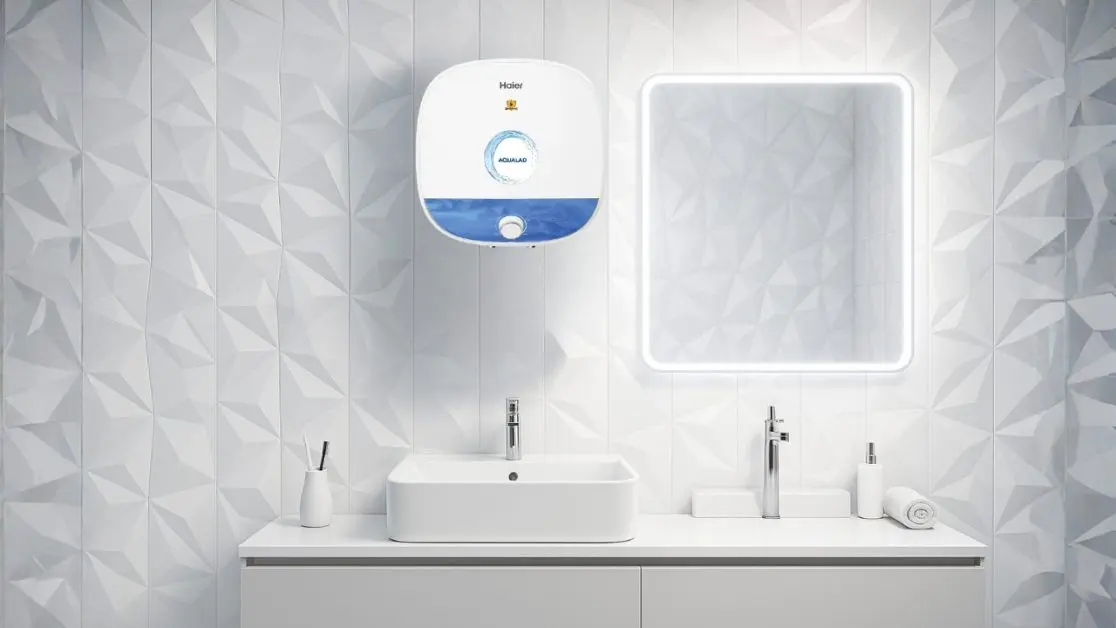
Old heaters were not built for 8 bar pressure
Here is the core truth.
Most tower flats exceed 20 floors.
Any heater installed that high must withstand around 8 bar pressure. This is the standard for modern high rise systems.
Older heaters hover near 3 to 6 bar ratings.
Every winter, pressure rises due to denser cold water.
When pressure increases, older tanks struggle with:
- fluctuating temperature
- weaker flow
- premature wear
- higher leakage risk
The modern Haier Aqualad Pro Series supports 8 bar rated pressure, specifically engineered for high rise buildings. both the 15L and 25L models, stating they are “designed for high-rise buildings with an impressive 8 bar pressure capability” .
Older models do not have this resilience.
Winter exposes the gap.
Heat loss increases with height
Gravity slows the flow
Cold water pushes harder against the system.
Hot water travels slower to taps on higher floors.
The heater works more to maintain the temperature.
Older insulation cannot retain heat long enough.
PUF insulation in modern heaters retains heat efficiently. The Haier Aqualad Pro series uses PUF/EPS insulation to reduce reheating cycles
But older heaters?
Their insulation weakens over time.
So they restart heating again and again.
Ageing heating elements lose efficiency
Old elements heat slower in winter
A heating element has one job.
Convert electricity into heat.
After years of mineral deposits, rust, and micro fractures, that job becomes harder.
In winter:
- water enters colder
- the thermostat calls for higher heating
- the element strains beyond its designed lifespan
Newer models use titanium heating elements as noted in the product. Titanium withstands corrosion far better than copper or steel elements, ensuring faster, safer heating even in winters.
Old copper elements lose power and efficiency every year.
Thermostats in old heaters react slower

A slow thermostat means slow hot water
Older capillary thermostats develop lag.
Lag means the heater waits longer to heat the water.
In winter, that delay feels even worse.
Modern systems use dual thermal protection (TTS), combining two sensors for accurate cut off. ,showing the dual sensor system clearly .
Precision reduces wasted time.
Old heaters never catch up.
Bacteria grows faster when heaters cannot reach safe temperatures
A winter problem that goes unnoticed
When older heaters fail to reach 65 to 80 degrees, bacteria inside tanks thrive.
Stagnant water plus low temperature equals microbial growth.
Haier’s Aqualad Pro units include Bacteria Proof System (BPS) that heats water to 80 degrees to deactivate bacteria. This is essential for winter hygiene, especially in colder regions .
Older heaters cannot consistently reach those temperatures.
The physics of high rise living
Here is the larger system at play.
Every tall building creates its own micro climate.
Cold air sinks down stairwells.
Pipelines stay colder because they run across open ducts.
Gravity changes water pressure.
Every bathroom becomes a test of efficiency.
Old heaters were built for ground plus two homes.
Today we live twenty floors up.
The system changed.
The appliance did not.
Three hidden causes most people miss
One. Pipe diameter reduces with age
Mineral scaling narrows the pipe interior.
Flow weakens.
Older heaters fail to push hot water with force.
Two. Magnesium rods dissolve over time
Magnesium rods protect the tank from rust.
They wear out.
Old heaters often run without it.
Three. Stagnant water becomes harder to heat
Old heaters lack circulation technology.
Haier uses RSC (U Turn Flow Technology) to keep water moving, preventing cold spots and ensuring fresh hot water. .
Old heaters let water sit.
Winter punishes stagnation.
Table: Why Old Water Heaters Fail vs Why New High Rise Ready Heaters Perform
| Factor | Old Water Heater | Modern High Rise Water Heater |
| Pressure Handling | 3 to 6 bar | 8 bar rated pressure (ideal for tall buildings) |
| Heating Element | Copper, prone to scaling | Titanium element for fast, safe heating |
| Heat Loss | High due to weak insulation | PUF insulation retains heat longer |
| Water Freshness | Stagnant water | RSC keeps water flowing |
| Hygiene | Poor high temp performance | BPS mode heats to 80 degrees to deactivate bacteria |
| Winter Output | Slow and inconsistent | Stable, faster heating |
The winter struggle is a system problem, not a product problem
This is the deeper idea.
Winter does not break old heaters.
The whole system of a tower flat does.
- colder inlet water
- higher pressure
- longer pipelines
- greater heat loss
- aged internal components
Each factor stacks on the next.
Think dominoes.
A new heater is not simply an upgrade.
It is a reset of the system.
A chance to align physics with modern design.
So what does this mean for modern Indian homes?
If you live in a tower flat in Delhi, Gurgaon, Noida, Jaipur, Indore or Nagpur, old heaters will continue to struggle as winters get colder and buildings get taller.
Upgrading is not about luxury.
It is about matching your home’s height, climate, and routines with technology designed for them.
A heater with:
- 8 bar pressure capability
- a titanium heating element
- PUF insulation
- dual thermal sensors
- RSC circulation
- BPS hygiene protection
simply performs better in tall buildings.
It is built for the physics of winter.
The Haier Aqualad Pro series is one example built with these systems,
Final Insight: Homes change faster than appliances do
We upgrade phones every two years.
Laptops every three.
But water heaters?
We expect them to work for a decade without losing power, pressure, or purity.
The truth is simpler.
The moment your home moved upward into a high rise, the rules changed.
Old heaters did not fail.
Their world did.
A modern water heater is not about speed or power.
It is about harmony with how we live today, in taller buildings with colder winters and faster routines.
That is the real shift.