
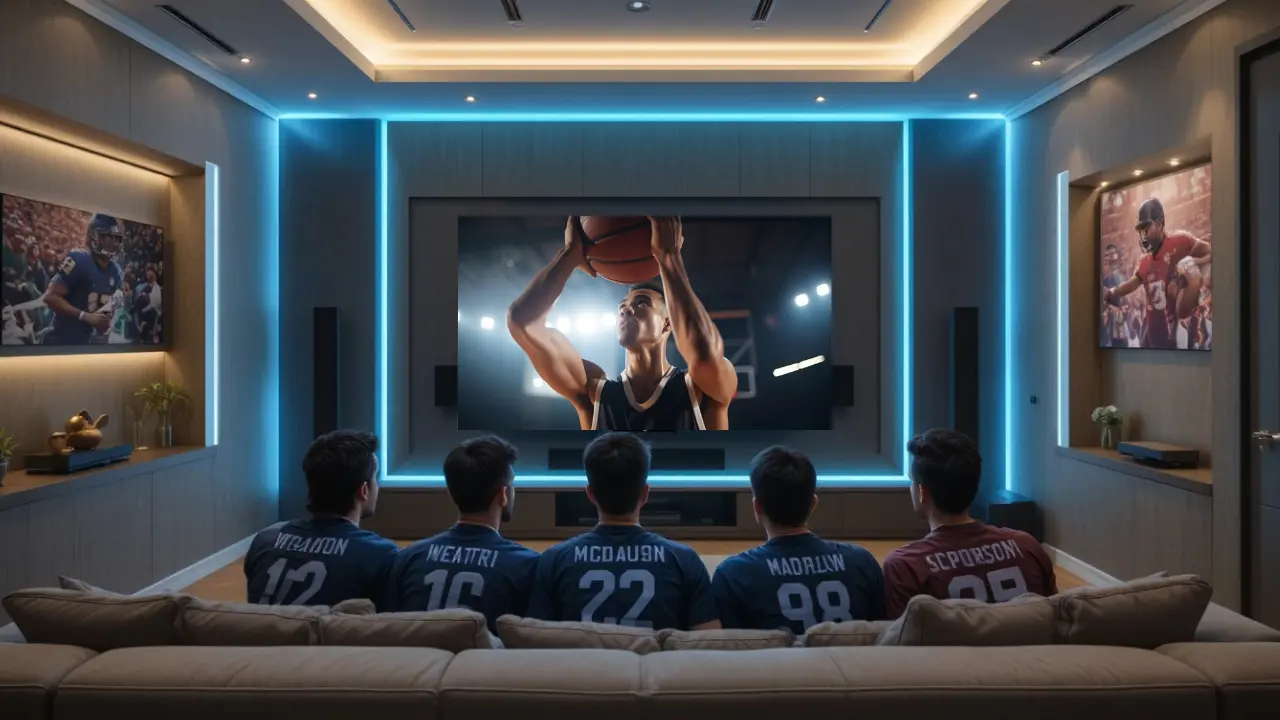

OLED clarity changes slow motion replays because every pixel controls its own light, motion stays stable at high refresh rates, and contrast remains precise even when time slows down frame by frame.
That combination reveals detail your eyes expect to see but most screens quietly blur away.
Once you experience it, slow motion stops feeling like a replay.
It starts feeling like evidence.
Slow motion is not about drama. It is about truth

Think about a familiar Indian living room moment.
A close cricket match.
Dinner plates pushed aside.
Someone says, “Replay that.”
The bowler’s wrist.
The seam position.
The faint edge that decides the game.
Slow motion is meant to settle arguments.
But on many TVs, it creates new ones.
Blur replaces clarity.
Shadows swallow detail.
You end up guessing.
This is where OLED changes the equation.
What slow motion actually demands from a television
Slow motion is demanding. Brutally so.
When action slows down, three things matter more than anything else:
1. Pixel response speed
2. Motion stability at high refresh rates
3. Precise contrast between light and dark
Most televisions fail here because their pixels do not control light independently.
OLED does.
Why OLED behaves differently when motion slows
OLED panels are self emissive. Each pixel switches on and off individually.
There is no backlight trying to keep up.
No light bleed.
No delayed transitions.
On the Haier OLED C90E Series, this pixel level control is the foundation of clarity.
Whether you are watching sports replays, movie action sequences, or high frame rate content, motion stays clean and intentional.
This is why slow motion on OLED feels calm instead of chaotic.
The role of 120Hz and MEMC in slow motion clarity
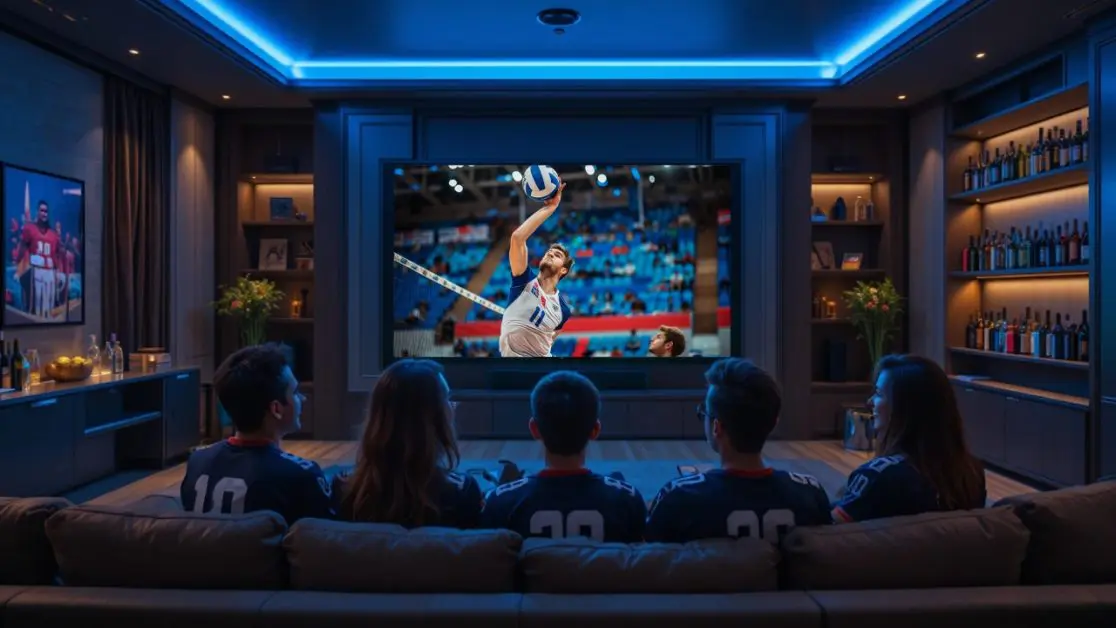
Slow motion is not just fewer frames.
It is how cleanly those frames are shown.
The Haier OLED 194cm (77)TV with Dolby Vision IQ, HDR10+, Dolby Atmos, AMD FreeSync Premium (Model: H77C90EUX) uses a 120Hz refresh rate combined with MEMC motion processing.
What this delivers in real use
- Reduced judder during slow camera pans
- Sharper pauses during freeze frames
- Smoother transitions between replay frames
You do not see artificial smoothing.
You see controlled motion.
This matters most in replays, where every micro movement carries meaning.
Contrast is what reveals the moment that matters
In slow motion, your eyes look for edges.
Bat versus glove.
Ball versus pad.
Foot versus line.
OLED excels here because pixels turn completely off to create true blacks.
On the Haier OLED C90E Series:
- Bright highlights stay clean
- Dark backgrounds remain genuinely dark
- Fine textures stay visible
This contrast precision makes slow motion informative, not confusing.
How Dolby Vision IQ and HDR10+ elevate replays
Lighting conditions change in real homes.
Daylight viewing.
Evening lights.
Late night darkness.
Dolby Vision IQ adjusts picture quality based on ambient light, while HDR10+ fine tunes brightness and contrast scene by scene.
In slow motion, this means:
- No crushed shadows during night matches
- No washed out highlights during day viewing
- Consistent detail regardless of room lighting
Replays look intentional, not overprocessed.
Why OLED slow motion feels easier on your eyes
This is subtle, but important.
Backlit TVs often cause eye fatigue during long viewing sessions. Especially during extended replays.
OLED reduces this strain by:
- Eliminating backlight flicker
- Maintaining uniform brightness
- Reducing motion blur
This matters during long tournaments, movie marathons, and late night viewing sessions.
Clarity is comfortable.
Sound matters more in slow motion than you think
Slow motion is visual.
But sound completes it.
The Haier OLED H77C90EUX features a 2.1 channel 50W audio system with Dolby Atmos.
During replays:
- Crowd reactions feel layered
- Commentary stays clear
- Impact sounds feel grounded
Slow motion feels immersive, not hollow.
How OLED changes different types of slow motion viewing
Sports
- Clear ball trajectory
- Defined player movement
- Easier judgment of close calls
Movies
- Clean action sequences
- Facial expressions stay sharp mid motion
- Depth feels cinematic
Nature and documentaries
- Flowing water retains texture
- Birds and animals remain defined
- Motion feels natural, not smeared
On larger screens like the 165cm (65) and 194cm (77) OLED models, these differences become unmistakable.
A simple way to understand the upgrade
Think of reading small text.
One option is poor lighting and smudged ink.
You lean forward. You squint.
The other option is clean light and sharp letters.
You read comfortably.
Slow motion on regular TVs feels like the first.
OLED feels like the second.
No effort.
No strain.
Just clarity.
The system behind the experience
OLED slow motion works because everything aligns:
- Pixel level lighting control
- 120Hz refresh rate with MEMC
- Dolby Vision IQ and HDR10+
- True black contrast
- Stable audio through Dolby Atmos
Remove one element and the experience weakens.
This is not a feature.
It is a system.
Why this matters beyond entertainment
Slow motion is about understanding moments.
Seeing clearly changes how decisions are made.
How arguments end.
How stories are remembered.
OLED brings honesty to the screen.
Once that honesty becomes normal, everything else feels compromised.
The habit that quietly changes
People who move to OLED notice something unexpected.
They rewind less.
Not because they care less.
But because they saw it clearly the first time.
That is the real upgrade.
The final insight
OLED does not exaggerate slow motion.
It clarifies it.
And once clarity enters your living room, your expectations change permanently.
That is why OLED clarity does not just change how you watch slow motion replays.
It changes what you believe a television should be capable of.