
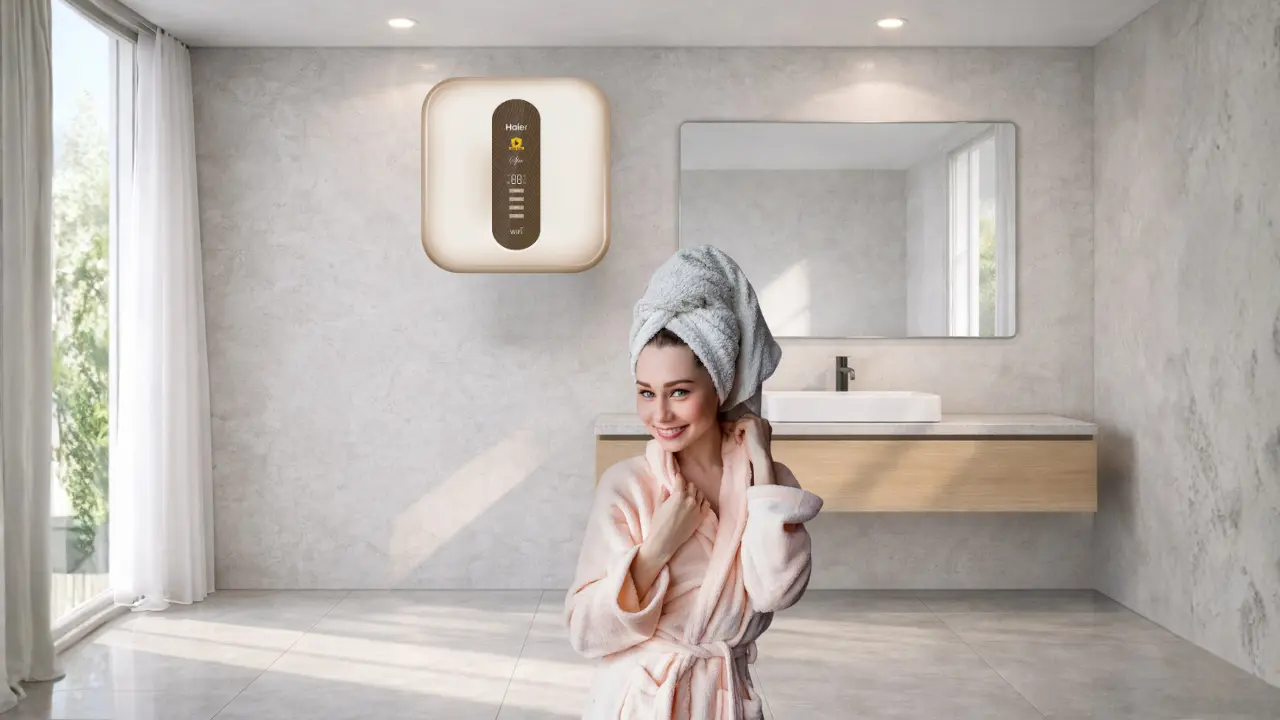

Stored hot water can quietly become a breeding ground for bacteria when temperature, circulation, and hygiene are not managed well.
Protecting your family comes down to understanding how bacteria behave in warm water, how everyday habits affect stored water, and how modern water heaters are designed to break this invisible chain before it reaches your skin.
The morning rush hides a quiet risk
It is 7:30 am.
Someone is late for work.
A child needs a quick bath.
The water heater was switched on last night.
Hot water flows. Relief follows.
And almost nobody pauses to ask a simple question.
How long has this water been sitting inside the tank?
Stored hot water feels safe because it is warm. But warmth alone is not safety. Especially when water cools, reheats, and remains unused for hours.
That is where bacteria find space.
Not because someone did something wrong.
But because routine allows it.
Why stored hot water needs awareness, not fear
Let us be clear.
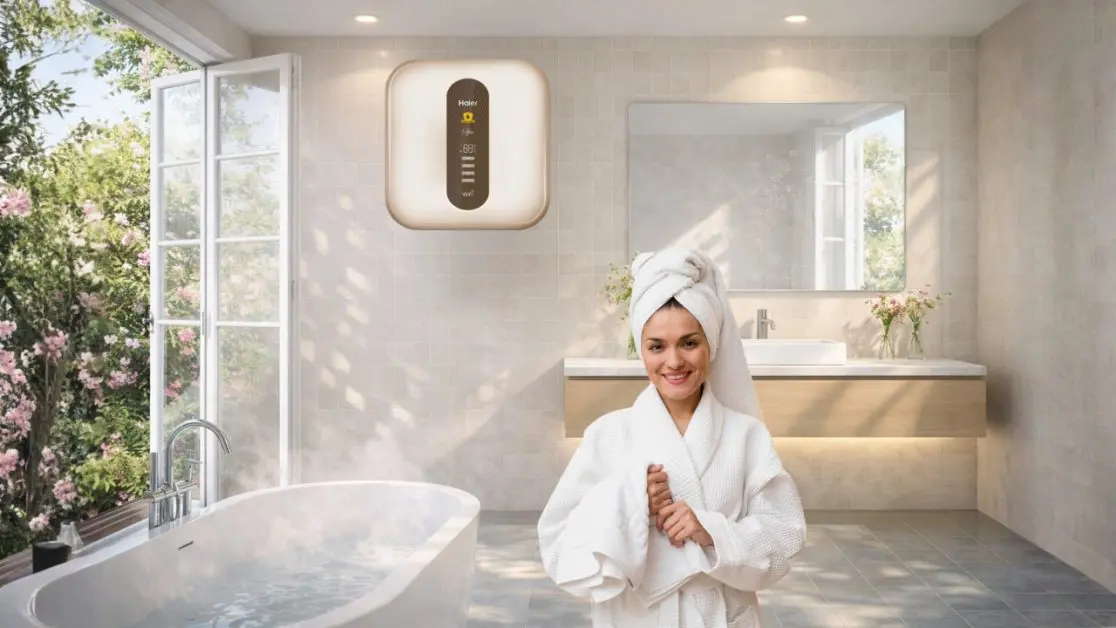
Storage water heaters are not unsafe by default. They are a part of everyday Indian life. The problem begins when we assume that all hot water is clean water.
Bacteria grow best in specific temperature bands. Public health studies consistently show that many waterborne bacteria multiply fastest between 25°C and 50°C. Warm. Comfortable. Invisible.
This temperature range commonly appears inside water heaters when:
- Water is heated partially
- Water cools down slowly overnight
- Water stays unused for long periods
The risk is not the shower.
It is waiting.
The invisible system inside your water heater
Most people see a switch and a temperature knob.
Inside, three systems decide water safety every day.
1. Temperature control
2. Water circulation
3. Tank hygiene
If even one fails, bacteria gain time.
If all three work together, bacteria lose relevance.
This is not about fear.
It is about design thinking.
Temperature is not only about comfort
Hot water feels hot at around 45°C.
Bacteria do not care how it feels.
Scientific guidelines show that many bacteria begin to deactivate only when temperatures cross 60°C, while 70°C to 80°C is commonly used for thermal disinfection in water systems.
This leads to a simple but uncomfortable truth.
Comfort temperature is not a hygiene temperature.
Why reheating does not equal cleaning
Many homes heat water, use part of it, and let the rest sit.
Later, they reheat it.
The logic sounds correct. The outcome often is not.
When water cools into the bacterial growth zone and stays there for hours, bacteria multiply. Reheating later does not always eliminate them unless the temperature rises high enough and stays there long enough.
This is why newer water heaters include dedicated antibacterial heating cycles. These cycles intentionally push water to higher temperatures to clean the tank itself.
Not for bathing.
For protection.
Stagnant water creates silent problems

Still water gives bacteria time.
Inside storage tanks, stagnant zones can form when circulation is poor. Sediments settle. Minerals deposit. Bacteria attach to surfaces and form biofilms.
Once biofilms form, bacteria become harder to eliminate.
This is why circulation design matters as much as heat.
What proper circulation actually solves
Good circulation:
- Prevents stagnant pockets
- Maintains even temperature
- Reduces sediment buildup
- Improves effectiveness of antibacterial heating
Think of it like cooking. Heat alone is not enough if nothing moves.
Three everyday habits that increase bacterial risk
These habits are common. They feel logical. They have side effects.
One habit is overnight heating
Heating water at night and using it in the morning allows water to cool slowly through bacterial growth temperatures.
The second habit is partial usage
Using some hot water and leaving the rest unused for days creates ideal stagnant conditions.
The third habit is low temperature settings
Permanent low-temperature settings to save power can unintentionally support bacterial survival.
Each habit makes sense on its own.
Together, they create risk.
What actually works in real homes
Protection is not a single action.
It is a system.
Households usually follow one of three approaches.
Option one: Manual discipline
- Periodic high-temperature heating
- Full tank usage occasionally
- Conscious timing
Cost: Effort and consistency
Benefit: Works only when followed carefully
Option two: Maintenance focused
- Frequent servicing
- Tank cleaning
- Component checks
Cost: Dependence on service schedules
Benefit: Reduces long-term buildup
Option three: Design-led protection
- Built-in antibacterial heating modes
- Circulation-focused tank design
- Corrosion-resistant materials
Cost: Slightly higher upfront choice
Benefit: Protection runs automatically in the background
Most modern households now lean toward the third option.
Not for features.
For peace of mind.
How modern water heaters quietly protect your family
Today’s water heaters are not passive storage boxes. They are active hygiene systems.
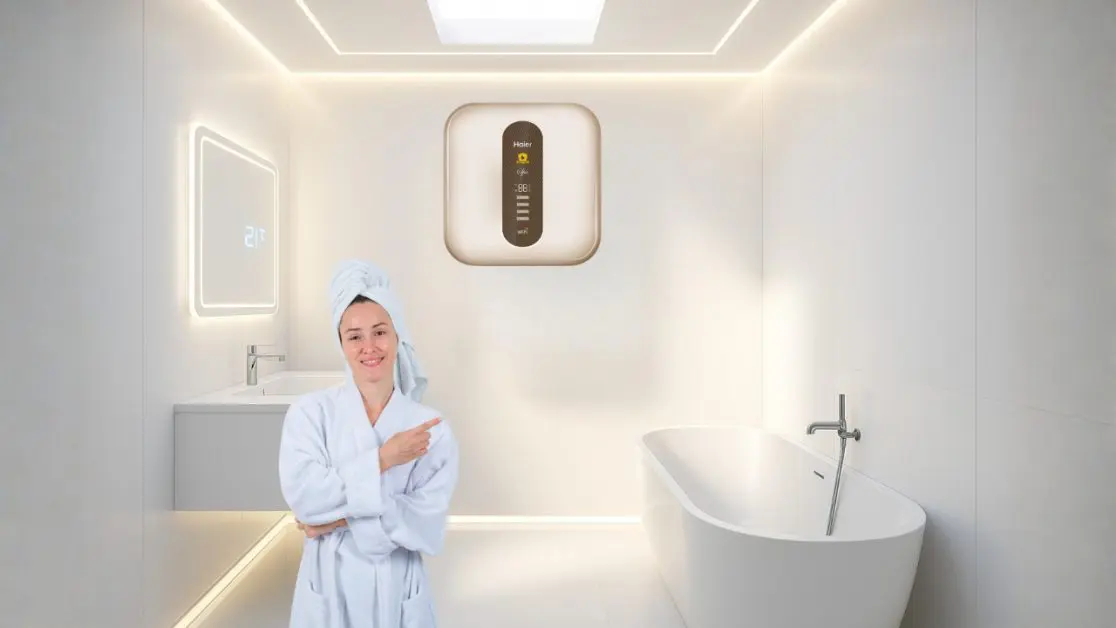
For instance, the Haier 15L Square 5 Star Water Heater ES15V-SD WIFI includes a Bacteria Proof System that heats water up to 80°C in a dedicated mode to inhibit bacterial growth inside the tank. This cycle is designed specifically for internal water hygiene, not for direct bathing use.
When this is paired with RSC U-turn Flow Technology, water circulation improves, preventing stagnation and keeping stored water fresher for longer.
This combination addresses the two biggest bacterial advantages.
Heat control.
Water stillness.
Why tank materials matter more than people realise
Inside the tank, surface quality matters.
- Glass-lined tanks resist corrosion and reduce bacterial attachment
- Incoloy 800 stainless steel heating elements last longer and minimise scale buildup
- PUF insulation maintains temperature stability and reduces repeated lukewarm cycles
These are not cosmetic upgrades.
They are hygiene decisions.
The Haier ES15V-SD WIFI uses a glass-lined tank and superior insulation to ensure water stays hot longer without frequent reheating, supporting both safety and energy efficiency.
Hygiene and energy efficiency are not opposites
Many households lower temperatures to save electricity.
But frequent reheating due to heat loss often increases total power usage.
Better insulation and stable temperatures reduce reheating cycles.
Fewer cycles mean lower long-term consumption.
When designed correctly, hygiene supports efficiency.
A simple mindset shift for Indian homes
Stop thinking of your water heater as a kettle.
Start thinking of it as a storage system.
Storage systems need rules:
- Time rules
- Temperature rules
- Circulation rules
When these rules are built into the appliance, daily life becomes easier.
You do not have to remember anything.
The system remembers you.
What this means for different households
For families, this is about protecting sensitive skin and immune systems.
For working professionals living solo, this is about water sitting unused for days.
For new homes, this is about choosing appliances that age safely, not just stylishly.
The best appliances feel invisible when they work well.
They do their job quietly.
The larger lesson
Bacterial problems rarely announce themselves.
They build slowly.
They stay unseen.
They thrive in systems that were not designed to stop them.
The solution is the same everywhere.
Design over discipline.
Systems over reminders.
Quiet protection over constant checking.
Hot water should feel reassuring, not questionable.
When your water heater understands this, your mornings change.
Not because you think about safety.
Because you never have to.
Frequently Asked Questions
Is warm water not automatically clean water?
Not always. Warmth feels reassuring, but many bacteria multiply best between 25°C and 50°C. Water can feel hot to the skin and still fall within this growth range. Hygiene depends on how hot, how long, and how often the water is heated.
I heat water at night and use it in the morning. Is that unsafe?
Not unsafe by default, but it can increase risk. Overnight, water cools slowly through temperatures where bacteria grow fastest. If this happens regularly without high-temperature disinfection cycles, bacteria get time to multiply.
If I reheat the water later, doesn’t that kill everything?
Only if reheating reaches 60–80°C and stays there long enough. Quick reheating for bathing comfort doesn’t always eliminate bacteria that multiplied during long idle periods.
Is comfort temperature enough for hygiene?
No. Comfort usually sits around 45°C, while bacterial deactivation typically requires 60°C or higher. That’s why hygiene cycles are separate from bathing temperature.
Is there an example of a heater that does kill bacteria automatically?
Yes. The Haier ES15V-SD WIFI model includes a Bacteria Proof System that heats water up to 80°C in a dedicated mode, paired with circulation-focused design to reduce stagnation, without requiring daily user intervention.