


Football qualifier nights are no longer just about the scoreline, they’re about togetherness.
It’s the laughter between friends, the anxious silences before a penalty, and the big-screen glow that turns every living room into a little stadium.
With the AFC World Cup qualifiers lighting up screens again, it’s these simple, shared rituals that remind us what home really feels like.
When football turns your home into a stadium

Something happens in Indian homes when a big match kicks off.
The kitchen lights dim. The last plate is stacked. Someone yells, “Kick-off!” from the living room.
It doesn’t matter if it’s India, Japan, or Saudi Arabia on screen, the energy is universal. Every household has its version of the “12th man.”
In some, it’s friends sprawled on beanbags with samosas and Coke cans. In others, it’s a father explaining offside to his teenage daughter who’s only half-listening but fully invested in the thrill.
Television isn’t just showing football, it’s broadcasting connection.
The emotional architecture of a match night
Why do qualifier nights feel different? Because they combine uncertainty and hope.
You don’t just watch, you participate emotionally.
A simple pass feels like potential. A missed goal feels personal.
And when a team like Indonesia almost topples a regional giant like Saudi Arabia, every Indian living room murmurs the same thing: anything can happen.
These matches are less about winning and more about witnessing the collective pulse of a continent. From Jakarta to Jeddah, and every Haier TV in between, millions tune in not to escape life, but to feel it.
What friends, food, and football teach us about home
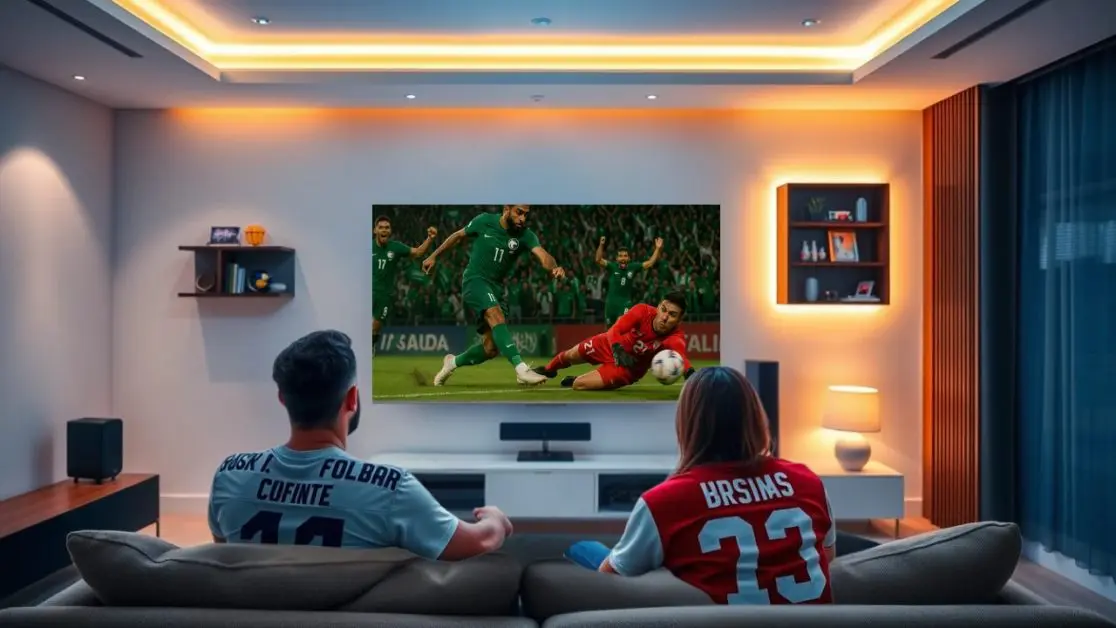
If you break down a perfect match night, it’s built on three essentials:
1. Friends who bring the noise – The ones who argue about formations and cheer for underdogs.
2. Food that keeps spirits high – From popcorn to paneer tikka to mom’s secret Maggi recipe at halftime.
3. A TV that captures every emotion – The slow-motion header, the replay of a missed save, the last-minute celebration that makes your heart race.
It’s never just entertainment. It’s memory architecture, the kind of moments you remember in fragments: a goal, a cheer, a high-five, a power cut, a laugh that lasted longer than the match.
Why screens matter more than ever
In a world of distractions, the humble television has reclaimed its throne.
Because when you’re watching live sport, you can’t pause life, you live it in sync with millions.
And that’s why modern TVs have evolved. It’s not about size anymore, it’s about experience.
A 75-inch QLED with 144Hz refresh rate doesn’t just show the match, it makes you feel the tension of every pass, the sweat on every brow, the green of every blade of grass.
Take the Haier S90 QLED 190cm (75) Google TV for instance. With its vivid colour range, Dolby Vision, and adaptive motion clarity, it turns a simple living room into a viewing arena. Pair it with smart lighting or even a quiet midnight snack, and you’ve built yourself the perfect match-night ecosystem, no stadium required.
The hidden joy of preparation
Every football night has a ritual.
The cushions get rearranged. The volume is tested. The remote gets a full battery check (because who risks a dead remote in the 89th minute?).
Even the snacks are planned like tactics, “Let’s keep something crunchy for halftime,” someone says. These small acts aren’t random. They’re part of the psychological build-up. They create anticipation, the same kind that fills stadium corridors before a match.
It’s a reminder: joy isn’t found in the 90th-minute goal. It’s built long before that, in the act of getting ready to care.
A new kind of social life
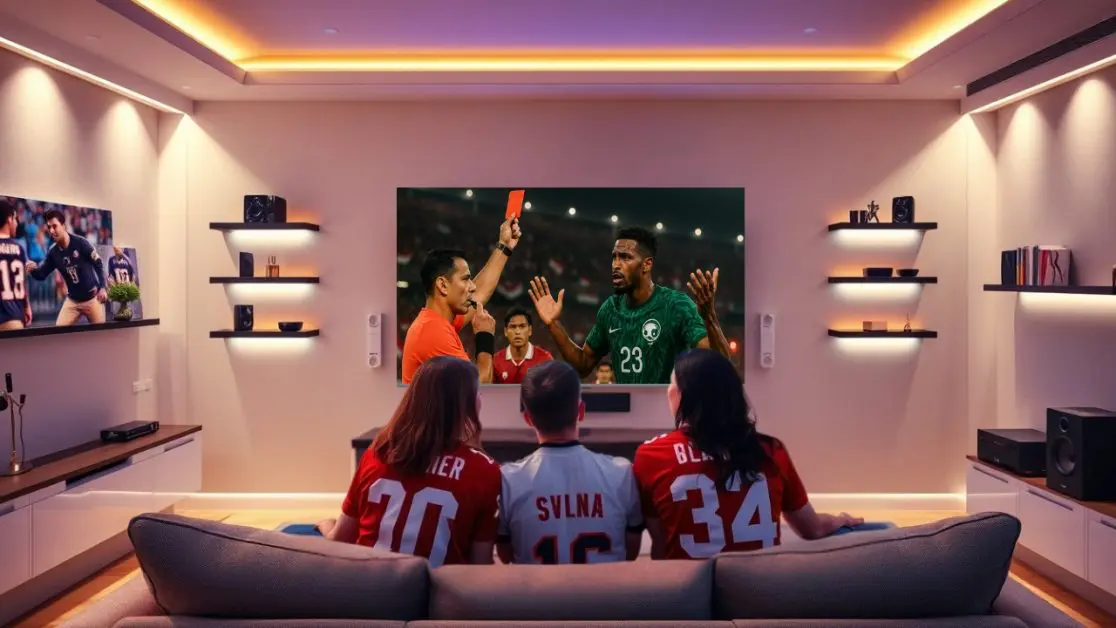
In a post-pandemic world, home gatherings have replaced crowded screenings.
Friends don’t meet at bars, they meet around a screen, sharing Wi-Fi and wildly different team loyalties. And that’s the beauty of it.
The home stadium has become the new commons. A space where colleagues turn into fans, introverts become analysts, and everyone forgets their to-do list for a while.
Even families who barely find time to dine together suddenly find themselves united over football trivia and VAR debates.
When technology fades into the background, what remains is human connection, laughter, arguments, collective gasps, and the pure rhythm of shared attention.
The sound of victory (and good audio)
Football isn’t visual alone, it’s sonic.
The chants, the boots, the commentator’s rising pitch, they make the experience visceral.
That’s where sound design plays its part.
Modern TVs with Dolby Atmos and Dbx-tv audio, like Haier’s flagship models, bring out the stadium’s pulse, not through loudness, but through depth. You don’t just hear the goal, you feel the crowd swell around it.
For anyone who’s ever turned up the volume during a penalty shootout, that’s the sound of belonging.
Why it all matters

Because in the middle of our busy, scattered lives, these nights anchor us.
They give structure to our emotions, permission to cheer loudly, and reasons to call friends we’ve not spoken to in months.
In a way, football qualifier nights are less about the match and more about reclaiming attention, from our phones, our fatigue, our fragmented timelines. They’re about remembering what it feels like to be fully present.
And when your home setup, your TV, your lighting, your comfort, is built to make that experience smoother, technology stops being a gadget. It becomes part of the ritual.
Final thought
A good match ends in 90 minutes.
A great one stays with you for years.
And somewhere between a winning goal and the last sip of cola, you realise, this is what home is for: feeling things together.
So, the next time the AFC Qualifiers light up your screen, don’t just watch the match.
Live it.
Because in homes that glow with stories and laughter, every goal counts a little more.