
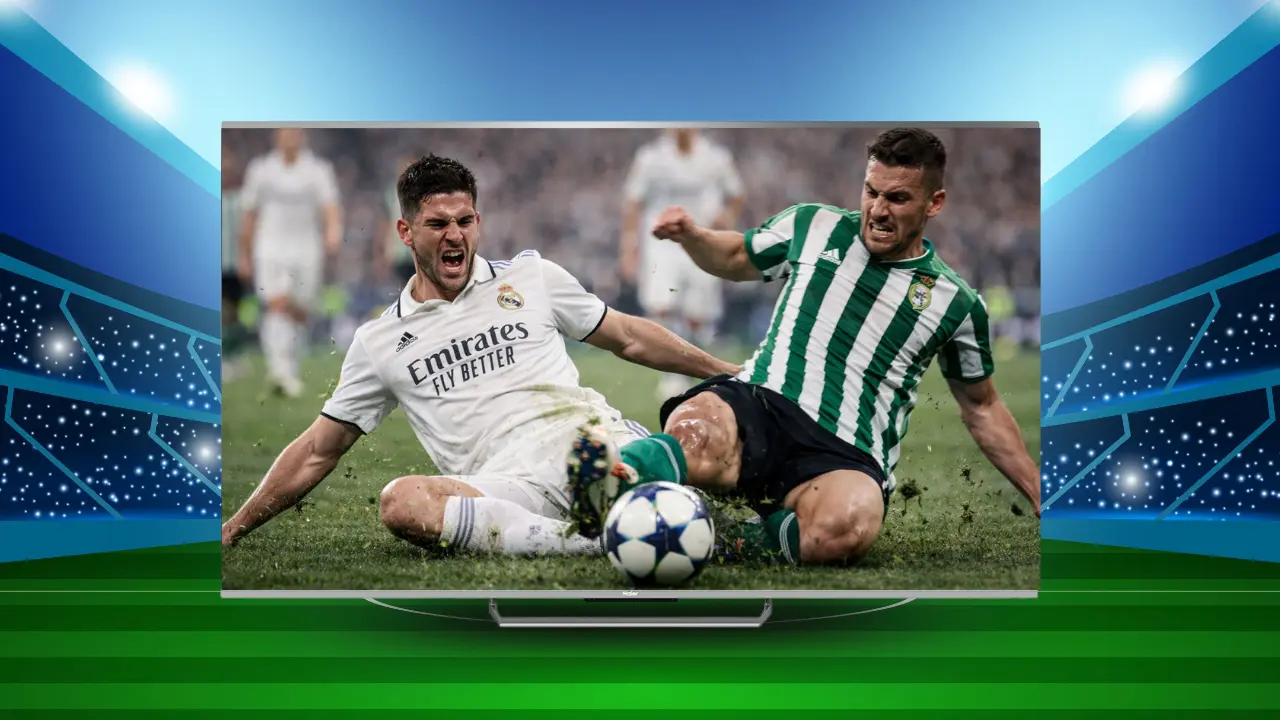

Real Madrid’s attacking play feels unstoppable because every pass, run, and finish connects without delay. A 144Hz display works the same way.
Higher refresh rates reduce blur, sharpen movement, and let your eyes follow fast action naturally. The result is clarity that keeps up with speed, whether it is football, gaming, or everyday viewing.
Speed only matters when you can actually see it
Watch Real Madrid in full flow and you notice something subtle. It is not just pace. It is continuity. Vinícius Jr bursts forward, the ball moves faster than defenders can think, and your eyes never lose the thread of play. Every moment connects.
Now imagine watching that same attack on a screen that struggles to keep up.
The run looks smeared.
The ball jumps.
The moment loses its edge.
This is where motion clarity stops being a technical term and starts becoming a feeling.
Speed without clarity is noise.
Speed with clarity feels inevitable.
Why fast football exposes slow screens
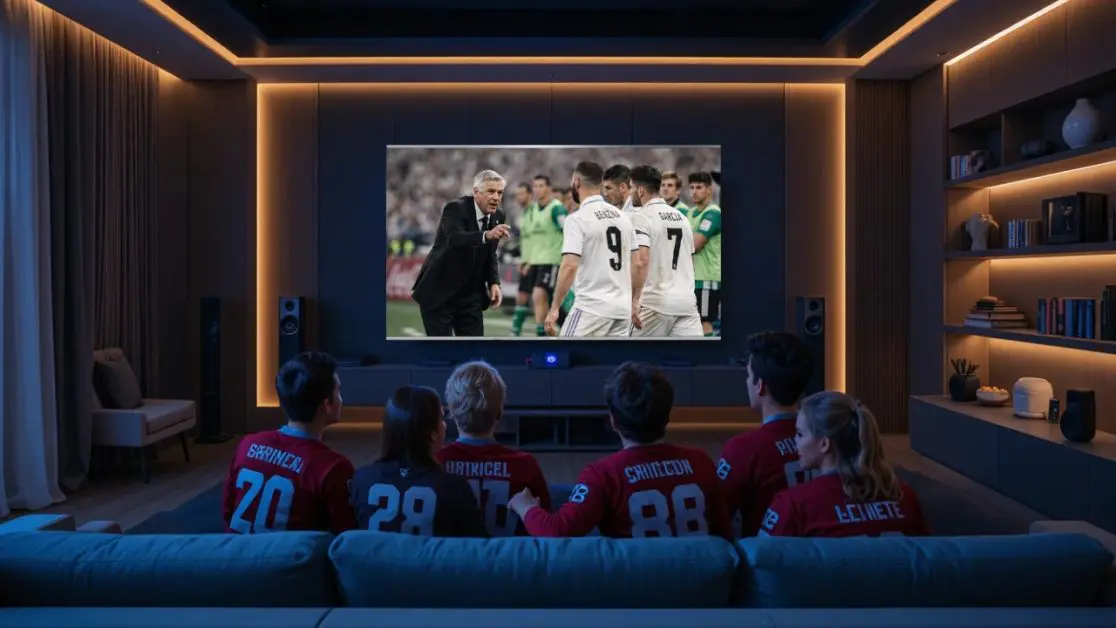
Football is an honest test for any display. There are no edits, no retakes, no pauses. Just 22 players moving at full tilt, often faster than your eyes expect.
Traditional displays refresh at 60Hz. That means the image updates 60 times a second. For casual viewing, that works. For fast sports, it shows its limits.
A 144Hz display refreshes 144 times a second. The gap between frames shrinks. Motion becomes continuous instead of stitched together.
The difference shows up clearly when you watch:
- Through balls slicing past defenders
- Quick one touch combinations in the final third
- Sudden changes of direction near the box
On a higher refresh rate screen, these moments stay sharp. On slower panels, they blur together.
Clarity does not slow the game down.
It lets your brain keep up.
What 144Hz really changes in daily viewing
It is easy to assume high refresh rates matter only to gamers. That idea is outdated.
In real homes, 144Hz affects more than just match nights.
One option is smoother sports
Fast pans, long passes, counter attacks. Motion stays crisp, especially on large screens where blur is more noticeable.
The second option is better gaming
Consoles and PCs now push higher frame rates. A 144Hz panel keeps up, reducing judder and tearing during intense scenes.
The third option is everyday comfort
Scrolling menus, switching apps, even navigating your TV interface feels more responsive and less tiring on the eyes.
The benefit is cumulative.
Once your eyes adapt, going back feels uncomfortable.
Why big screens demand better motion handling
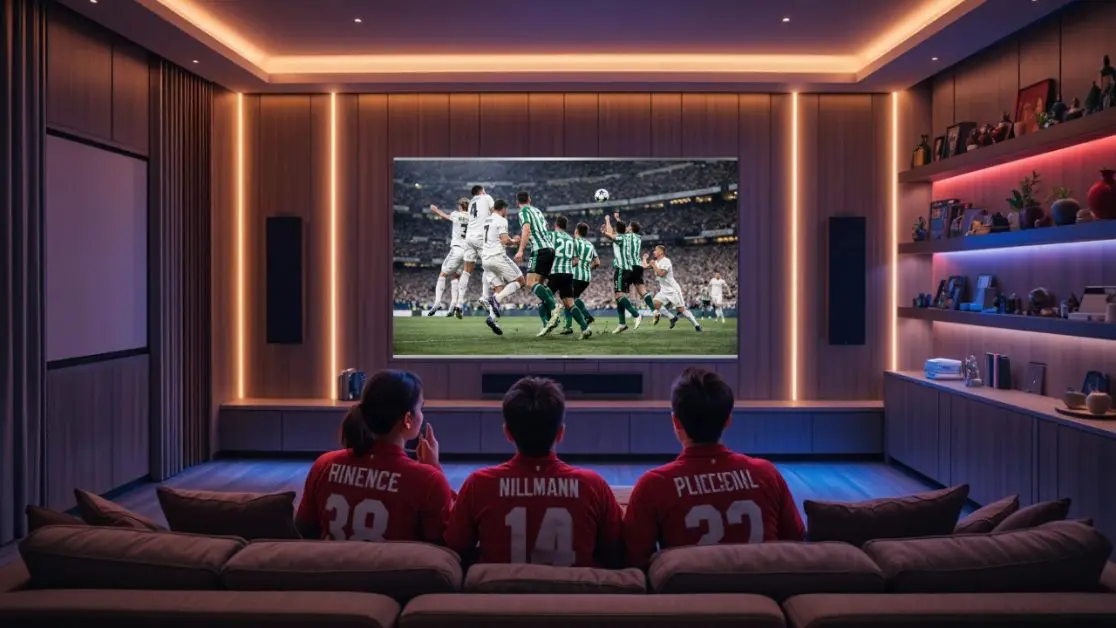
Indian living rooms are changing. Screens are getting larger, walls are being designed around TVs, and family viewing is becoming more immersive.
Here is the trade off.
Bigger screens amplify everything.
- Great motion looks cinematic
- Poor motion looks distracting
On a 139 cm (55) or larger display, motion blur becomes harder to ignore. A fast attack across a big screen needs more frequent refreshes to stay clean.
That is why modern large format TVs increasingly lean on 120Hz and 144Hz panels.
Size demands discipline.
Speed demands precision.
How Haier fits into this shift quietly
Haier does not talk about speed as a spec race. It treats it as a lived experience.
Take the Haier M90 Mini LED 139 cm (55) Google TV with a 144Hz refresh rate. On paper, it promises smoother motion, reduced blur, and better handling of fast content. In practice, it shows up during real moments.
- A late night Champions League match that stays sharp till extra time
- A console gaming session that feels fluid instead of frantic
- A weekend movie marathon where action scenes do not strain your eyes
Mini LED backlighting adds another layer. Better contrast control means moving objects stay defined against bright stadium lights or dark backgrounds.
According to Haier’s own product details, the combination of 144Hz refresh rate, Mini LED technology, and Dolby Vision IQ is designed specifically to handle fast paced scenes with precision and consistency .
Technology works best when you stop noticing it.
The hidden system behind motion clarity
Most people think motion blur is about speed alone. It is not.
It is about how often the screen corrects itself.
Your eyes track motion continuously. Screens update in steps. The closer those steps are, the more natural movement looks.
Sports like football expose this gap instantly.
So do racing games.
So do action films with fast cuts.
A higher refresh rate reduces the mismatch between how your eyes move and how the screen updates.
Good displays respect human perception.
Great ones adapt to it.
What to look for if motion matters to you
If football, gaming, or fast content is a priority in your home, focus on three things.
1. Refresh rate of at least 120Hz or higher
This sets the foundation for smooth motion.
2. Strong backlight control
Mini LED or advanced dimming keeps moving objects defined.
3. Smart processing, not aggressive smoothing
You want clarity, not artificial soap opera effects.
These choices cost more upfront. They repay you every night you watch without fatigue.
Why this matters beyond entertainment
There is a reason high performance teams obsess over marginal gains. Small improvements compound.
Better motion clarity does the same at home.
- Less eye strain during long viewing
- More engagement during sports and games
- A screen that feels relevant for years, not months
The future of viewing is not just sharper pixels. It is faster to understand.
Real Madrid’s attack works because every player arrives on time.
A 144Hz display works because every frame does too.
When speed and clarity align, nothing feels rushed.
Everything feels right.