
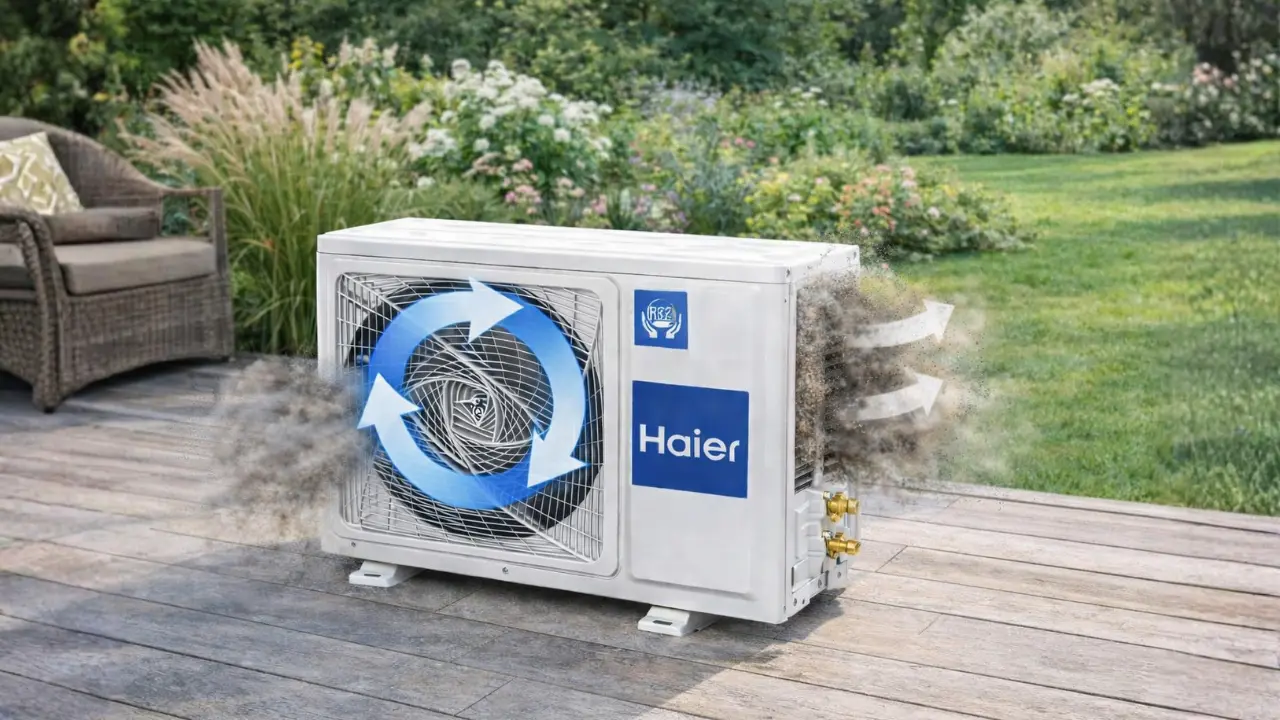

Outdoor Cyclone Clean reduces AC servicing by automatically clearing dust from the outdoor unit, keeping cooling efficient without frequent manual cleaning.
By reversing airflow inside the outdoor unit, the system prevents dust buildup before it becomes a problem. The result is fewer service calls, steadier performance, and one less household chore to remember.
That is the simple explanation.
The real story is about how Indian homes actually use air conditioners today. And why maintenance has quietly become the most overlooked part of comfort.
The part of your AC you rarely think about.
Most people know what happens inside the room.
The cool air.
The temperature setting.
The remote that always goes missing.
What rarely gets attention is the outdoor unit. The box sitting outside, quietly doing the hardest work in the system.
It faces dust.
Pollution.
Construction debris.
Monsoon moisture.
Summer heat.
And it does this every single day.
In Indian cities, that outdoor unit collects dust faster than most people realise. Over time, this buildup slows heat exchange. Cooling takes longer. Power consumption creeps up. And eventually, servicing becomes unavoidable.
Not because the AC is broken.
But because it is dirty.
Why servicing feels more frequent than it should
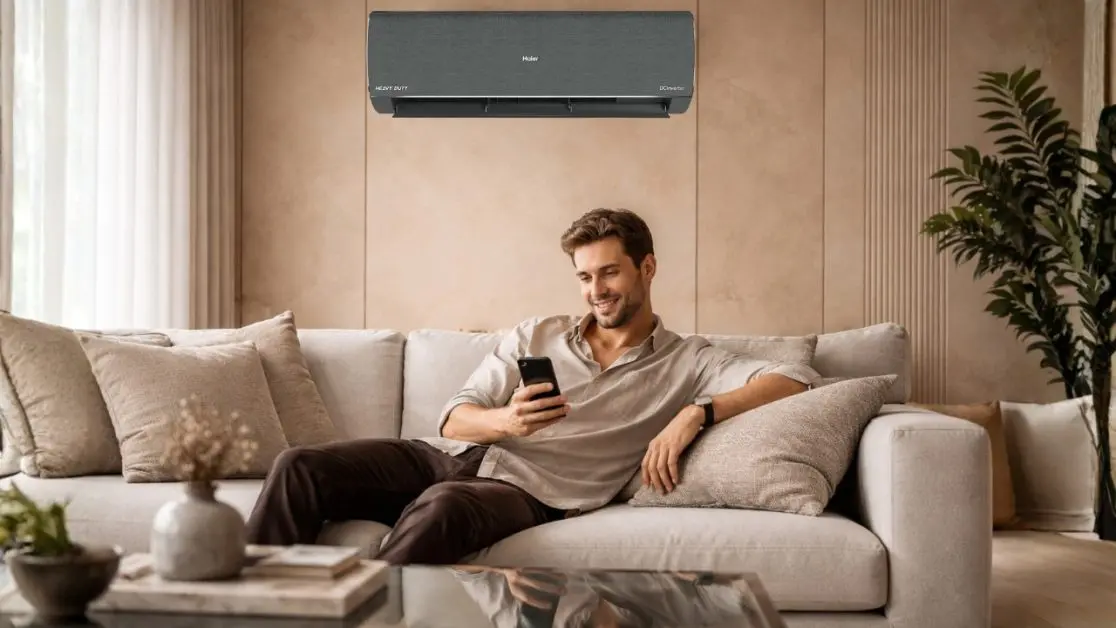
Servicing has become a seasonal ritual in many households.
Before summer.
Mid summer when cooling drops.
After the monsoon, just to be safe.
This pattern exists for a reason.
What dust really does to an AC
When dust settles on the condenser coils of the outdoor unit:
- Heat release becomes less efficient
- The compressor works harder
- Cooling time increases
- Electricity consumption rises
- Wear and tear accelerates
None of this happens suddenly.
It happens slowly. Quietly. Invisibly.
By the time you feel the difference, the system has already been struggling for weeks.
This is not a user problem.
It is a design gap.
The assumption that caused the problem
For decades, AC design assumed one thing.
Those outdoor units would be cleaned manually. Regularly. Perfectly.
In real homes, that assumption rarely holds true.
People forget.
Access is difficult in apartments.
Technicians are not always available.
And no one enjoys scheduling servicing calls.
The result is predictable.
Maintenance gets delayed. Performance suffers. Costs rise.
Outdoor Cyclone Clean changes the maintenance equation
Outdoor Cyclone Clean works by reversing the fan motor to blow dust off the condenser surface automatically.
Instead of allowing dust to settle and harden over time, the system clears it before buildup affects performance.
This happens internally.
Without opening the unit.
Without manual intervention.
It is not about replacing service technicians.
It is about reducing how often you need them.
How Outdoor Cyclone Clean actually works
The idea is simple.
Dust sticks because airflow always moves in one direction. Over time, particles settle and stay.
Outdoor Cyclone Clean flips that logic.
The cleaning cycle
- After switch off, the outdoor fan reverses direction
- This reverse airflow pushes accumulated dust outward
- The condenser surface stays cleaner for longer
- Heat exchange efficiency remains closer to new
This entire process takes seconds. It does not interrupt usage. And it happens automatically.
No reminders.
No settings.
No extra steps.
Why fewer service calls matter more than you think
Reduced servicing is not just about saving money.
It is about time.
Convenience.
And mental load.
The hidden costs of frequent servicing
Every service visit comes with friction:
- Coordinating schedules
- Letting strangers into the home
- Temporary disruption to daily routines
- Inconsistent service quality
Over time, these small inconveniences add up.
Outdoor Cyclone Clean does not eliminate servicing entirely. But it stretches the interval between visits. And that shift matters.
The performance effect you actually notice
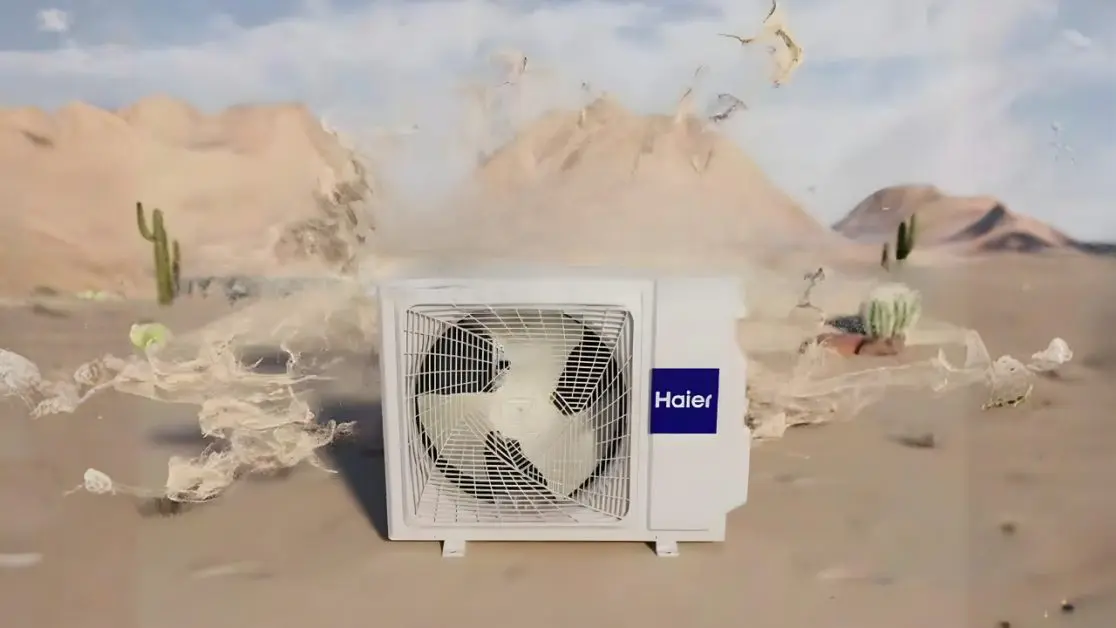
Cleaner outdoor units do one thing very well.
They keep performance consistent.
What consistency looks like in daily life
- Cooling feels the same in May as it did in March
- The AC does not struggle during peak afternoon heat
- Power bills stay predictable
- The unit does not sound strained
This steadiness is easy to miss until you experience the opposite.
When performance fluctuates, comfort becomes unpredictable. And unpredictability is what frustrates people most.
Reduced servicing also protects efficiency
Efficiency is not just about star ratings.
It is about how closely real world performance matches lab conditions.
Dust buildup widens that gap.
Cleaner coils mean
- Faster heat release
- Lower compressor load
- Shorter cooling cycles
- Less energy wasted
Outdoor Cyclone Clean helps maintain that efficiency curve without asking homeowners to manage it manually.
The system takes responsibility.
The user gets the benefit.
Why this matters in Indian conditions
India is not a gentle environment for outdoor machines.
Real world challenges outdoor units face
- High dust levels in urban areas
- Construction activity year round
- Coastal humidity
- Extreme summer temperatures
- Limited ventilation space in apartments
Under these conditions, traditional maintenance schedules struggle to keep up.
Outdoor Cyclone Clean is not a luxury feature. It is a response to environmental reality.
How this fits into modern Indian living
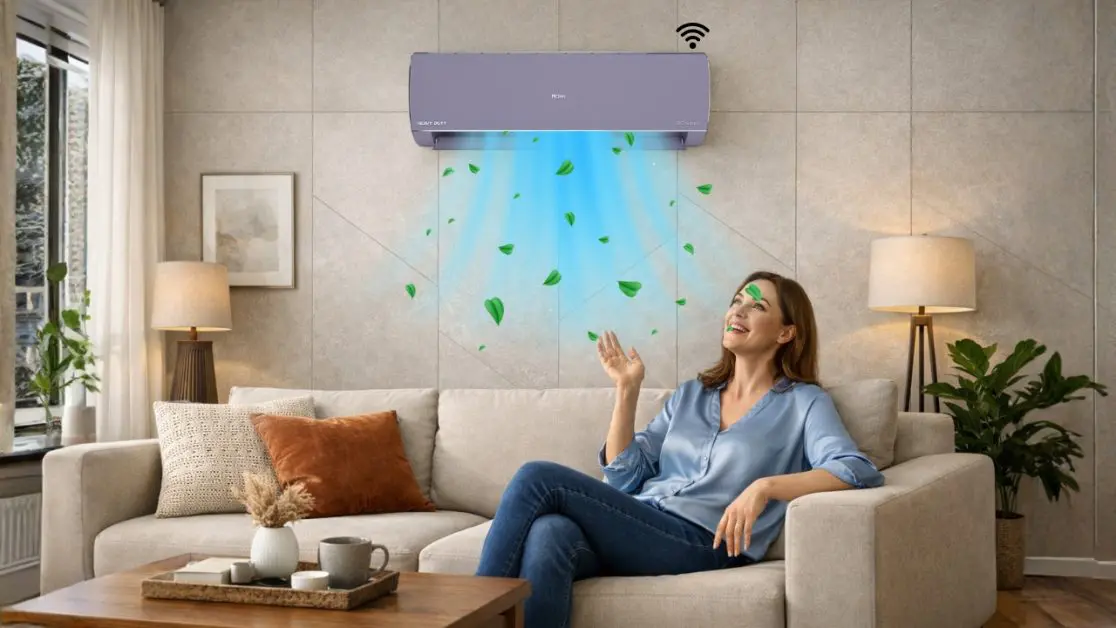
Homes today are busier than ever.
Dual income households.
Hybrid work schedules.
Smaller living spaces.
Less tolerance for interruptions.
People want appliances that manage themselves.
Not because they are lazy.
But because attention is limited.
Maintenance automation is part of that shift.
The bigger pattern behind self cleaning systems
Outdoor Cyclone Clean is one piece of a larger trend.
Machines are moving from passive tools to active systems.
Earlier, appliances waited for instructions.
Now, they monitor, adapt, and act.
This is visible across categories:
- Washing machines adjusting water usage
- Refrigerators optimising cooling cycles
- TVs tuning picture automatically
AC maintenance is simply catching up.
What reduced servicing really means for long term ownership
Over years of use, the different compounds.
Long term benefits
- Slower performance degradation
- Lower cumulative maintenance costs
- Better resale value
- Less stress during peak seasons
None of these benefits feel dramatic on day one.
They show up quietly. Over time.
Which is exactly how good systems should work.
Where Haier fits into this story
Haier has focused on building appliances that reduce daily friction, not add to it.
Outdoor Cyclone Clean reflects that philosophy.
It does not ask users to change habits.
It does not introduce complexity.
It simply removes a problem before it grows.
That is what thoughtful design looks like.
The question worth asking before your next AC purchase
Most people ask about cooling capacity.
Energy ratings.
Smart features.
Few ask about maintenance.
That might be the most important question of all.
Because comfort is not just about how an appliance performs on day one.
It is about how reliably it performs on day three hundred.
The takeaway
Reduced servicing with Outdoor Cyclone Clean is not about avoiding maintenance. It is about designing systems that need less of it.
That shift changes ownership from reactive to effortless.
In homes where time is scarce and expectations are high, that difference matters.
Comfort should not require reminders.
Good design should take care of itself.
Frequently Asked Questions
Why does my AC need servicing so often even though it’s not broken?
Most servicing isn’t about fixing faults, it’s about cleaning dust from the outdoor unit. In Indian conditions, dust buildup quietly reduces efficiency long before anything “breaks.”
I service my AC every summer. Why does cooling still drop mid-season?
Dust begins settling again immediately after cleaning. By mid-summer, the outdoor coils are already struggling, making cooling slower and less consistent.
Why does the outdoor unit matter more than I think?
The outdoor unit releases heat. When dust coats its condenser coils, heat gets trapped, forcing the compressor to work harder and longer.
My indoor air feels weak. Could the outdoor unit really be the reason?
Yes. Indoor cooling performance depends directly on how efficiently heat is expelled outside. A dirty outdoor unit slows everything down.
I never look at my outdoor unit because it’s outside my apartment. Is that a problem?
That’s exactly why dust issues go unnoticed. Reduced-servicing technologies exist because most people realistically don’t monitor outdoor units.
What really happens when dust builds up on the outdoor unit?
Heat release becomes inefficient
Compressor strain increases
Cooling takes longer
Power consumption rises
Long-term wear accelerates
None of this happens suddenly, it compounds quietly.
What exactly is Outdoor Cyclone Clean?
It’s an automated self-cleaning system that reverses airflow in the outdoor unit to blow dust off the condenser before it hardens or accumulates.
How is this different from manual servicing?
Manual servicing removes dust after it becomes a problem. Outdoor Cyclone Clean prevents buildup in the first place automatically.
Does Outdoor Cyclone Clean replace AC servicing entirely?
No. It reduces how often servicing is needed by keeping the outdoor unit cleaner between visits.
I forget maintenance completely until cooling drops. Is Outdoor Cyclone Clean designed for people like me?
Yes. It assumes real human behaviour forgetfulness, busy schedules, and limited attention.
How does Outdoor Cyclone Clean clean without opening the unit?
After switch-off, the outdoor fan briefly reverses direction. This reverse airflow pushes accumulated dust outward from the condenser surface.