

Refrigerators designed for Indian food diversity must do more than keep food cold. They must manage spices, leftovers, vegetables, dairy, batters, and frozen snacks at the same time.
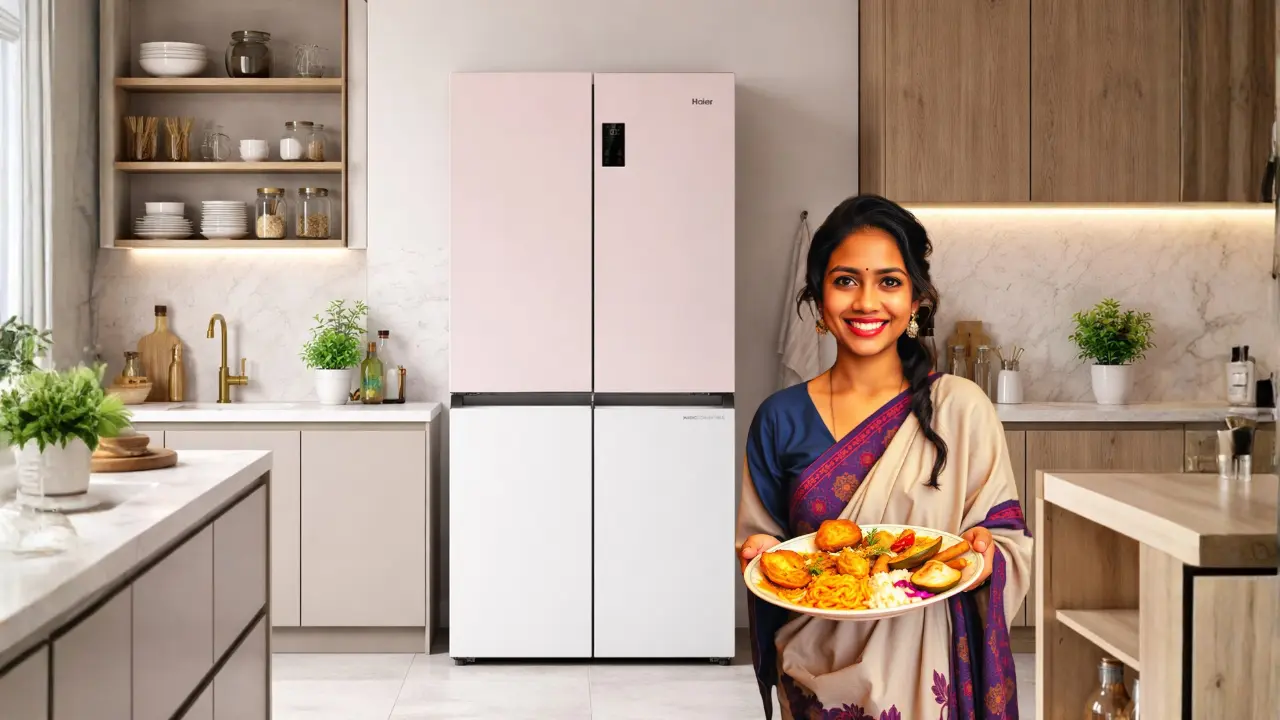
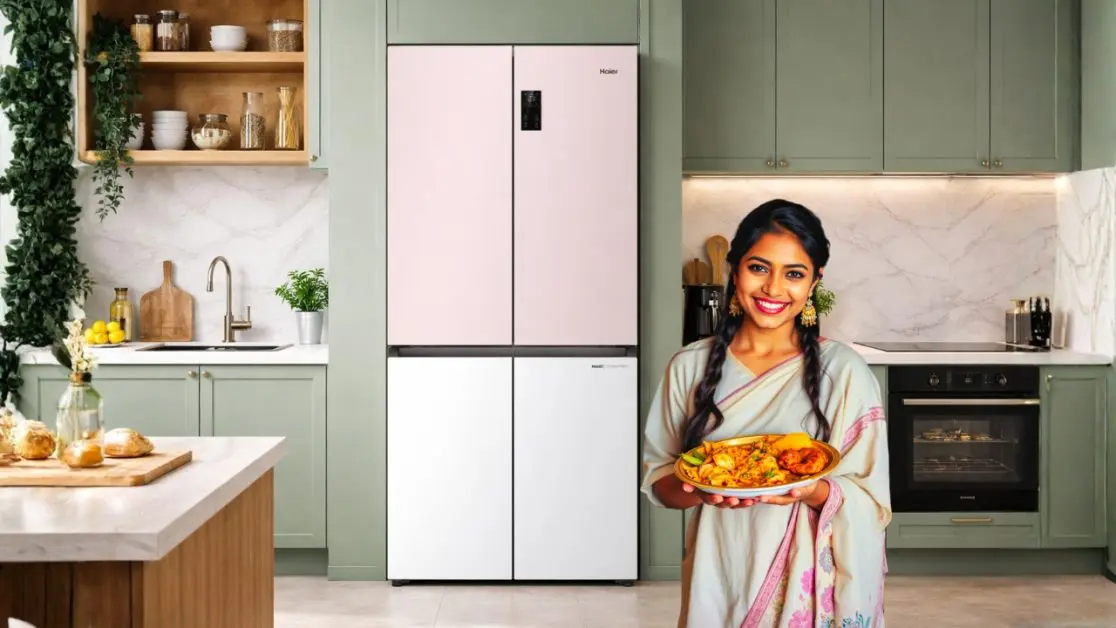
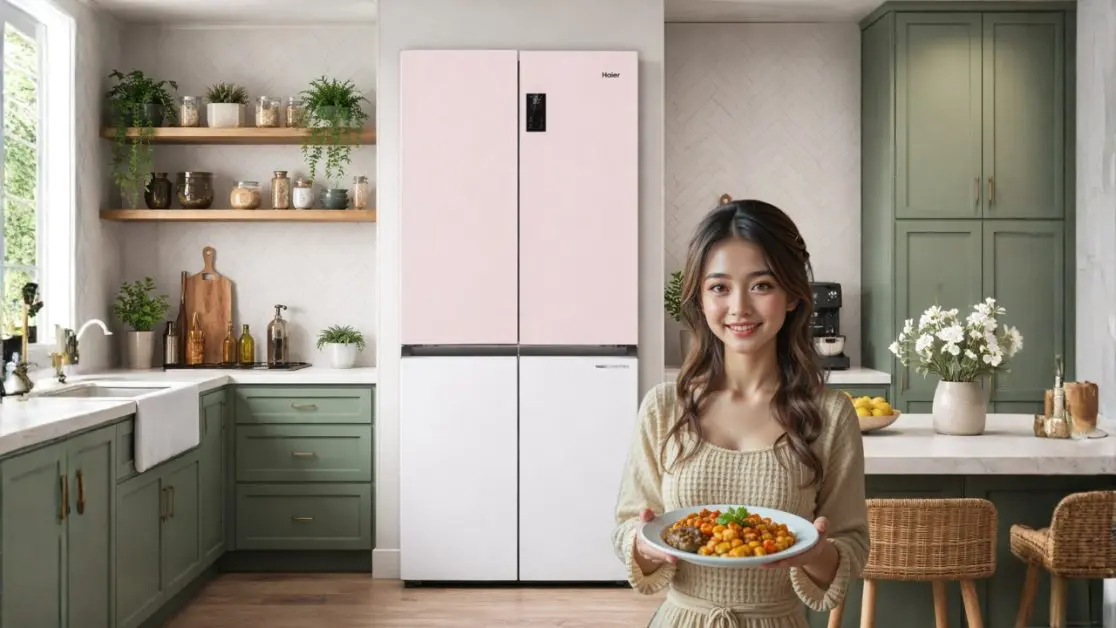
Appliances like the Haier Vogue Lumiere 520L Mauve Pink 4 Door Convertible Refrigerator are built around this reality, creating flexible cooling zones and organized storage that match the complexity of Indian kitchens.
The Indian refrigerator carries an entire cuisine.
Open an Indian refrigerator on a Sunday afternoon.
You will not find one cuisine.
You will find ten.
A bowl of leftover rajma sits next to chopped coriander. Dosa batter ferments quietly on the middle shelf.
A jar of mango pickle rests beside curd. Somewhere behind the milk carton, someone has placed half a chocolate cake from last night’s celebration.
This is not clutter.
It is Indian food diversity in motion.
Most global appliance designs assume a simpler storage pattern. A few vegetables. Dairy. Packaged meals.
Indian kitchens operate differently.
They are ecosystems.
And every ecosystem needs the right environment to survive.
Indian Food Diversity Is a Storage Puzzle
Cooking is only half the story.
Storage is the real challenge.
An Indian refrigerator often holds multiple food categories at the same time:
- Fresh vegetables for everyday cooking
- Dairy items such as milk, paneer, curd, and butter
- Cooked leftovers from lunch or dinner
- Frozen snacks like samosas or ice cream
- Fermented batters for idli or dosa
- Pickles, chutneys, and spice pastes
Each of these foods behaves differently.
Some release moisture.
Some release aromas.
Some spoil quickly if temperature changes.
A single cooling space cannot treat all foods equally.
That is why refrigerator design has evolved.
The appliance is no longer a storage box.
It is a food organization system.
Why Traditional Refrigerator Designs Struggle in Indian Homes
Early refrigerator designs followed a simple assumption.
Food types were limited.
One vegetable drawer.
Two shelves.
A freezer above.
That system worked well in many parts of the world.
It struggles in Indian homes.
Look at how different foods behave.
| Food Category | Storage Challenge | Why It Matters |
| Cooked curries | Strong aromas | Can affect other foods |
| Fresh greens | High moisture | Requires humidity balance |
| Paneer and dairy | Temperature sensitive | Spoils quickly |
| Frozen snacks | Frequent access | Needs stable freezing |
| Fermented batter | Gas release | Needs space and airflow |
When these foods share limited space, problems appear.
Shelves become crowded.
Containers hide behind other containers.
Ingredients disappear until they expire.
In other words, the refrigerator stops working as a system.
Smart Refrigerator Design Begins With One Insight
Design must follow behavior.
Indian households cook frequently.
They store leftovers. They marinate ingredients. They prepare batters in advance.
The refrigerator becomes a daily workflow tool.
Good design solves three problems at once.
- Organization
- Temperature balance
- Flexible storage space
When these three systems work together, the appliance disappears into the background.
And invisible tools are often the most valuable.
Multi-Zone Cooling Is Built for Indian Kitchens
Modern refrigerator engineering treats food storage as a dynamic system.
Different foods require different environments.
That insight led to multi-zone refrigerator designs.
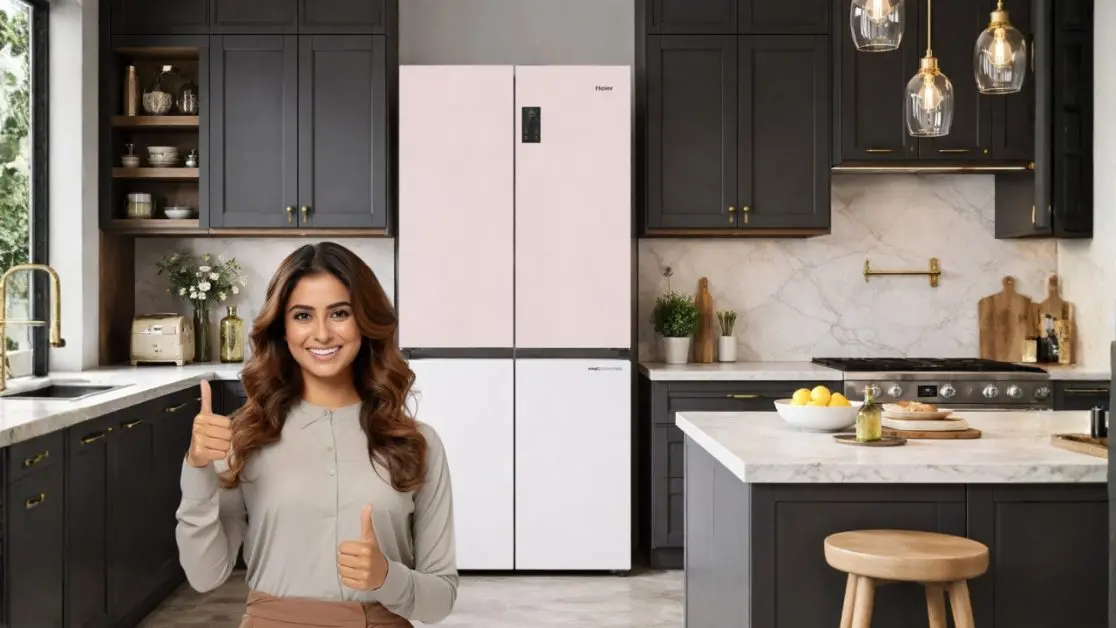
A strong example is the Haier Vouge Lumiere 520L Mauve Pink 4 Door Convertible Refrigerator, a premium refrigerator built for modern Indian households.
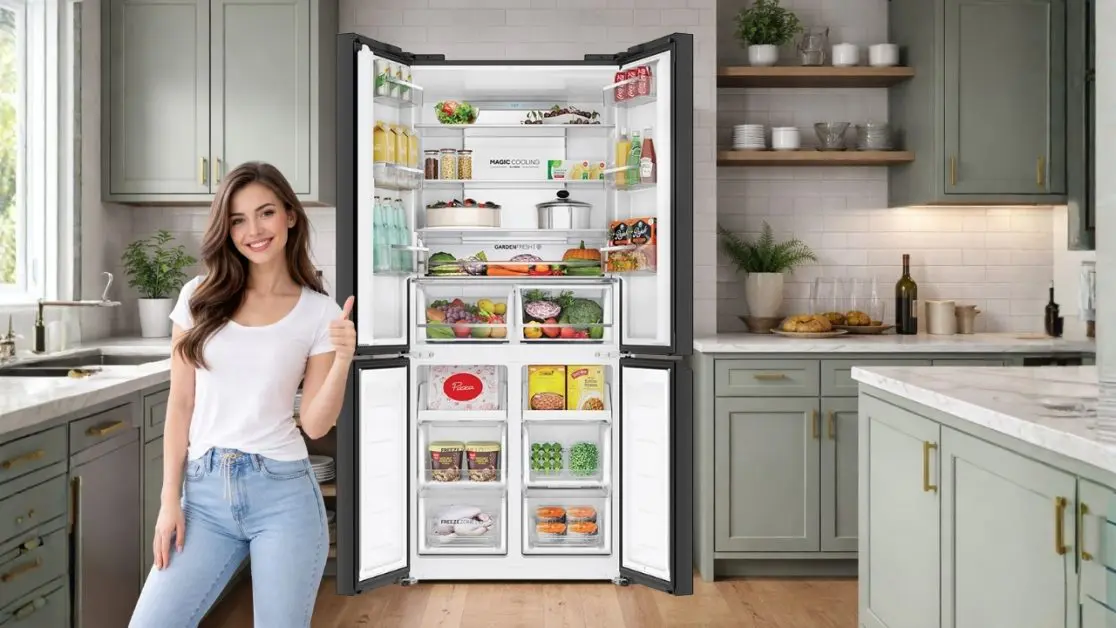
The refrigerator offers 520 litres of total capacity, with 440 litres of refrigerator space and a 90 litre convertible section that can switch between fridge and freezer depending on storage needs.
Why does this matter?
Because Indian kitchens rarely store the same foods every week.
One week the refrigerator stores vegetables and fruits for daily cooking.
Another week it is filled with festival sweets.
Then suddenly it becomes a container for leftovers after a family gathering.
Flexible storage becomes essential.
Three Storage Styles Found in Indian Homes
Every Indian household stores food differently.
Yet most refrigerators must support three common storage patterns.
1. The Daily Cooking Household
Many families cook twice every day.
Their refrigerator needs:
- Easy vegetable access
- Space for chopped ingredients
- Clear visibility for leftovers
Benefits:
- Faster meal preparation
- Less forgotten food
- Organized cooking workflow
Cost:
- Requires wider shelves and deep vegetable boxes.
2. The Batch Cooking Household
Working professionals often cook once and store meals for several days.
Their refrigerator requires:
- Stable cooling zones
- Large container space
- Effective odor management
Technologies like Deo Fresh anti bacterial systems help absorb odor and impurities so multiple dishes can coexist without mixing aromas.
Benefit:
Meals remain fresh for longer periods.
Cost:
Better organization habits are required.
3. The Festival Preparation Household
Every Indian home recognizes this moment.
A festival approaches.
Suddenly the refrigerator contains:
- Milk for sweets
- Fruits for prasad
- Vegetables for large meals
- Desserts for guests
Large storage capacity and sturdy shelves become essential.
The Haier Vouge Lumiere 520L Mauve Pink 4 Door Convertible Refrigerator includes toughened glass shelves designed to handle heavy Indian utensils and large cooking containers.
During festive seasons, that design choice becomes invaluable.
The Hidden System Behind Smart Refrigerator Design
Appliance designers now follow a simple principle.
Food diversity requires spatial diversity.
This means refrigerators must offer:
- Adjustable shelves
- Dedicated vegetable zones
- Convertible freezer compartments
- Consistent cooling circulation
Advanced cooling systems now distribute cold air evenly across all compartments.
Technologies such as 360 degree cooling airflow ensure every container receives uniform temperature.
This is important in Indian homes.
Because containers rarely sit neatly in a row.
They stack.
They shift.
They multiply after family dinners.
Smart Storage Reduces Food Waste
Food waste in many homes has a simple cause.
Visibility.
When food disappears behind other containers, it disappears from memory.
Modern refrigerator designs improve visibility through:
- Wider shelves
- Better interior lighting
- Transparent vegetable drawers
- Organized compartments
These small design choices solve a large problem.
When food is visible, it gets used.
When it gets used, waste drops.
A refrigerator quietly becomes a sustainability tool.
A Refrigerator Is Now a Lifestyle Appliance
This is the shift many households overlook.
Refrigerators now influence daily living.
Consider three familiar moments.
A young professional stores pre-cut vegetables to save weekday cooking time.
A couple preparing dinner guests keeps marinated paneer overnight.
Parents place fruits in visible drawers so children reach for healthy snacks.
In each case, the refrigerator shapes behavior.
The appliance becomes part of the household rhythm.
Design Features That Support Indian Food Diversity
Modern refrigerator designs increasingly reflect the realities of Indian kitchens.
Important features now include:
- Large vegetable compartments for seasonal produce
- Convertible storage zones for changing food patterns
- Adjustable glass shelves for steel containers and large utensils
- Odor control systems for mixed cuisines
- Energy efficient cooling technology for everyday use
Each feature reflects one underlying truth.
Indian kitchens operate with scale and variety.
Why Indian Food Diversity Demands Better Appliances
India does not have one cuisine.
It has hundreds.
Gujarati thali.
South Indian dosa batter.
Punjabi gravies.
Bengali fish curry.
Street food snacks.
Festival sweets.
All of these foods eventually share the same refrigerator.
That reality changes how appliances must be designed.
Refrigerators built for Western food storage cannot fully support this diversity.
Appliances designed for Indian kitchens must adapt.
The Haier Vouge Lumiere 520L Mauve Pink 4 Door Convertible Refrigerator reflects that shift by combining large capacity, convertible storage, and smart cooling systems tailored for Indian cooking habits.
The Bigger Lesson Hidden Inside Kitchen Design
Food diversity is not a problem.
It is a design opportunity.
When appliances understand the rhythm of Indian kitchens, daily cooking becomes simpler.
Vegetables remain fresh longer.
Leftovers stay organized.
Festival preparations become easier.
And the refrigerator stops being a crowded storage space.
It becomes a quiet system supporting everyday life.
The Insight Worth Remembering
Good appliances solve invisible problems.
When refrigerator design respects Indian food diversity, something subtle happens.
Cooking becomes smoother.
Food stays fresher.
The kitchen feels calmer.
And the appliance fades into the background.
The best technology always works like that.
You stop noticing it.
But life works better because it is there.
Frequently Asked Questions
I cook daily and store lots of leftovers. How do I choose the right refrigerator for my needs?
Look for multi-zone cooling, large capacity (400L+), and flexible shelves. These features support both fresh cooking and leftover storage without crowding.
I feel overwhelmed comparing refrigerator features. What actually matters for Indian kitchens?
Focus on convertible compartments, vegetable storage size, and airflow systems rather than just brand or aesthetics.
Is a 4-door refrigerator really necessary for my home, or is it overkill?
If you store diverse items (batters, leftovers, veggies, frozen snacks), a 4-door model helps separate food zones, reducing clutter and odor mixing.
My fridge smells like mixed curry and pickles. How do I fix this?
Use refrigerators with odor control systems (like anti-bacterial or Deo Fresh tech) and store strong-smelling foods in sealed containers.
Can I store dosa batter, leftovers, and fruits together safely?
Yes, but only if your fridge has consistent airflow and separate compartments to prevent cross-contamination.
Why do my vegetables spoil faster even when refrigerated?
They need humidity-controlled drawers. Standard shelves often dry them out or expose them to temperature fluctuations.