
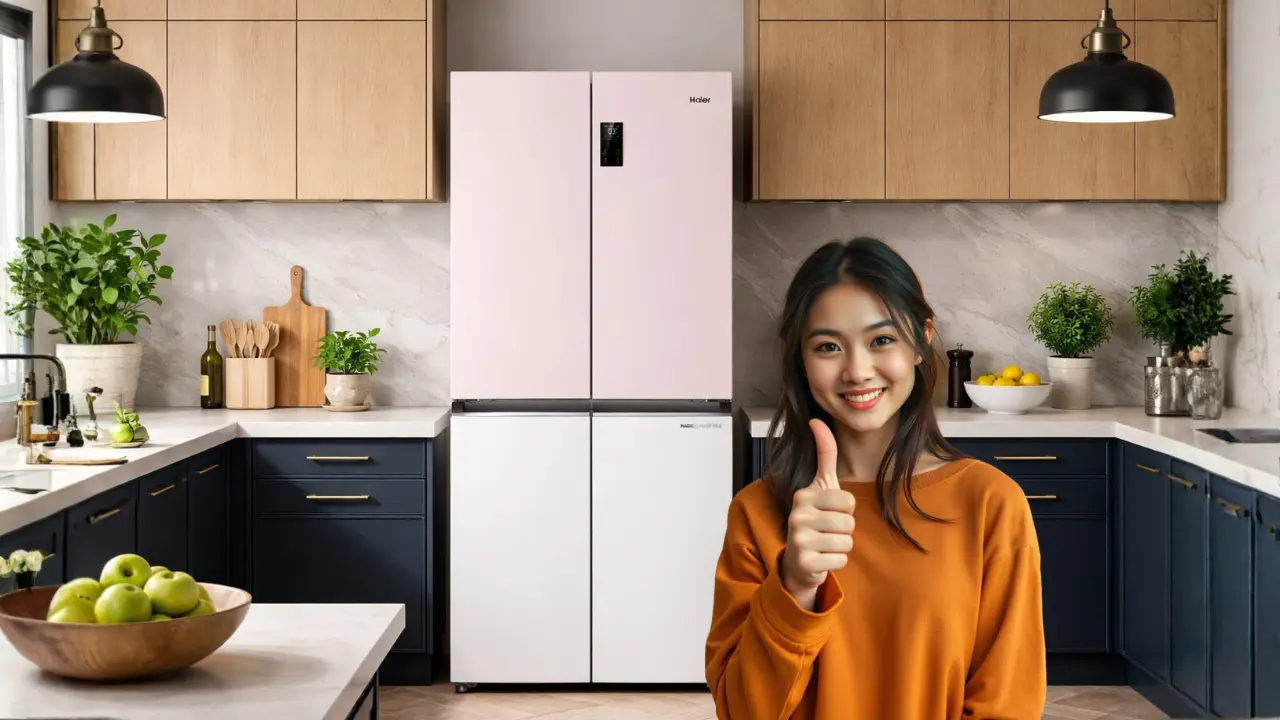

Power-cut friendly cooling retention means appliances are designed to keep their internal temperature stable even when electricity temporarily stops.
Advanced insulation, inverter compressors, and smart airflow systems slow down heat entry, helping food stay fresh longer and cooling remain stable during outages.
In simple words.
Cooling should not disappear the moment power disappears.
And in many Indian homes, that difference quietly protects dinner plans, groceries, and daily routines.
A familiar moment in many Indian homes.
It is 8:15 pm.
The pressure cooker has just cooled down. Someone reaches into the refrigerator to grab coriander. A child opens the freezer for ice cream.
Then the lights flicker.
Power cut.
The house pauses for a second.
Someone instinctively says what every household has said at least once.
“Don’t open the fridge now.”
That reaction reveals something interesting.
People already understand the idea of cooling retention, even if they never call it that.
Because when electricity stops, the goal becomes simple.
Keep the cold inside.
Why cooling does not vanish instantly
Cooling inside appliances behaves like cold water inside a thermos.
If the lid stays closed, the temperature changes slowly.
The same principle applies inside refrigerators and cooling systems.
Three invisible forces control how long cooling lasts during a power cut:
- Insulation that slows heat entry
- Airflow systems that distribute cold evenly
- Compressor stability before the outage
When these three systems work together, the appliance stores cold energy like a thermal battery.
The result is simple.
Cooling fades slowly instead of disappearing quickly.
Why power cuts still matter in Indian homes
Electricity infrastructure in India has improved significantly. But short outages still happen.
Common causes include:
- Summer demand surges
- Transformer maintenance
- Local grid overload
- Monsoon disruptions
According to the Central Electricity Authority, India’s electricity demand crosses 230 gigawatts during peak summer months.
When demand rises sharply, brief outages become more likely.
And these outages often happen during the hottest time of the year.
Exactly when cooling matters the most.
What actually happens inside a refrigerator during a power cut
A refrigerator is essentially a sealed cold storage box.
Once electricity stops, the compressor pauses. But the cold air inside remains trapped.
Temperature begins rising slowly depending on three factors.
| Factor | What it does | Impact on cooling retention |
| Insulation thickness | Slows heat entering the fridge | Cooling lasts longer |
| Door opening frequency | Allows warm air to enter | Cooling fades faster |
| Food load | Stored items retain cold | Temperature rises slowly |
A full refrigerator usually retains cooling longer than an empty one.
Why?
Because food itself stores cold energy.
Milk, vegetables, and frozen items all act like small cooling blocks.
How inverter compressors improve cooling retention
Traditional refrigerators behave like light switches.
They run at full power.
Then they stop completely.
Inverter compressors behave differently.
They run continuously at variable speeds and maintain stable temperatures.
This stability matters during power cuts.
Because when electricity disappears, the internal temperature has already been balanced.
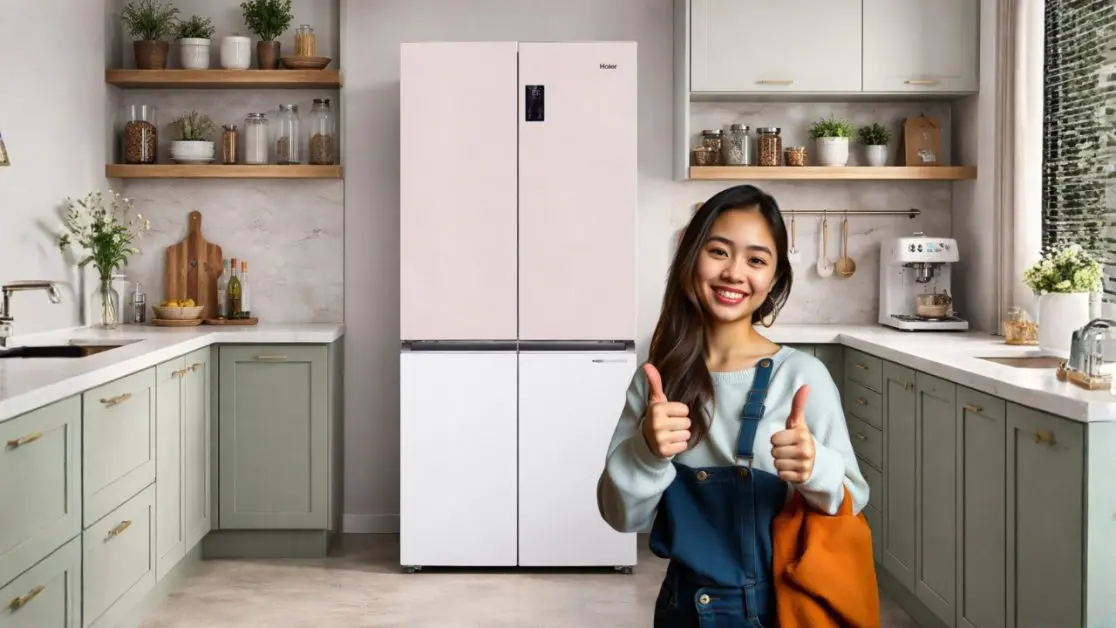
For example, refrigerators such as the Haier Vouge Lumiere 520L Mauve Pink 4 Door Convertible Refrigerator (HRB-600MP) use advanced cooling systems designed to maintain consistent temperature zones and stable airflow.
Stable cooling before the outage leads to slower warming during the outage.
Small design decision.
Large real world benefit.
Three design choices that improve cooling retention
Not all refrigerators are built the same way.
Different engineering decisions influence how well cooling survives a power interruption.
Option 1: High-density insulation
The first approach focuses on insulation.
Modern refrigerators use thick foam layers inside the cabinet walls.
Benefits include:
- Slower heat transfer
- Longer cooling retention
- Improved energy efficiency
Cost tradeoff:
- Slightly higher appliance cost
- Heavier construction
But the result is powerful.
Cold stays where it belongs.
Option 2: Multi-directional airflow systems
The second approach improves airflow.
Many premium refrigerators distribute cold air evenly through multiple vents.
Benefits include:
- Uniform cooling across shelves
- Reduced temperature gaps
- Slower heat build up during outages
Imagine air conditioning in a cinema hall.
Every seat receives airflow.
Refrigerators work on the same principle.
Even cooling creates stronger retention.
Option 3: Intelligent compressor management
The third approach focuses on smarter compressor control.
Modern inverter compressors adjust cooling power based on usage patterns.
Benefits include:
- Faster cooling recovery
- Stable internal temperatures
- Lower electricity consumption
Before a power cut occurs, the system has already created a stable cooling environment.
That stability slows temperature loss later.
Why convertible storage helps cooling efficiency
Modern Indian kitchens store a wide range of foods.
Fresh vegetables.
Frozen snacks.
Leftovers from family dinners.
Desserts waiting for guests.
Flexible storage systems help organize these items.
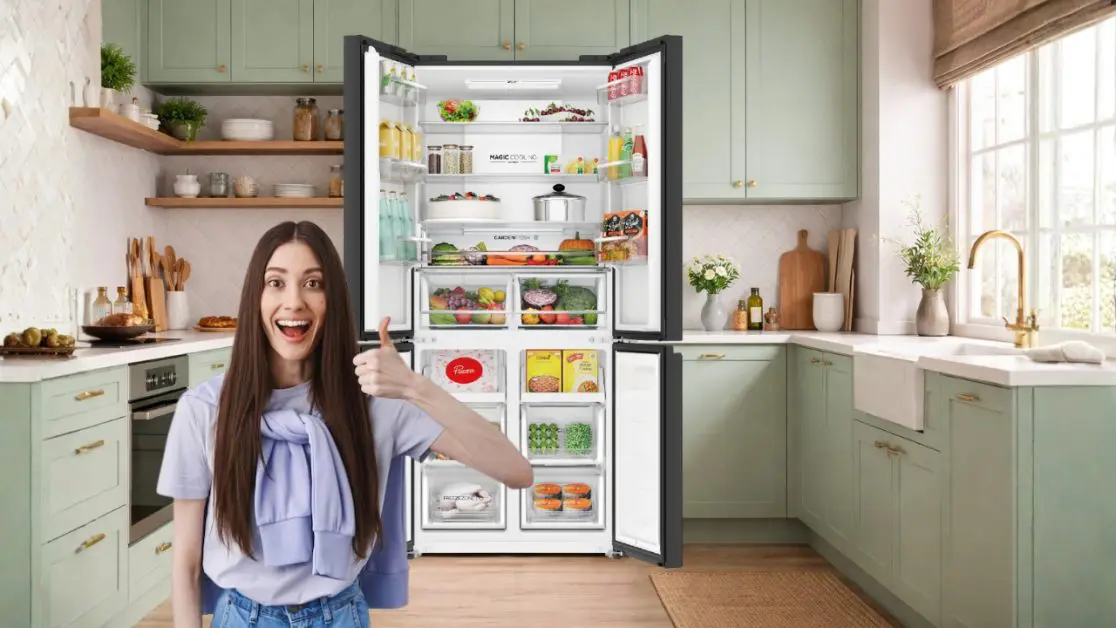
The Haier Vouge Lumiere 520L Mauve Pink 4 Door Convertible Refrigerator (HRB-600MP) offers a large 520 litre capacity with convertible storage sections that can shift between refrigerator and freezer modes depending on household needs.
This flexibility improves cooling retention in several ways.
- Organized storage reduces door opening time
- Items remain grouped by temperature needs
- Cold air escapes less frequently
Cooling is not only about engineering.
It is also about everyday behavior.
Three simple habits that extend cooling during outages
Technology helps a lot.
But household habits still make a difference.
1. Avoid frequent door openings
Every time the refrigerator door opens, warm air enters.
During a power cut, minimizing door openings protects internal cooling.
Even one unnecessary opening can raise the internal temperature noticeably.
2. Store frequently used items together
Organizing items intelligently helps reduce search time.
Benefits include:
- Faster access
- Shorter door opening duration
- Less temperature fluctuation
This small habit extends cooling retention naturally.
3. Allow airflow between stored items
Overcrowded shelves block cold air movement.
Maintaining small gaps between containers improves air circulation.
Many refrigerators include toughened glass shelves that support heavy Indian utensils while maintaining airflow channels.
Design and behavior work together.
Cooling retention reflects a deeper principle of modern homes
The idea behind power cut friendly cooling retention reveals something important about appliance design.
Homes today rely on multiple systems:
- Refrigeration
- Air conditioning
- Washing machines
- Kitchen appliances
- Entertainment systems
All of them depend on electricity.
But the smartest designs assume electricity will occasionally pause.
Great appliances do not panic when that happens.
They adapt.
Cooling retention is really about resilience
Many people think appliances exist purely for convenience.
But modern appliance design focuses increasingly on resilience.
Cooling retention protects several things at once:
- groceries
- meal preparation plans
- food safety
- family routines
In busy Indian households, refrigerators open dozens of times daily.
During festivals, gatherings, or dinner parties, usage increases dramatically.
Appliances that maintain cooling stability reduce stress during unexpected power interruptions.
And over time, that reliability becomes invisible.
Which is exactly the point.
A hidden philosophy behind smart home design
The best technology does not only perform well when conditions are perfect.
It performs well when conditions are imperfect.
Power cuts.
Voltage fluctuations.
Summer heat waves.
Design that anticipates these realities creates stronger homes.
Cooling retention is not just a technical feature.
It is a philosophy.
Design for real life, not ideal conditions.
What this means for the future of Indian homes
Indian households are becoming smarter, more connected, and more design focused.
But they are also becoming more resilient.
The next generation of appliances is not only about speed or capacity.
It is about stability.
Cooling that lasts longer.
Freshness that survives interruptions.
Homes that continue functioning when electricity pauses.
Because comfort is not measured only when everything works perfectly.
Comfort is measured in the moment when something stops.
And the home still feels under control.
One quiet insight remains.
A smart home is not the one with the most technology.
A smart home is the one that keeps life running even when the power goes out.
Frequently Asked Questions
How do I know if a refrigerator is actually good for power cuts?
Look for features like high-density insulation, inverter compressors, and multi-airflow systems. These help maintain internal temperature even when electricity goes off.
Is it worth paying more for better cooling retention?
If you live in an area with frequent or even occasional outages, yes. Better cooling retention protects food, reduces spoilage, and avoids stress during power cuts.
I had a power cut for 2–3 hours. Is my food still safe?
If the fridge door stayed closed, food is usually safe. Cooling fades slowly, not instantly. Freezers can retain temperature even longer.
I opened the fridge during a power cut. Did I ruin everything?
Not necessarily, but it speeds up temperature rise. One quick opening is okay, but repeated openings can reduce cooling retention significantly.
What does an inverter compressor actually do for power cuts?
It maintains a steady internal temperature before the outage, so when power stops, cooling fades more slowly.
How does airflow inside a fridge affect cooling retention?
Even airflow ensures all sections are equally cold, preventing weak spots that warm up faster during outages.
Does a full fridge really stay cold longer?
Yes. Stored food acts like thermal storage, helping retain cold for longer.
Is cooling retention just a feature or something more?
It’s a design philosophy building appliances that continue working even when conditions aren’t perfect.