
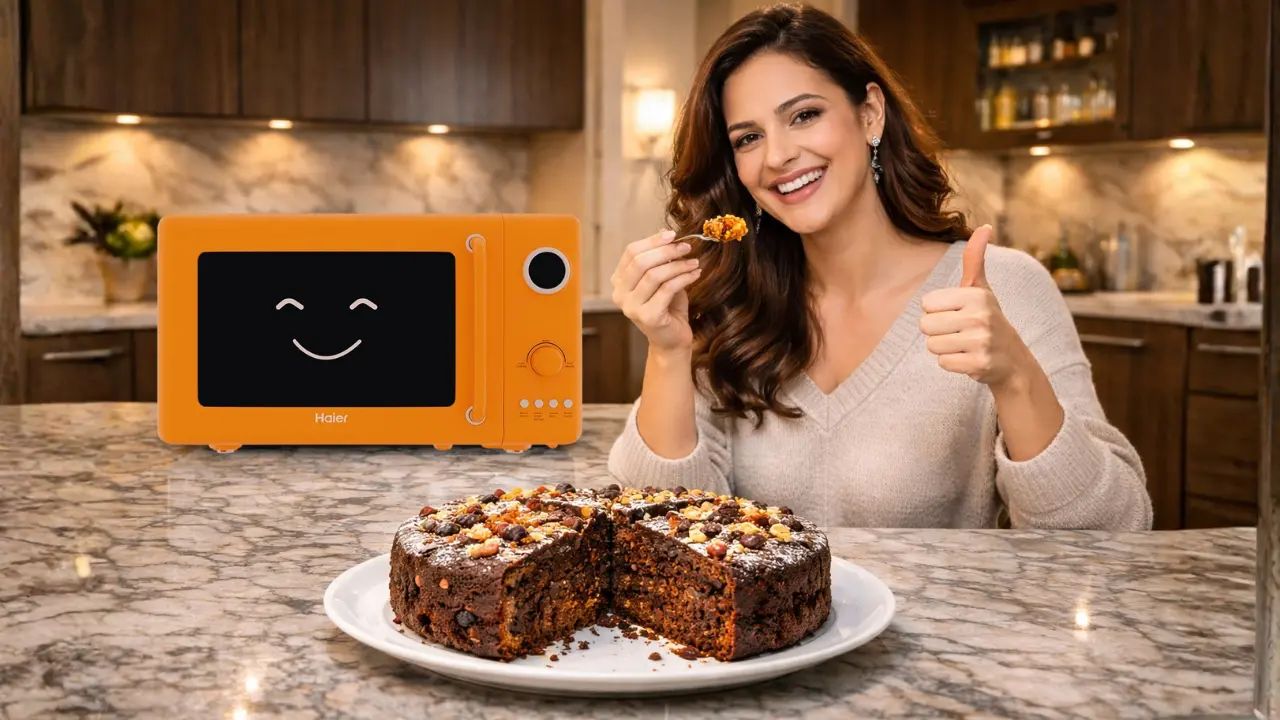

To reheat plum cake without drying it out, use low heat, introduce moisture, and reheat in short, controlled intervals.
Wrap the cake, avoid high temperatures, and allow steam to do the work. Plum cake does not need force.
It needs patience.
That is the system.
Everything else is execution.
Why reheated plum cake so often feels like a letdown
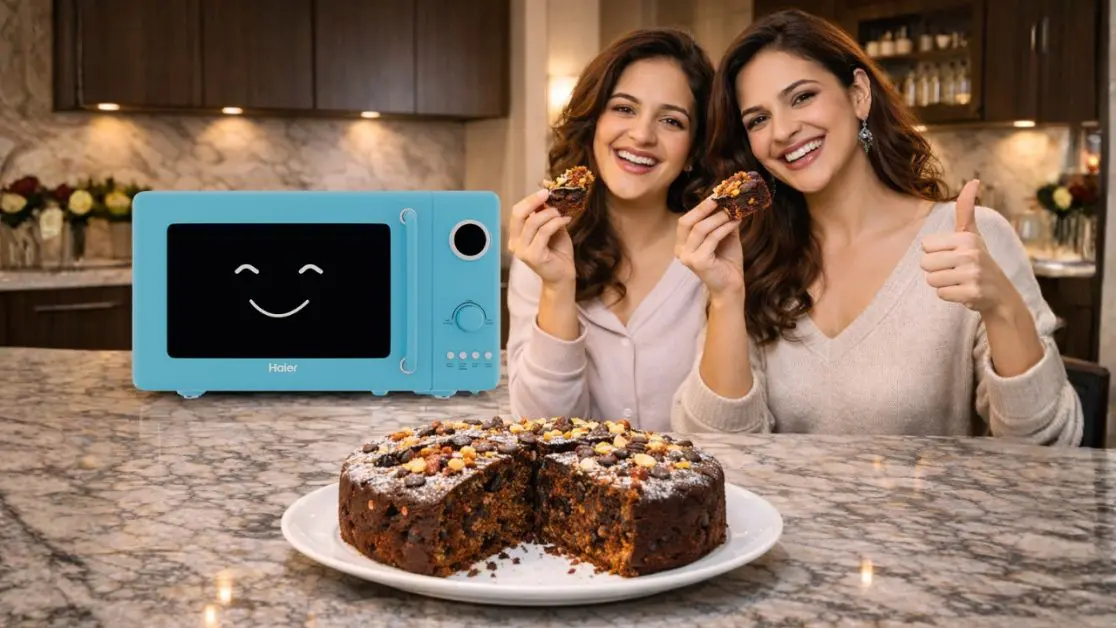
Plum cake carries more history than most desserts.
It is baked weeks ahead.
It matures quietly in tins.
It travels between homes.
It waits for the right moment.
By the time you reheat it, the cake has already lived a life.
The common mistake is assuming reheating is about making it hot.
It is not.
Reheating is about preserving moisture while raising temperature.
Once moisture leaves, no appliance can bring it back.
The invisible forces working against your cake
Before choosing a method, it helps to understand why plum cake dries out so easily.
Dense structure holds less margin for error
Unlike sponge cake, plum cake is compact. Heat moves slowly through the centre but aggressively through the edges.
Result.
Warm middle. Dry corners.
Sugar and fruit react sharply to high heat
Plum cake is rich in sugars and soaked fruits. When overheated, sugar tightens and fruit loses moisture quickly.
That is why even 30 extra seconds can ruin a slice.
Dry heat pulls moisture outward
Microwaves, ovens, even stovetops are fine.
But dry heat without steam is unforgiving.
The goal is simple.
Warm the cake.
Not rebake it.
Three reliable ways to reheat plum cake at home

There is no universal best method. There are context-appropriate ones.
Choose based on portion size, time, and how much control you want.
Option 1: Microwave reheating with precision
The microwave is not the villain. Impatience is.
Used correctly, it is the most efficient option for daily life.
What actually works
- Always cut the cake into slices
- Wrap each slice loosely in parchment paper or a slightly damp paper towel
- Place a small cup of water inside the microwave to create steam
- Use medium power only
Controlled power levels matter here. Microwaves like the Haier 20L Vogue Solo Microwave Oven are designed with adjustable power settings and auto cook logic that prevent overheating during everyday reheating tasks.
Timing guide
| Slice thickness | Power level | Time |
| Thin slice | 50 to 60 percent | 15 seconds |
| Regular slice | 50 to 60 percent | 20 seconds |
| Thick slice | 50 percent | 25 seconds |
Stop.
Let it rest for 10 seconds.
Check texture.
If needed, add 5 seconds more.
That pause is not optional. Steam redistributes moisture during rest time.
Option 2: Stove steaming for patient kitchens
This method is slower but extremely forgiving.
Ideal for family tea time or when reheating several slices together.
How to do it
- Take a wide pan with a lid
- Add two tablespoons of water
- Place a small stand or inverted bowl inside
- Keep the cake on a plate above the water
- Cover and heat on the lowest flame
Steam warms the cake evenly without attacking the crumb.
Timing
- 3 to 4 minutes for sliced cake
- Rest covered for 1 minute after switching off heat
This method works because it respects the cake’s density.
No shortcuts. No shocks.
Option 3: Oven reheating when hosting guests
Only use the oven when scale demands it.
Ovens consume time and energy. They make sense when serving many people.
Safe oven method
- Preheat oven to 150 degrees Celsius
- Wrap cake loosely in aluminium foil
- Place a small oven safe bowl of water inside
- Heat for 8 to 10 minutes
Remove foil for the last minute only if you want a slightly warm surface.
Never cross 160 degrees.
Above that, moisture loss accelerates.
Small interventions that make a big difference
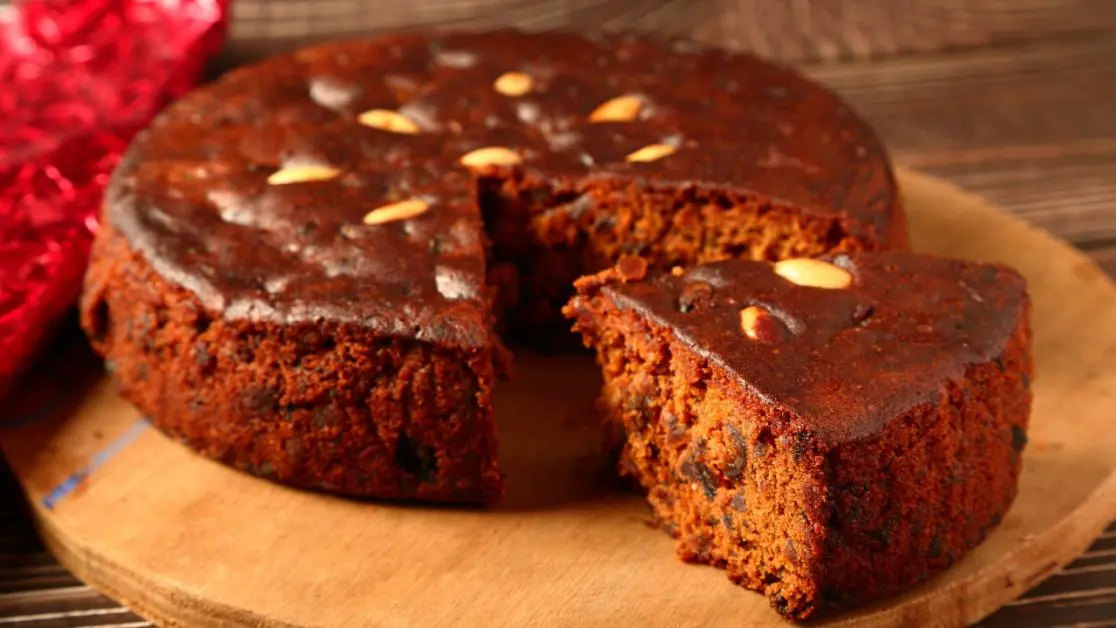
You do not need extra ingredients. Just intention.
Light hydration before reheating
Before reheating, lightly brush the cut side with one of these:
- Orange juice
- Apple juice
- Sugar syrup
- Warm milk
Do not soak.
Think of it as insurance, not rescue.
Covering beats temperature
Even placing an inverted plate over a slice traps enough steam to protect texture.
Most reheating success comes from what you block, not what you add.
What consistently ruins plum cake
Some habits sound logical. They are not.
High power microwaving
Fast energy excites water molecules too aggressively. Moisture escapes before heat distributes.
Reheating the whole loaf
The centre stays cold. The edges overcook. Slice first. Always.
Skipping rest time
Immediate cutting releases steam that was meant to stay inside.
Heat needs time to settle.
Why appliance control matters more than people think
In real homes, reheating happens late at night, early morning, or between work calls.
People want reliability.
Modern microwaves are no longer blunt tools. Features like preset power levels, uniform cavity heating, and compact turntable design allow better control during sensitive tasks like reheating dense cakes.
That is where models such as the Haier Vogue Solo Microwave series quietly fit into daily routines. Not because they promise miracles, but because they reduce mistakes.
Good appliances do not rush you.
They slow you down just enough.
Plum cake as a lesson in restraint
Plum cake teaches something deeper than baking.
Good outcomes often come from gentle systems.
Too much heat ruins what only needs warmth.
Too much force breaks what needs time.
The same logic applies in kitchens, homes, and routines.
Quick decision guide
Best for one slice after dinner
Microwave with medium power and steam
Best for family tea time
Stove steaming
Best for festive hosting
Low temperature oven with foil
One rule to remember
Moisture first. Heat second.
A thought worth keeping
Reheating is not about making food new again.
It is about respecting what already exists.
Plum cake has already done its job.
Your role is to not undo it.
That mindset makes food better.
And life is easier.