
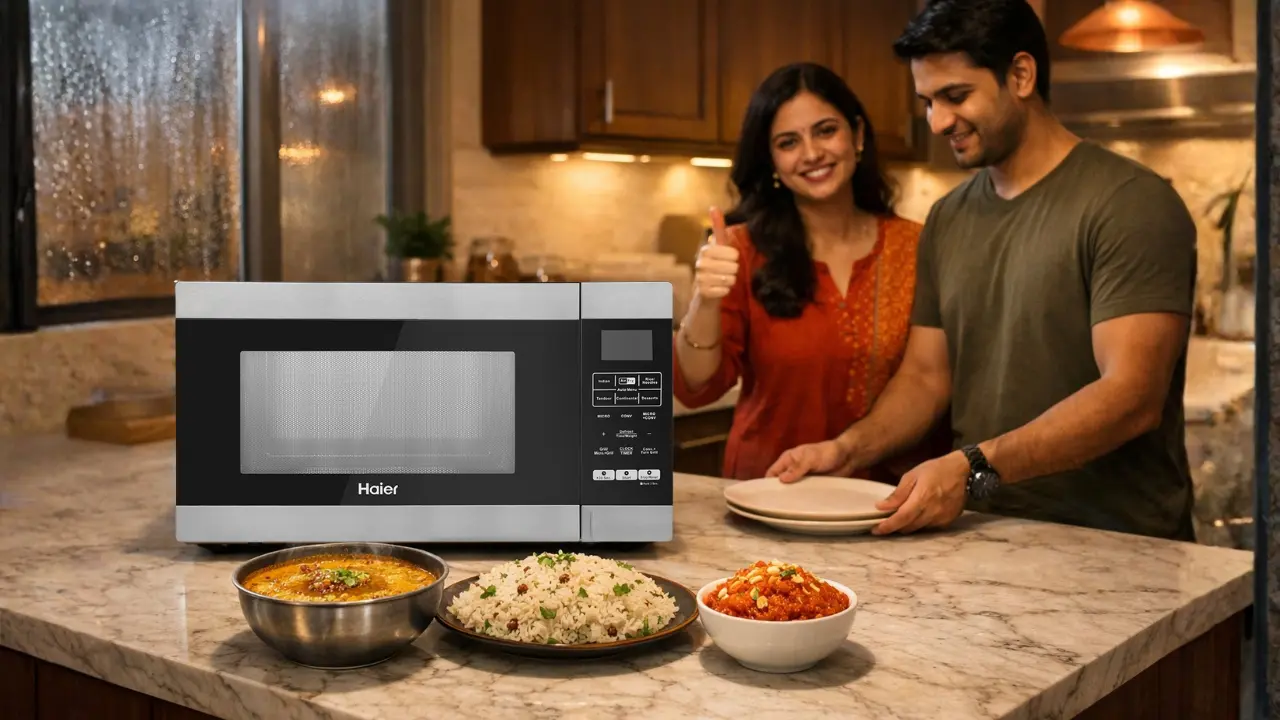

Reheating leftovers safely in March humidity means storing food correctly, reheating it to the right temperature, and using appliances that heat evenly.
As Indian weather shifts from winter to early summer, rising moisture and warmth create ideal conditions for bacterial growth. Safe reheating protects both taste and health.
Food safety is rarely dramatic.
But it quietly shapes daily life in Indian homes.
Especially in March.
Why does March humidity change how leftovers behave?
March sits between two seasons.
Winter habits remain. Summer conditions begin.
And the kitchen notices first.
Lunch cooked at 1 pm often becomes dinner at 8 pm. Extra dal sits in the fridge. Half a paneer curry waits in a steel bowl. Yesterday’s rajma promises an easy lunch tomorrow.
Leftovers are not laziness.
They are systems of efficiency.
Yet humidity changes the rules.
According to food safety guidelines referenced by organizations like the World Health Organization, bacteria multiply fastest between 5°C and 60°C, often called the “danger zone”. In humid weather, food crosses that zone faster.
In simple words:
Warm air plus moisture equals faster spoilage.
This is why March leftovers behave differently than January leftovers.
The principle is simple.
Weather changes food safety timelines.
The 9:30 PM Dinner Moment Most Homes Recognise
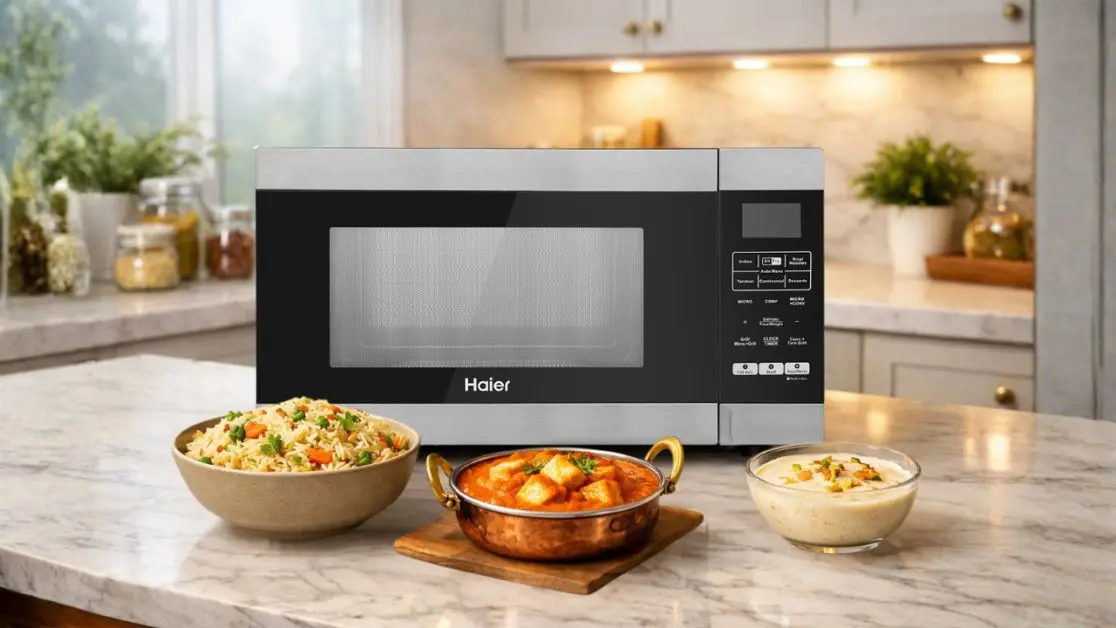
Picture a familiar evening.
Work finishes late. Children finish homework. The kitchen quiets down.
Someone opens the refrigerator.
Inside sits a container of yesterday’s biryani.
Now comes the decision.
Should it be reheated quickly?
Should it be reheated properly?
The difference feels small.
But the consequences are not.
Reheating leftovers safely is not about convenience. It is about temperature control and even heating.
Because bacteria do not disappear when food is cold.
They simply pause.
And reheating is the moment they either disappear or survive.
Three Safe Ways to Reheat Leftovers in Humid Weather
Every kitchen follows one of three reheating systems.
Each comes with benefits and risks.
1. Stovetop Reheating
One option is traditional reheating on a gas stove.
Benefits
- Excellent for curries, dals, and gravies
- Easy temperature control
- Good for large quantities
Costs
- Uneven heating without stirring
- Slower process
- Requires attention
A curry that simmers evenly reaches safe temperatures.
But a curry that only warms on the surface does not.
2. Microwave Reheating
The second option is microwave reheating.
Modern kitchens increasingly prefer it because it is faster and more predictable.
Microwave ovens heat food by causing water molecules to vibrate, producing heat within the dish itself.
This internal heating is what makes reheating efficient.
Benefits
- Rapid reheating
- Even heat distribution when food is stirred
- Lower cooking time
Costs
- Dry spots if uncovered
- Cold pockets if food is not mixed
Modern convection microwaves simplify the process further with automatic cooking menus that adjust time and power combinations for different foods.
This matters because consistency is the real safety system.
3. Oven or Convection Reheating
The third option is convection heating.
This works especially well for breads and dry dishes.
Benefits
- Restores texture in rotis, pizza, and baked foods
- Crisp outer layers
- Even heating
Costs
- Longer reheating time
- Higher energy usage
Convection systems combine heating modes and can cook or reheat faster by combining microwave and grill functions.
In practice, many modern kitchens rotate between all three.
The Hidden Rule of Safe Reheating

Food safety experts often repeat one guideline.
Reheat food to at least 74°C.
But Indian kitchens rarely measure temperature.
Instead they rely on signals.
Here are practical indicators.
| Signal | What It Means |
| Visible steam rising | Food is approaching safe reheating temperature |
| Bubbling gravy | Internal temperature rising above bacteria survival range |
| Even heat across dish | No cold spots remain |
The lesson is simple.
Heat should reach the entire dish, not just the edges.
A bowl that feels warm outside but cool inside is not reheated.
It is only warmed.
Common Leftovers That Need Extra Care in March
Humidity affects different foods differently.
Some dishes tolerate storage well. Others spoil quickly.
Here is a practical guide.
| Food Type | Safe Reheating Tip |
| Rice or biryani | Reheat once only and ensure steaming hot |
| Dal and curries | Bring to full simmer before serving |
| Paneer dishes | Avoid reheating repeatedly |
| Rotis and parathas | Use convection or tawa for texture |
| Cooked vegetables | Reheat thoroughly and consume immediately |
Rice deserves special attention.
Improperly stored rice can allow bacteria such as Bacillus cereus to survive and multiply. This is why reheating rice requires complete heating.
Leftovers are safe only when reheated once.
Repeated heating weakens food safety.
Smart Kitchens Reduce Food Safety Guesswork
Modern homes increasingly rely on appliances that remove decision fatigue.
This is where intelligent kitchen tools quietly change habits.
Take a convection microwave.
A device like the Haier 30L Convection Microwave with In-Built Air Fryer (HIL3001ARSB) integrates multiple heating modes and automated cooking programs that adjust time and power levels automatically.
The benefit is not technology alone.
It is consistent.
Some convection microwave ovens also include hundreds of preset cooking menus that automatically determine power levels and heating duration for different foods.
Consistency removes the guesswork from reheating.
And food safety thrives on consistency.
The Five Habits That Protect Leftovers in Humid Weather
Food safety rarely depends on a single decision.
It depends on small habits repeated daily.
Here are five habits that matter most.
1. Cool food before storing
Hot food should cool for 20 to 30 minutes before refrigeration.
Storing steaming containers traps condensation.
Moisture encourages bacteria.
2. Use shallow containers
Food cools faster when spread in shallow containers.
Deep bowls hold heat longer.
Heat retention increases spoilage risk.
3. Refrigerate within two hours
Food left outside longer than two hours enters the danger zone.
Humidity accelerates that process.
4. Reheat only once
Every reheating cycle increases microbial risk.
Cooked food should ideally be reheated once.
Then consumed.
5. Heat evenly
Cold pockets are the enemy.
Stir. Rotate. Rest.
Simple actions ensure uniform heating.
A Small Kitchen Truth Most Homes Discover

The refrigerator stores food.
But the microwave decides whether leftovers remain safe.
Because reheating is the final checkpoint.
That final step matters.
In many Indian kitchens, convection microwaves now serve multiple roles: reheating, baking, grilling, and quick cooking. Some models even include features such as deodorizing systems that remove vapors and odors after cooking, keeping the appliance hygienic for repeated use.
Clean appliances support safe food.
Clean systems support safe habits.
Why This Matters More Than It Seems
Leftovers are not simply yesterday’s food.
They represent planning.
Time saved.
Food not wasted.
Household food management plays a role in reducing that waste.
Safe reheating keeps that system working.
It preserves nutrition.
It prevents illness.
And it allows kitchens to operate efficiently.
The principle is surprisingly simple.
Food safety is not about fear. It is about rhythm.
Store well.
Reheat properly.
Eat confidently.
The Bigger Lesson Hidden in a Bowl of Leftovers
Every kitchen eventually learns this.
Technology does not replace habits.
It strengthens them.
A well organised refrigerator encourages better storage.
A reliable microwave encourages safer reheating.
A thoughtful kitchen reduces daily friction.
And when small systems work quietly in the background, everyday life feels easier.
That is the invisible architecture of modern homes.
Not dramatic.
Just dependable.
One reheated meal at a time.
Frequently Asked Questions
I cooked dal at lunch and want to eat it again at night. Is it still safe to reheat?
Yes, if the dal was refrigerated within about two hours after cooking and stored in a sealed container. Reheat it until it comes to a full simmer with visible steam before eating.
I found yesterday’s biryani in the fridge at 9:30 PM. Should I reheat it or just cook something fresh?
You can safely reheat it once if it has been refrigerated properly. Make sure the biryani becomes steaming hot throughout, not just warm on top.
I forgot to refrigerate my curry for three hours in March humidity. Is it still okay to reheat?
It’s safer to discard it. In warm and humid weather, bacteria grow quickly after two hours at room temperature.
I left my rice outside overnight by mistake. Can I just microwave it and eat it?
No. Rice left out overnight can grow bacteria like Bacillus cereus, which reheating may not completely eliminate.
I stored hot food directly in the fridge. Did I make a mistake?
It’s better to let food cool for 20–30 minutes first. Placing very hot food in the fridge can trap condensation and affect both food quality and fridge temperature.
Is microwave reheating actually safe for leftovers?
Yes. Microwaves heat food by exciting water molecules, which warms the food internally. Just stir the food halfway to avoid cold spots.
I reheated my curry quickly but it was warm outside and cool inside. Is that unsafe?
Yes. Uneven heating can allow bacteria to survive. The food should be hot all the way through.
Should I reheat dal on the stove or in the microwave?
Both are safe if done properly.
Stovetop: great for curries and dals because you can simmer evenly.
Microwave: faster but requires stirring.