

Reliable cooling with lower electricity bills comes from appliances designed to manage energy intelligently.
Modern refrigerators combine efficient compressors, higher energy ratings, and stabilizer-free operation to maintain steady cooling while consuming less power.
The result is simple: fresh food, consistent performance, and electricity bills that stay predictable.
Cooling is not just about temperature.
It is about control.
Walk into any Indian kitchen in May. The fan spins faster. The afternoon sun presses against the windows. Bottles of water move in and out of the fridge every hour.
Cooling systems work harder in moments like these.
And that is where the real question begins.
How do you keep food fresh without watching your electricity bill climb every month?
The Hidden System Behind Reliable Cooling
Cooling feels invisible. We open the fridge. Cold air greets us. Vegetables stay crisp. Ice forms in the freezer.
But behind that quiet convenience sits a small ecosystem of engineering.
Three forces shape how efficiently a refrigerator cools:
- Compressor efficiency
- Energy rating
- Voltage stability
If even one of these fails, the system struggles.
Think of it like traffic in a city.
If the roads are smooth, traffic flows. If signals fail, chaos begins. Refrigerators work the same way. Efficient systems maintain balance. Inefficient systems burn electricity to compensate.
Reliable cooling is simply a well-designed system working quietly in the background.
Why Electricity Bills Rise When Cooling Systems Work Harder
Indian homes place unique pressure on appliances.
High summer temperatures. Frequent door openings. Large cookware. Occasional voltage fluctuations.
Each of these adds stress to cooling systems.
Consider a simple comparison.
| Household Situation | Cooling Impact | Electricity Outcome |
| High outside temperatures | Compressor runs longer | Higher power consumption |
| Frequent door openings | Cold air escapes | Cooling cycles increase |
| Voltage fluctuations | Compressor strain | Reduced efficiency |
| Poor insulation | Temperature leaks | Continuous cooling effort |
According to the International Energy Agency, refrigeration accounts for nearly 10–15 percent of household electricity consumption worldwide.
That means every efficiency improvement matters.
Not just for bills.
But for the longevity of the appliance itself.
The Role of Energy Ratings in Lower Electricity Bills
Walk into any appliance store and you will see a small label with stars.
Five stars. Three stars. Sometimes two.
These ratings tell a simple story.
Higher stars mean lower electricity consumption.
Energy-efficient refrigerators consume significantly less power annually compared to lower-rated models. For example, a high-efficiency refrigerator with advanced compressors may consume around 120 units annually, while lower-rated models consume far more electricity over the same period.
That difference may look small on paper.
But over ten years?
It becomes substantial.
| Energy Rating | Approximate Annual Energy Use | Long-Term Impact |
| 5 Star | Lowest electricity consumption | Maximum savings |
| 3 Star | Moderate energy efficiency | Balanced performance |
| 2 Star | Higher consumption | Higher lifetime cost |
This reveals a quiet truth about appliances.
The cheapest purchase is rarely the cheapest ownership.
Energy efficiency changes that equation.
Cooling That Adapts to Real Indian Homes
Not every household behaves the same.
A family of five opens the refrigerator dozens of times a day. A working professional living alone opens it far less.
Design matters here.
Modern refrigerators now adapt to the rhythm of real homes.
Take the example of the Haier 190 L 5 Star Marine Hilton Single Door Refrigerator (HRD-2105PMHA-P). It integrates features designed for everyday reliability.
These include:
- 1 HIT: 1 Hour Icing Technology, allowing rapid ice formation when demand increases
- Stabilizer-free operation, protecting the refrigerator during voltage fluctuations
- Automatic connection with home inverter, ensuring cooling continues during power cuts
- Heavy-duty compressor for efficient cooling and long life
These systems are not flashy.
They are practical.
And practical design often produces the biggest energy savings.
What Reliable Cooling Actually Looks Like at Home
Reliable cooling rarely announces itself.
It shows up in small everyday moments.
A cold bottle of water after returning from work.
Fresh coriander leaves that last through the week.
Ice cubes ready when guests arrive unexpectedly.
Reliability is simply consistency over time.
Here is what that consistency often depends on.
The Three Foundations of Reliable Cooling
- Efficient compressors
A heavy-duty compressor stabilizes cooling cycles. Instead of constantly restarting, it maintains balanced operation. - Voltage protection
Stabilizer-free systems protect appliances from power fluctuations common in many Indian areas. - Continuous cooling during power cuts
Refrigerators that automatically connect with home inverters maintain freshness even during outages.
These features sound technical.
But their outcome is simple.
Food stays fresh longer. Electricity consumption stays controlled.
A Small Technology That Makes a Big Difference: Fast Ice
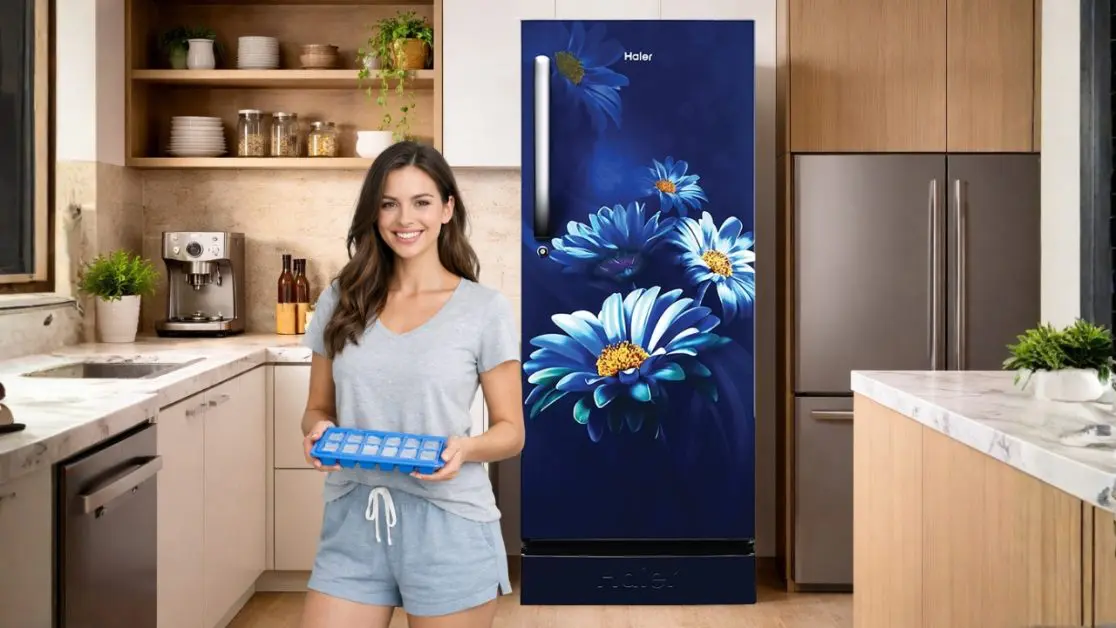
Sometimes the smallest innovations solve the most common problems.
Think about summer afternoons.
Guests arrive unexpectedly. Lemon water needs ice. The freezer tray sits empty.
Waiting hours for ice feels unnecessary.
Technologies such as 1 Hour Icing accelerate freezing, producing ice quickly without forcing the refrigerator to overwork its compressor.
The insight here is subtle.
Efficiency often comes from speed.
Faster freezing means shorter compressor cycles. Shorter cycles mean lower energy usage.
Design That Matches Indian Kitchen Realities
Indian kitchens carry their own design logic.
Large steel utensils. Heavy vegetable baskets. Tall water bottles.
Appliances must adapt.
That is why durable shelves matter.
Modern refrigerators increasingly include toughened glass shelves designed to support heavier cookware and containers.
These shelves do more than hold weight.
They maintain airflow.
Good airflow maintains uniform cooling. Uniform cooling reduces the workload on compressors.
Another example of invisible systems quietly improving efficiency.
Smart Cooling Is Also About Hygiene
Cooling preserves food. Hygiene protects health.
Inside a refrigerator, moisture and food particles create conditions for bacteria growth.
That is why modern refrigerators often include removable anti-bacterial gaskets that prevent dust and bacteria buildup while remaining easy to clean.
This matters more than many people realize.
A clean cooling environment keeps food fresh longer. When food lasts longer, households waste less.
Lower food waste is another hidden form of savings.
Reliable Cooling During Power Cuts
In many Indian cities and towns, power supply still fluctuates.
Short outages happen.
Without proper design, refrigerators shut down. Cooling drops quickly.
But refrigerators that connect automatically to home inverters maintain operation during these interruptions.
This simple feature changes household experience dramatically.
Instead of worrying about food spoilage, families continue their day normally.
True reliability shows up when systems fail elsewhere.
The Cost-Benefit Equation of Efficient Cooling
Every appliance decision involves trade-offs.
Here is how reliable cooling typically balances them.
| Factor | Short-Term Cost | Long-Term Benefit |
| Higher star rating | Slightly higher purchase price | Lower electricity bills |
| Advanced compressors | Better engineering investment | Longer appliance lifespan |
| Stabilizer-free operation | Built-in protection | No stabilizer purchase needed |
| Inverter compatibility | Design upgrade | Cooling continues during outages |
Viewed this way, efficient cooling becomes less about technology.
And more about decision quality.
Choose systems that work quietly for years.
What Modern Indian Households Actually Want
People rarely say, “I want an energy-efficient refrigerator.”
They say something simpler.
They want:
- Lower electricity bills
- Food that stays fresh longer
- Appliances that survive voltage fluctuations
- Cooling that continues during power cuts
- A refrigerator that fits their kitchen rhythm
These are not technical desires.
They are lifestyle expectations.
And when appliances deliver them quietly, trust grows.
The Broader Pattern Behind Energy-Efficient Homes
Step back for a moment.
Cooling is just one part of a larger pattern.
Indian homes are gradually shifting toward smarter appliances.
Air conditioners that adjust temperature automatically. Washing machines that sense fabric load. Refrigerators that optimize cooling cycles.
These changes reveal a bigger system.
Efficiency is becoming the new comfort.
People still want convenience.
But they also want responsibility. Lower electricity use. Lower environmental impact. Lower monthly expenses.
Reliable cooling with lower electricity bills sits right at that intersection.
The Insight That Matters Most
In the end, reliable cooling is not about cold air.
It is about predictability.
When appliances manage energy intelligently, households stop worrying about bills. Food stays fresh longer. Kitchens feel organized.
Small systems working quietly.
Day after day.
That is the real promise of modern appliances.
And it explains why the best appliances rarely demand attention.
They simply make life feel a little more sorted.
A little more effortless.
Exactly the way a good home should.
Frequently Asked Questions
I feel overwhelmed choosing between 3-star and 5-star refrigerators. Is the higher rating really worth it?
Yes, if you plan to use the fridge for years. A 5-star refrigerator consumes significantly less electricity annually. While the upfront cost is higher, the long-term savings on electricity bills often outweigh it within a few years.
I’m on a budget. Should I prioritize price or energy efficiency?
If your usage is daily (which it usually is), prioritize efficiency. A cheaper fridge may cost more over time due to higher electricity consumption.
I live alone. Do I really need a high-efficiency refrigerator?
Even with lower usage, efficient models reduce baseline energy consumption. Smaller, energy-efficient fridges are ideal for single users.
Do I really need stabilizer-free operation?
In many Indian households, yes. Voltage fluctuations are common, and built-in protection prevents damage and inefficiency.
My area has frequent power cuts. Will my fridge stop working completely?
Not if it supports inverter connection. Such refrigerators continue cooling during outages.
What does a “heavy-duty compressor” actually do for me?
It ensures consistent cooling even under stress (heat, frequent use), reducing energy spikes and improving lifespan.
Are smart features just marketing, or do they really save electricity?
Practical features (like adaptive cooling, inverter compatibility, efficient compressors) directly reduce power consumption and improve reliability.