


You remove pet hair in one wash by combining three things that work together: a good pre-wash shake, the right wash settings, and a machine designed to lift hair instead of letting it cling.
Pet owners who follow this system see cleaner clothes, fewer repeats, and fresher fabrics.
Why pet hair becomes a daily puzzle in Indian homes
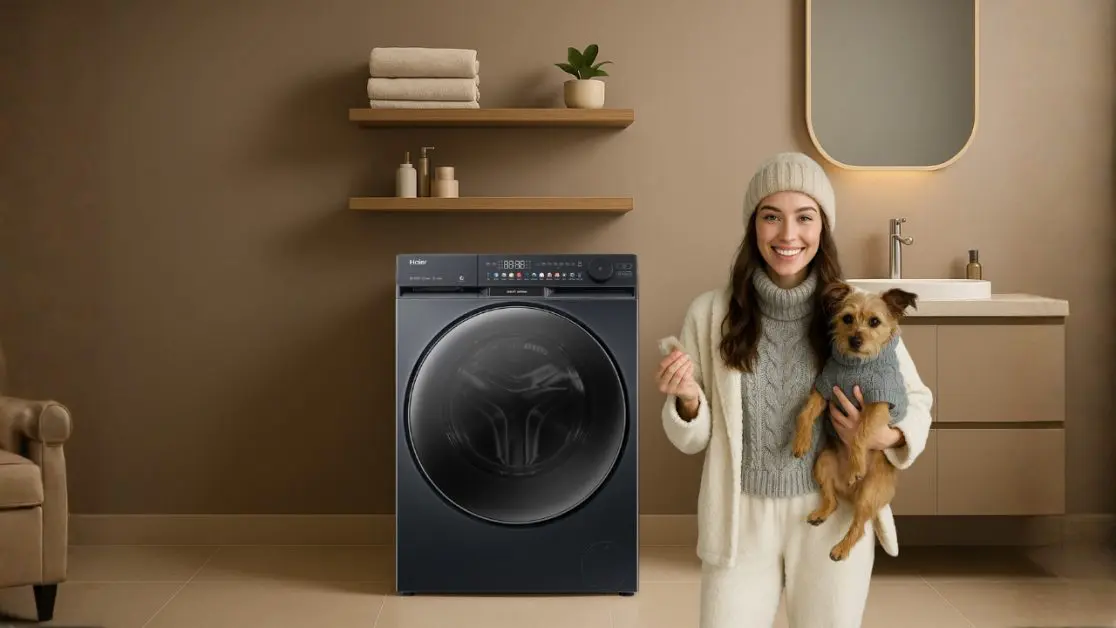
If you live with a dog or a cat, you already know the truth.
Pet hair is not a problem.
It is the season.
It shows up everywhere. On your black T-shirt right before a meeting. Inside your bedsheet even though your pet never climbed the bed. And somehow on the towel you washed two days ago.
The surprising part is not that hair spreads. It is that it holds on.
Fabric experts say that hair grips wet fibres strongly because moisture works like glue. Once it settles during the wash, it stays.
So the real question is simple.
How do you break this invisible cycle?
Start with the hidden system: what makes pet hair cling
Before techniques, a quick principle. Hair sticks because of three forces.
1. Static electricity
Dry environments create static charge that traps hair on clothes.
2. Moisture bonding
Explains that human and pet hair become softer when wet, flattening into fabric and refusing to lift.
3. Fabric texture
Terry towels, fleece hoodies, and cotton bedsheets trap hair deeper.
Once you see the system, the solution becomes clearer.
You are not removing hair.
You are removing the conditions that help it stay.
The pre-wash ritual that decides everything
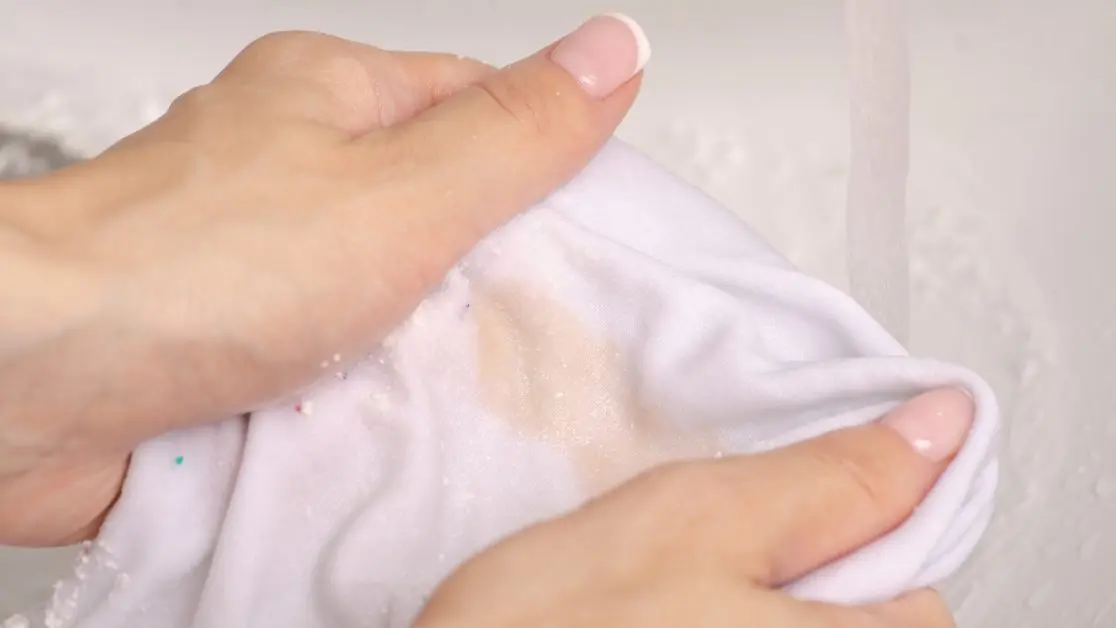
Pet hair removal begins before the wash starts.
Think of it like sweeping the floor before mopping.
The sequence matters.
1. Shake and separate
Hard truth. Mixing clothes with bedsheets or gym shorts with your pet’s blanket increases hair transfer.
Separate into three piles:
- Light clothes
- Heavy fabrics
- Pet-related items
A 15 second shake outdoors removes up to 20 percent of loose hair according to the National Cleaning Institute.
2. Use lint rollers where it counts
One option is a classic lint roller.
The second option is a reusable silicone brush.
The third is a simple rubber glove that grips hair instantly.
The benefit is the same.
You reduce the burden on the washing machine.
3. Add a fabric softener sheet in the drum
This reduces static.
Less static means less hair sticking again.
This small step alone improves results dramatically.
What actually happens inside the drum
A front-load washing machine moves clothes in a tumbling motion instead of soaking them in water.
This motion loosens hair more effectively because gravity does half the work.
This is why many pet parents say that shifting from top-load to front-load changed how clean their laundry felt.
Haier’s newer front-load models use a pillow-shaped drum pattern that lifts fabric gently while pushing out hair. The Direct Motion motor keeps the movement precise, which means clothes rub just enough to release hair but not enough to damage fibres.
It is a quiet kind of engineering.
You do not see it, but you feel the effect in the wash.
The wash settings that remove pet hair instead of redistributing it
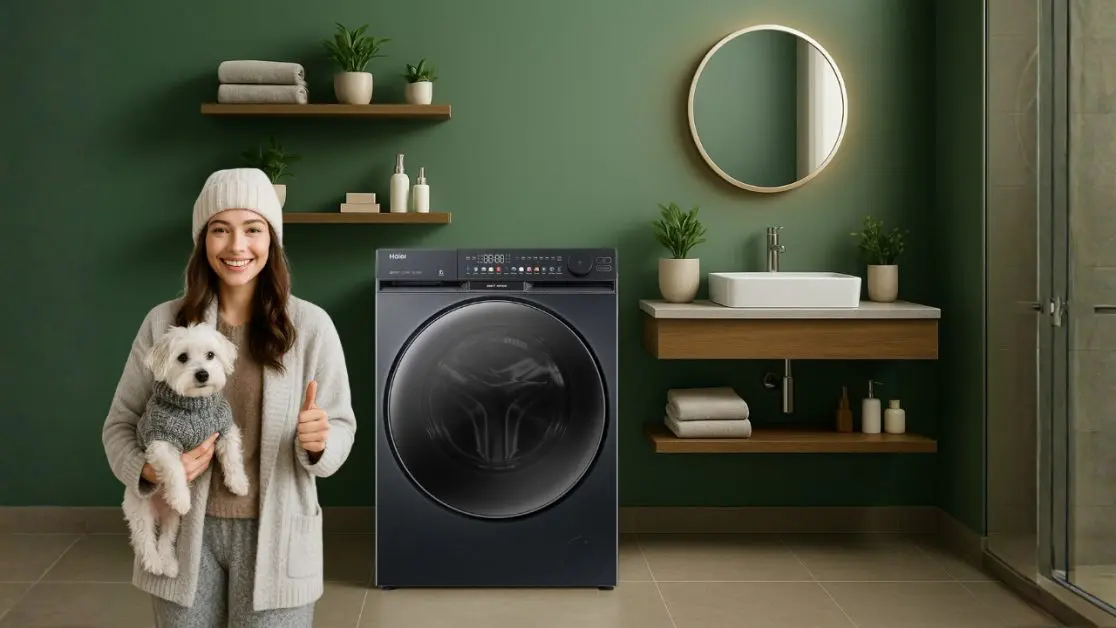
Here is where most people struggle.
They rely on higher water pressure when they really need the right combination of three elements.
1. Warm water instead of cold
Warm water relaxes fibres so hair lifts easily.
Cold water traps hair deeper.
2. Extra rinse
This is the simplest upgrade.
One rinse removes dirt.
The extra rinse removes everything left behind.
3. Higher spin speeds
This shakes free the hair that loosened during the wash.
A 1200 to 1400 RPM spin works best for most fabrics.
If you want pet hair gone in one wash, use a system
Here are three systematic options that work.
One option: The minimalist routine
For daily laundry.
- Shake before wash
- Warm wash
- Extra rinse
- Air dry instead of machine dry
Cost efficient.
Low effort.
Great for people with low to moderate pet shedding.
The second option: The deep-clean routine
For heavy shedding days.
- Add a vinegar rinse in the fabric dispenser
- Use a pet-hair specific detergent
- Higher spin speeds
- Clean the machine filter after the cycle
This is what removes deep-set hair from towels and bedding.
The third option: The smart-appliance upgrade
This one is for households where shedding is continuous.
Haier’s latest front-load models (like the 10 kg and 12 kg Direct Motion Series) support:
- One Touch AI Wash that identifies dirt and fabric texture
- Extra Rinse and Hygiene cycles
- Pillow drum pattern for gentle but effective agitation
- 1400 RPM spin speeds
The benefit is simple.
You do not need to know which setting solves pet hair.
The machine knows.
Not a push to buy.
Just a note on how design quietly reduces labour.
The drying stage that most people underestimate
If hair remains after washing, the drying routine decides the final result.
Air drying outdoors
Natural airflow lifts off loose hair so it does not settle back.
Machine drying with dryer balls
Dryer balls create separation between fabrics and reduce hair reattaching.
Shaking between drying stages
A small but powerful habit.
Shake once when half dry.
Shake once when fully dry.
It is the laundry version of hitting refresh.
A small table to make decisions faster
| Problem | What causes it | What fixes it |
| Hair sticking after wash | Static + moisture bonding | Warm water + softener sheet + extra rinse |
| Hair on towels | Deep weave fabrics | Higher spin + vinegar rinse |
| Hair trapped inside machine | Pet blankets washed often | Clean filter + regular self-clean cycle |
| Hair spreading across clothes | Mixed loads | Separate laundry types |
Useful. Simple. Actionable.
Why real pet homes need practical, not perfect solutions
No home with a pet is spotless.
And that is not the goal.
The goal is to create a routine where laundry does not feel like a battle.
Where one wash feels like enough.
Where a machine quietly handles the invisible work so the visible parts of life feel lighter.
Haier’s new front-load machines fit into this rhythm naturally because they use engineering to solve small domestic frictions.
Not in dramatic ways.
In everyday ways that matter more.
The bigger insight beneath all this
Pet hair teaches a strange lesson.
If you remove the source, the problem returns.
If you remove the system that holds it, the problem disappears.
Laundry works the same way.
Life too.
Clean the system and the rest follows.