
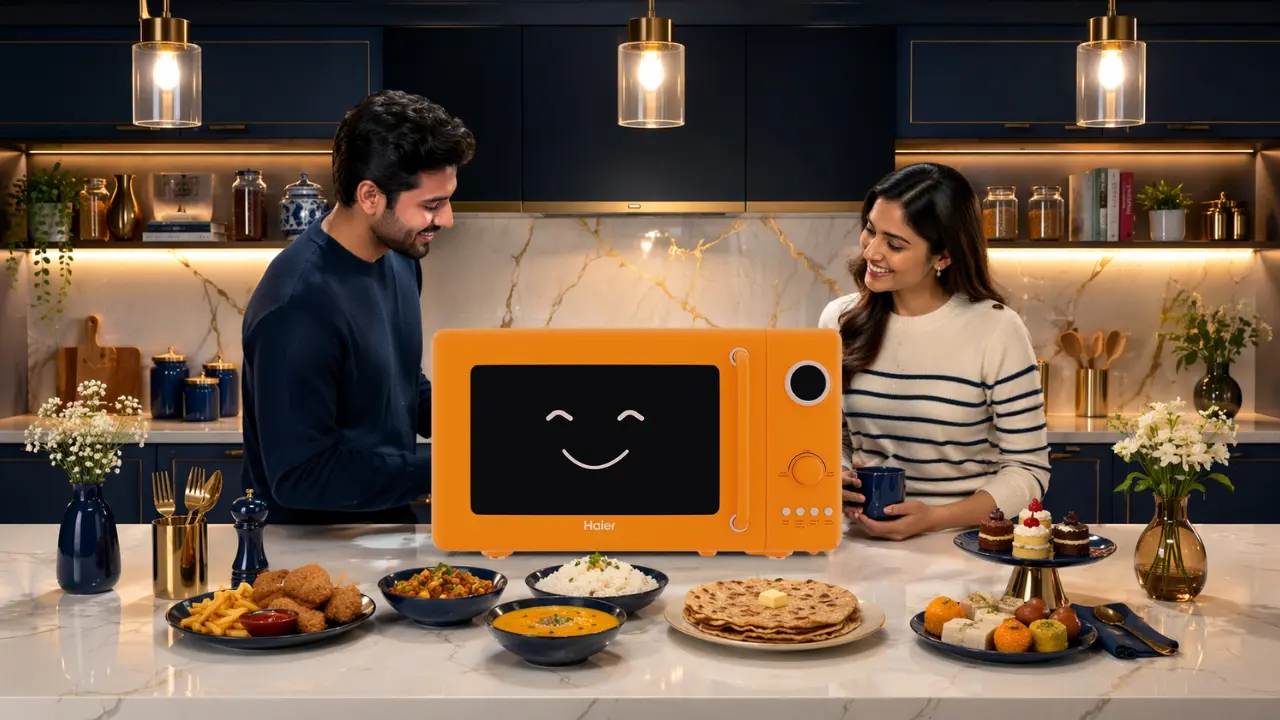

Modern kitchen appliance design is no longer about looks alone.
It shapes how efficiently we cook, how we feel in our spaces, and how seamlessly technology fits into daily life.
Good design reduces effort, saves time, and turns everyday routines into smoother, more intuitive experiences.
Why design quietly runs your kitchen?
Walk into a typical Indian kitchen at 8:15 PM.
Pressure cooker whistles. Someone is chopping onions. A microwave hums in the background. A phone rings. A child asks for help with homework.
Nothing is calm.
Now notice something else.
The appliances that feel “easy” to use rarely get noticed. The ones that don’t work well stand out immediately.
That is the role of design.
Good design disappears. Bad design interrupts.
This is not about aesthetics alone. It is about systems.
- How quickly you can cook
- How easily you can clean
- How naturally technology fits into your routine
Studies show over 70 percent of buyers now prioritise usability and design alongside performance. In urban Indian homes, this matters even more.
Design is no longer decoration.
It is infrastructure.
What does “design” really mean in kitchen appliances?
Most people reduce design to colour or shape.
That is only the surface.
Real design in modern kitchen appliances works across three layers:
1. Functional design
This is about ease.
- Can you start cooking instantly?
- Are controls intuitive?
- Can anyone in the family use it without instructions?
Take the Haier Vogue 20L Lemon Solo Microwave Oven with Auto Cook Menus and Digital Display (HIL20V1MYPD).
It offers instant start, jog dial control, and pre-set cooking programs that automatically adjust time and power .
That is not a feature list.
That is decision-making removed.
Insight: The best appliance is the one that asks the least from you.
2. Spatial design
This is about fit.
Urban kitchens today are compact.
- Average sizes range between 60 to 100 sq ft
- Storage competes with movement space
- Every inch matters
Appliances must respect that constraint.
A 20-litre microwave strikes a balance between usability and footprint without crowding the counter .
Design here is about discipline.
3. Emotional design
This is about feeling.
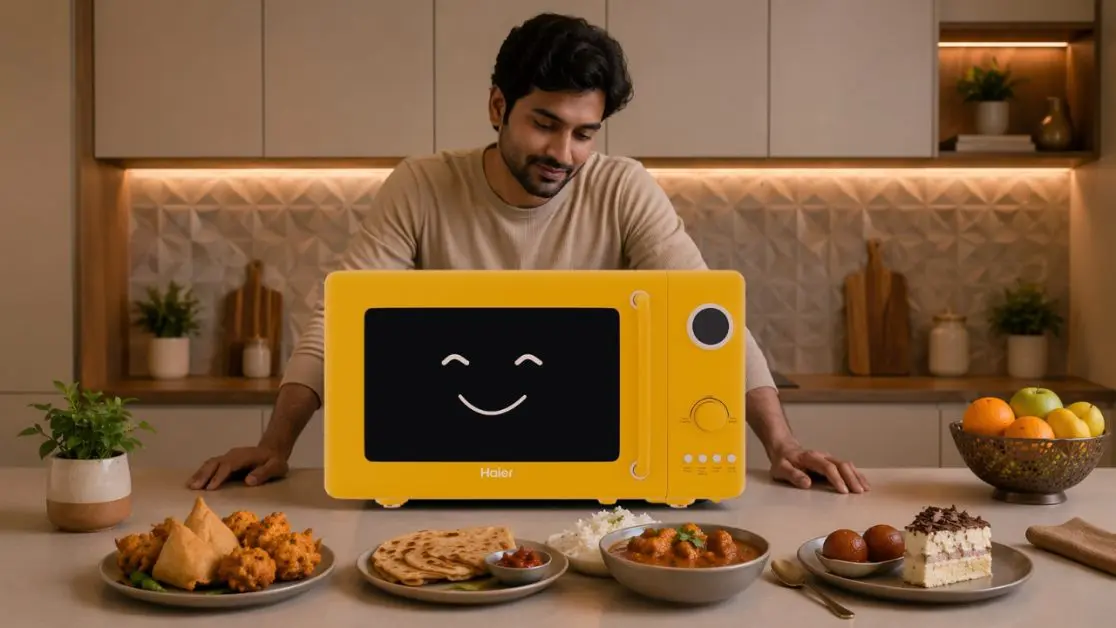
A smiley glass door. A bold yellow finish. A playful presence.
These are not cosmetic choices.
They change how the kitchen feels.
The Haier Vogue 20L Lemon Solo Microwave Oven with Auto Cook Menus and Digital Display (HIL20V1MYPD) uses a smiley glass door and vibrant colour to bring warmth into everyday cooking .
And in Indian homes, kitchens are emotional spaces.
They hold routines. Celebration. Comfort.
Insight: Design is not just seen. It is felt.
Why design matters more in modern Indian homes

The kitchen has evolved.
Faster than most people realise.
1. Time compression
Cooking time is shrinking.
- Urban households spend up to 30 percent* less time cooking on weekdays
- Reheating and quick meals dominate
Design must reduce friction.
Auto cook menus and digital controls make decisions faster.
2. Space constraints
Homes are getting smaller.
- Compact apartments dominate metro cities
- Kitchens often double as storage zones
Design must become efficient.
Compact appliances are not optional anymore.
3. Lifestyle expression
Kitchens are now visible spaces.
- Open layouts
- Social media influence
- Hosting culture
Appliances now contribute to identity.
A bold appliance colour becomes a design choice.
Not just a purchase.
The three design choices every kitchen makes
Every home follows one of these paths.
Option 1: Purely functional appliances
Benefits:
- Economical
- Reliable
Costs:
- No aesthetic integration
- Feels mechanical over time
Option 2: Design-first appliances
Benefits:
- Visually striking
- Enhances kitchen appearance
Costs:
- May compromise usability
- Not always practical
Option 3: Balanced design systems
This is where modern appliances like the Haier Vogue 20L Lemon Solo Microwave Oven with Auto Cook Menus and Digital Display (HIL20V1MYPD) operate.
Benefits:
- Functional and aesthetic balance
- Intuitive usage
- Fits real-life routines
Costs:
- Slightly higher investment
Insight: The right design aligns beauty with behaviour.
How small design details create big differences
Consider the control panel.
Traditional
- Multiple buttons
- Confusing interface
- Trial and error
Modern
- Jog dial control
- Minimal inputs
- Clear feedback
This reduces thinking.
You act instead of figuring things out.
Design impact breakdown
| Design Element | What It Changes | Real-Life Impact |
| Auto cook menus | Decision-making | Faster cooking |
| Digital display | Clarity | Fewer errors |
| Compact size | Space | Cleaner kitchen |
| Colour options | Visual appeal | Personalisation |
| Instant start | Time | Less waiting |
Why colour is becoming a design language
Earlier, appliances came in black or white.
Now they speak in colour.
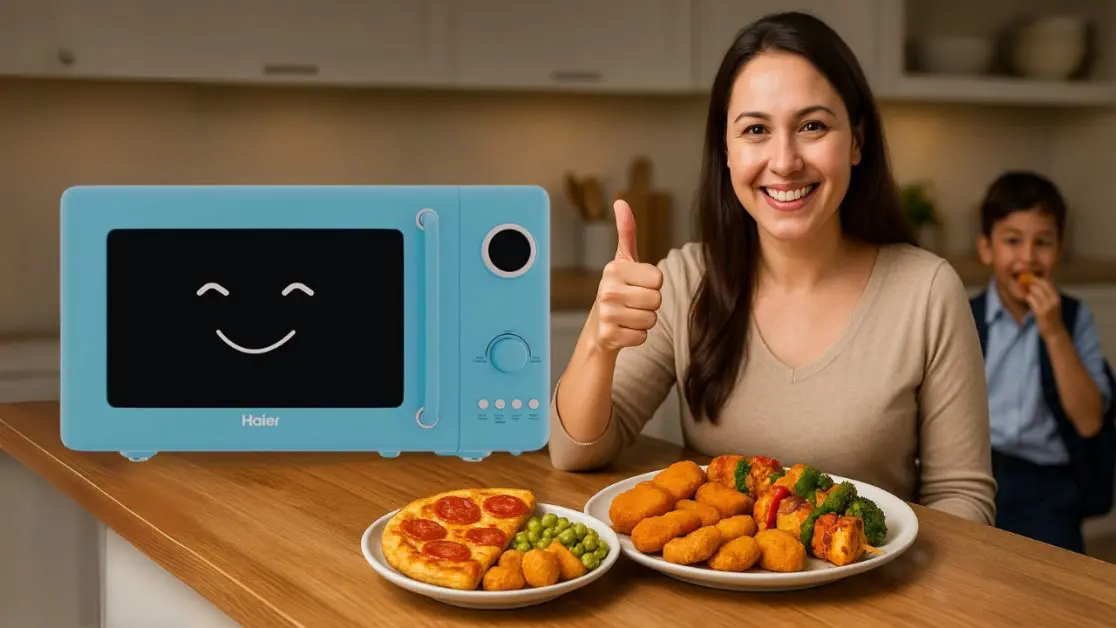
The Haier Vogue series offers:
- Lemon Yellow
- Peach Orange
- Blueberry Blue
Across models like:
- Haier Vogue 20L Lemon Solo Microwave Oven with Auto Cook Menus and Digital Display (HIL20V1MYPD)
- Haier Vogue 20L Peach Solo Microwave Oven with Auto Cook Menus and Digital Display (HIL20V1MOPD)
- Haier Vogue 20L Blueberry Solo Microwave Oven with Auto Cook Menus and Digital Display (HIL20V1MBPD)
This is not just variety.
It is identity.
A colourful appliance does three things:
- Breaks monotony
- Reflects personality
- Makes the kitchen feel alive
Insight: When appliances look better, kitchens feel better.
The hidden system: design reduces mental effort
Cooking is not just physical.
It is cognitive.
Every step involves decisions.
- Time
- Power
- Sequence
Design removes that burden.
Auto cook menus automate time and power settings .
Digital displays guide you.
Jog dial controls simplify actions.
You think less.
You do more.
Insight: Good design removes decisions you never wanted to make.
What should you actually look for in appliance design?
Ask better questions.
A simple framework
- Does it reduce effort?
- Does it fit your space?
- Does it match your lifestyle?
- Does it improve how your kitchen feels?
If the answer is yes to all four, design is working.
Design is becoming the new technology
Technology alone is not enough anymore.
Without design, it creates friction.
And friction is what people remember.
The bigger shift: kitchens are becoming systems
Kitchens are evolving into connected environments.
- Appliances align with usage patterns
- Spaces are optimised for flow
- Experiences are designed end-to-end
Design is what connects everything.
The final insight
People think they buy appliances.
They don’t.
They buy time. Ease. Comfort.
Design delivers all three.
Quietly.
Without asking for attention.
The best kitchen is not the one with the most features.
It is the one that feels effortless to live in.
Frequently Asked Questions
Why do I feel so mentally tired just deciding cooking time and settings every day?
Because cooking isn’t just physical it’s cognitive. Appliances with auto cook menus (like the Haier Vogue 20L Lemon Solo Microwave Oven) remove repetitive decisions by automating time and power, reducing mental load.
How can I make my kitchen feel less overwhelming during busy evenings?
Choose appliances with intuitive controls (jog dials, instant start). They reduce friction so you act instead of thinking through every step.
I just want something that works without instructions. What should I look for?
Look for functional design, simple interfaces, preset programs, and clear displays. The less you have to “learn,” the better the design.
Why do some appliances feel stressful even if they have more features?
Because more features without thoughtful design increase decision fatigue. Good design simplifies, not complicates.
My kitchen is small. How do I choose appliances that won’t clutter it?
Focus on spatial design, compact capacity (like 20L microwaves) that balance usability and footprint.
Do colours in appliances really matter, or is it just marketing?
They matter emotionally. Colours like Lemon Yellow or Blueberry Blue (seen in the Haier Vogue 20L Blueberry Solo Microwave Oven) can make kitchens feel more lively and personal.
I have an open kitchen. How do appliances affect how my home looks?
Appliances are now part of your visual identity. Design-forward options enhance aesthetics while maintaining usability.
What’s better, stylish appliances or practical ones?
The best choice is a balanced appliance that looks good and works effortlessly.