
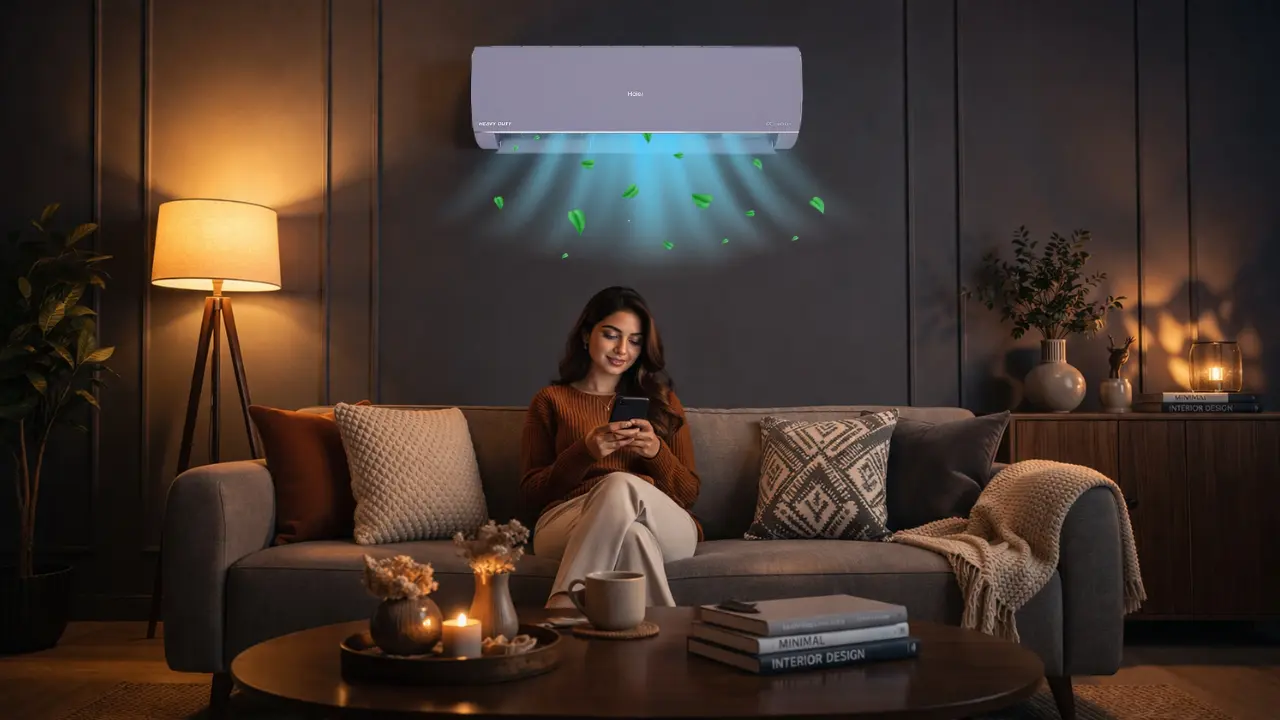

Room cooling lowers the temperature of the entire space. Target cooling focuses airflow directly on the people inside that space.
Both methods fight the same enemy. Heat.
But they solve the problem in different ways.
Room cooling treats the room as technology.
Target cooling treats the person as technology.
Once you see this difference, modern cooling technology begins to make sense.
A summer evening every Indian home recognizes.
It is a humid June evening.
Someone switches on the air conditioner. The ceiling fan slows down. The room slowly begins to cool.
Five minutes pass.
The person sitting directly under the AC starts feeling comfortable. Someone on the far corner of the sofa still feels warm. Another person grabs a shawl.
Same room. Three different comfort levels.
Why?
Because cooling a room does not always mean cooling people at the same speed.
This small everyday moment reveals the technology behind cooling.
What Is Room Cooling?
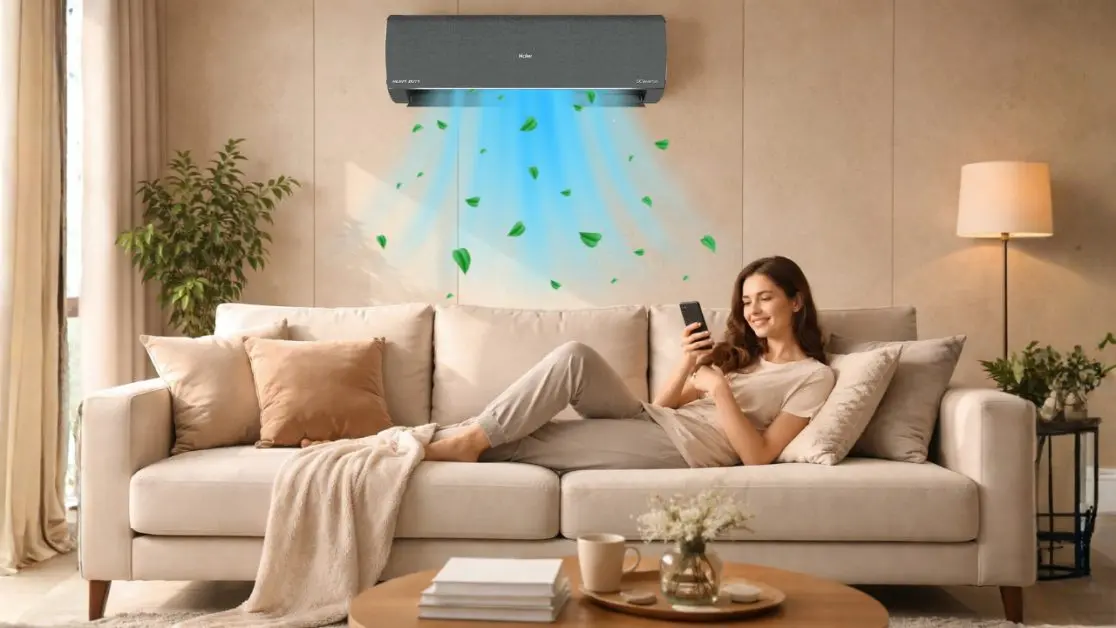
Room cooling focuses on lowering the temperature of the entire room
Traditional air conditioners operate with a straightforward principle.
Cool the air. Circulate it across the room. Gradually lower the temperature everywhere.
The walls are cool. Furniture cools. The air stabilizes.
Only after the room reaches the desired temperature do people feel comfortable.
Here is what that technology looks like in practice.
| Aspect | Room Cooling |
| Cooling focus | Entire room |
| Cooling speed | Gradual |
| Energy use | Higher during partial use |
| Comfort distribution | Uneven initially |
| Ideal spaces | Living rooms, bedrooms, family areas |
Room cooling works well when multiple people share the same space.
But it also means the air conditioner must cool every corner of the room, even when only one person needs comfort.
This is where the idea of Target cooling enters.
What Is Target Cooling?
Target cooling directs airflow toward the person instead of the entire room
Target cooling takes a different approach.
Instead of waiting for the entire room to cool, the airflow focuses on the area where someone is sitting, working, or resting.
The goal is simple.
Deliver comfort faster.
Imagine sitting on the sofa after a long day. Instead of waiting for the entire room temperature to drop, cool air reaches your spot first.
The experience feels immediate.
| Aspect | Target Cooling |
| Cooling focus | Specific area or person |
| Cooling speed | Faster |
| Energy efficiency | Higher |
| Comfort distribution | Direct airflow |
| Ideal spaces | Study desks, sofas, reading corners |
Think of it like lighting.
Room cooling is like turning on the ceiling light.
Target cooling is like switching on a reading lamp.
Both illuminate the room. But one focuses exactly where it matters.
Why Modern Homes Need Both
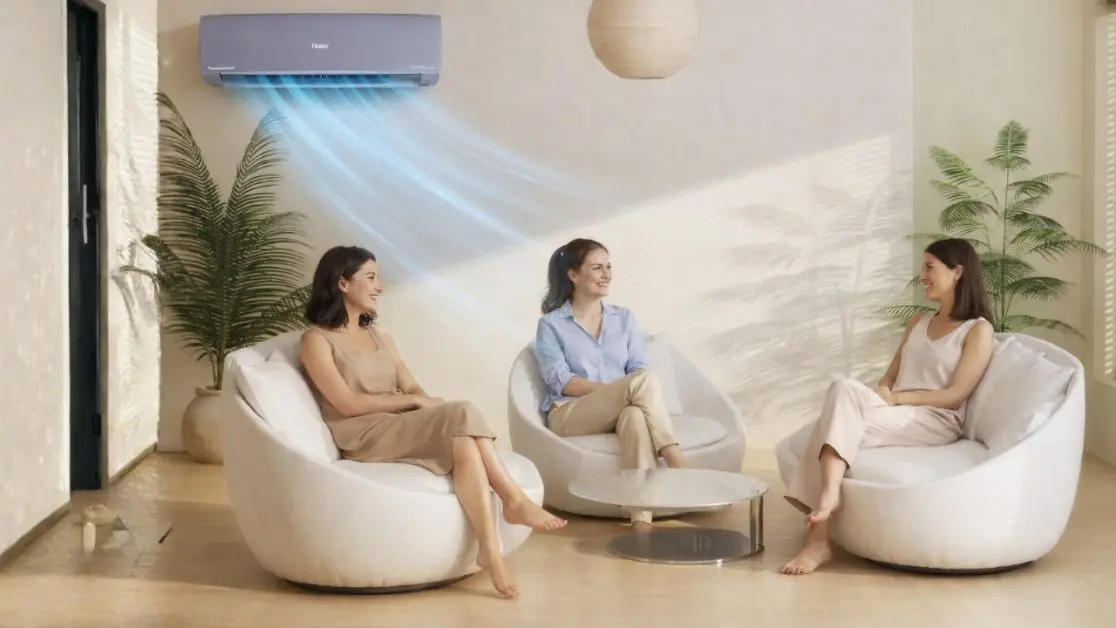
Today’s homes do not use rooms the way they once did
Living rooms double as offices. Bedrooms become workspaces. Dining tables turn into homework stations.
A single room may host multiple activities throughout the day.
Cooling every corner constantly is not always necessary.
Consider three familiar situations.
1. Late night work calls
You are working on your laptop in one corner of the room.
Room cooling lowers temperature everywhere.
Target cooling delivers airflow directly where you sit.
Comfort arrives faster.
2. Weekend cricket match
Family members sit in different parts of the living room watching IPL.
Room cooling slowly balances the temperature.
Smart airflow can focus cooling toward occupied areas.
3. Afternoon rest
You stretch out on the sofa after lunch.
Direct airflow toward that area creates comfort quickly without overcooling the entire room.
This is why cooling technology is evolving.
How Smart AC Technology Combines Both Approaches
Modern air conditioners combine room cooling with Target cooling
Advanced cooling technology now relies on artificial intelligence to manage airflow, temperature, and energy consumption.
For example, Haier’s AI Atmox integrates multiple intelligent cooling technologies.
The technology analyzes environmental conditions and adapts cooling automatically to maintain comfort and efficiency.
Instead of relying only on manual settings, the technology studies temperature patterns, room conditions, and user behavior to optimize cooling performance.
Several features illustrate how room cooling and Target cooling can work together.
AI Pre Cooling
AI can anticipate when someone is about to arrive and begin cooling the room beforehand.
Using smart prediction models, the technology prepares the room so that comfort is ready when you enter.
AI Target Cooling
Target cooling directs airflow toward the exact area where cooling is required.
Instead of distributing cold air randomly across the room, the AC focuses airflow to deliver comfort faster and reduce energy waste.
AI Eco Cooling
Smart eco modes automatically adjust cooling capacity based on the temperature difference between the room and the set temperature.
This allows the technology to maintain comfort while reducing electricity consumption.
Room Cooling vs Target Cooling: A Clear Comparison
| Feature | Room Cooling | Target Cooling |
| Cooling approach | Entire room | Focused zones |
| Comfort speed | Slower | Faster |
| Energy efficiency | Moderate | Higher |
| Ideal usage | Families and shared rooms | Individual comfort |
| Technology trend | Traditional cooling | AI-driven airflow |
Both approaches have value.
The real shift lies in combining them intelligently.
Energy Efficiency Is Becoming a Priority
Cooling demand in India continues to grow rapidly.
According to the International Energy Agency, India may add hundreds of millions of air conditioners by 2050.
Energy efficiency will play a critical role.
Cooling an entire room when only one person needs comfort increases energy use unnecessarily.
Target cooling helps address this by focusing airflow where it matters most.
Some modern technologies also include electricity monitoring tools that track consumption patterns and display energy usage in easy visual formats.
When people understand how cooling affects energy use, they begin to make smarter choices.
Three Cooling Choices Modern Homes Can Consider
Cooling today is not a single fixed method. It is a set of approaches.
1. Traditional Room Cooling
Best for family spaces where several people share the room.
Benefits
- Even temperature across the room
- Familiar operation
- Suitable for living rooms and bedrooms
Trade off
- Slower comfort response
- Higher energy consumption when the room is partially used
2. Target Cooling
Best for focused activities.
Benefits
- Faster comfort
- Lower energy usage
- Efficient airflow distribution
Trade off
- Entire room may take longer to cool
3. Intelligent Hybrid Cooling
The most advanced approach combines both technologies.
Benefits
- Adaptive airflow
- Energy optimization
Trade off
- Requires advanced cooling technology
The Real Insight Behind Cooling
Cooling is not only about temperature.
Cooling is about how quickly comfort reaches people.
A room may be cold, yet someone sitting far from the airflow still feels warm.
Target cooling solves this gap.
It aligns cooling technology with human behavior.
What the Future of Cooling Looks Like
Indian homes are evolving quickly.
Apartments are compact. Electricity awareness is growing. Work and leisure often happen in the same room.
Cooling technology is responding.
Room cooling creates the baseline comfort.
Target cooling refines that comfort.
Together they build a smarter cooling experience.
The sofa during IPL nights.
The desk during late evening work.
The bed during a humid summer night.
The future of cooling is not simply colder rooms.
The future of cooling is intelligent comfort.
Comfort that adapts.
Comfort that anticipates.
Comfort that understands exactly where you are.
Frequently Asked Questions
I only use one corner of my room most of the time. Do I really need full room cooling?
Not always. If you spend most of your time in a fixed spot (like a desk or sofa), Target cooling can deliver faster comfort while using less energy. Room cooling becomes more useful when multiple people occupy different areas.
I feel like my AC takes too long to make me comfortable. Am I using the wrong type of cooling?
Possibly. Traditional room cooling lowers temperature gradually across the space. Target cooling would direct airflow toward you immediately, reducing that waiting time.
Should I prioritize energy savings or comfort speed? I can’t decide.
You don’t have to choose anymore. Hybrid systems (like those from Haier India) combine both, giving fast comfort where needed while optimizing energy use.
My family prefers different temperatures. How do I keep everyone happy?
Room cooling alone struggles here. Systems with targeted airflow or zoned cooling help customize comfort for different people in the same room.
What does AI cooling actually do in real life, not just marketing?
It studies your usage patterns, room temperature, and environment to automatically adjust airflow and cooling intensity for better comfort and efficiency.
I heard about AI Target Cooling. How is that different from normal AC airflow?
Instead of spreading cool air randomly, it directs airflow exactly where you are sitting, giving faster comfort with less energy waste.
Can my AC really predict when I’ll come home?
Some systems use patterns (like daily schedules) to pre-cool rooms so they’re comfortable when you arrive.
What is eco cooling, and will I actually notice a difference?
Eco cooling adjusts power usage based on temperature gaps. You may not notice a comfort drop, but you’ll likely see lower electricity consumption.