
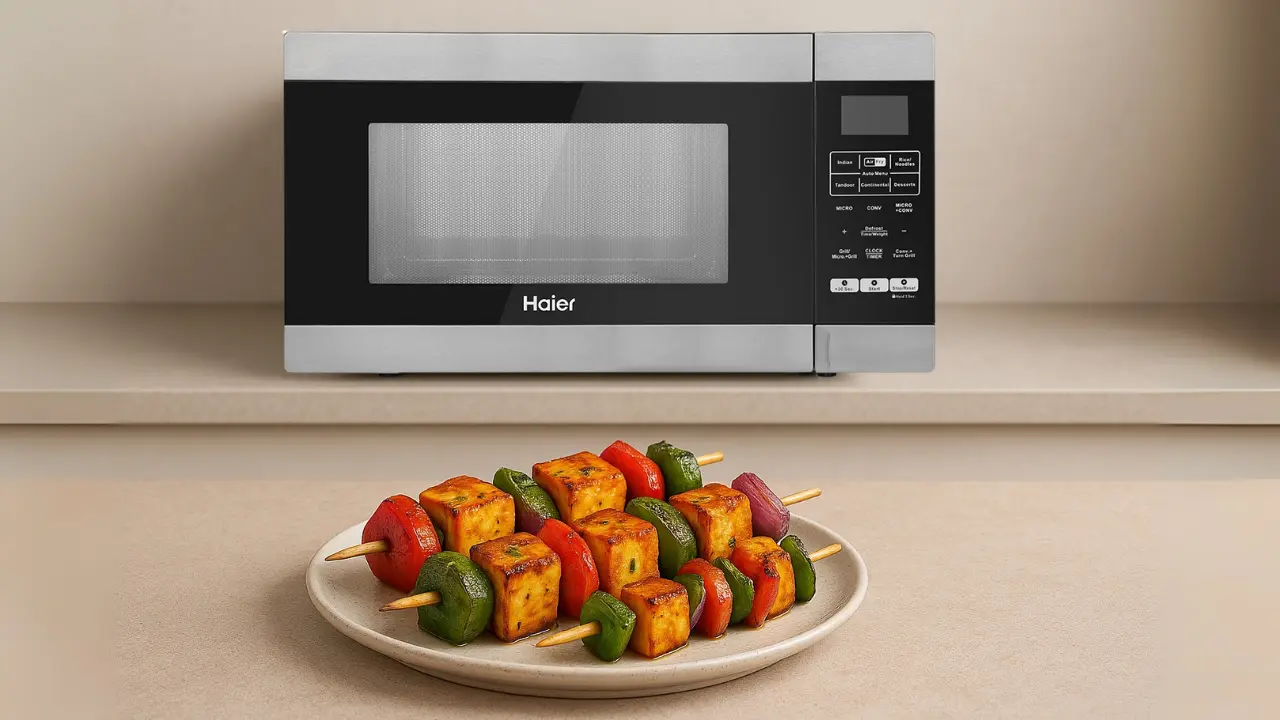

Start with the craving, not the appliance
It starts with a craving.
For tandoori paneer that tastes like it came from a smoky roadside dhaba.
For charred chicken legs with crisp skin and juicy insides.
For something slow-roasted, caramelised, and deeply satisfying.
Now zoom out.
You’re in a flat.
No balcony grill. No backyard. No smoke allowed.
The only fire you’re lighting is in your DMs.
So how are urban Indians still getting that roasted, rotisserie finish without open flames or smoke?
Rotisserie microwaves are quietly rewriting what ‘home-cooked BBQ’ even means.
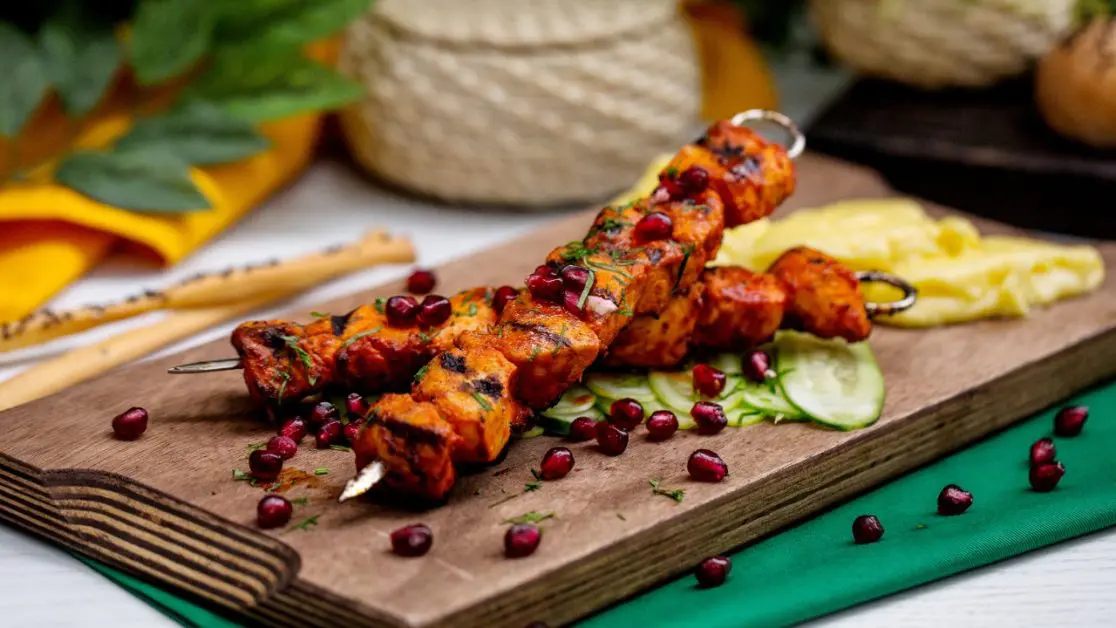
They’re doing what barbecues did.
Just cleaner. Safer. Quicker.
And they’re doing it from the countertop of a 2BHK kitchen.
What does ‘rotisserie’ mean when there’s no fire involved?
We think of rotisserie as skewers spinning over open flames.
But what matters more than the fire is the motion.
In a rotisserie microwave, meat (or veg) rotates automatically, roasting uniformly from all angles.
It’s not grilled. It’s based on design.
This constant rotation means:
- Even cooking
- No dry patches
- That signature outer crispiness with tender insides
Add convection microwave and grill functions to the mix, and you’re roasting at restaurant levels without stepping out.
Why this matters in an Indian flat
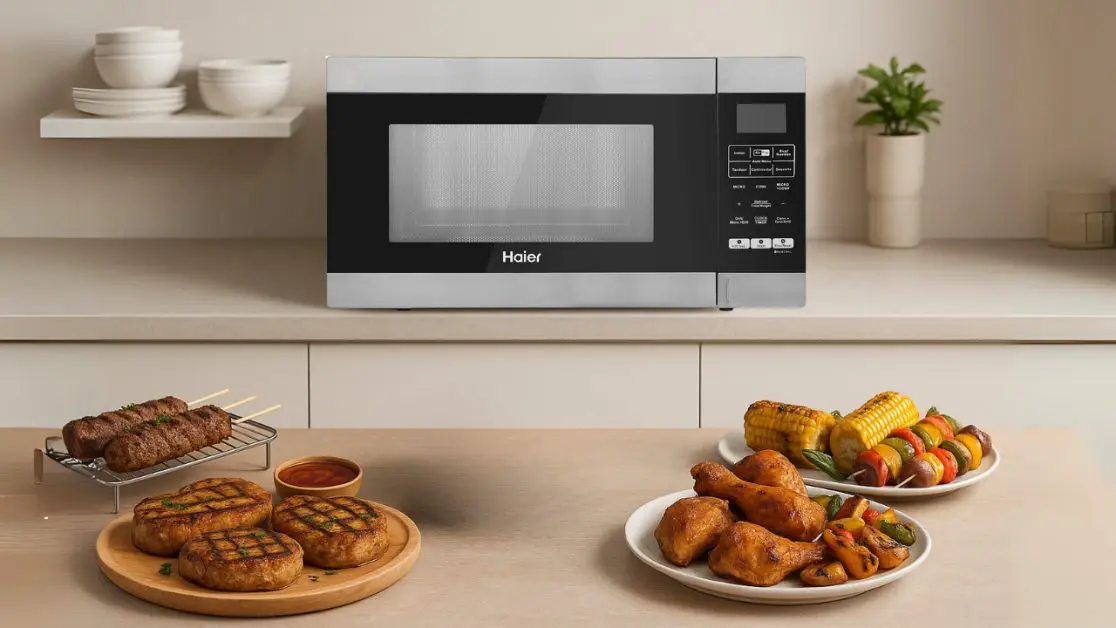
In India, especially in metros, we don’t just cook.
We adapt. Innovate. Hack space and time.
Three reasons why rotisserie microwaves are finding loyal fans in high-rises:
1. Space is non-negotiable
A BBQ setup needs space. A rotisserie microwave fits on your kitchen slab next to your pressure cooker and instant coffee stash.
2. Regulations kill the grill
Most apartment societies don’t allow open flames or smoke-based cooking.
With a microwave? No permissions needed. No alarms triggered.
3. Weather is a mood
Monsoons. Delhi winters. Chennai summers.
Barbecuing outdoors isn’t always fun or possible.
A rotisserie microwave works 365 days, rain or shine.
BBQ taste without BBQ drama
Here’s what gets replaced:
| BBQ Headache | Rotisserie Microwave Solution |
| Smoke all over your kitchen | Sealed heat inside glass + grill cavity |
| Charcoal mess | Digital control, pre-set auto-cook menus |
| Long prep times | Instant heating with uniform results |
| Weather dependency | Indoor setup, zero weather interference |
You’re not giving up flavour.
You’re trading smoke for smart tech.
The taste test: Is it actually as good?
Here’s what users say:
- Tandoori soya tastes almost like highway dhaba fare
- Roast chicken gets crispy skin with no oil
- Even baingan bharta gets that roasted depth without charring it on the gas
- Kids think it’s takeout. Moms know it’s made in 20 minutes.
You get the crunch, the caramelisation, the bite.
Just without soot in your hair or smoke in your eyes.
Why Gen Z and Indian dads both love it
It’s a rare kitchen tool that speaks to both experimental Gen Zs and desi dads.
But rotisserie microwaves are bridging that gap.
- Gen Z loves them for reels and recipes. Think: paneer tikka, mug cakes, and Insta-friendly plating.
- Dads love them for grilled fish, control panels, and the ability to tell guests: “yeh maine banaya hai.”
This isn’t just a microwave.
It’s a point of pride.
But is it affordable? Or just a fancy gimmick?
Let’s talk about values.
- One-time investment: Starting around ₹9,000–₹15,000
- No recurring charcoal or gas costs
- Multiple uses beyond rotisserie: reheating, baking, defrosting, grilling
It replaces 3 appliances in one.
And earns its keep with every Sunday lunch and midnight craving.
Haier’s take on the trend: Designed for modern India
This isn’t a Western transplant.
Brands like Haier India are building microwaves specifically for Indian kitchens.
- Auto-cook menus for Indian dishes
- Multiple colour options to match your kitchen aesthetic
- Smiley glass doors that make the appliance look like part of your decor not just another machine
And yes rotisserie rods are standard in their convection models.
That means your soya chaap, aloo tikka, and lemon chicken get the rotation they deserve.
No hacks. No adjustments.
Just smart design for Indian homes.
This isn’t about cooking. It’s about reclaiming joy
When people buy a rotisserie microwave, they’re not just buying an appliance.
They’re buying:
- Independence from takeout
- Freedom from space constraints
- Control over what goes into their food
- The ability to host, impress, and experiment
In a culture where food is celebration, conversation, and comfort this matters.
So what’s the bigger picture?
Barbecue isn’t disappearing. It’s evolving.
The grill isn’t going extinct.
But in cities, where balconies are for drying clothes and weekends are for catching up on life, rotisserie microwaves are the logical upgrade.
They democratise roasted cooking.
No grill required. No occasion needed.
The takeaway: This isn’t a trend. It’s a shift
Rotisserie microwaves aren’t a substitute.
They’re a smarter successor for the way we now live, cook, and host.
You don’t need smoke to serve something fire
Just a bit of rotation.
And a well-designed machine.