
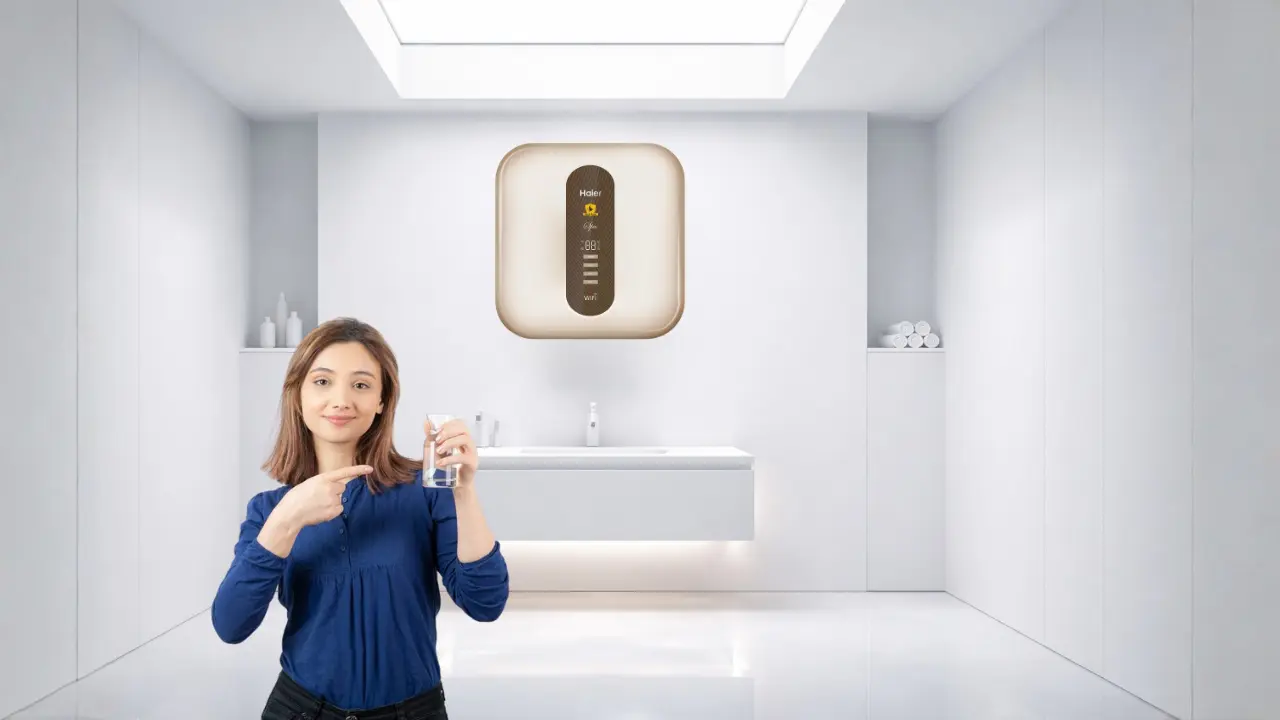

A safer way to enjoy hot water at home means choosing systems that quietly protect your family every single day.
It is about water heaters that manage electricity, temperature, pressure, and hygiene together, without demanding attention. In modern Indian homes, safety is no longer a feature. It is the foundation.
Why does hot water safety deserve a second look?
Hot water is part of muscle memory.
You wake up.
You turn the knob.
Steam rises.
The day begins.
That familiarity is exactly why safety often gets ignored. In many Indian homes, the water heater was chosen years ago, installed once, and never questioned again. But homes have changed. Cities have grown vertical. Electricity loads are heavier. Usage is more frequent.
Old systems were built for slower lives.
New lives need smarter protection.
The risks hiding behind everyday comfort
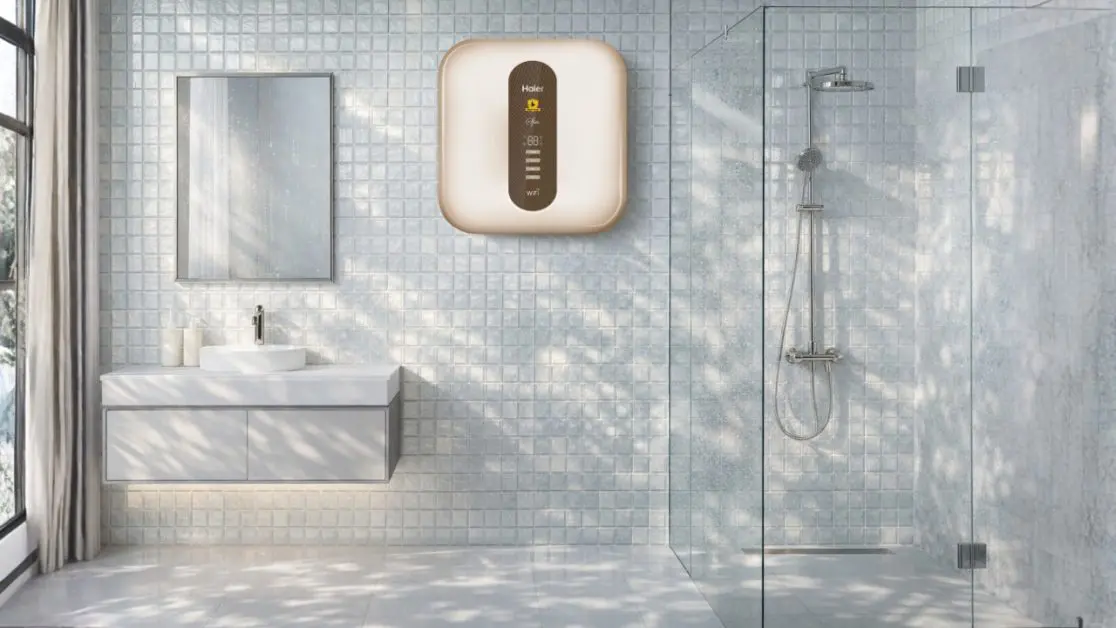
Hot water systems operate at the intersection of electricity, heat, pressure, and water. That combination demands respect.
Electrical exposure
Bathrooms are wet environments. Even minor insulation failure can become dangerous during voltage fluctuations.
Overheating
Uncontrolled temperature rise can cause scalding, especially for children and older family members.
High water pressure
Apartments in high-rise buildings experience pressure spikes that basic tanks cannot handle long-term.
Water hygiene
Stored water that sits at lukewarm temperatures can encourage bacterial growth.
These risks do not announce themselves. They wait quietly.
Modern safety works as a layered system
The safest appliances today are designed with one assumption.
Something will eventually fail.
So systems are built in layers.
If one protection misses a signal, another takes over. This thinking mirrors aviation, medical equipment, and modern infrastructure. It is not about avoiding failure. It is about designing for it.
This approach defines new-generation water heaters like the Haier 15L Square AQUALAD PRO 5 Star Water Heater and the Haier 25L Square AQUALAD PRO 5 Star Water Heater, where multiple safety mechanisms work together instead of relying on a single cutoff .
Electrical safety that responds faster than humans
Voltage instability is a daily reality in many Indian cities.
Shock-proof technology reduces voltage instantly during leakage, keeping users safe even if something goes wrong internally. The system reacts before the body can.
In practical terms, this means the bathroom remains safe even during sudden power fluctuations or insulation wear.
Insight:
Good safety does not wait for perfect conditions. It assumes the opposite.
Temperature control that plans for failure
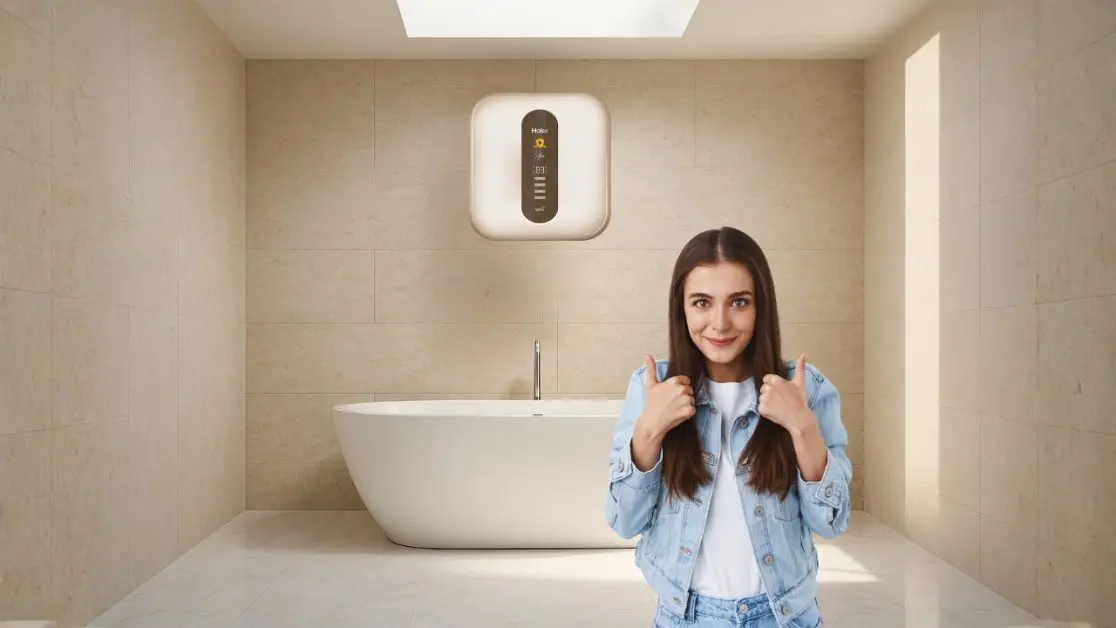
Most people assume a thermostat is enough. It is not.
Modern water heaters use dual thermal protection. One sensor monitors normal heating. A second independent sensor acts as backup if the first fails.
If temperatures rise beyond safe limits, the system shuts down automatically.
This matters because overheating is not always caused by misuse. Sometimes it comes from aging components or prolonged use during peak hours. Dual protection ensures safety does not depend on a single part working forever.
Pressure safety for vertical living
Indian homes are going up, not out.
High-rise buildings create variable water pressure, especially during morning rush hours. Tanks not designed for this environment face internal stress that shortens lifespan and increases failure risk.
An 8-bar rated working pressure, as found in both the Haier 15L Square AQUALAD PRO 5 Star Water Heater and the Haier 25L Square AQUALAD PRO 5 Star Water Heater, ensures stable performance even in tall buildings .
Pressure rating is not about extremes.
It is about consistency over years.
Clean water is also a safety issue
Safety is not only about avoiding accidents. It is also about what enters the body.
Stored hot water can become a breeding ground for bacteria if temperatures fluctuate.
Modern systems counter this with Bacteria Proof Systems, which periodically heat water to higher temperatures that inhibit microbial growth.
This keeps stored water fresher without requiring daily manual intervention.
The result is simple.
Hot water that is safer to use.
Why energy efficiency improves safety
Energy efficiency is often discussed as a cost benefit. It is also a safety advantage.
Poor insulation forces frequent reheating. Frequent reheating increases thermal stress on internal components. Over time, that stress leads to failure.
High-quality PUF insulation retains heat longer, reduces reheating cycles, and keeps internal temperatures stable. Stability reduces risk.
This is why 5-star rated water heaters are safer over the long term, not just cheaper to run.
Aphorism:
A system under less strain fails less often.
Choosing the right capacity is part of staying safe
Capacity decisions are often rushed. They should not be.
An undersized tank overworks its heating element.
An oversized tank wastes energy and space.
Here is a practical framework that fits most Indian households:
| Household Type | Ideal Capacity |
| Single professional | 10 to 15L |
| Couple | 15 to 25L |
| Family with children | 25L or more |
Correct sizing ensures balanced usage, longer component life, and consistent performance.
Design that improves stability, not just looks
Square-profile water heaters are more than a style choice.
They distribute weight evenly across the wall.
They reduce internal pressure points.
They improve structural stability.
Design decisions like these are easy to overlook because they work silently. But over years of use, they make a difference.
Good design is not decorative.
It is preventative.
What defines a genuinely safe water heater today
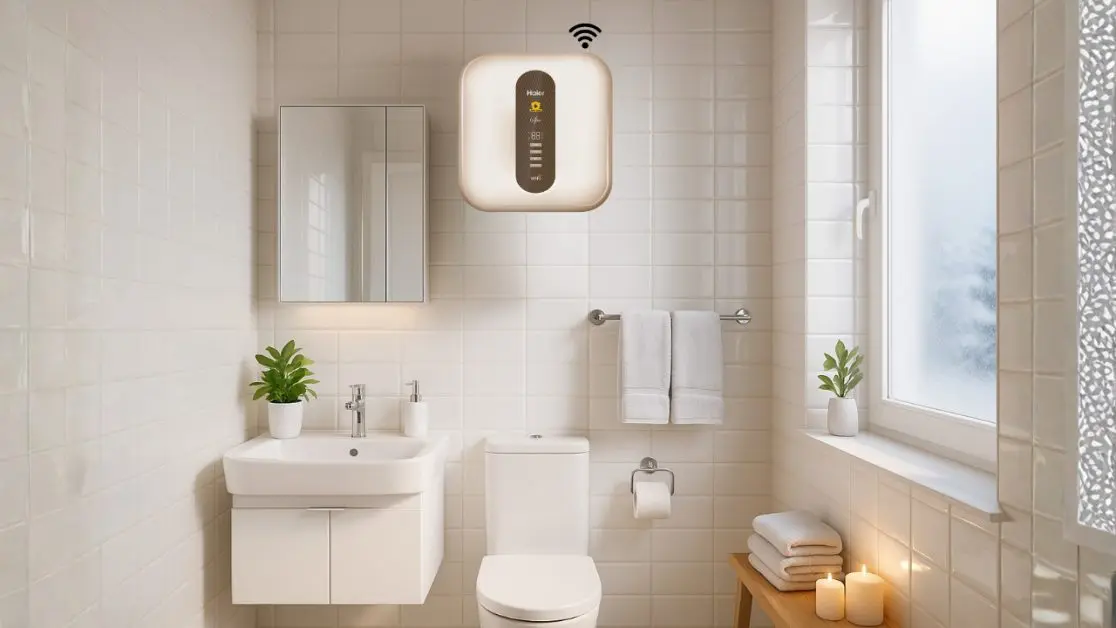
Before installing any water heater, think in systems, not specifications.
Look for:
- Shock-proof electrical protection
- Dual thermal cut-off
- High pressure rating for apartments
- Bacteria protection cycles
- Strong insulation for heat retention
- Long tank warranty as a durability signal
When these elements work together, safety stops being something you think about.
Safety shows up in everyday moments
True safety is rarely dramatic.
It is the child who can use the bathroom without supervision.
The elderly parent who bathes confidently.
The working professional who never worries about switching something off.
These moments do not feel like technology.
They feel like peace of mind.
Why modern Indian homes are rethinking hot water
Bathrooms are no longer utility spaces. They are places of reset.
As homes become smarter, appliances are expected to adapt, protect, and simplify life quietly.
Water heaters like the 15L Square AQUALAD PRO 5 Star Water Heater and 25L Square AQUALAD PRO 5 Star Water Heater reflect this shift by blending safety engineering with everyday usability.
Hot water should never come with anxiety attached.
The real upgrade is invisible
A safer way to enjoy hot water is not about fear-based decisions. It is about trust.
Trust that the system protects you even when you are rushing.
Trust that design accounts for real Indian conditions.
Trust that comfort and safety can coexist without effort.
That is how modern homes move forward.
Quietly.
Thoughtfully.
Frequently Asked Questions
Why should I worry about hot water safety at home?
Because water heaters combine electricity, heat, pressure, and water. If any one of these fails, it can cause electrical shock, scalding, tank damage, or hygiene issues, often without warning.
Can a water heater cause electric shock in the bathroom?
Yes. Bathrooms are wet spaces, and voltage fluctuations are common in India. Without shock-proof protection, internal insulation failure or leakage can become dangerous.
Is a thermostat enough to prevent overheating?
No. Modern water heaters use dual thermal protection, one thermostat for regular control and a backup cut-off if the first fails. This prevents overheating and scalding.
What happens if water pressure is too high for my geyser?
Over time, excess pressure can weaken the tank, cause leaks, or lead to sudden failure. Proper pressure rating prevents long-term damage.
How do modern water heaters keep stored water clean?
They use bacteria protection systems that periodically heat water to higher temperatures, preventing microbial growth without manual effort.
Does the shape of a water heater really matter?
Yes. Square-profile designs distribute weight evenly, reduce pressure points, and improve wall stability, especially over long-term use.
Why are modern Indian homes rethinking water heaters?
Because bathrooms are no longer just utility spaces. Homes now expect appliances to protect users quietly, adapt to real conditions, and provide peace of mind without constant attention.