
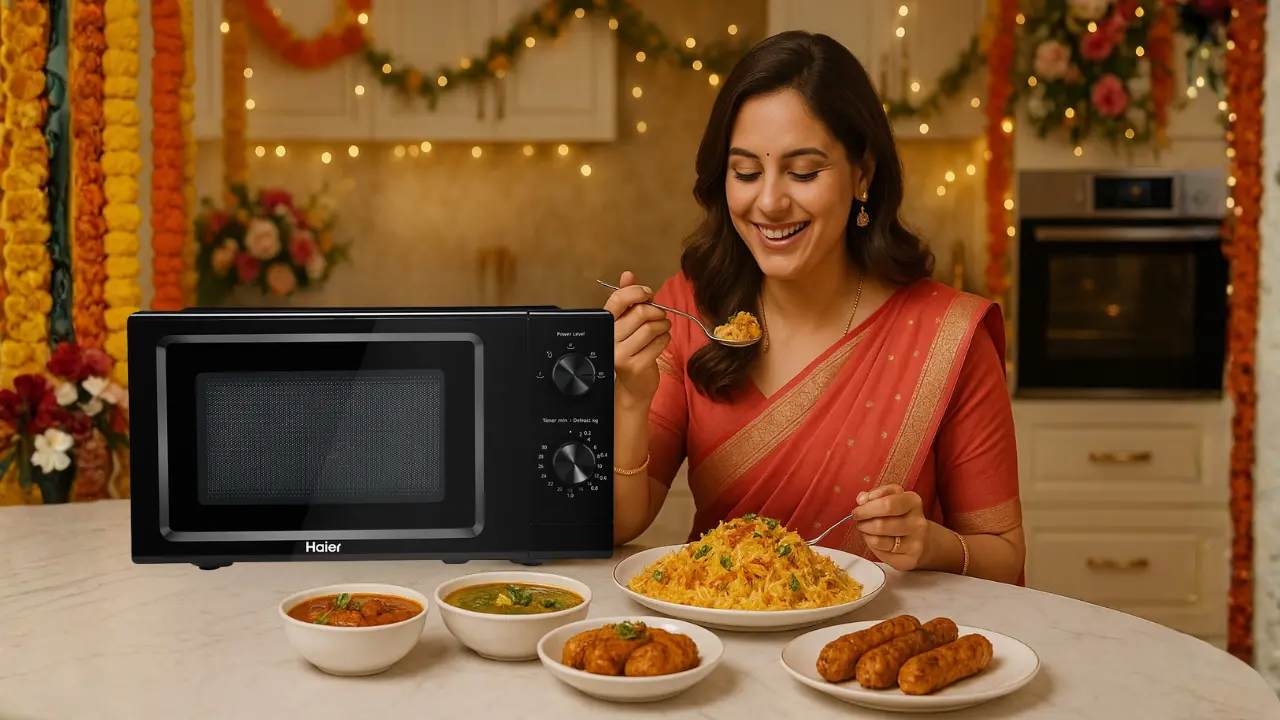

Inverter microwaves save energy by delivering steady, controlled heat instead of switching between full power and zero power.
This reduces cooking time, prevents electricity spikes, and lowers monthly energy use in everyday Indian kitchens.
Every home has that one appliance that becomes the quiet hero of a busy weeknight.
For many Indian households today, it is the microwave.
A quick reheat before a late dinner. A bowl of oats for a child getting ready for school. A plate of steamed vegetables between meetings.
The microwave is no longer a luxury. It is a rhythm.
But here is the real question.
If this small appliance works so hard, should it not work smarter?
That is where inverter microwaves step forward.
Why do inverter microwaves save more energy?
Traditional microwaves behave like old traffic lights.
Red. Green. Red. Green.
Full power. No power. Full power again.
This jumpy pattern uses more electricity than we realise, because every surge back to full power needs extra energy.
Inverter microwaves avoid this waste by keeping the heat continuous.
No peaks. No dips.
Just smooth, steady power that matches the temperature your food needs.
The result is simple.
- Food cooks faster
- Electricity consumption drops
- Temperature stays consistent
- Texture stays intact
A small shift in technology creates a large shift in efficiency.
What does energy saving look like in real Indian homes?
Let’s ground this idea in familiar moments.
1. The weekday dinner rush
You walk into the kitchen hungry and tired.
Reheating dal should not take two cycles.
An inverter microwave warms it evenly the first time because it does not switch power levels abruptly.
2. Couples setting up a new home
Electricity bills are suddenly part of the conversation.
Every appliance becomes a long term decision.
Choosing inverter technology becomes a quiet investment in lower monthly costs.
3. Families with kids or elders
Warm milk without boiling over.
Soft idlis without hard edges.
Controlled heat protects texture and nutrients.
Energy saving here feels less like a feature and more like a form of care.
Where Haier’s inverter microwave fits into this story

At this point comes the natural question.
Which inverter microwave blends efficiency with everyday practicality?
One example is the Haier 19L Solo Microwave Oven With Inverter Technology (HIL1901MBPB). It uses precise, steady power to heat food evenly without the energy spikes common in older microwaves. In real terms, that means faster cooking, fewer repeat reheats, and lower electricity usage for small and medium meals.
Because it is a compact 19 litre model, it aligns with how most Indian households actually cook:
- Reheating leftovers after office hours
- Steaming vegetables for dinner prep
- Heating milk or porridge for kids
- Making quick snacks without wasting energy
Inverter technology here is not a bullet point.
It is an invisible system that removes waste, protects texture, and reduces electricity costs without changing your routine.
The hidden system behind energy savings
It is easy to think energy saving is about discipline.
Turn off lights. Shorter showers. Less appliance use.
But real efficiency comes from design, not sacrifice.
Inverter microwaves teach us this.
Consistency consumes less electricity than intensity.
Smooth heat uses less power than stop start cycles.
The microwave becomes a quiet teacher in how modern homes can reduce energy use without giving up comfort.
How inverter microwaves reduce electricity bills
Here are the three forces working in your favour.
1. Continuous heating prevents energy spikes
Older microwaves waste electricity each time they jump back to full power.
Inverter technology avoids that jump completely.
2. Faster cooking equals less total power consumption
Even heat means food reaches the right temperature quicker.
Less runtime. Lower bills.
3. No repeat reheating cycles
The dreaded cold center problem disappears.
One reheat is enough.
These are the small efficiencies that create noticeable monthly savings.
Small habits that multiply inverter efficiency
A smart appliance becomes smarter with simple kitchen habits.
Use glass or ceramic containers
They retain heat and reduce cooking time.
Cover your food
Steam accelerates heating and prevents dryness.
Use auto cook or sensor modes
Let the appliance decide the correct power for the task.
Heat in smaller portions
Balanced loads warm faster and more evenly.
None of these require effort.
They simply work with the inverter system instead of against it.
A larger shift in the Indian kitchen
Look around modern Indian homes.
Refrigerators that optimize cooling levels.
Air conditioners that sense presence.
TVs that adjust brightness automatically.
Microwaves that save energy without compromising speed.
Energy efficiency is no longer a nice to have idea.
It is a lifestyle design choice.
Inverter microwaves are part of this evolution.
They show us that smarter cooking is not about shortcuts.
It is about technology that respects time, electricity, and the realities of everyday life.
The insight that stays with you
Energy saving becomes effortless when the appliance handles the complexity for you.
Inverter microwaves operate on one powerful principle.
Steady power is smarter than maximum power.
And when a kitchen appliance works with intention instead of intensity, the whole home feels more future ready.
A meal reheated right.
A bill that feels lighter.
A home that feels thoughtfully designed.
That is the quiet impact of inverter technology.