

Self-clean technology that works after every use is about appliances quietly resetting themselves.
They clear moisture, dust, bacteria, and residue automatically, without reminders or manual effort.
In Indian homes where usage is frequent and conditions are demanding, this means better hygiene, consistent performance, and appliances that age slower instead of wearing out faster.
Now let us slow down and look at why this matters more than we realise.
The problem nobody notices until it becomes a problem.
It usually begins small.
A faint smell when you switch on the AC.
Clothes that feel clean but not fresh.
An appliance that works, but feels tired.
Most Indian homes blame the weather. Or water. Or pollution.
Rarely the machine itself.
The truth is simple and uncomfortable.
Every appliance absorbs what your home throws at it.
Dust. Humidity. Oil vapours. Moisture. Microbes.
And when that buildup stays inside, performance drops quietly.
Systems fail silently before they fail loudly.
Why “cleaning once in a while” no longer works
Older appliances were forgiving.
Lower usage. Fewer cycles. Slower lifestyles.
Modern Indian homes are different.
- ACs run longer due to hotter summers and humid monsoons
- Washing machines handle mixed loads, quick cycles, daily use
- Kitchens stay active all day, not just during meals
This changes the math.
Manual cleaning has three structural flaws
- It is reactive
You clean after smells, stains, or inefficiency show up. - It depends on memory
Busy homes forget maintenance until something breaks. - It never reaches the inside
Coils, drums, airflow paths stay untouched.
The cost is invisible at first.
Higher electricity bills. Slower cooling. Shorter lifespan.
By the time you notice, damage has already settled in.
What self-clean technology actually does
Real self-cleaning is not a button you press once a month.
It is a system.
A set of actions that happen automatically, repeatedly, and invisibly.
Good self-clean technology does three things
- Removes moisture before it becomes mould
- Clears dust before it blocks efficiency
- Resets the appliance after every cycle or shutdown
Think of it like brushing teeth instead of visiting the dentist only when there is pain.
Small actions. Done daily. Big outcomes over time.
The hidden enemy inside appliances: moisture
In Indian conditions, moisture is the real villain.
Especially during monsoon and coastal seasons.
Inside appliances, moisture creates:
- Bacterial growth
- Musty smells
- Corrosion
- Reduced heat exchange efficiency
Once trapped, it stays there.
Unless the appliance knows how to remove it by itself.
How modern self-clean systems work in real life
Let us break it down using everyday situations.
After you switch off the AC
Most people assume the job is done.
Cooling stops. Power off.
But inside the unit, moisture remains.
Modern self-clean systems flip this logic.
They:
- Run controlled airflow after shutdown
- Dry internal components
- Prevent condensation from settling
This happens automatically.
No reminder. No extra step.
The appliance finishes its own work.
Inside the AC: cleaning without opening it
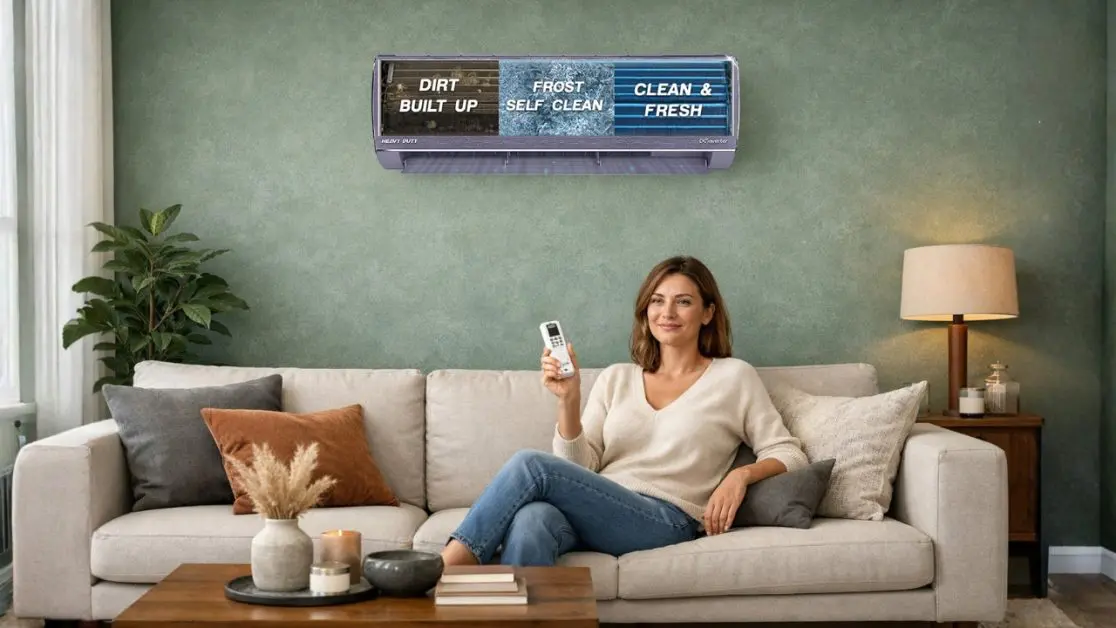
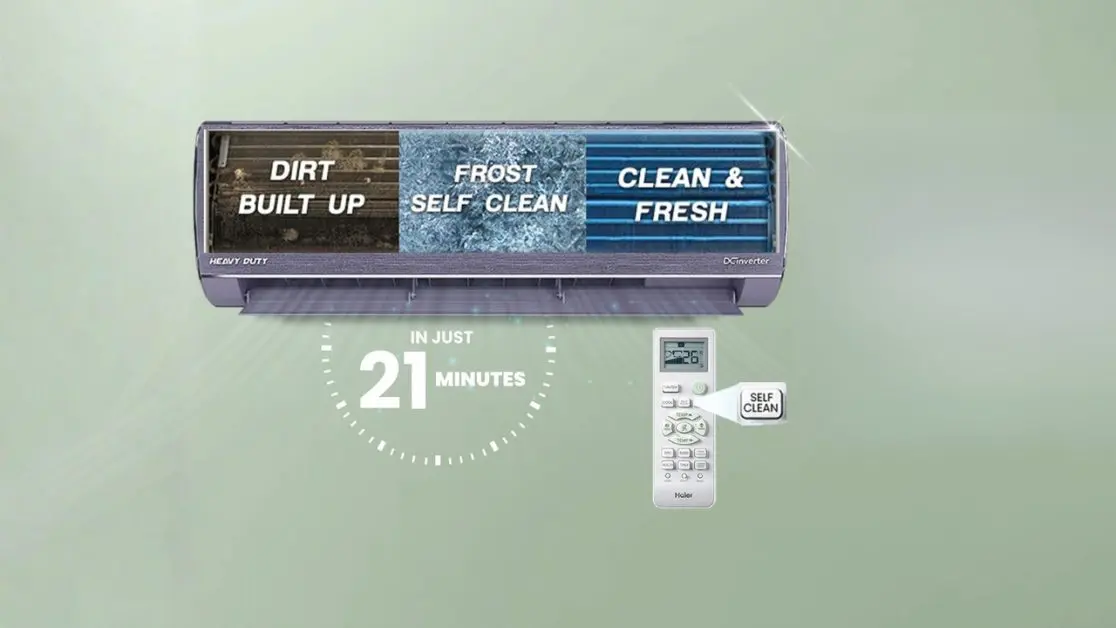
Advanced AC self-clean technology uses two coordinated actions.
Indoor self-clean
- Freezes moisture on coils
- Melts it to wash away dirt
- Dries the surface completely
Outdoor self-clean
- Reverses airflow briefly
- Blows dust off the condenser
- Keeps heat exchange efficient
This inside-out approach keeps both performance and hygiene intact
The benefit is compounding.
Cleaner coils mean:
- Faster cooling
- Lower power consumption
- Less strain on the compressor
Why “after every use” matters more than frequency
Cleaning once a week sounds responsible.
Cleaning after every use is smarter.
Because buildup is exponential.
One missed cycle leads to another
- Moisture stays longer
- Dust sticks faster
- Bacteria multiplies quietly
Self-clean systems interrupt this chain early.
Before it becomes visible.
Before it becomes expensive.
Consistency beats intensity. Every time.
The Indian home reality self-clean is designed for
Self-clean technology is not a luxury feature.
It responds to very Indian conditions.
High dust environments
Urban roads. Construction. Open windows.
Humidity swings
Dry heat. Wet monsoons. Coastal air.
High usage patterns
Work from home. Joint families. Frequent washing and cooling.
In these conditions, appliances do not get “rest days”.
So they need systems that reset themselves.
A quick comparison that clarifies everything
| Without Self-Clean | With Self-Clean |
| Manual cleaning needed | Automatic cleaning |
| Smell appears over time | Fresh airflow stays |
| Efficiency drops quietly | Performance stays consistent |
| Higher service dependency | Lower maintenance effort |
| Shorter appliance life | Longer usable lifespan |
The difference is not dramatic on day one.
It shows up over years.
Why Haier’s approach feels different
Some brands add self-clean as a checkbox.
Others build it into the core system.
Haier’s self-clean technology sits inside its AI-powered appliance logic.
It treats cleanliness as part of performance, not a bonus.
What that changes
- Cleaning triggers automatically based on usage hours
- Indoor and outdoor units clean in coordination
- The appliance knows when it needs cleaning, not the user
This removes friction.
And friction is what kills good habits.
The quiet mental benefit nobody talks about
Self-clean technology does not just clean machines.
It clears mental load.
- One less reminder
- One less maintenance worry
- One less service booking
In homes juggling work, kids, elders, and routines, this matters.
Good technology reduces decisions, not adds to them.
Does self-clean really save money
Indirectly. Yes.
Cleaner systems:
- Cool faster
- Consume less power
- Avoid efficiency loss
According to appliance efficiency studies, dirty coils alone can increase energy consumption by up to 15 percent over time if left untreated.
Self-clean stops that drift early.
You do not save money loudly.
You avoid wasting it quietly.
What to look for when choosing self-clean appliances
Not all self-clean features are equal.
Ask these questions
- Does it clean automatically or only on manual command
- Does it handle moisture and dust together
- Does it clean both internal and external components
- Does it work after shutdown, not just during cycles
If the answer is yes to most, you are looking at a real system.
Not a marketing label.
Self-cleaning is not about convenience. It is about design philosophy
This is the bigger pattern.
Appliances are moving from:
- Tools that need management
- To systems that manage themselves
Self-clean technology is part of that shift.
It assumes people are busy. Homes are dynamic. Conditions are imperfect.
So the system adapts.
The bigger implication for modern Indian homes
As homes get smarter, the best technology becomes invisible.
It works in the background.
It fixes problems before they show up.
It keeps standards consistent without asking for attention.
Self-clean technology that works after every use is exactly that.
Not flashy.
Not loud.
Just quietly reliable.
And in real homes, reliability always wins.
Frequently Asked Questions
My clothes are clean but don’t smell fresh. Is my machine the problem?
Likely yes. Moisture trapped in the drum breeds bacteria. Self-clean dries the drum and internal paths after every cycle, stopping odours before they start.
Why does my AC smell when I turn it on after a few days?
Moisture left on coils during shutdown causes microbial growth. Self-clean ACs run controlled airflow post-shutdown to dry internal components automatically.
Does faster cooling in ACs mean more internal damage over time?
Not if self-clean is present. Clean coils exchange heat efficiently, reducing compressor strain even with heavy, frequent usage.
Is self-clean just a button I press sometimes?
Real self-clean isn’t manual. It’s a system, triggered by usage hours, shutdowns, or internal sensors, working repeatedly without user input.
Does self-clean actually save money or is it just marketing?
It saves indirectly. Dirty coils alone can increase power consumption by up to 15% over time. Self-clean prevents this efficiency drift, reducing electricity bills and service visits.