

Every Indian household knows the smell.
That damp, lingering mustiness that clings to freshly washed clothes when the monsoon refuses to let them dry.
Even if you line them under a fan, even if you iron them twice, the scent of wet fabric stuck indoors doesn’t go away.
So the real question is are we cleaning our clothes, or are we simply trapping moisture and bacteria inside the drum itself?
Why the monsoon makes laundry harder
Humidity is the invisible villain.
When the air is already loaded with moisture, clothes take forever to dry. That gives mold and bacteria the perfect breeding ground not just on fabrics, but inside the washing machine’s drum and pipes.
Think about it:
- Clothes smell musty because the drum isn’t fully clean.
- The drum isn’t fully clean because the rinse cycle wasn’t enough.
- And the rinse cycle wasn’t enough because humidity slowed down evaporation.
It’s a loop. And Indian households live through it every July to September.
The overlooked culprit: your washing machine itself
We blame the rain. We blame the air. We even blame the detergent.
But often, the source of odor is closer inside the washer.
Residual lint, trapped detergent, and hidden moisture in the drum can turn your machine into a musty box. Then every load you wash carries that smell forward.
This is where Self-Clean steps in not as a luxury, but as a necessity for monsoon living.
What does ‘Self-Clean’ actually do?
Here’s the simple version.
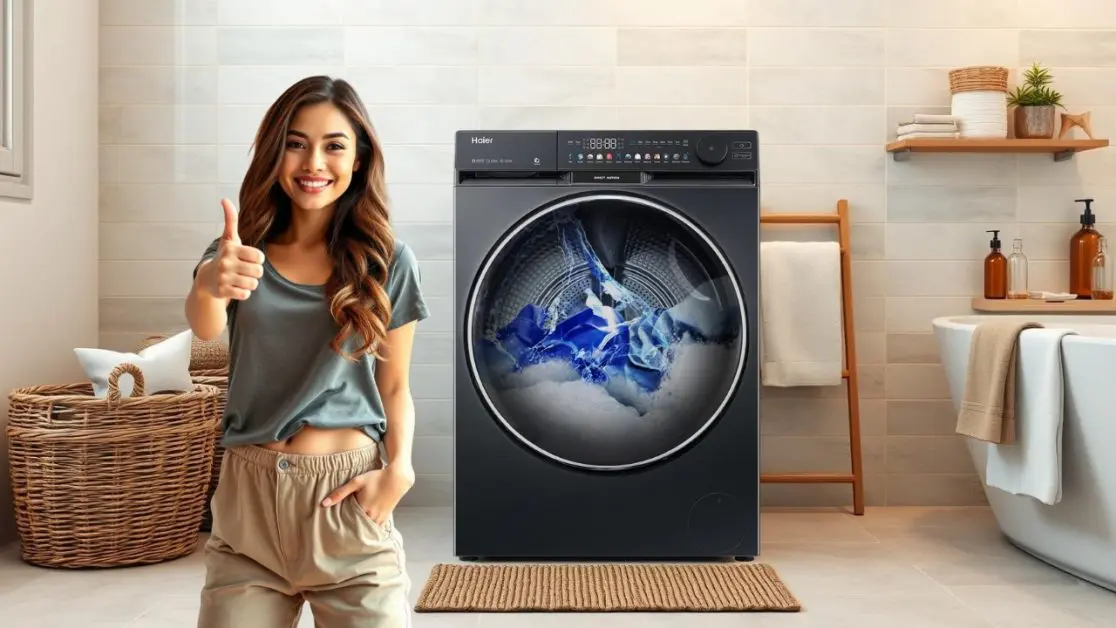
When you hit Self-Clean, the machine heats water at higher temperatures and flushes the drum at full spin strength.
The effect?
- The residue gets dissolved and rinsed away.
- Bacteria and mold spores don’t get a chance to settle.
- The drum smells fresh, so clothes come out cleaner.
It’s housekeeping for your washing machine, done by the machine itself.
The Haier approach: turning self-clean into smart care
New front-load washers including the 9 kg, 11 kg, and washer-dryer combos make this even simpler. Their Self-Clean programs are built into the cycle list, right next to cotton, baby care, and sportswear.
You don’t need special detergents or complicated routines. Just run it after a few heavy loads or at least once during the monsoon and your washer resets to a fresh state.
And because these models come with features like:
- Direct Motion motor (quiet, durable, energy-efficient),
- Super Drum 525 (larger space for clothes to tumble and breathe),
- Refresh cycle with steam (reduces wrinkles and odour between washes),
Self-Clean becomes part of a bigger ecosystem of hygiene and convenience.
Real monsoon scenarios where self-clean saves the day
Let’s make this practical.
1. The bachelor’s room laundry pile
One week of postponed washing turns into a musty mountain. Run Self-Clean before you start, and the first load smells like new, not like it sat next to damp socks.
2. The parent with endless school uniforms
Kids wear the same cotton shirts day after day. Humidity makes them smell sour. Self-Clean ensures every batch feels crisp, not clammy.
3. The working couple hosting weekend guests
Bedsheets washed during the rains often smell half-dry. A quick self-cleaned machine means linens feel hotel-fresh, even when sunshine is missing.
How often should you use it?

Think of it like brushing your teeth. Once in a while isn’t enough. Too often is unnecessary.
- Every 15–20 washes in normal weather.
- Every 5–7 washes during monsoon, when humidity is high.
- Immediately if you notice any damp smell when opening the door
It’s a small investment of time that prevents bigger hygiene problems later.
But what about power and water?
Valid concern. Running an extra cycle feels like extra cost.
Here’s the system-level truth:
- One Self-Clean run consumes less than the energy wasted re-washing smelly clothes.
- Water used in one drum-clean saves you from buckets wasted on hand-scrubbing musty laundry
In other words, it’s efficient by prevention.
Self-Clean as part of smarter living
The feature is not just about the drum. It’s about the mindset of maintenance.
Smart homes aren’t built on gadgets alone. They’re built on systems that care for themselves so you don’t have to.
Haier taps into this thinking with its Hai Smart App, where you can even schedule or track your wash cycles remotely. The idea is simple: if your machine is clean, your clothes are fresh, your life feels lighter.
Why this matters for Indian households

Monsoon is not just a season. It’s an emotional rhythm chai by the window, pakoras on the plate, damp clothes on the balcony.
The frustration of musty laundry is not just about smell. It’s about comfort, dignity, and the quiet pride of having a home that feels fresh even when the weather outside doesn’t cooperate.
Self-Clean is the unsung hero that makes this possible.
Three takeaways you’ll actually remember
1. Musty clothes in the monsoon often come from the washer, not the weather.
2. Self-Clean cycles are simple, efficient, and built into Haier’s smart washers.
3. Prevention beats correction keeping your machine clean keeps your wardrobe (and mood) fresher
The bigger principle: machines that care for themselves
In a world where time feels scarce and mental load keeps rising, the most valuable appliances are those that maintain themselves.
A washing machine that remembers to clean itself is not just a convenience. It’s a partner in the rhythm of everyday Indian life.
And when the skies pour and the air feels heavy, that kind of partner makes all the difference.
Closing thought:
Monsoon will always test us with leaks, dampness, and endless laundry. But with a Self-Clean washer, one battle is already won.
Fresh clothes. Clear mind. Dry humour.
That’s how you tackle mustiness without waiting for the sun.