
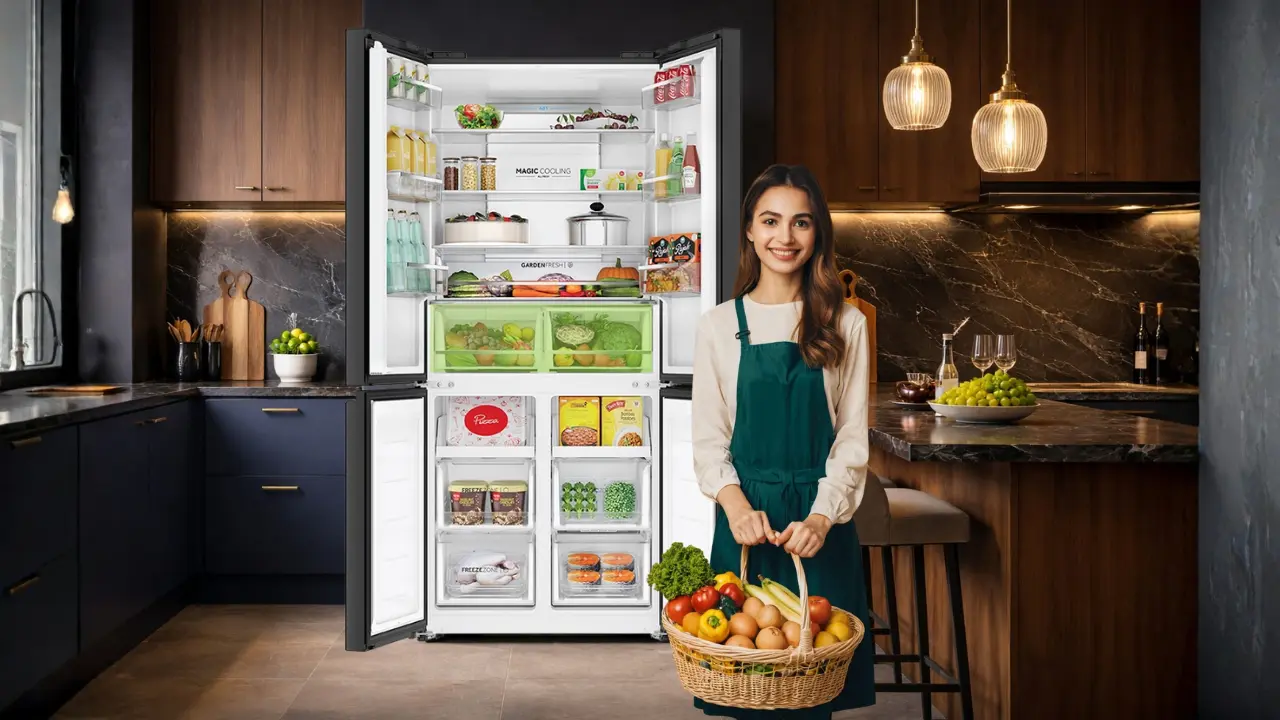

Separate storage for fruits and vegetables keeps them fresh longer because they need different environments.
Different humidity. Different airflow. Different cooling rhythms. When a refrigerator respects these differences, food stays crisp, flavours hold, and everyday cooking becomes calmer and more predictable.
Freshness is not luck.
It is structured.
The midweek moment that exposes the problem.
It usually happens on a Wednesday evening.
You open the fridge after work. The coriander has gone limp. Tomatoes feel softer than they should. Apples carry a faint onion smell. You bought everything just a few days ago.
Most people blame themselves.
Bad planning. Overbuying. Busy schedules.
But here is the quieter truth.
Many refrigerators are designed for storage capacity, not freshness behaviour.
Fruits and vegetables are living produce. They breathe. They release gases. They respond to moisture. When they are forced into the same space, freshness becomes accidental.
Order breaks down first.
Spoilage follows later.
Why fruits and vegetables were never meant to live together

Think of fruits and vegetables as two very different personalities.
Fruits are ripening.
Vegetables are holding structure.
Fruits release ethylene gas. This gas speeds up ripening. It is why bananas make everything around them mature faster. Vegetables are sensitive to this gas. Exposure shortens their usable life.
They also need different humidity levels.
- Fruits prefer controlled, slightly lower humidity.
- Vegetables need higher humidity to stay crisp and hydrated.
Put them together, and one always loses.
Freshness fails quietly.
Until dinner plans fail loudly.
The hidden system inside a well designed refrigerator
A good refrigerator is not a cold box.
It is a controlled ecosystem.
Air circulation.
Humidity balance.
Temperature stability.
Odour management.
When fruits and vegetables have separate storage zones, each zone supports what that produce needs. The result is not just longer shelf life. It is predictability.
You stop checking vegetables every morning.
You stop cooking in panic.
You stop throwing food away silently.
Mental calm is an underrated kitchen feature.
What separate storage actually solves in Indian homes
Indian kitchens are complex ecosystems.
Leafy greens. Root vegetables. Seasonal fruits. Masalas. Chutneys. Dairy. Leftovers. All sharing space. Often bought in bulk. Often stored together.
Separate fruit and vegetable storage solves everyday problems Indian households face.
1. Moisture imbalance
Vegetables like spinach, methi, and cabbage lose moisture quickly. Dedicated vegetable cases with controlled humidity slow this process.
2. Odour mixing
Apples should not smell like garlic. Separate compartments reduce odour transfer and preserve natural aromas.
3. Uneven ripening
Ethylene gas from fruits no longer rushes vegetables into early decay.
4. Visual overload
Clear storage zones improve visibility. When you see what you have, waste drops naturally.
Organisation is not about neatness.
It is about control.
Freshness is a habit created by design
Most people believe freshness depends only on temperature.
It does not.
Freshness is shaped by small, repeated actions made easier by good design.
- Where produce is placed.
- How often compartments are opened.
- Whether airflow reaches every corner.
- Whether moisture is balanced instead of trapped.
Separate storage removes decision fatigue. You do not think. You place produce where it belongs.
Good systems reduce effort.
Great systems remove thinking.
One fridge. Three storage philosophies
Every household follows one of these patterns.
Option one: Everything together
Low effort. High waste.
Works only if shopping happens daily.
Option two: Manual separation
Plastic boxes. Paper wrapping. Zip bags.
Better, but inconsistent and effort heavy.
Option three: Built in separation
Dedicated fruit and vegetable cases with designed airflow and humidity control.
Once experienced, it becomes non-negotiable.
The third option is not indulgence.
It is aligned with real life.
Why multi door refrigerators change freshness completely

Multi door refrigerators are not about size.
They are about zones.
Separate doors mean:
- Less cold air loss every time you open one section.
- Stable temperature for sensitive produce.
- Clear segregation of food categories.
When fruits and vegetables live in dedicated sections, opening the fridge does not disturb their microclimate.
Freshness improves not because the fridge is colder.
But because it is calmer.
Where Haier gets this quietly right
Some brands talk about freshness.
Others build systems around it.
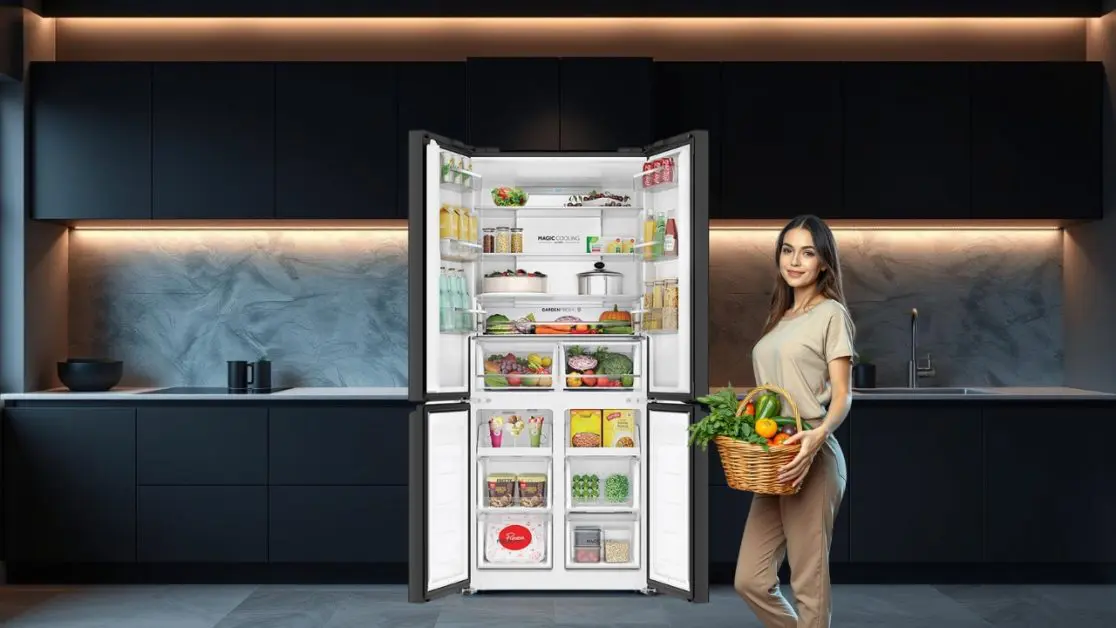
Refrigerators like the Haier Vogue Lumiere 520L 4 Door Convertible Refrigerator are designed with organised storage at the core. The layout includes clearly defined fruit and vegetable cases, multiple storage zones, and cooling systems that maintain stable conditions across compartments.
The design assumes real Indian usage.
Bulk vegetable buying. Mixed cuisines. Weekly grocery cycles.
Instead of asking users to change habits, the refrigerator adapts to them.
That is where trust builds.
The overlooked cost benefit of separate storage
Separate storage is not just about better looking vegetables.
Lower food waste
Produce lasts longer. Emergency grocery runs are reduced.
Time saved
No daily inspection. No reshuffling. No guessing.
Mental load reduction
You trust your fridge to hold freshness.
Better nutrition
Vitamins degrade slower when storage conditions stay stable.
Efficiency rarely announces itself.
It simply works, day after day.
How this changes everyday cooking
When vegetables stay fresh longer, cooking changes.
- Meal planning becomes relaxed.
- Experimentation increases.
- Packaged food dependence reduces.
- Waste drops naturally.
Cooking shifts from reactive to intentional.
A refrigerator that respects produce changes how you eat.
And eventually, how you live.
Freshness is not about perfection
No refrigerator can stop time.
But a well designed one slows it intelligently.
Separate storage for fruits and vegetables recognises a basic truth. Different things need different environments to thrive.
When your refrigerator understands that, you stop fighting it.
You start trusting it.
That is what good design does.
It aligns with reality instead of resisting it.
The bigger idea hiding inside your fridge
This is not just about refrigeration.
It is about systems that respect differences.
About design that reduces friction.
About making the right behaviour effortless.
Separate storage for fruits and vegetables may seem like a small detail.
But small systems, done right, quietly shape better living.
Freshness, redefined, is not colder air.
It is a smarter structure.
Frequently Asked Questions
I buy vegetables only once a week. Is my fridge working against me?
In many cases, yes. Standard refrigerators prioritize space, not produce behaviour. Without separate zones, weekly grocery habits clash with how fruits and vegetables naturally age.
Why do my apples smell like onions or garlic after a few days?
Odour transfer happens when airflow mixes across compartments. Separate fruit storage reduces cross-contamination and preserves natural aromas.
Are fruits and vegetables unhygienic to store together?
Not unhygienic, but biologically incompatible. Fruits emit ethylene gas; vegetables absorb moisture. Sharing space quietly accelerates spoilage.
Why do tomatoes soften unevenly in my fridge?
Ethylene exposure plus inconsistent airflow causes uneven ripening. Separate fruit zones stabilize this process.
What does “separate storage” actually mean inside a refrigerator?
It means dedicated fruit and vegetable cases with distinct humidity levels, airflow paths, and temperature stability.
How do multi-door refrigerators improve freshness?
Separate doors create micro-climates. Opening one section doesn’t disturb others, keeping produce environments calm and consistent.
Can separate storage reduce grocery expenses?
Yes. Less spoilage means fewer emergency runs, lower waste, and more predictable meal planning.
Why do some refrigerators feel calmer to use?
Because zoned storage reduces temperature shock, visual clutter, and mental load. Calm systems feel invisible, but effective.