
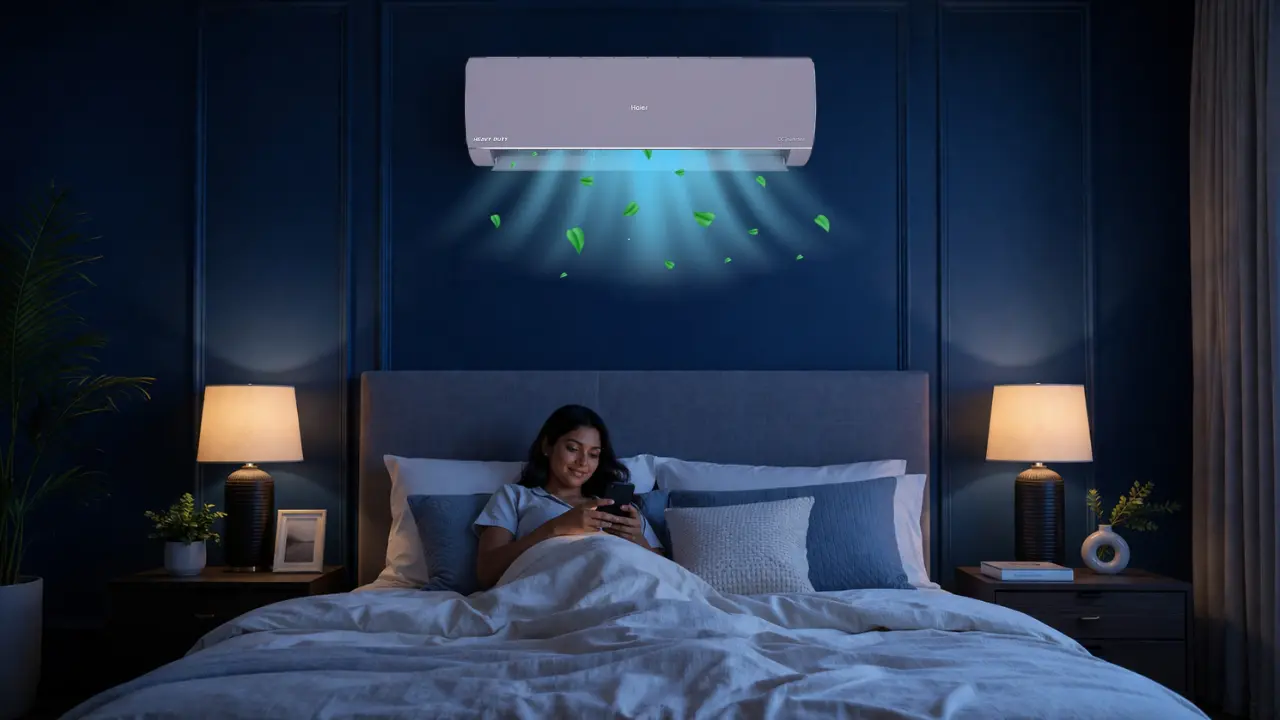

A smart AC is not just about cooling. It is about control, efficiency, and timing.
A smart AC learns your routine, adapts to your space, and optimizes energy automatically. Instead of constant manual adjustments, it uses sensors, AI, and connectivity to deliver comfort exactly when and where you need it while reducing electricity consumption.
Why does buying an AC feel more complicated today than ever?
Walk into any electronics store in May.
Rows of ACs. Same white bodies. Same promises.
But the confusion begins the moment you look closer.
1 ton or 1.5 ton
3 Star or 5 Star
Inverter or non-inverter
WiFi or non-WiFi
AI or just “smart”
Choice looks like progress.
But too much choice creates hesitation.
The real question is not which AC is best.
The real question is which AC fits your life.
The hidden shift: Cooling is becoming intelligent
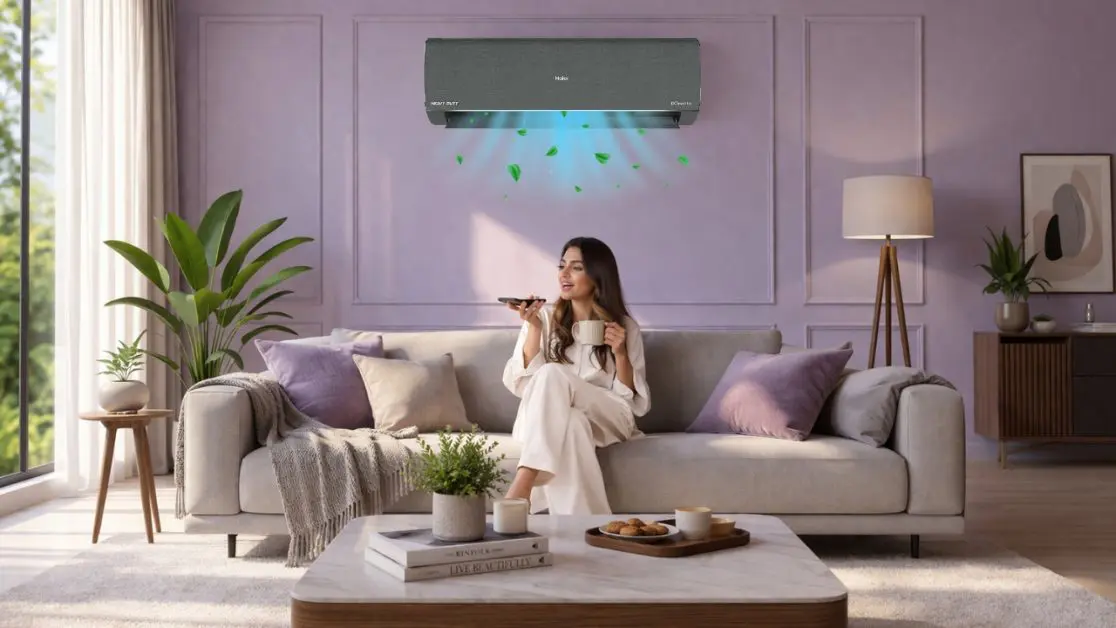
There was a time when ACs followed commands.
You pressed a button. The machine responded.
Now, the technology flips.
The AC observes first. Then act.
Take something like AI-based climate technology.
Instead of reacting to temperature changes, they predict patterns.
- When you usually come home
- How long you stay in a room
- How external weather affects indoor comfort
According to the AI Atmox technology, modern ACs can automatically analyze environment data, user behavior, and temperature conditions to optimize cooling without manual input
Cooling stops being reactive.
It becomes anticipatory.
And that changes how you should buy.
How to choose the right smart AC: Think in technology, not features
Most people compare features.
Smart buyers compare technology.
Here are the four technologies that actually matter.
1. The Capacity technology: How much space are you cooling?
Capacity is not a number. It is a match.
| Room Size | Recommended AC Capacity |
| Up to 120 sq ft | 1 Ton |
| 120–180 sq ft | 1.5 Ton |
| 180–250 sq ft | 2 Ton |
But here is what most people miss.
- Top floor rooms need higher capacity
- West-facing rooms heat up more
- Kitchens and living rooms behave differently
Undersized AC struggles. Oversized AC wastes power.
The right size saves both comfort and cost.
2. The Intelligence technology: How “smart” is the AC really?
Not all smart ACs are equal.
Some are remote-controlled machines.
Others are adaptive technology.
Let’s break this down.
One option is basic smart control
- App-based control
- Scheduling
- Remote on/off
Cost: Lower
Benefit: Convenience
The second option is AI-assisted cooling
- Learns your usage patterns
- Adjusts temperature automatically
- Reduces overcooling
Cost: Moderate
Benefit: Energy savings + comfort
The third option is fully adaptive AI technology
This is where things change.
technology like Haier’s AI Atmox introduce features such as:
- AI Climate Control that adapts to environment automatically
- AI Pre-Cooling that cools your room before you arrive
- AI Target Cooling that focuses airflow where needed
- AI Eco 2.0 modes that adjust power usage dynamically
These technologies combine environmental data and user behavior to optimize cooling continuously
Cost: Higher upfront
Benefit: Lower long-term electricity + effortless comfort
Insight worth remembering:
A smart feature reacts.
An intelligent technology decides.
3. The Energy technology: What will it cost you every month?
Electricity bills tell the truth.
Not brochures.
Here is how to evaluate energy efficiency:
Look at star ratings
- 3 Star: Lower upfront cost, higher running cost
- 5 Star: Higher upfront cost, lower long-term cost
Look at inverter technology
Inverter ACs adjust compressor speed instead of switching on and off.
- Less energy consumption
- Stable cooling
- Lower noise
Look at AI-based energy optimization
Modern technology tracks electricity usage in real time.
For example:
- AI Eco 2.0modes adjust cooling levels based on temperature gaps
- Electricity monitoring 2.0 shows actual consumption patterns
- Human detection reduces power when the room is empty
This kind of technology can automatically reduce power usage without affecting comfort
Cost vs Benefit Snapshot
| Feature | Upfront Cost | Long-Term Benefit |
| Basic AC | Low | High electricity bills |
| Inverter AC | Medium | Balanced savings |
| AI Smart AC | High | Maximum savings + comfort |
4. The Comfort technology: How does cooling actually feel?
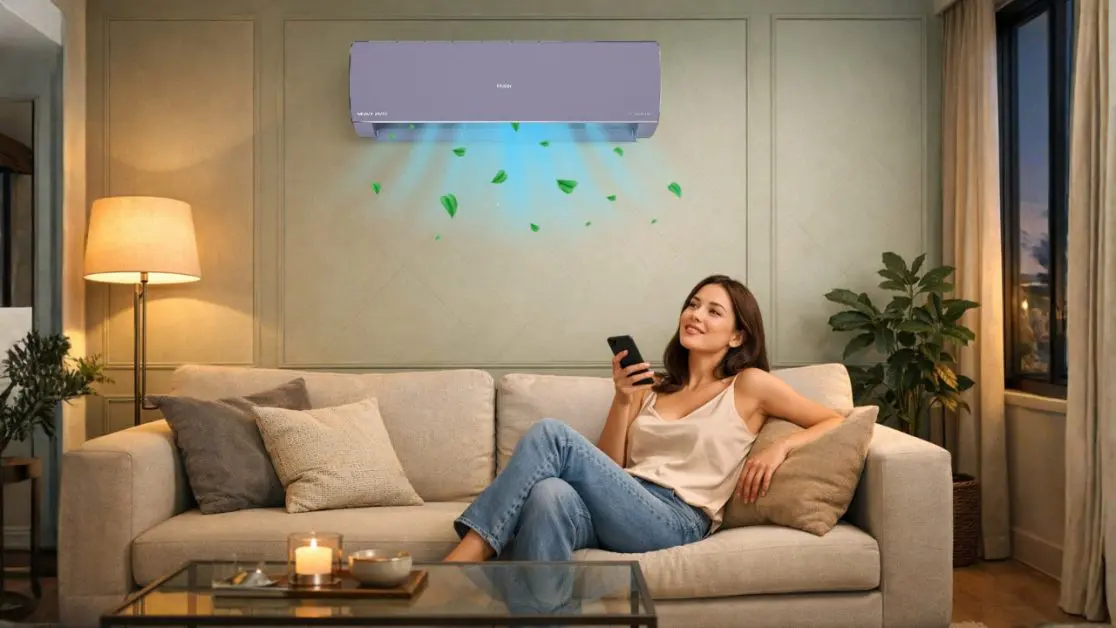
Two ACs can show 24°C.
But I feel completely different.
Why?
Because comfort is not temperature.
It is airflow, humidity, and distribution.
Traditional cooling
- Uniform cooling
- Can feel harsh or uneven
Targeted cooling
- Directs airflow to specific areas
- Faster comfort
- Less energy waste
AI Target Cooling technology use room layout data to focus cooling exactly where needed, instead of cooling empty space
The insight here is simple.
Cooling the room is easy.
Cooling the person is intelligent.
Features that actually matter in Indian homes
Indian homes are not uniform.
They are dynamic.
- Power cuts
- Heat waves
- Humidity swings
- Multiple people in one room
So your smart AC needs to handle real-life chaos.
Must-have features checklist
- Stabilizer-free operation
- High ambient cooling for peak summers
- Fast cooling modes
- Sleep mode optimization
- Self-cleaning technology
- Dust and air filtration
Advanced smart features worth considering
- Voice control for hands-free use
- Geo-fencing for auto pre-cooling
- Electricity tracking dashboards
- Auto-cleaning indoor and outdoor units
For example, some technology now clean both indoor and outdoor units automatically, improving efficiency and reducing maintenance costs over time
The real decision: What kind of buyer are you?
Every buying decision is a trade-off.
Here are three clear paths.
Option 1: The budget-focused buyer
- Prioritizes upfront cost
- Chooses basic or 3 Star AC
Works if: usage is low
Risk: higher electricity bills
Option 2: The balanced buyer
- Chooses inverter AC
- Looks for efficiency + cost balance
Works if: moderate usage
Benefit: predictable performance
Option 3: The future-focused buyer
- Invests in AI-powered smart AC
- Focuses on automation and long-term savings
Works if: daily usage is high
Benefit: lower effort, lower bills, better comfort
The pattern is clear.
The more you use your AC, the smarter it needs to be.
A small moment that explains everything
You walk into your home after a long day in June.
The air is already cool.
No remote. No waiting.
Just comfort.
This is what AI Pre-Cooling technology aim to deliver by predicting your arrival and cooling the room in advance
That moment matters.
Because comfort is not just temperature.
It is timing.
What this means for how you should buy
Stop asking:
“What is the best AC?”
Start asking:
- What does my day look like?
- When do I need cooling the most?
- How often will this AC run?
- What will this cost me over 5 years?
Because the smartest purchase is not the most advanced product.
It is the one that quietly solves your everyday problems.
Final thought: The future of cooling is invisible
The best AC is the one you stop thinking about.
No constant adjustments.
No sudden discomfort.
No shocking electricity bills.
Just a technology that learns, adapts, and stays out of your way.
That is where smart ACs are heading.
And once you experience it, going back feels like going from a smartphone to a landline.
It still works.
But it no longer fits the way you live.
Frequently Asked Questions
Why do I feel overwhelmed choosing an AC today?
Because modern ACs offer too many overlapping choices (tonnage, star rating, inverter, AI features). The confusion comes from comparing features instead of fit for your lifestyle.
Should I just buy the most expensive AC to avoid regret?
Not necessarily. A high-end AC only makes sense if you use it frequently. Otherwise, you’ll overpay without recovering the cost through energy savings.
What is pre-cooling and is it useful?
It cools your room before you arrive (based on timing or location). It improves comfort without manual effort.
Do ACs really need frequent cleaning?
Yes. Dust buildup reduces efficiency and increases electricity usage.
What is self-cleaning AC technology?
It automatically removes moisture and dirt buildup inside the unit, reducing maintenance needs.
Is air filtration important in Indian homes?
Absolutely. Dust, pollution, and humidity make filtration a valuable feature.