
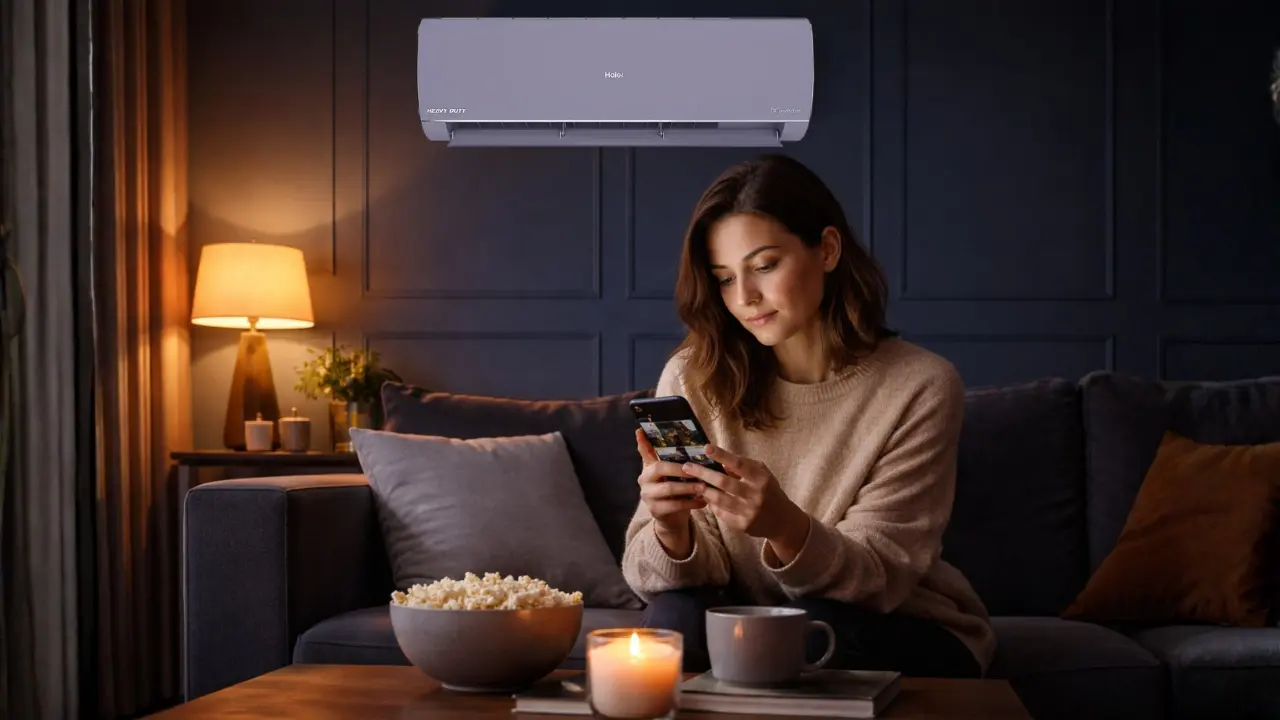

Intelligent monitoring encourages responsible energy use by making electricity visible, measurable, and adjustable in real time.
When homes can see how much power they use, where it goes, and how behaviour changes impact bills, energy stops being an invisible expense and becomes a conscious choice.
Smart technologies that track, predict, and auto-adjust cooling help families save power without sacrificing comfort.
That is the short answer.
The longer answer lives in real homes.
The evening when the bill suddenly feels personal.
It is 9:45 pm. Dinner plates are stacked. The AC hums quietly.
Someone checks the electricity app and says, “This month feels higher.”
No one knows why.
The AC ran. The fridge ran. The TV streamed a series. Nothing unusual.
And that is the problem.
Energy waste is rarely dramatic. It is gradual. Invisible. Habitual.
According to India’s Bureau of Energy Efficiency, cooling alone can account for nearly 40 to 60 percent* of household electricity use in urban homes during peak summer. Add televisions, refrigerators, washing machines, and kitchen appliances, and the pattern becomes clear. Small inefficiencies compound daily.
What we do not measure, we cannot manage.
Intelligent monitoring solves that gap.
It turns guesswork into data. And data into better decisions.
What intelligent monitoring actually means in a modern Indian home
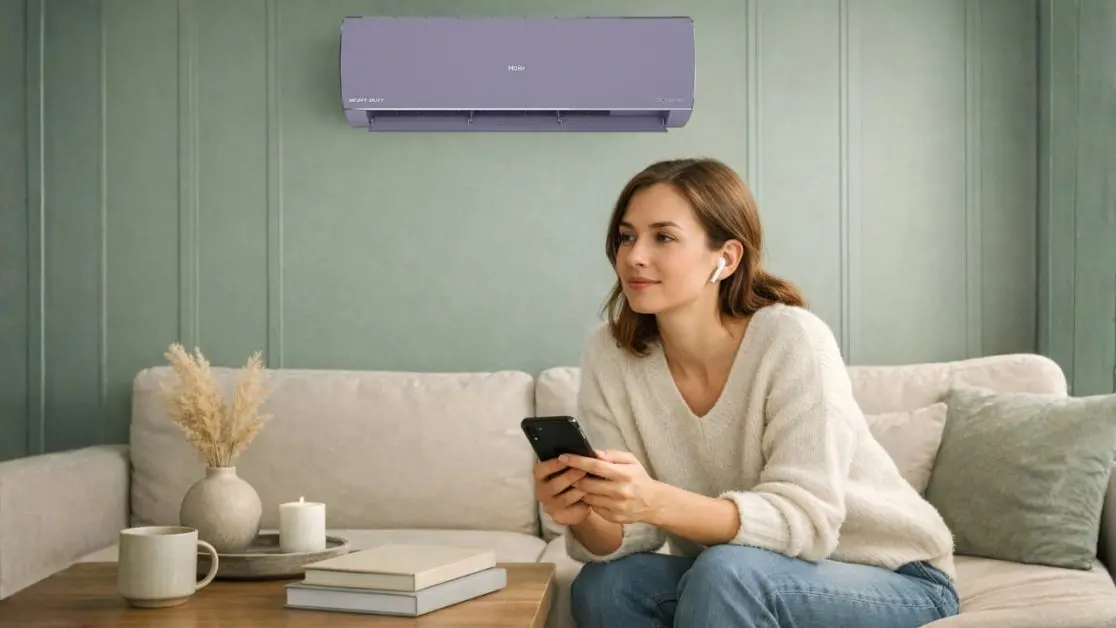
Intelligent monitoring is not just about an app showing numbers.
It is a technology.
A technology that tracks usage patterns. Detects occupancy. Learn behaviour. Optimises cooling. And presents electricity consumption in ways that feel understandable.
For example, Haier’s AI powered Atmox Power Manager brings electricity monitoring directly into the AC experience. It combines AI Eco 2.0, human detection, and real time electricity tracking into one ecotechnology.
But let us break that down simply.
Three layers of intelligent monitoring
1. Measurement
- Tracks unit consumption in kilowatt hours
- Displays usage in graphical and calendar views
- Shows consumption in currency for real time cost awareness
2. Analysis
- Compares normal mode versus Eco mode duration
- Detects temperature gaps and auto adjusts performance
- Identifies occupancy to prevent unnecessary cooling
3. Action
- Switches to energy saving modes automatically
- Turns off after inactivity
- Sets custom energy targets
Monitoring without action is just information.
Monitoring with automation becomes transformation.
Electricity becomes real when you see it in rupees
There is something powerful about seeing consumption in currency instead of units.
When the technology shows 16.2 kWh on a random Tuesday, it feels abstract.
When it shows ₹132 spent in a single day on cooling, it feels immediate.
The AI Atmox overview , electricity monitoring includes graphical tracking, calendar mapping, cost display, and adjustable energy targets. That design choice matters.
Because behaviour changes faster when numbers feel personal.
According to the International Energy Agency, behavioural energy feedback can reduce residential electricity consumption by 5 to 15 percent when users receive real time insights.
That is not a new appliance.
That is awareness.
AI Eco 2.0: Where monitoring meets intelligent adjustment
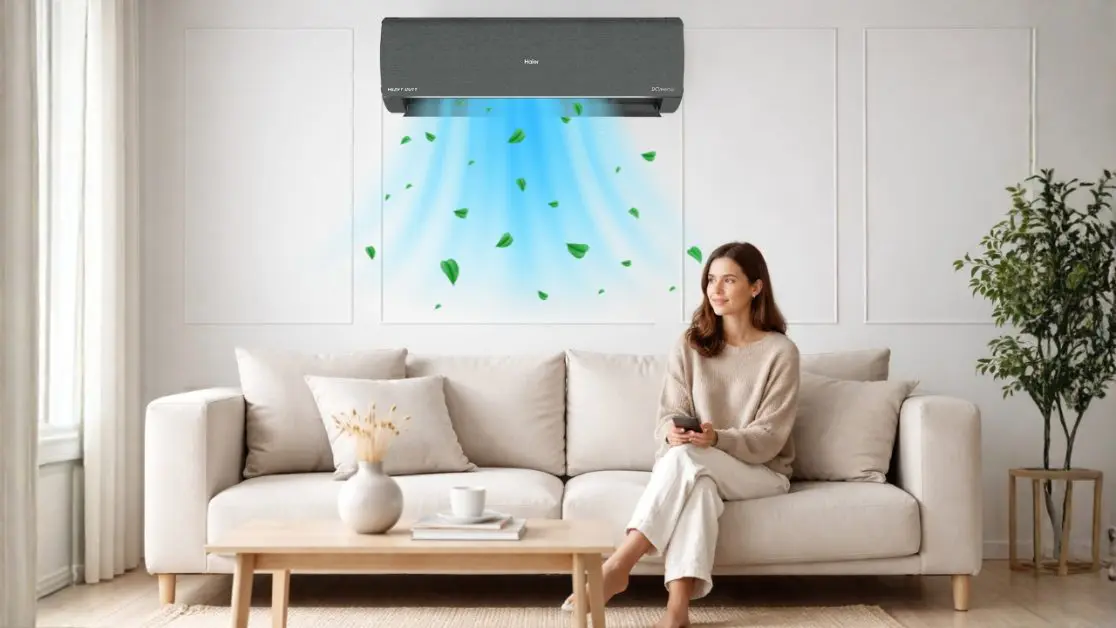
Most people assume saving electricity means compromising comfort.
Sweating slightly.
Reducing usage manually.
Switching off aggressively.
But AI Eco 2.0 changes that equation.
As described in the AI Atmox features , the technology automatically adjusts performance based on the temperature gap:
- If the gap exceeds 3°C, it activates L1 Eco mode
- If the gap is between 1 and 3°C, it shifts to L2
- If the gap is 1°C or less, it moves to L3
That progression creates dynamic control.
Not fixed savings. Intelligent savings.
The cost:
- Slight reduction in peak cooling speed
The benefit:
- Lower energy consumption
- Reduced compressor stress
- Stable comfort
Efficiency is not about doing less. It is about doing just enough.
Human detection removes silent waste
Think about how often ACs run in empty rooms.
Children move to another room.
Someone leaves for the store.
The meeting ends early.
Traditional technologies rely on manual control or timers.
AI human detection changes that.
According to the AI Atmox , the AC detects inactivity and automatically shifts to energy saving mode. It moves to Auto L3 after 15 minutes. It powers off after 30 minutes without activity.
That is not convenient alone.
That is responsible energy use designed into the technology.
The cost:
- Slight delay in cooling if someone re-enters suddenly
The benefit:
- No wasted power during absence
- Lower monthly bills
- Reduced environmental load
Energy waste rarely happens because people are careless.
It happens because technologies are not aware.
Pre cooling: Saving energy before you even arrive
There is a paradox here.
Pre-cooling sounds wasteful.
Cooling an empty room?
But intelligent pre-cooling works differently.
As outlined in the AI Pre Cooling feature , the technology uses geofencing within 100 metres to predict arrival. It starts cooling in advance so the room reaches comfort just as you walk in.
That reduces the need for aggressive high power cooling bursts.
Instead of running at full intensity for 30 minutes after arrival, the technology runs moderately in advance.
The cost:
- Slight background energy use before entry
The benefit:
- Faster comfort
- Lower peak load
- Reduced strain on grid during extreme hours
Energy efficiency is often about smoothing peaks, not eliminating use.
Responsible energy use is a cultural shift, not a feature
In Indian homes, comfort matters.
Grandparents prefer warmer rooms.
Children sleep cooler.
Work from home demands stable environments.
Intelligent monitoring respects those differences.
It allows custom targets.
It shows daily and monthly trends.
It lets families discuss energy as a shared responsibility.
Consider three household mindsets:
- The Passive User
Let appliances run. Rarely checks consumption. - The Manual Controller
Switches modes constantly. Adjusts temperature daily. - The Intelligent Monitor User
Set goals once. Let’s adapt. Reviews trends weekly.
The third option saves time and power.
Because technologies handle complexity better than memory.
India’s residential electricity demand has steadily risen over the last decade, especially during summer peaks. Urbanisation and air conditioning adoption continue to accelerate. Intelligent monitoring does not reduce growth.
It manages it responsibly.
Data builds discipline
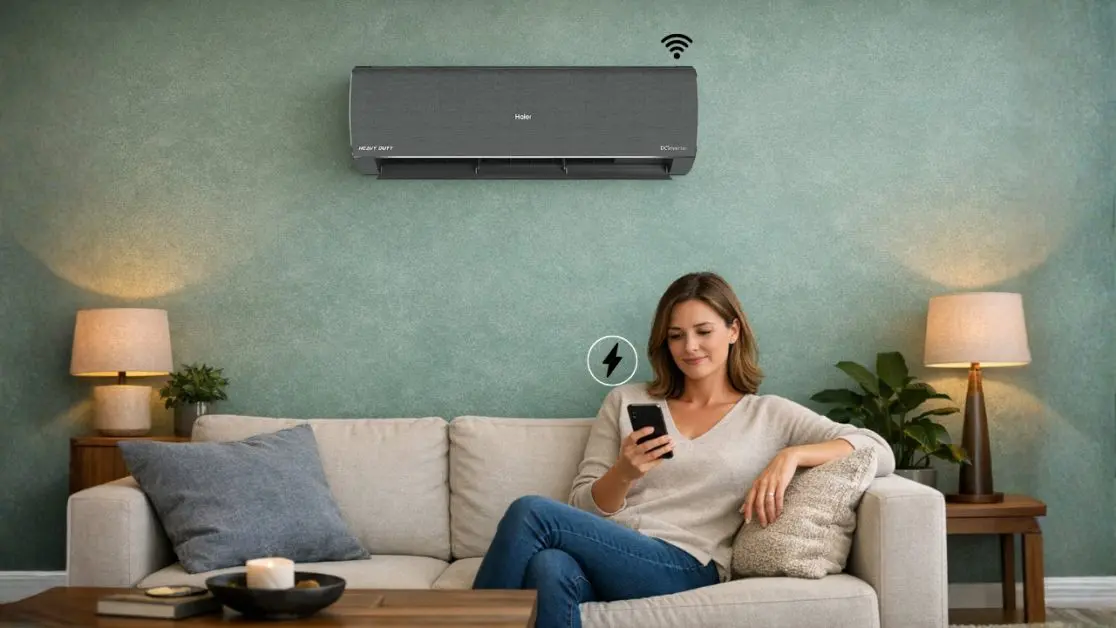
There is a reason gyms display calories burned.
There is a reason finance apps show daily expenses.
Feedback changes behaviour.
When electricity monitoring displays usage in graphs and calendar formats , patterns emerge:
- Sundays spike due to longer TV hours
- Midweek cooling is lower
- Afternoon peaks are consistent
Patterns build discipline.
Discipline builds savings.
Savings build long term impact.
The bigger picture: Future ready homes need visible technologies
Modern Indian households are evolving.
Millennial homeowners track EMIs, SIPs, and subscriptions on apps.
Gen Z renters track UPI expenses and streaming plans.
Why should electricity remain invisible?
Smart refrigerators monitor temperature.
Smart washing machines optimize water levels.
Smart ACs now track electricity consumption.
Energy becomes another metric.
And metrics drive improvement.
According to the Ministry of Power, energy efficiency improvements across appliances have significantly reduced per unit consumption over the last decade. But behavioural efficiency still holds untapped potential.
Intelligent monitoring unlocks that final layer.
Three decisions every household faces
When thinking about responsible energy use, families typically choose one of three paths:
One option is Ignore It
- No tracking
- Fixed temperature habits
- Bills fluctuate unpredictably
Cost: Higher long term electricity spend
Benefit: Zero mental effort
The second option is Manual Vigilance
- Constant switching
- Frequent checking
- Daily adjustments
Cost: Time and attention
Benefit: Some control
The third option is Intelligent Monitoring
- Automated optimisation
- Real time electricity monitoring
- Human detection and AI Eco 2.0 adjustments
Cost: Initial adoption
Benefit: Sustainable savings with minimal effort
The third option aligns with how modern technologies work.
Set once. Review occasionally. Improve gradually.
Responsible energy use is quiet leadership inside the home
We often think of leadership as public.
But leadership also happens in small private decisions.
Choosing an AC that monitors electricity consumption.
Setting custom energy saving targets.
Reviewing monthly graphs before the bill shocks you.
These are micro decisions.
They compound.
They shape household culture.
Haier’s AI powered Atmox technology integrates climate control, AI Eco 2.0, electricity monitoring, and human detection into one intelligent layer. Not as a loud feature. As a quiet assistant.
And that is the point.
The best technologies do not demand attention.
They prevent problems.
Energy responsibility should not feel like sacrifice.
It should feel like clarity.
Because when electricity becomes visible, responsibility becomes natural.
And when responsibility becomes natural, savings follow.
That is intelligent monitoring at work.
Not dramatic.
Just deliberate.
Just enough.
And exactly what modern homes need.
Frequently Asked Questions
Why does my electricity bill suddenly feel higher even though I didn’t change anything at home?
Often the increase comes from small daily inefficiencies, especially from cooling. In Indian urban homes, air conditioning can contribute 40–60% of electricity usage during peak summer, so even small behavioral patterns like leaving ACs running longer can raise bills.
Do I really need to monitor my electricity usage, or will energy-efficient appliances handle everything automatically?
Efficient appliances help, but monitoring creates awareness. When you can see usage in real time especially in currency you become more conscious about consumption patterns and can adjust habits or settings.
I’m tired of constantly adjusting my AC temperature. Is there a smarter way to manage cooling?
Yes. Technologies like AI Eco modes automatically adjust cooling intensity based on temperature differences. Instead of manually switching modes, the system dynamically balances comfort and energy savings.
If I set an energy-saving target once, will my AC actually help me stay within it?
Smart monitoring systems allow custom energy goals and track your progress. They combine data analysis and automation to keep cooling efficient without requiring constant manual changes.
How much electricity does my AC really consume compared to other appliances?
In hot climates, ACs are usually the largest electricity consumer in homes. During summer months they can account for nearly half of the household’s power use, far more than TVs or lighting.
Is leaving my AC running when I leave the room really that big of a problem?
Yes. Even short periods of empty-room cooling accumulate into significant wasted electricity over time.
Can smart ACs actually detect if someone is in the room?
Many modern systems include human detection sensors that identify inactivity. If no movement is detected for a set period, the AC shifts into energy-saving mode or turns off automatically.
If the AC turns off automatically due to inactivity, will the room feel uncomfortable when I come back?
There might be a slight delay in cooling when you return, but overall the system saves electricity while maintaining comfort most of the time.