

Smart ACs AI climate control can sense when a room is occupied, adjust cooling in real time, and reduce power use without compromising comfort.
Instead of running at full capacity all day, they cool only when needed, where needed, and ease off automatically when the room is empty. That is how everyday comfort quietly becomes energy efficiency.
It starts with a familiar moment
You step out to take a work call.
Or you walk into the kitchen to refill your water bottle.
Or the kids abandon the living room halfway through a movie.
The AC keeps running.
Not because anyone wants it to.
But because no one remembered to turn it off.
This is the invisible leak in most Indian homes. Not water. Not money in a dramatic way. Just electricity slipping away in small, untracked moments.
Smart ACs change this by noticing what humans forget.
Why traditional cooling wastes more than we realise
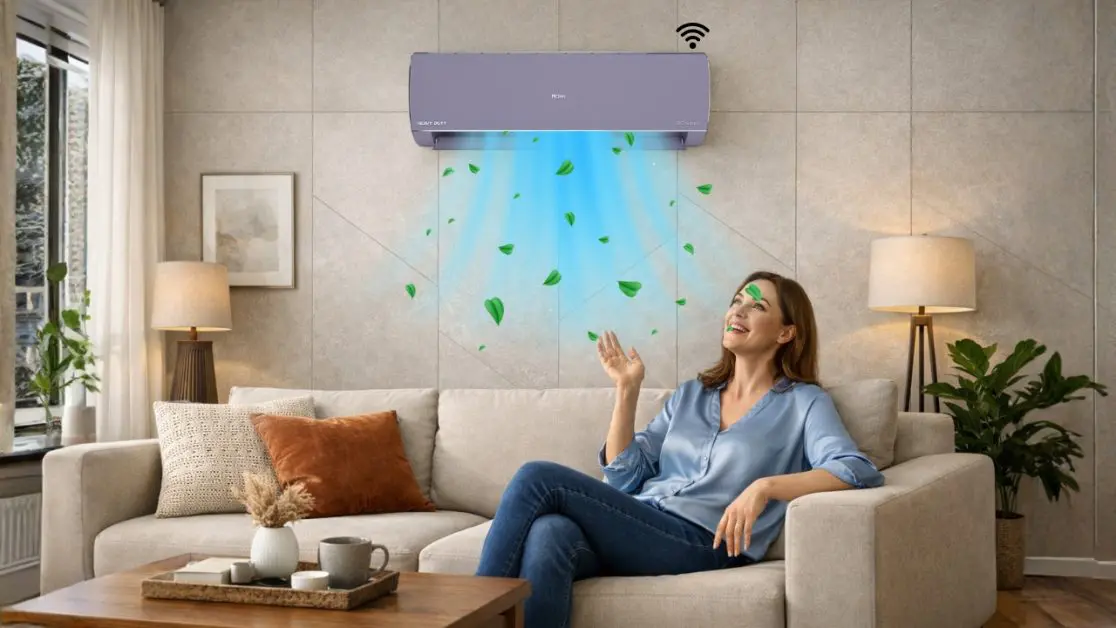
Most air conditioners still work on a simple assumption.
If the AC is on, someone must be in the room.
That assumption breaks down fast in real homes.
Indian households are dynamic. Doors open and close. People move between rooms. Day naps turn into evening conversations. Work-from-home blurs into family time.
Timers help. Schedules help. But they are guesses.
Smart ACs replace guesses with signals.
How smart ACs know when you’re in the room
This is not magic. It is sensing.
Modern smart ACs use that track movement and presence within a defined range. When activity stops, the system understands the room is empty. When movement resumes, cooling adapts again.
According to Haier’s AI-powered AtmoX platform, these systems can detect human presence up to 12 metres and adjust cooling automatically, without manual input.
The implication is simple.
Cooling responds to reality, not settings.
The quiet intelligence behind human detection
Here is what happens behind the scenes.
1. Sensors monitor movement patterns in the room.
2. AI interprets whether the space is actively occupied.
3. Cooling output adjusts in stages instead of switching off abruptly.
4. If the room stays empty, power use reduces further or stops entirely.
This layered response matters.
It avoids the discomfort of restarting cooling from scratch while still preventing energy waste.
Comfort stays intact. Bills come down.
Why this matters more in Indian homes
Indian summers are long.
Electricity costs are rising.
And AC usage has shifted from luxury to daily necessity.
But Indian homes are also multi-use spaces.
A bedroom doubles as a workspace.
The living room hosts guests, naps, and Netflix.
The AC is rarely in one fixed rhythm.
Smart ACs are built for this reality.
They respond to movement, not rigid schedules.
Cooling only where you actually sit
Presence detection is only half the story.
The next layer is targeted cooling.
Instead of cooling the entire room evenly, smart ACs focus airflow towards occupied zones. Think of it like adjusting a reading lamp instead of lighting the whole house.
Haier’s AI Target Cooling, for example, uses installation data and room layout to direct cooling precisely where people are sitting.
The system-level benefit is clear.
- Faster comfort
- Lower energy draw
- Less overcooling
Cooling becomes directional, not excessive.
Energy saving without behaviour change
The most effective technology removes friction.
Smart ACs do not ask users to learn new habits. They work around existing ones.
No constant remote adjustments.
No mental load.
No reminders.
The system adapts quietly.
This is important because behaviour-based energy saving rarely scales. Automation does.
What happens when the room empties
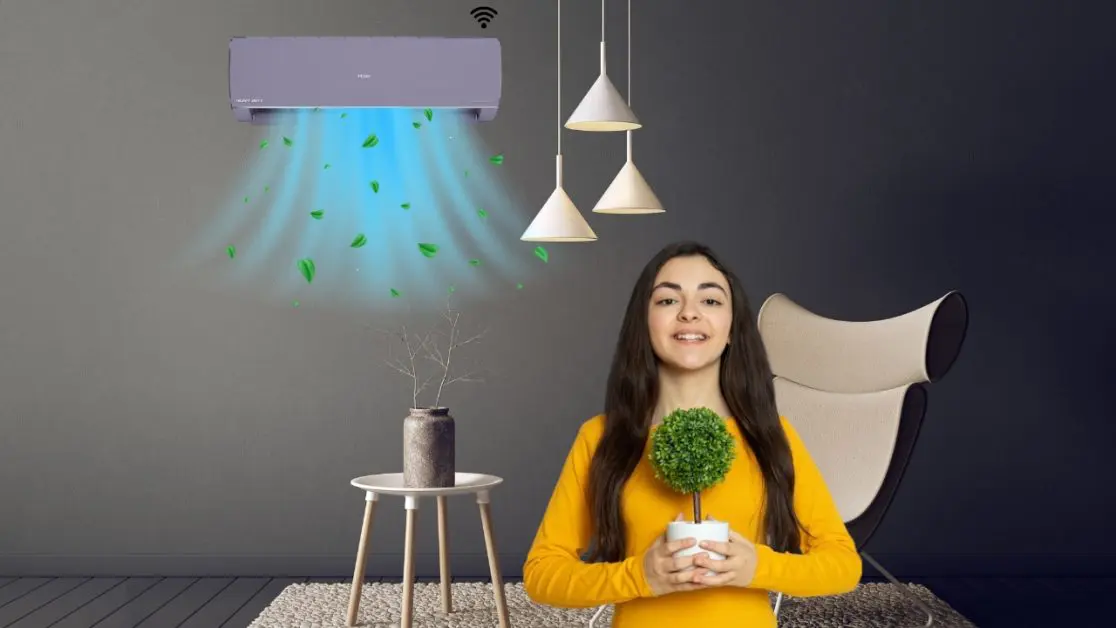
Here is where the real savings show up.
In Haier’s AI Eco 2.0 framework, this happens in steps, based on how close the room temperature is to the set temperature.
If the gap is large, cooling reduces gently.
If the gap narrows, power use drops further.
If the room stays empty, the system powers down intelligently.
No sudden stops. No discomfort when you return.
Just restraint.
Electricity awareness changes behaviour
Another overlooked shift happens on the user side.
Smart ACs with Electricity monitoring 2.0 show consumption in real time, often in units and currency. When users see patterns, habits change naturally.
Late-night cooling gets adjusted.
Eco modes get used more often.
Rooms are cooled with intention, not assumption.
This is not control through restriction.
It is clarity through visibility.
Three kinds of households. Three different wins
One option is the solo professional.
Out all day. Back late. AC usage spikes in the evening. Smart pre-cooling ensures comfort on arrival without running all afternoon.
The second option is the multi-generational home.
Different comfort needs across rooms. Targeted cooling ensures comfort without overloading the system.
Different lifestyles. Same underlying intelligence.
The hidden system shift
What is really changing here is not just cooling.
It is how appliances relate to human presence.
Smart ACs stop behaving like machines waiting for commands. They act more like systems that observe, learn, and respond.
The system sees patterns humans do not track.
And that is where efficiency lives.
Why this feels like the future of work and living

The same principle shaping modern workplaces shows up here.
Systems that respond to presence instead of schedules outperform rigid planning.
Whether it is hybrid offices or hybrid homes, responsiveness beats rules.
Smart ACs are a domestic version of that idea.
They optimize around people, not assumptions.
Aphorism worth remembering
Energy savings happen when systems stop guessing and start noticing.
That is the shift.
Where Haier fits naturally into this story
Haier’s approach to smart cooling reflects this philosophy.
Its AI Atmox platform combines human detection, targeted cooling, Electricity monitoring 2.0, and adaptive eco modes into one learning system rather than isolated features.
The point is not technology for its own sake.
There are fewer interruptions.
Lower bills.
And homes that feel a little more in sync with the people inside them.
What this means going forward
As energy costs rise and climate awareness sharpens, efficiency will stop being optional.
But efficiency does not need sacrifice.
Smart ACs show that comfort and conservation can coexist when systems are designed around real behaviour.
Not ideal behaviour.
Real behaviour.
The kind that forgets to turn the AC off.
The kind that moves rooms without thinking.
The kind that just wants the house to work.
The quiet takeaway
The smartest appliances do not ask for attention.
They notice when you leave.
They respond when you return.
They save energy without announcing it.
And over time, that silence adds up.
To lower bills.
To calmer homes.
To decisions that feel less heavy.
That is not just smart cooling.
That is thoughtful living.
Frequently Asked Questions
How does a smart AC know I’m in the room? Is there a camera?
No cameras. Smart ACs use motion and presence sensors that detect movement patterns, not images, faces, or identity.
Does energy saving mean weaker cooling during peak summer?
Not at all. Full cooling power is used when you’re present. Energy saving happens only when cooling isn’t actually needed.
What is Electricity Monitoring 2.0 and why does it matter?
It shows real-time electricity use, often in units and cost, so users naturally adjust habits without being told to.
What happens if the room stays empty for a long time?
Cooling reduces step-by-step and eventually powers down intelligently, no abrupt stops, no wasted energy.
I live alone and I’m out most of the day. Is a smart AC worth it?
Absolutely. Smart pre-cooling gives comfort when you return without running the AC all afternoon.