


A smart AC today is not just about cooling air. It thinks for you, saves electricity automatically, and cleans itself without reminders.
Systems like AI-powered climate control, intelligent energy management, and self-cleaning mechanisms work quietly in the background so comfort feels natural, bills stay predictable, and maintenance stops being a chore.
That is the promise.
The real story is how this changes everyday life in Indian homes.
Why does cooling still feel harder than it should?
It usually begins the same way.
You come home after a long day.
The room feels warm.
You switch on the AC.
Ten minutes later, it was too cold.
You reach for the remote.
Then again.
And again.
This dance plays out in homes across India every summer.
The problem is not heat.
It is guesswork.
Most air conditioners still assume one thing.
That humans enjoy managing temperature.
They do not.
They want the room to feel right without thinking about it.
The shift from control to intelligence
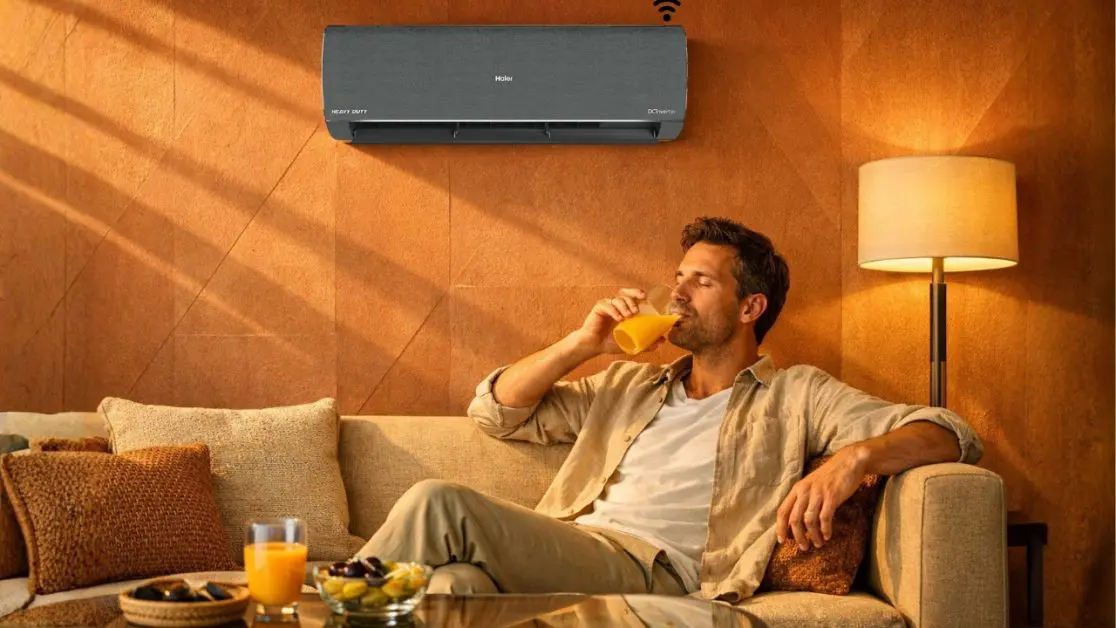
Older appliances waited for instructions.
Modern ones take responsibility.
This is the quiet shift happening inside today’s smart ACs.
Instead of reacting to button presses, intelligent climate systems observe patterns.
- When the room warms up
- How humidity behaves during monsoon
- When people usually come home
- How quickly comfort drops when doors open
This is not magic.
It is systems thinking applied to daily life.
Haier’s AI-powered climate control, built around AI Atmox technology, is designed on this idea. It combines environmental sensing, user behaviour, and real-time optimisation to remove manual effort from cooling decisions .
The goal is simple.
Comfort without micromanagement.
What does it mean when an AC thinks
Thinking does not mean talking.
It means anticipating.
AI Climate Control in plain terms
A thinking AC constantly answers three questions.
- What is the room experiencing right now
- How do people usually respond in this situation
- What is the most efficient way to restore comfort
This shows up in small but meaningful ways.
- Cooling adjusts during peak afternoon heat without overshooting
- Performance changes as seasons shift from summer to monsoon
- Power draw reduces once the room stabilises
No modes to switch.
No timers to remember.
This is especially relevant in Indian homes where usage patterns are irregular. Parents step in and out. Kids nap during afternoons. Work-from-home schedules blur lines.
A static temperature setting cannot keep up.
Pre-cooling is not a luxury, it is respect for your time
There is a moment every working professional knows.
You open the door after a commute.
Warm air hits your face.
The AC is still off.
Now imagine the room already feels calm.
AI Pre-Cooling explained simply
Pre-cooling uses location awareness and routine learning to prepare the room before you arrive.
When the system detects you are nearing home, cooling begins automatically. No schedules. No manual triggers.
The benefit is not speed.
It is timing.
You are not waiting for comfort.
Comfort is waiting for you.
This matters more than it sounds. It turns cooling from a reactive act into a welcoming gesture.
Target cooling solves the biggest inefficiency at home
Most ACs cool the entire room.
Most people occupy one corner of it.
This mismatch wastes energy.
AI Target Cooling as a system
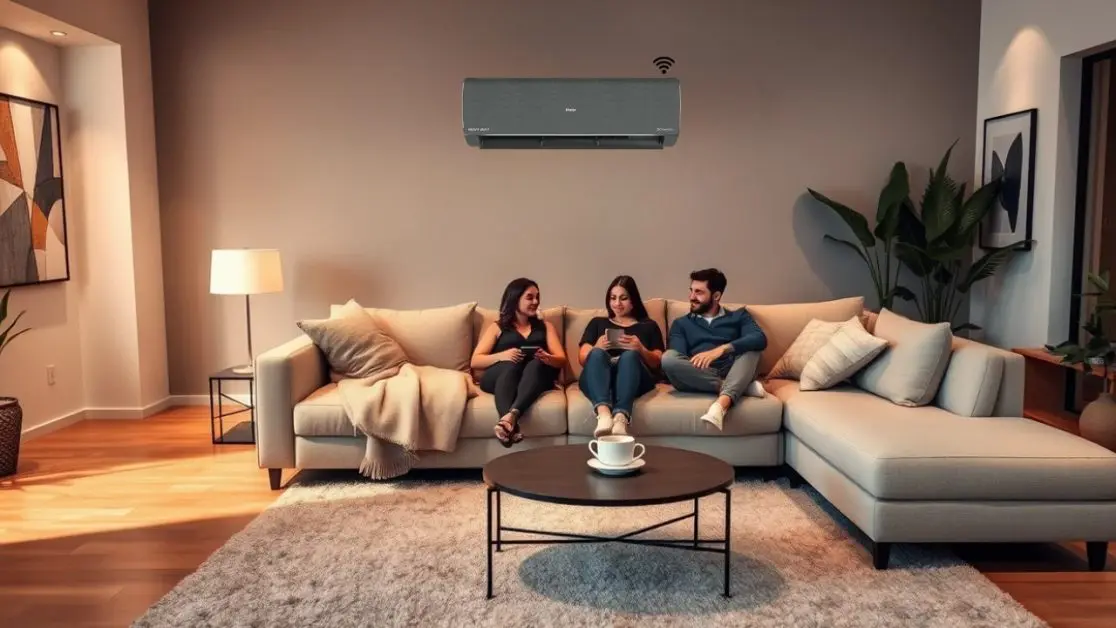
Target cooling focuses airflow where it is actually needed.
- Sofa area during evening TV time
- Bedside during sleep
- Work desk during office hours
Instead of flooding the whole space, cooling becomes directional.
The implication is powerful.
- Faster comfort
- Lower energy consumption
- Less overcooling
In large Indian living rooms and open bedrooms, this is not a feature. It is a correction.
Saving power without thinking about saving power
Energy saving usually demands discipline.
Turn it off.
Lower the temperature.
Switch to eco mode.
That discipline rarely lasts.
AI Eco 2.0 mode changes the equation
Instead of expecting behaviour change, the AC adapts itself.
AI Eco 2.0 continuously evaluates the gap between room temperature and the set point.
- Larger gap means stronger cooling
- Smaller gap means gentler operation
- Near equilibrium means minimal power draw
The system shifts automatically between levels based on need.
This keeps comfort intact while trimming unnecessary consumption.
For Indian households watching electricity bills climb every summer, this matters more than spec sheets.
Electricity monitoring 2.0 turns anxiety into awareness
Most people check electricity bills once a month.
By then, it is too late.
What real-time monitoring changes
When your AC shows:
- Daily usage
- Mode-wise consumption
- Cost in rupees, not units
Behaviour changes naturally.
You do not feel restricted.
You feel informed.
Smart dashboards and app views make energy visible. And visible systems get managed better.
This is how savings actually stick.
Human detection is the politest feature you never notice
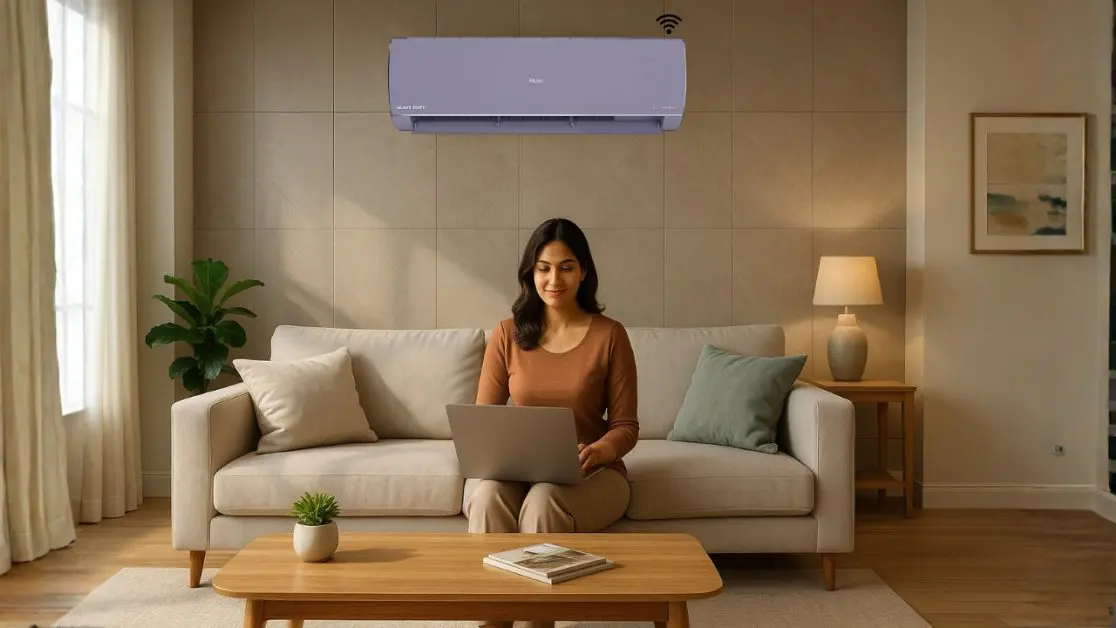
There is a silent waste in many homes.
The AC runs in an empty room.
No one forgot.
Life just happened.
How human detection works in practice
Sensors track movement and presence.
- No activity for a while, cooling reduces
- Longer absence, power switches off
- Return triggers normal operation again
No scolding notifications.
No guilt.
Just a quiet correction.
This is especially useful for families with kids, elderly parents, or multi-room usage where attention is divided.
Self-cleaning fixes the problem no one wants to discuss
Every AC owner knows this moment.
The air smells slightly off.
Cooling feels weaker.
Cleaning feels overdue.
But cleaning is inconvenient.
Why self-cleaning matters more than you think
Dust and moisture reduce efficiency. They increase power use. They affect air quality.
AI-powered self-clean systems tackle this from the inside.
- Indoor units use frost-based cleaning cycles to remove residue
- Outdoor units reverse airflow to blow away dust from condenser coils
- The system notifies you once cleaning is complete
No dismantling.
No service calls for routine hygiene.
Cleaner coils mean faster cooling and lower bills over time .
This is not about convenience alone. It is about preserving performance across years.
The hidden system behind all of this
Individually, these features sound impressive.
Together, they form a system.
- Thinking reduces guesswork
- Saving becomes automatic
- Cleaning preserves efficiency
This is the real upgrade.
Not smarter buttons.
Smarter defaults.
Haier’s AI-enabled ACs are designed around this idea. The technology does not demand attention. It earns trust by staying invisible.
What this means for modern Indian homes
Homes today are evolving.
- Smaller families
- Flexible schedules
- Shared spaces
- Higher energy awareness
Appliances must adapt to this reality.
A thinking, saving, self-cleaning AC fits naturally into this rhythm. It respects time. It respects energy. It respects effort.
The most important insight is simple.
The best technology is the kind you forget exists.
When cooling feels right, bills stay reasonable, and maintenance disappears, life feels more sorted.
That is not marketing.
That is good system design.
And once you experience it, going back feels surprisingly difficult.
Frequently Asked Questions
Why do I keep adjusting my AC remote every 10 minutes?
Because traditional ACs depend on you to manage comfort. They don’t understand heat buildup, humidity shifts, or how your body reacts over time. Smart ACs remove this guesswork by adjusting cooling automatically as conditions change.
Why does my AC feel too cold and then too warm again?
Static temperature settings can’t adapt to real-world variables like sunlight, cooking heat, or doors opening. AI-powered climate control constantly recalibrates instead of locking into one number.
Do I really need “smart” cooling, or is this just overengineering?
If cooling feels effortless and you stop thinking about settings altogether, that’s not overengineering, that’s good design. Intelligence replaces micromanagement.
What does “AI climate control” actually do in daily life?
It continuously evaluates:
Current room temperature & humidity
How fast comfort drops
How you usually react
Then it adjusts cooling strength automatically without you switching modes or remembering settings.
Will the AC keep changing temperatures on its own?
Yes, but subtly. The goal isn’t noticeable shifts it’s maintaining a stable comfort zone without overshooting or freezing the room.
Is pre-cooling just about faster cooling?
No. It’s about timing, not speed. The room feels comfortable the moment you walk in, no waiting, no discomfort phase.
Do I need to set schedules for pre-cooling?
No. AI systems learn routines automatically and trigger cooling based on real-life patterns rather than fixed clocks.