

If you want simple cooling at the lowest upfront cost, a normal AC works.
If you want lower electricity bills, smarter comfort, and less daily effort, a smart AC is the better long-term choice.
The real difference is not cooling. It is how intelligently that cooling fits into your life.
The moment that decides everything.
It is 6:45 pm in May.
You walk into your home after a long commute. The room feels heavy. Heat sits on the sofa, the walls, the air itself.
You switch on the AC.
And then you wait.
Five minutes. Sometimes ten.
This is where most buying decisions quietly begin.
Not in showrooms.
Not in specifications.
But I’m waiting.
Cooling is not the problem. Delay is.
What is the real difference between a smart AC and a normal AC?
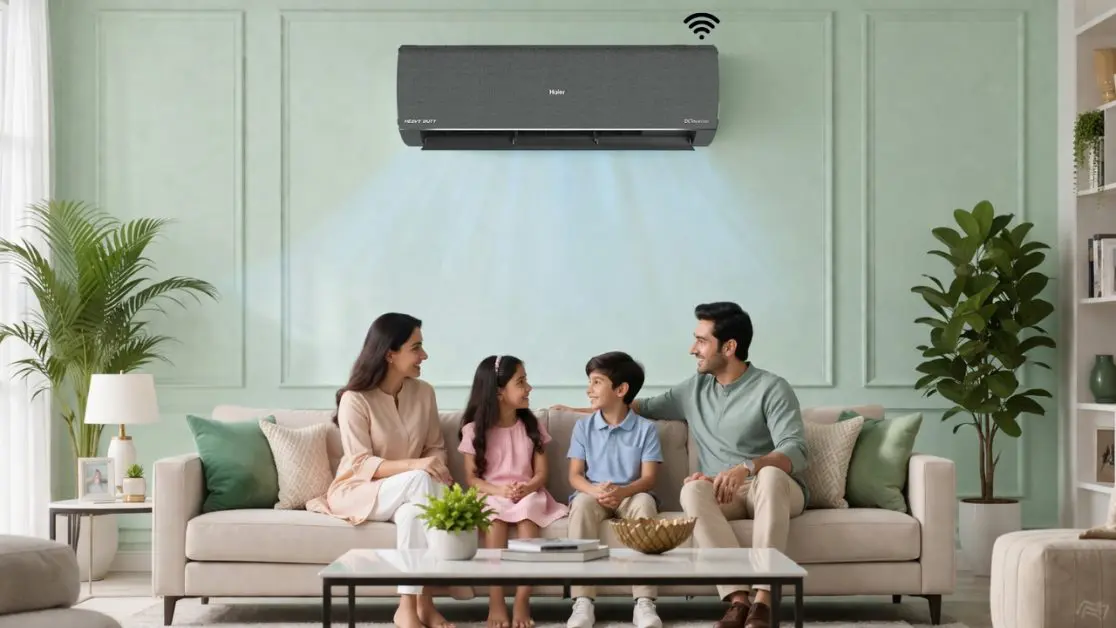
Two machines. Two philosophies.
A normal AC follows a simple rule.
- You press a button
- It starts cooling
- You wait
A smart AC works differently.
- It learns your habits
- It predicts your needs
- It prepares your space
That shift changes everything.
Quick comparison: Smart AC vs Normal AC
| Feature | Normal AC | Smart AC |
| Cooling style | Reactive | Pre-cooling |
| Control | Remote/manual | App, voice, AI |
| Energy usage | Fixed | Adaptive |
| Comfort level | Uniform | Personalized |
| Electricity tracking | No | Yes |
| Automation | None | High |
The difference is not hardware. It is intelligence layered on top of it.
Why traditional cooling feels outdated in modern Indian homes
Homes have changed. ACs did not.
A typical Indian home today is not predictable.
- Work from home on Monday
- Office on Tuesday
- Guests on weekends
- Kids moving between rooms
But a normal AC assumes one thing.
A fixed routine.
That assumption breaks quietly.
- AC runs when no one is in the room
- Cooling starts after discomfort begins
- Temperature stays constant even when your body does not
Traditional ACs cool spaces. Smart ACs understand behavior.
What makes a smart AC actually “smart”?
It learns before it cools
Modern smart ACs are built around technology that continuously observe and adapt.
For example, Haier’s AI Atmox platform focuses on three invisible layers:
- Prediction
- Precision
- Optimization
According to the technology overview, AI climate control automatically analyzes temperature, environment, and usage patterns to adjust cooling dynamically without manual input .
That sounds technical.
The real impact is simple.
You stop thinking about the AC.
Key smart features that change daily life
1. AI Pre-Cooling
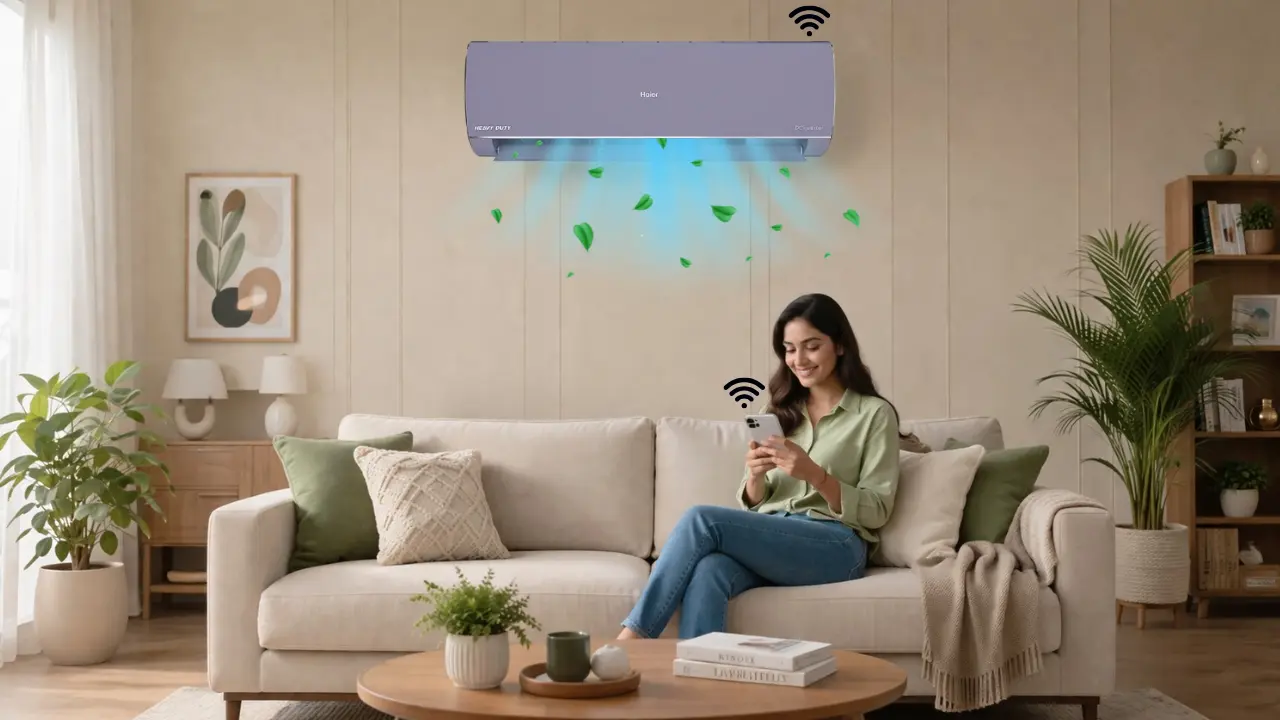
The AC starts cooling before you arrive.
Using geofencing, it detects when you are within about 100 meters and prepares the room in advance .
No remote. No waiting.
Comfort should be waiting for you. Not the other way around.
2. AI Target Cooling
Instead of cooling the entire room, it focuses airflow where you are.
- Faster cooling
- Less energy waste
- More direct comfort
As described in the technology, it uses layout and positioning data to deliver cooling exactly where needed .
Cooling everywhere is wasteful. Cooling where it matters is efficient.
3. AI Eco 2.0 Mode
Energy saving becomes automatic.
The technology adjusts cooling levels based on the temperature gap.
- Large gap → higher cooling
- Small gap → lower power
This dynamic shifting reduces electricity consumption without affecting comfort .
Savings are not about turning off appliances. They are about smarter operations.
4. Human Detection
The AC knows when the room is empty.
- Reduces power after inactivity
- Switches off automatically after extended absence
This prevents unnecessary usage and cuts electricity waste .
Energy waste usually happens when nobody is watching. Smart technology fixes that.
5. Electricity monitoring 2.0
You can see how much power your AC consumes.
- Daily usage
- Monthly trends
- Cost estimates
This turns electricity from a surprise into a technology you can manage .
What gets measured gets optimized.
The cost question everyone actually cares about
Is a smart AC worth the higher price?
Let’s break it down clearly.
Option 1: Buy a Normal AC
Cost
- Lower upfront price
- Minimal features
Benefits
- Reliable cooling
- Simple usage
Hidden costs
- Higher electricity bills over time
- Manual adjustments daily
- Inefficient usage during absence
Option 2: Buy a Smart AC
Cost
- Higher upfront investment
Benefits
- Lower energy consumption
- Reduced electricity bills
- Automated comfort
- Long-term savings
Hidden advantage
- Less mental effort
- Better lifestyle alignment
The simple truth
A normal AC is cheaper to buy.
A smart AC is cheaper to live with.
Where each option actually makes sense
When a normal AC is enough
- Guest rooms used occasionally
- Short-term rentals
- Budget-first decisions
In these cases, simplicity wins.
When a smart AC makes more sense
- Daily usage bedrooms or living rooms
- Homes with working professionals
- Families managing electricity costs
- Smart home setups
In these environments, intelligence compounds.
The bigger shift most people miss
This is not about ACs anymore
It is about how homes are evolving.
Look around.
- Phones became smart
- TVs became smart
- Speakers became smart
Now cooling is following the same path.
Because the expectation has changed.
People no longer want control. They want technology that works without control.
A small detail that changes everything
Think about this.
How often do you adjust your AC every day?
- Increase temperature at night
- Decrease after waking up
- Turn off when leaving
- Turn on when returning
Each action feels small.
But it repeats daily.
Smart ACs remove repetition.
And that is where real convenience lives.
So, which one should you buy?
Ask a better question first
Do you want:
- Cooling on demand
You control everything manually - Cooling that adapts
The technology adjusts to your life - Cooling that thinks ahead
The technology predicts and prepares
Most people think they are choosing between machines.
They are actually choosing between effort levels.
The final insight
A refrigerator runs all day.
An AC shapes how you feel every day.
Which means this is not just a purchase decision.
It is a lifestyle decision.
Normal ACs cool rooms.
Smart ACs remove friction from everyday living.
What this means for modern Indian homes
As homes become busier, smaller, and more dynamic, appliances need to do more than just function.
They need to fit into life without effort.
That is where technology like Haier’s AI-driven smart cooling begins to matter.
Not because they are advanced.
But because they quietly solve problems you deal with every day.
The future of cooling is not colder air.
It is better timing, better efficiency, and less thinking.
And once you experience that shift, going back feels… outdated.
Frequently Asked Questions
Should I just buy a normal AC and save money right now?
If your priority is upfront cost and basic cooling, yes. But if you’ll use the AC daily, the long-term electricity savings and convenience of a smart AC usually outweigh the initial price difference.
Why do I feel confused even after comparing specs?
Because the real difference isn’t specs, it’s experience. You’re choosing between manual effort vs automated comfort, not just tonnage or star rating.
Am I paying extra just for “fancy features” in a smart AC?
Not really. You’re paying for automation, energy optimization, and reduced daily interaction. These features translate into real savings and convenience over time.
Will I regret not buying a smart AC later?
If you value convenience, probably yes. Many people only realize the friction of manual control after experiencing automation.
What does “AI cooling” even mean in real life?
It means the AC adjusts temperature, airflow, and power automatically based on your habits and environment without you doing anything.
Is app control actually useful or just a gimmick?
It’s useful if you’re away from home often. You can turn on cooling remotely or monitor energy usage.
Will I actually use voice control for my AC?
Maybe not daily, but it adds convenience especially when your hands are full or at night.
Can a smart AC really reduce my electricity bill?
Yes, through adaptive cooling, eco modes, and usage tracking that helps you optimize consumption.