
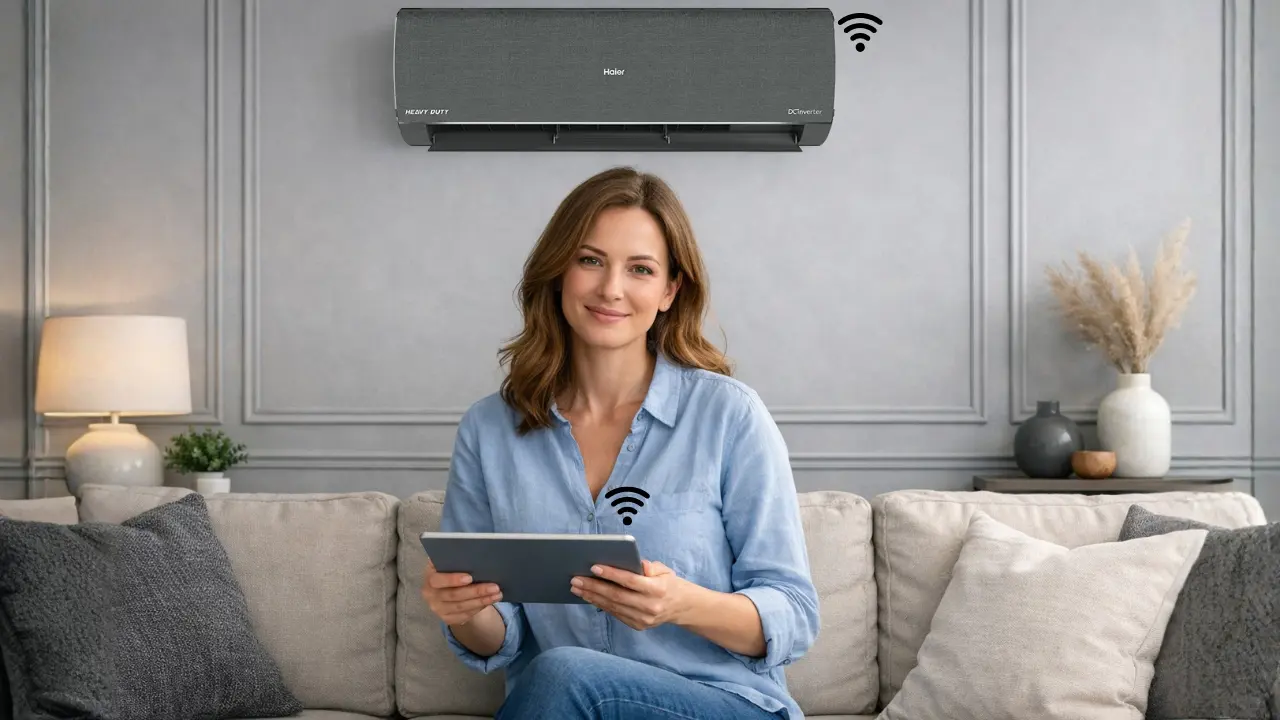

Smart cooling today means your air conditioner understands your routines, adapts to your home, and balances comfort with energy use automatically.
Instead of fixed temperatures and constant adjustments, modern AI-powered ACs learn how you live, anticipate your needs, and cool only when and where it matters. The result is comfort that feels natural, efficient, and quietly dependable.
Why does cooling still feel like effort in many Indian homes?
It usually starts with a familiar scene.
You walk in after a long day.
The room is warm.
You switch on the AC.
Five minutes later, you feel cold.
Ten minutes later, someone turns it down again.
This cycle repeats across homes in Delhi summers, Mumbai humidity, Bengaluru evenings, and Chennai afternoons.
The problem is not the heat.
The problem is static cooling in a dynamic life.
Indian homes change constantly.
- People move between rooms
- Occupancy fluctuates
- Weather shifts during the day
- Power costs matter more than ever
Yet most cooling systems still assume one thing.
That comfort can be fixed to a single number.
It cannot.
Lifestyle-first cooling changes the question
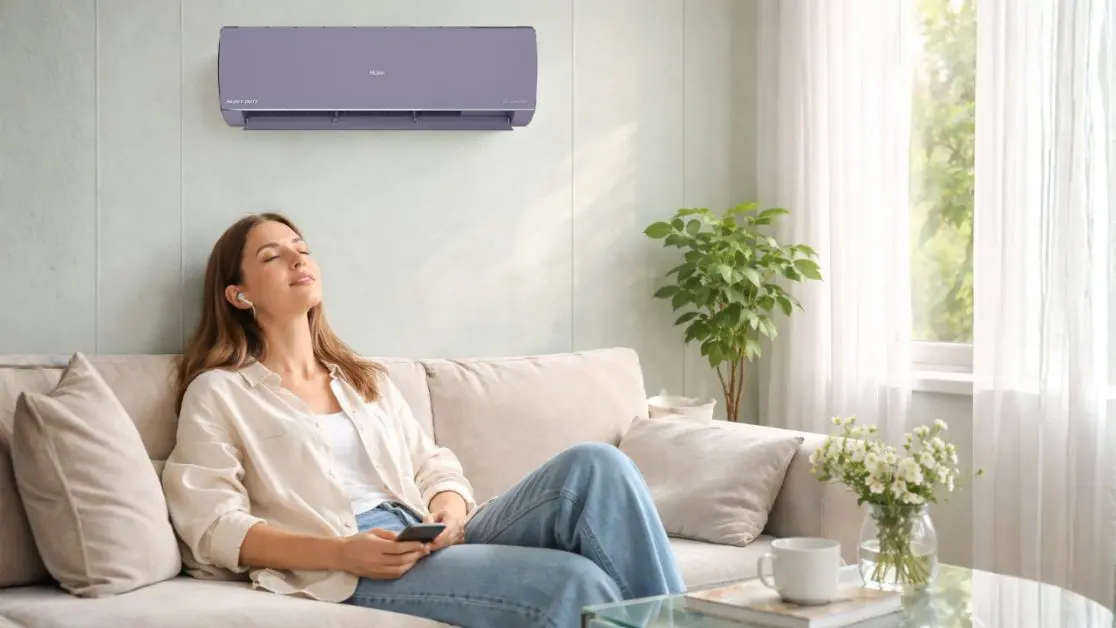
Older air conditioners asked one question.
What temperature do you want?
Smart cooling asks for a better one.
How do you live in this space?
This shift matters.
Because comfort is not about numbers.
It is about timing, presence, and intent.
A working professional needs fast relief at night, not full-day cooling.
Parents want steady comfort without overcooling kids.
Couples setting up a new home want efficiency without micromanagement.
Solo residents want lower bills without compromising sleep.
Smart cooling systems start by observing these patterns instead of ignoring them.
From manual control to intelligent adaptation
Traditional AC usage relies on habits.
- Fixed temperature settings
- Timers that assume predictable schedules
- Manual switching between modes
Smart cooling replaces habit with learning.
Modern AI climate systems combine multiple inputs.
- Room temperature
- Outdoor conditions
- Time of day
- Usage history
- Human presence
This creates a system that adjusts continuously, not occasionally.
According to the AI climate control framework outlined in Haier’s AI Atmox platform, the system uses real-time environmental data and machine learning to optimize cooling while preventing overuse and overcooling
In simple terms.
The AC does the thinking so you do not have to.
Pre-cooling that respects your time
One of the most practical shifts in smart cooling is predictive pre-cooling.
Instead of waiting for you to feel uncomfortable, the system anticipates arrival.
Here is how it plays out in real life.
You leave the office.
You are stuck in traffic.
The system detects proximity.
Cooling begins before you enter.
By the time you unlock the door, the room feels ready.
No timers.
No reminders.
No wasted hours of cooling an empty room.
This approach is particularly useful for urban professionals whose schedules change daily but still want predictable comfort.
Targeted cooling instead of blanket cooling
Most people do not use the entire room equally.
You sit on the sofa.
You sleep on the bed.
You work at a desk.
Yet traditional ACs cool everything equally.
Smart cooling introduces targeted airflow.
Instead of cooling the whole room, the system directs air to occupied zones. This reduces energy consumption and speeds up comfort delivery.
The benefits stack up quickly
- Faster cooling where you actually are
- Less energy wasted on empty areas
- More consistent comfort
This is not a premium luxury.
It is a practical correction to decades of inefficiency.
Energy efficiency without lifestyle compromise
Energy saving often sounds like sacrifice.
Lower usage.
Higher temperatures.
Reduced comfort.
Smart cooling changes that trade-off.
AI-powered eco modes dynamically adjust capacity based on the gap between room temperature and desired comfort. As the gap reduces, the system automatically shifts to lower power levels.
The system does not ask you to choose between comfort and savings.
It balances both continuously.
What this looks like in practice
- High cooling power during peak heat
- Gradual reduction once comfort is reached
- Automatic adjustments during sleep
- Lower consumption during partial occupancy
This matters in a country where electricity costs vary by city, season, and time of use.
Human detection makes cooling contextual
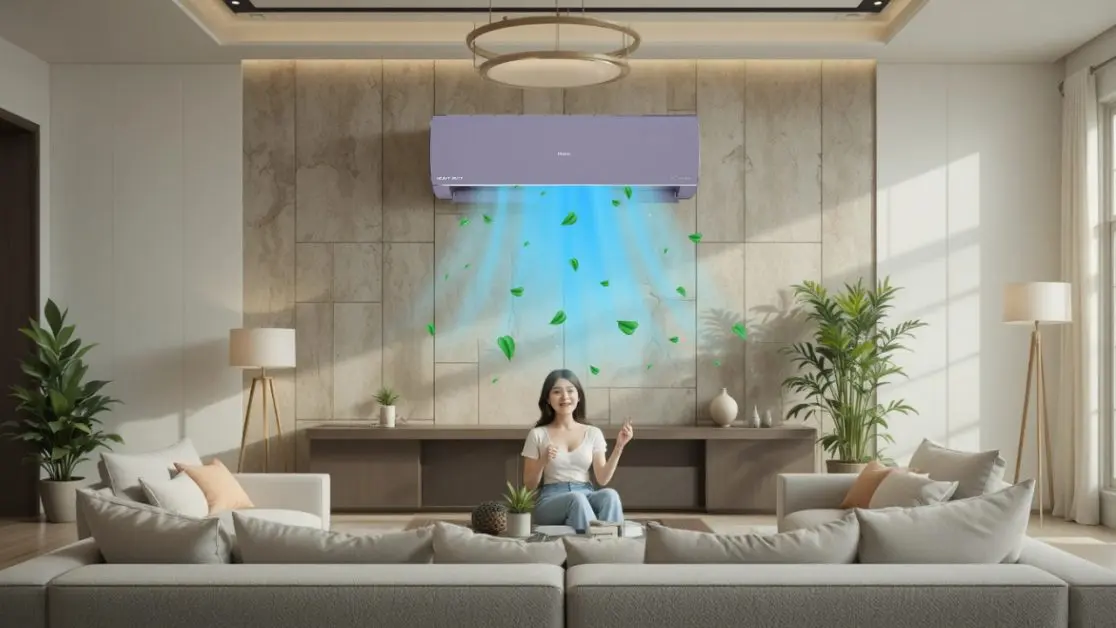
One of the most underrated advances in smart cooling is occupancy awareness.
AI-powered sensors detect whether people are present. If the room is empty, the system shifts to power-saving modes automatically.
No forgotten switches.
No wasted hours of cooling an empty room.
In some configurations, the system reduces cooling after inactivity and powers down entirely if absence continues.
For families, this prevents accidental overuse.
For solo residents, it directly lowers monthly bills.
Comfort remains uninterrupted when someone returns.
Electricity visibility changes behavior
You cannot improve what you cannot see.
Smart cooling systems now offer detailed Electricity monitoring 2.0 through companion apps.
This includes:
- Daily and monthly usage
- Mode-wise consumption comparison
- Cost estimates in currency
- Custom energy targets
When users see real numbers instead of vague assumptions, behavior changes naturally.
People stop overcooling.
They trust eco modes more.
They adjust without feeling restricted.
This transparency builds long-term trust between user and appliance.
Clean systems sustain comfort
Cooling efficiency drops when machines get dirty.
Dust buildup reduces airflow.
Moisture encourages odor.
Manual cleaning gets postponed.
AI-enabled self-cleaning systems address this quietly.
- Indoor units clean themselves after usage cycles
- Outdoor units reverse airflow to clear dust
- Notifications prompt cleaning only when needed
The result is consistent performance across seasons with minimal intervention.
Clean systems cool faster, consume less power, and last longer.
Smart cooling fits the Indian rhythm
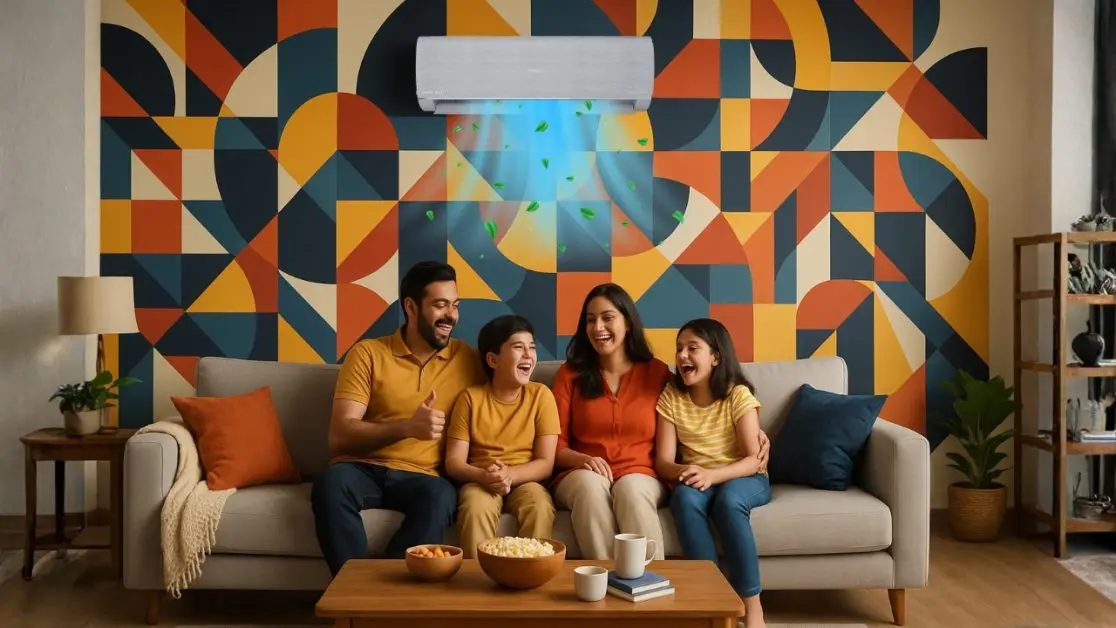
Indian households do not follow a single pattern.
Morning heat builds early.
Afternoon usage fluctuates.
Evenings bring family together.
Nights demand quieter, gentler cooling.
Smart cooling respects this rhythm.
It adapts to monsoon humidity.
It handles extreme summer peaks.
It reduces load during mild evenings.
It optimizes sleep comfort without manual changes.
This flexibility matters more than raw specifications.
Why this shift feels bigger than appliances
Smart cooling is not about features.
It is about mental load.
Every decision removed from daily life adds up.
- One less thing to remember
- One less adjustment to argue about
- One less bill surprise
When appliances adapt to people instead of the other way around, homes feel calmer.
That is the real value.
A useful framework for choosing smart cooling
When evaluating a smart AC, focus on systems, not slogans.
One option is automation
Does the system learn and adjust without constant input?
The second option is efficiency
Does it reduce power use dynamically, not just on paper?
The third option is visibility
Can you track and understand consumption clearly?
The right balance depends on lifestyle, not square footage.
The bigger implication
Cooling is becoming contextual.
Just like phones learned habits and cars adapted driving modes, air conditioning is moving from control to intelligence.
The homes that feel most comfortable in the coming years will not be the ones with the lowest temperature.
They will be the ones where cooling understands intent.
Smart cooling designed around lifestyle is not a trend.
It is the next baseline.
And once you experience it, going back feels oddly difficult.
Because the best technology does not demand attention.
It quietly makes life easier.
Frequently Asked Questions
Why does adjusting my AC still feel like a constant task even with a remote?
Because most ACs still rely on static settings. Your day, occupancy, and weather change constantly but the cooling logic doesn’t. Smart cooling removes this mental load by learning patterns instead of waiting for commands.
I’m tired of arguing with my family about the “right” temperature. Why does this keep happening?
Comfort isn’t a single number. Kids, adults, sleepers, and working people all feel temperature differently. Smart cooling adapts airflow, intensity, and timing so comfort stays balanced without manual compromise.
My home isn’t used the same way all day. Why does my AC assume it is?
Traditional systems are room-centric, not lifestyle-centric. Smart cooling observes when, where, and how you use space, and adjusts cooling only where it matters.
I only sit on the sofa or sleep on the bed. Why cool the whole room?
You shouldn’t have to. Targeted airflow focuses cooling on occupied zones, reducing energy waste while delivering faster comfort.
My AC starts smelling after a few months. Why does this happen?
Dust and moisture accumulate inside units, reducing airflow and causing odor. Manual cleaning is often delayed.