
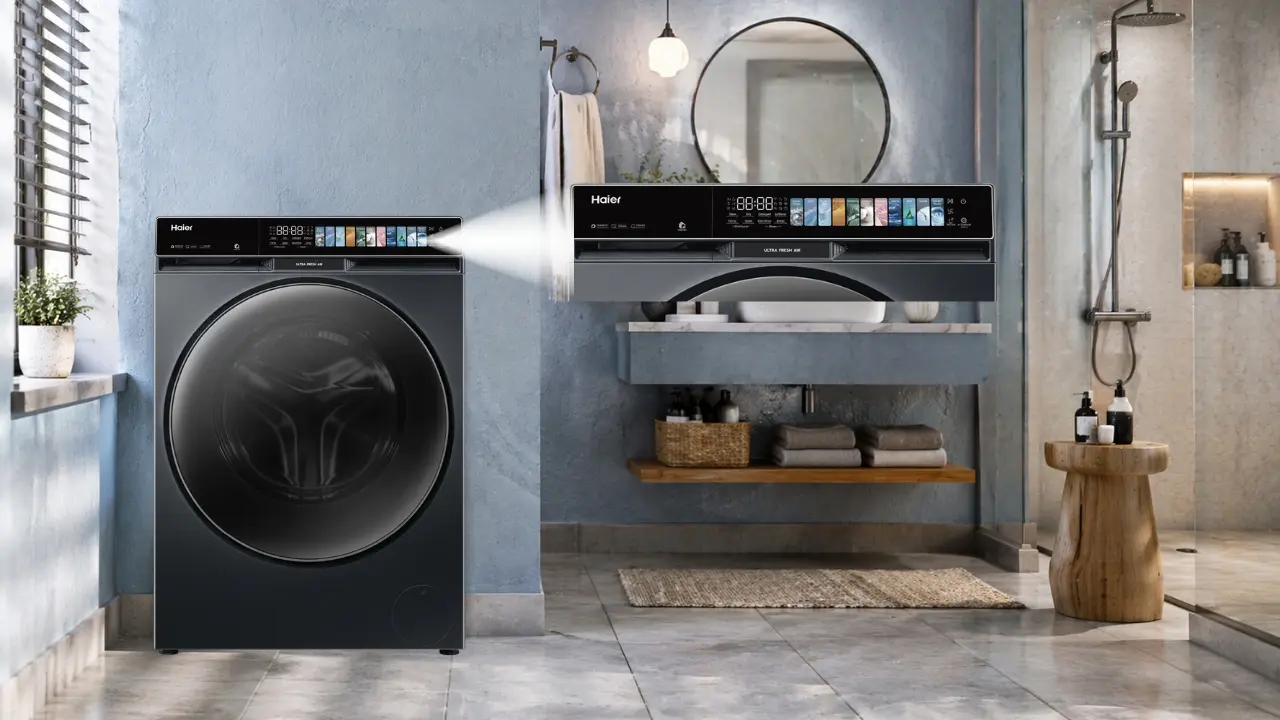

Smart displays are changing home appliances from machines that just sit there to systems that learn, adapt, and guide.
Appliances now use visual intelligence to make decisions easier, cut down on work, and make everyday tasks feel natural, quick, and even fun, instead of buttons and guesswork.
The moment you realize screens are not just screens.
It is 9:30 PM.
Dinner is done. The washing machine is loaded. Someone presses a button and walks away.
But something has changed.
The machine does not just start. It shows you what it is doing. Fabric detected. Load adjusted. Time optimized. Energy saved.
No manual thinking. No second guessing.
Just clarity.
That is what smart displays are really doing.
They are not adding screens.
They are removing confusion.
A good interface does not add information. It removes the need for it.
From Buttons to Decisions: The Quiet Shift in Appliances
Why traditional appliances feel outdated now
For decades, appliances followed a simple model:
- Buttons
- Knobs
- Fixed programs
- User guesswork
You had to learn the machine.
But modern Indian homes do not have time for that. Between work calls, school routines, and evening chaos, people want appliances that understand them instead.
This is where smart displays step in.
What smart displays actually change
A smart display does three things:
1. Visual clarity
It shows exactly what is happening. No guessing
2. Guided choices
It suggests the right settings based on real inputs
3. System intelligence
It connects data, sensors, and usage patterns into decisions
Take something as simple as laundry.
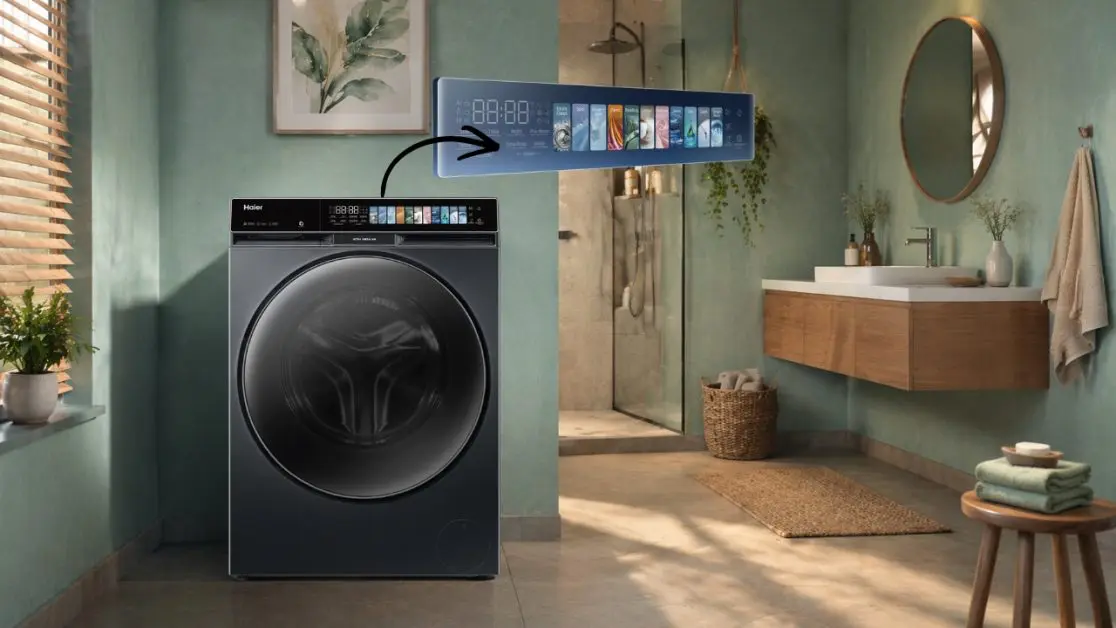
Modern machines like the Haier 12 Kg F9 Pro Front Load Washing Machine (HW120-DM14F9PBKU1) use an AI-powered colour touch panel that makes interactions intuitive and visual.
Similarly, the Haier 10 Kg Fully Automatic Front Load Washing Machine (HW100-DM14F9BKU1) brings the same intelligent interface into slightly more compact homes, ensuring consistency in experience.
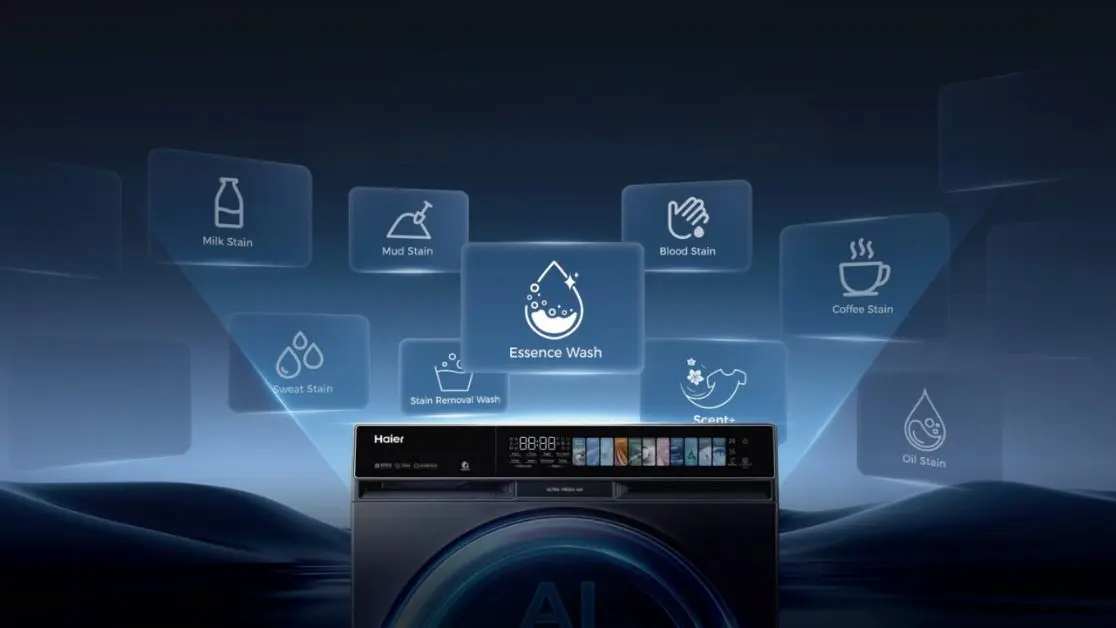
Now, with the Haier 12 Kg F11 Front Load Washing Machine (HW120-DM14F11BKU1), the experience evolves further combining an AI colour full panel with one-touch AI wash that automatically senses fabric type, load, and dirt level to select the ideal cycle.
For those seeking even greater convenience, the Haier 12 Kg F11 Front Load Washer & Dryer (HWD120-DM14F11BKU1) extends this intelligence into a complete wash-and-dry solution delivering the same intuitive interface with added seamless drying capability.
You are no longer selecting blindly.
You are responding to a system that already understands the load.
When machines start thinking, users stop overthinking.
The Hidden System Behind Smart Displays
What makes a display “smart
A screen alone is not smart.
A calculator has a screen. That does not make it intelligent.
A smart display combines:
- Sensors that detect real-world conditions
- AI models that interpret those conditions
- Interfaces that communicate decisions clearly
Think of it like a good waiter at a restaurant.
They do not just take orders.
They suggest. They anticipate.
Smart displays bring that same behavior into appliances.
Three layers of intelligence working together
| Layer | What it does | Real impact |
| Input | Detects load, fabric, environment | No manual setup |
| Processing | AI decides optimal settings | Better efficiency |
| Output | Display shows clear actions | Zero confusion |
In both the HW120-DM14F9PBKU1 and HW100-DM14F9BKU1, one-touch AI wash automatically senses fabric type, load, and dirt level to choose the right settings.
That is not convenient.
That is decision automation.
Smart Displays Are Redesigning Everyday Moments
The laundry routine, reimagined
Laundry used to involve:
- Sorting
- Selecting programs
- Adjusting time and water
Now it looks different.
- Tap once
- Watch the display confirm
- Let the system run
Both Haier models feature large colour touch panels with dedicated fabric programs like cotton, jeans, shirts, and delicate wear displayed visually.
That means no decoding symbols.
No flipping manuals.
Clarity is the new luxury.
The Indian home, simplified
Picture a weekday morning.
Someone is getting ready for work. Another is packing lunch. The washing machine runs quietly in the background.
With features like Night Wash and silent Direct Motion motors, these machines do their job without interrupting the rhythm of the home.
And the display keeps you informed without demanding attention.
That balance matters.
Three Ways Smart Displays Change Behaviour
1. They reduce decision fatigue
Every small choice takes energy.
Temperature. Mode. Timer. Settings.
Smart displays remove that burden.
Cost: Initial adjustment to a new interface
Benefit: Long-term mental ease
2. They improve efficiency without effort
Most people want to save electricity.
Few want to think about how.
Smart displays connect with AI systems that optimize:
- Water usage
- Energy consumption
- Cycle duration
Eco wash systems automatically match water levels and washing time for efficiency.
Cost: Trusting automation
Benefit: Lower bills without extra effort
3. They create confidence in usage
Traditional appliances create doubt.
Did I select the right mode?
Will this damage clothes?
Smart displays remove that uncertainty.
They show the logic behind decisions.
Cost: None
Benefit: Confidence with every use
Smart Displays Are Not About Technology. They Are About Trust
Why visual feedback matters
Humans trust what they can see.
A blinking LED tells you something is happening.
A smart display tells you what and why.
That difference builds trust.
From control to collaboration
Old appliances were tools.
New appliances are collaborators.
- You give input
- The system refines it
- The display confirms it
This loop creates a new kind of interaction.
Not control. Not automation.
Collaboration.
What This Means for Modern Indian Homes
The shift is cultural, not just technical
Smart displays reflect how homes are evolving:
- Faster lifestyles
- Smaller decision windows
- Higher expectations from everyday tools
Where this shows up most clearly
- Working professionals want speed
- Young couples want design and intelligence
- Families want reliability
Smart displays meet all three needs at once.
The New Definition of a “Good Appliance“
Earlier definition
- Durable
- Energy-efficient
- Functional
New definition
- Understands usage
- Communicates clearly
- Adapts automatically
This is a shift in expectation.
A good appliance no longer just works.
It works with you.
The Future Is Already Visible
What comes next
Smart displays will evolve into:
- Predictive systems
- Voice-enabled interfaces
- Fully connected ecosystems
Imagine:
- Your washing machine syncing with your daily routine
- Your appliance notifying you before a cycle ends
- Your system learning your preferences over time
The display becomes the window into that intelligence.
The Bigger Insight Most People Miss
People think smart homes are about automation.
They are not.
They are about removing friction from daily life.
Smart displays are the first visible layer of that system.
They take something complex and make it feel simple.
They turn machines into partners.
So What Should You Look For Now
If you are choosing appliances today, think about systems.
One option is: Basic digital displays
- Shows information
- Requires manual decisions
- Lower cost
The second option is: Smart AI displays
- Guides decisions
- Reduces effort
- Optimizes performance
The third option is: Connected smart ecosystems
- Integrates across devices
- Learns usage patterns
- Higher investment
Final Thought: The Screen Is Not the Feature
The real change is invisible.
The screen is just the interface.
The real value lies in:
- Intelligence behind it
- Decisions it simplifies
- Confidence it creates
Smart displays do not make appliances smarter.
They make life simpler.
And in a home where everything moves fast,
simplicity becomes the most powerful upgrade of all.
Frequently Asked Questions
I feel overwhelmed choosing wash settings every time can smart displays actually help me think less?
Yes. Smart displays are designed to remove decision-making, not add more options. Instead of choosing temperature, cycle, and time manually, AI systems analyze load, fabric, and dirt level, then suggest or auto-select the best settings. This reduces mental load, especially during busy routines.
Do I still need to learn how my washing machine works?
Not really. Traditional machines required learning symbols and cycles. Smart display machines guide you visually showing fabric detection, time, and optimization so you interact naturally instead of memorizing functions.
I left my laundry in the washer overnight. Will a smart display warn me or help fix it?
Many smart systems notify you when cycles end or remind you if clothes are left inside too long (especially in connected ecosystems). While they don’t “fix stale laundry automatically, they reduce the chances of forgetting.
How do I know if I’m using the right cycle for delicate clothes?
Smart displays often show fabric-specific programs (like cotton, delicates, jeans) visually. Advanced AI models can even detect fabric type and adjust automatically, reducing the risk of damage.
Is a smart display just a fancy screen, or does it actually do something useful?
It’s not just a screen, it’s the interface of an intelligent system. It combines sensor data, AI decisions, and visual feedback to guide you. The real value is in the decisions it simplifies.
What makes an AI washing machine different from a normal digital one?
A digital machine shows information.
An AI-powered smart display interprets and acts on data, suggesting or automatically selecting the best settings.
What if the smart system makes the wrong decision?
Most machines allow manual override. While AI is highly accurate, you still have control if needed. Over time, systems may adapt better to your usage patterns.
Can I trust the machine to handle everything automatically?
Trust builds through transparency. Smart displays show what the machine is doing and why, making automation feel reliable rather than mysterious.