

Smart storage solutions help busy urban families living in small spaces stay organised by transforming limited square footage into flexible, high-utility systems that adapt to real life.
Instead of adding more furniture or chasing perfect minimalism, smart storage reduces daily friction, shortens routines, and makes homes feel calmer without needing more space.
This is not about owning less.
It is about thinking better.
Small homes do not struggle. Poor systems do.
Every compact Indian home has a familiar moment.
You open the fridge and something tips over.
The kitchen counter is full, yet dinner still feels unplanned.
There is space somewhere, but never where you need it.
Small homes do not create these problems.
They expose them.
Across Indian cities, apartment sizes are shrinking while lifestyles are expanding. Families buy weekly groceries in bulk. Couples cook more at home.
Work-from-home blurs boundaries between rooms. Storage systems designed for slower, simpler routines start to crack.
When space shrinks and life accelerates, storage becomes a strategy.
Storage is not about rooms. It is about rhythm
Most storage advice begins with dimensions.
Width.
Depth.
Height.
Real homes begin with habits.
- A working couple shops on Sundays
- Children snack every evening
- Groceries peak before festivals
- Leftovers multiply midweek
Storage that ignores these rhythms always feels insufficient.
Smart storage starts with one question.
What repeats every week in this home?
Once you see that pattern, the solution reveals itself.
The invisible cost of clutter in busy households
Clutter does not just look bad.
It drains energy.
Research on home environments consistently shows that clutter increases stress and decision fatigue. In daily life, that translates to slower mornings, rushed evenings, and constant background irritation.
For urban families juggling work, school, and personal time, that friction compounds quickly.
Smart storage removes effort first. Appearance follows naturally.
Three smart storage principles that actually work in small Indian homes
1. Divide storage by use, not by category
Most people organise by type.
All vegetables together.
All snacks together.
All containers together.
It sounds logical. It rarely works.
Smart homes organise by use moment.
- Morning essentials together
- Daily cooking items within arm’s reach
- Weekly or seasonal items stored higher or deeper
This reduces unnecessary movement.
And movement is what makes small spaces feel cramped.
Refrigerators designed with multiple internal zones support this thinking. When fresh produce, snacks, and leftovers have clearly defined spaces, food stays visible and accessible.
Less gets forgotten. Less gets wasted.
This is where multi-zone and convertible storage systems make a real difference in everyday living .
2. Vertical thinking beats horizontal expansion
Small homes rarely lack floor space alone.
They lack usable height.
Vertical storage changes how space behaves.
- Tall cabinets instead of deep ones
- Stackable drawers instead of wide shelves
- Multi-level racks instead of cluttered counters
But vertical storage only works if access is easy.
Smart designs balance height with visibility. Adjustable shelves. Clear compartments. Doors that open fully without blocking movement.
In kitchens, this means fewer dark corners and more layered access. In refrigerators, it means multi-door layouts that let you see everything at once without letting cold air escape.
When you can see what you have, you waste less.
Food.
Time.
Energy.
3. Flexibility matters more than permanence
Most storage solutions assume life stays the same.
It never does.
Children grow.
Diet habits change.
Work-from-home becomes permanent.
Smart storage adapts without renovation.
- Adjustable shelves
- Modular compartments
- Convertible appliance zones
A freezer that becomes fridge space during heavy grocery weeks.
A cabinet that shifts from utensils to lunch boxes during the school term.
Flexibility is not luxury.
It is resilience.
Why the refrigerator is the most important storage unit in a small home
In Indian households, the refrigerator works harder than any cupboard.
It stores fresh produce, cooked food, beverages, festival items, and emergency backups. It opens multiple times a day. It reflects household rhythm better than any other appliance.
Yet many families treat fridge space as fixed.
Smart storage thinking treats the refrigerator as a living system.
Multi-door layouts reduce unnecessary opening.
Separate compartments prevent food mixing.
Convertible sections adjust capacity when needs spike.
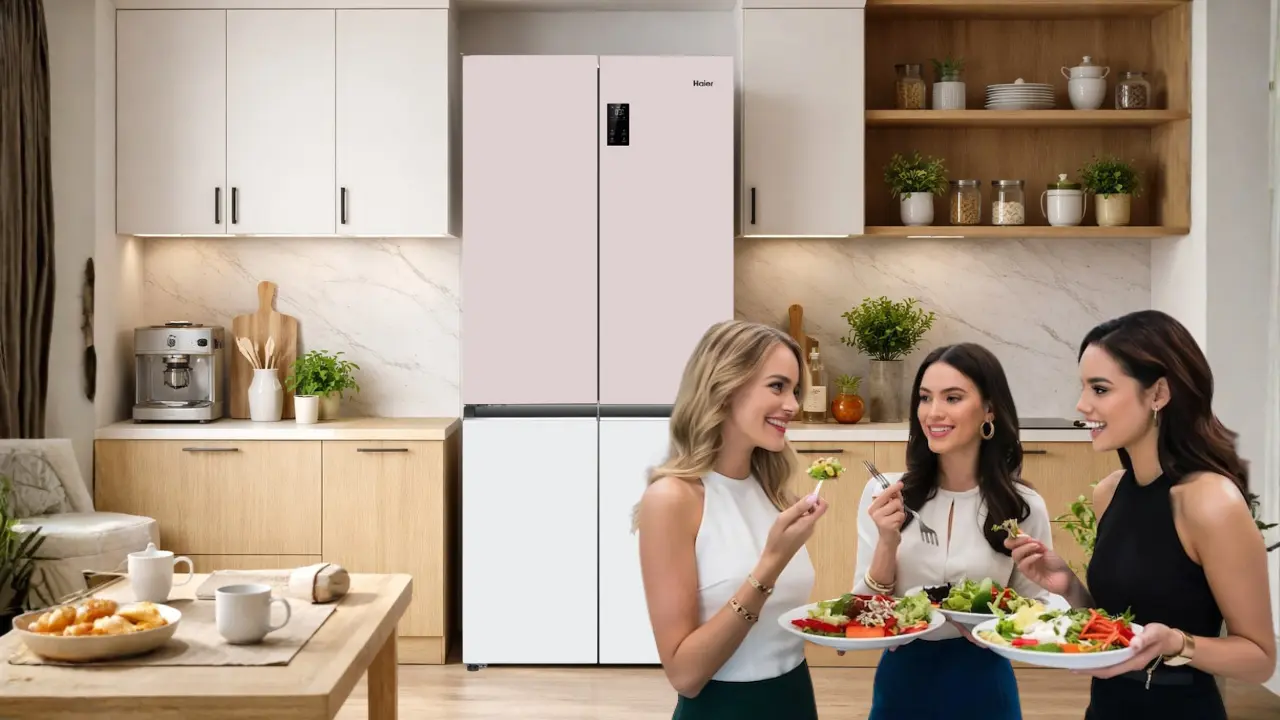
A clear example of this approach is the Haier Vogue Lumiere 520L Rosette White 4 Door Convertible Refrigerator (HRB-600RW).
Its four-door layout and convertible zones allow families to prioritise fresh food storage during regular weeks and expand freezer or special-use space during festivals or bulk shopping periods .
The benefit is simple.
The fridge feels bigger without occupying more floor space.
The festival stress test of smart storage
Nothing exposes storage flaws faster than Indian festivals.
Suddenly there are sweets.
Prepared dishes.
Extra vegetables.
Beverages for guests.
Homes that struggle every festive season usually do not lack space.
They lack adaptability.
Smart storage solutions absorb these peaks.
- Convertible fridge sections handle overflow
- Stackable containers reduce chaos
- Defined zones prevent spillover
The home stays functional.
The people stay calmer.
That is the real test of good storage.
A practical framework for choosing smart storage
Before adding any storage solution, ask three questions.
- Does it reduce daily effort or add extra steps
- Can it adapt to change without replacement
- Does it make the space feel calmer when full
If the answer is yes to all three, it belongs in a small home.
If not, it will become clutter in disguise.
What smart storage teaches us about modern urban living
Small homes are no longer temporary.
They are deliberate choices.
Urban families are trading size for location, convenience, and quality of life. That shift demands better systems, not more square footage.
Homes must work harder without feeling heavier.
Storage must disappear into function.
Appliances must adapt quietly to daily rhythms.
The best storage solutions are the ones you stop noticing after a week.
Because that is when they are doing their job.
The bigger implication
Smart storage is not about organising things.
It is about organising life.
When storage works, mornings move faster.
Cooking feels easier.
Weekends feel lighter.
Homes stop demanding attention and start offering support.
In busy urban lives, that support matters more than space ever did.
Because the real luxury today is not a bigger home.
It is easy.