

Children’s Day has always been about joy in its simplest form.
This year, that joy feels different. Not louder or bigger. Just clearer. Because somewhere between Sunday cartoon marathons and today’s smart TV world, families are rediscovering something important.
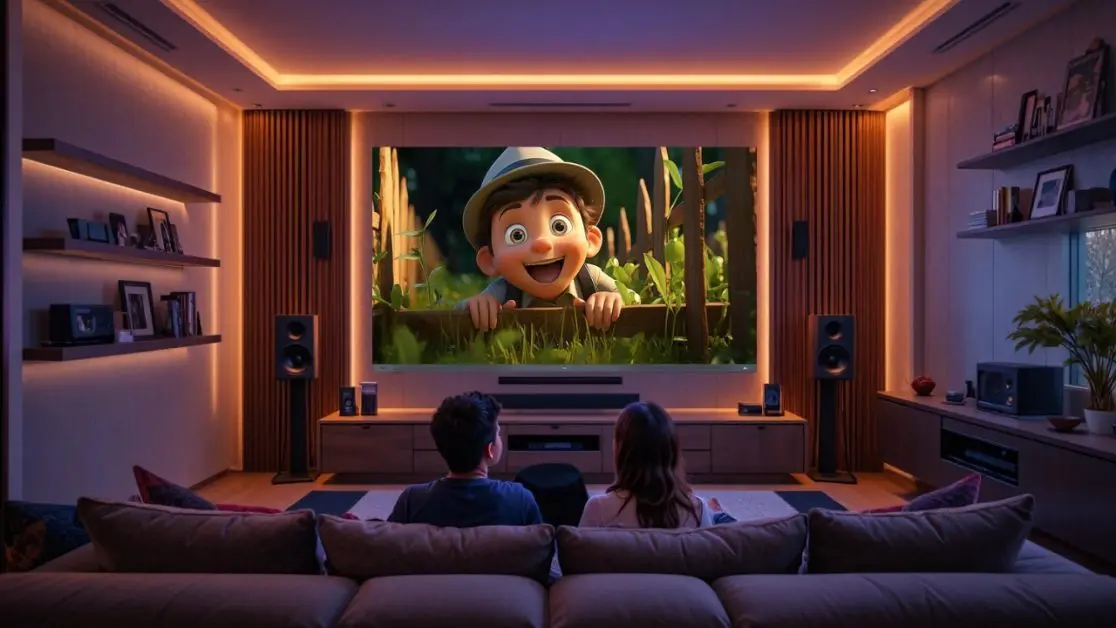
The ritual of watching something together. The comfort of a familiar show. The warmth of a living room that feels like a little theatre of its own.
And that is the real story of this Children’s Day.
Why Simple Moments Still Matter
Every generation believes its childhood was the best.
But ask any millennial or Gen Z parent what they remember most and they rarely talk about things.
They talk about moments.
The Sunday 10 am cartoon slot.
The noise of cousins gathering in the living room.
The way the TV light bounced on the floor during power cuts.
The thrill of watching one show that the entire family agreed on.
Those weren’t just memories.
They were systems.
Tiny rituals that made homes feel stable, predictable and safe.
Children’s Day reminds us that children notice more than we think. A show paused so they could finish their homework. A parent who sits beside them even when they are tired. A screen that makes the world look a little kinder, a little more colourful.
The screen mattered.
But what surrounded it mattered even more.
What Has Changed About Watching Together
Modern Indian homes look different now.
Nuclear families. Faster internet. Busier routines. More screens competing for attention.
Yet something interesting is happening.
Families are finding their way back to shared watching. Not out of nostalgia. Out of need.
Three patterns stand out.
1. Parents want calmer homes.
One screen in the centre of the room creates togetherness. Five screens in five corners scatter it.
2. Kids enjoy stories more when adults join in.
Studies from child development experts like Dr. Rebecca Silverman show that children engage deeper with visuals when parents react, explain, and laugh along.
3. Homes feel warmer when technology fits into life instead of demanding space.
A smart TV today does more than stream. It shapes the mood of a room.
Children’s Day becomes a good excuse to slow down and watch again. Proper watching. Not doom-scrolling. Not half-attention entertainment. But being present.
The Hidden Design of Modern Living Rooms
Look closely at any Indian living room today and you will find a quiet shift.
Spaces are designed around the screen.
Streaming replaces channels.
Kids hop between animation, DIY crafts, superhero universes, educational stories and gaming clips.
The invisible work happens behind the scenes.
AI adjusts brightness when curtains move.
Advanced processors cut motion blur during fast animation.
Sound systems place dialogue so cleanly that a child doesn’t need to raise the volume.
This is why televisions like the Haier QD Mini LED series started gaining attention among new homeowners. Not because they are flashy. But because they solve old problems with new intelligence.
Sharper motion means action scenes do not overwhelm kids.
Adaptive brightness means eyes strain less.
Hands free voice control means a child can switch shows without clutching a remote like a fragile artifact.
Technology becomes the invisible adult in the room. Helpful. Quiet. Reliable.
Children’s Day Is Also About The Parents
Here is the part we rarely say out loud.
A good screen is actually a gift for the parents too.
A parent who returns home after work wants one thing.
Peace with their child.
A shared show can create that peace faster than any toy.
It becomes a bridge between two tired worlds.
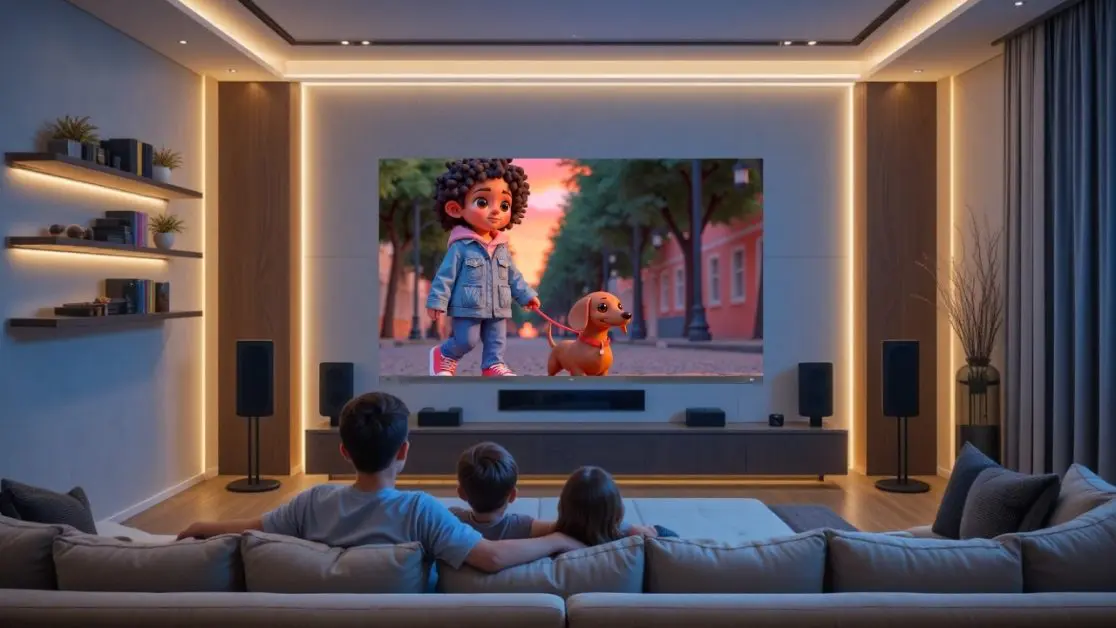
A parent settling into the sofa.
A child rushing in with their favourite animated series.
The living room light dimmed automatically.
A soft bass note filling the room without drowning anyone’s voice.
Both watched without a single adjustment fight.
That is not luxury.
That is a relief.
And on Children’s Day, relief is a gift.
What Children Teach Us About Screens
Children engage with screens the way adults engage with memories.
They watch with intensity.
They notice details.
They replay scenes because repetition feels comforting, not boring.
A child doesn’t care if a TV has Dolby Vision IQ or 144Hz motion smoothing.
But they care when a picture feels real.
When colours look close to the crayons they use.
When sound feels warm instead of sharp.
This is where good technology quietly steps in.
Better colour accuracy means Doraemon finally looks the correct shade of blue.
Better contrast helps children notice expressions that matter.
A cleaner interface means less frustration for the grown ups.
It all adds up to one truth.
Screens do not ruin childhood.
Bad experiences do.
Good screens simply get out of the way and let stories do their job.
How Families Are Using Smart TVs Differently This Year

Three new behaviours are emerging in modern Indian households.
1. Rewatching classics together
Old shows become family events. Parents explain, kids question, everyone laughs.
2. Turning learning into watching
Smart TVs now feature curated educational content that actually holds attention.
3. Creating mini weekend traditions
Friday movie. Saturday animation. Sunday cooking show. Micro rituals build macro memories.
A 254cm(100) Mini LED TV in a small living room sounds excessive until you realise it becomes the digital version of those old cloth tent forts we built as kids. A space that pulls everyone inside.
The Real Meaning Of Children’s Day In Modern Homes
Children’s Day is not about buying things.
It is about creating time.
The kind that slips away unless we hold it with intention.
For many Indian parents, that intention now lives in the living room.
In a screen that brings the family into one frame.
In stories that slow the world down.
On weekends that feel like tiny holidays.
And if a smart TV helps create that kind of home, it becomes more than an appliance. It becomes a quiet partner in the background of childhood.
Simple joys never disappear.
They evolve.
And sometimes, all we need is the right screen to see them clearly again.