
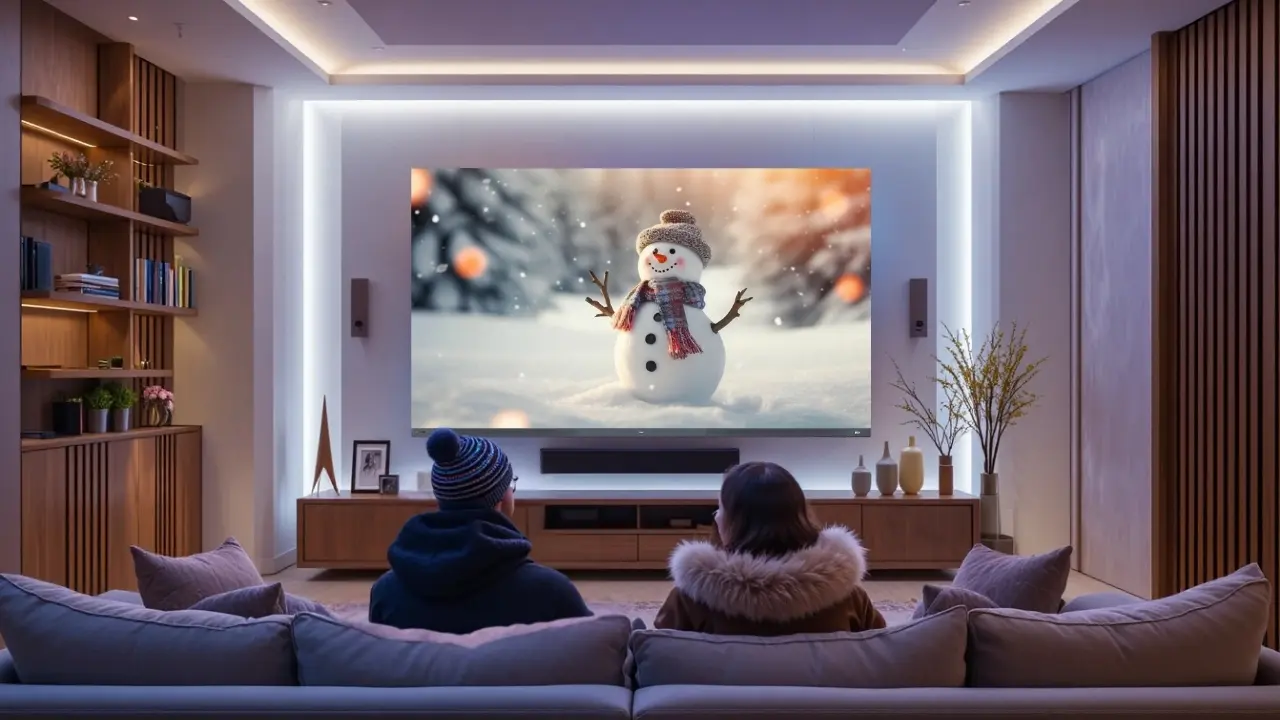

Modern display panels like Haier’s D-LED with HDR10 and Energy Saving Mode use up to 30% less power than conventional LCDs, a quiet upgrade that matters most during long, cozy winter evenings when the TV stays on longer than usual.
When Winter Turns the Living Room Into a Theatre
Every Indian home feels a little smaller in winter curtains drawn, sweaters out, family huddled under one blanket.
The TV becomes the unofficial hearth.
Evenings stretch into late-night movie marathons, cricket highlights, or streaming marathons that go far beyond “just one more episode.” The problem?
More screen time usually means more electricity bills.
But what if watching more didn’t have to mean consuming more?
That’s where new-age display technology, especially D-LED panels paired with intelligent energy-saving systems, changes the math of modern entertainment.
So, What Makes a TV Energy-Efficient in the First Place?
The answer starts with the light source itself.
Traditional LCD TVs used CCFL backlights bright but power-hungry.
Modern TVs like the Haier H50K85FUX (4K UHD) and H32K85FX (HD Smart TV) use Direct-LED (D-LED) panels, where light comes from strategically placed LEDs that illuminate only the active parts of the screen.
The result?
- Lower energy use: LEDs need less power to produce the same brightness.
- Sharper contrast: Backlight control means deeper blacks and brighter whites.
- Cooler operation: Less heat means less stress on internal circuits extending lifespan.
It’s efficient by design, not by compromise.
HDR10 – Brightness With a Brain

Here’s the hidden irony of winter TV habits: we love turning up brightness when the room feels dim, but that’s when most TVs start guzzling watts.
Haier’s answer is HDR10 (High Dynamic Range), which adjusts contrast dynamically scene by scene.
Instead of pushing uniform brightness across the panel, HDR10 enhances local contrast, brightening only what needs to pop and keeping darker areas energy-neutral.
Think of it like smart streetlights: only lighting up where someone walks.
So, even during an intense cricket replay or a late-night movie, the TV isn’t overworking. It’s thinking before it shines.
MEMC and Motion Efficiency – Why Smooth Can Also Be Smart
Haier’s Motion Estimation, Motion Compensation (MEMC) tech, found in the 127cm (50) H50K85FUX, does more than make fast action look cinematic.
It optimizes frame rendering so the display maintains clarity without over-refreshing pixels unnecessarily.
In simpler terms the TV learns your content type.
Sports? Fluid motion.
Drama series? Lower refresh rates to conserve energy.
It’s not visible efficiency, but it adds up quietly on your energy meter over time.
Energy Saving Mode – The Unsung Hero

Every Haier Smart TV from the compact H32K85FX (32-inch HD Ready) to the expansive H50K85FUX (127cm (50) 4K UHD) comes with a dedicated Energy Saving Mode.
Here’s what it actually does:
- Auto-brightness tuning based on ambient light
- Smart standby management (≤ 0.5 W power draw when idle on the H32K85FX)
- Selective dimming of inactive display zones
- Optimised speaker output using Dolby Audio and dbx-TV processing
This isn’t a cosmetic feature; it’s a power-aware system. Perfect for winters when TVs often stay on as background warmth news, playlists, or kids’ cartoons running while chai is brewed.
Why Power Efficiency Matters More in Winter
Electricity tariffs don’t drop with temperature.
In fact, many Indian households use extra heating, water geysers, and closed-room lighting all of which stretch the same meter.
A smart TV that consumes 20–30% less energy effectively offsets part of that seasonal spike.
Think of it as a quiet saver in the corner of your living room, doing its job while everyone else is watching theirs.
Besides cost, lower power usage reduces heat output meaning your TV stays cooler, components last longer, and performance remains consistent year-after-year.
Haier’s Display Philosophy – Efficiency Without Trade-Offs
Haier has always positioned technology as a helper, not a show-off.
The K85 Series demonstrates that philosophy beautifully.
1. Intelligent Picture Control
HDR10 and HLG formats ensure every frame looks vivid without energy waste.
The 4K H50K85FUX handles 3840×2160 pixels with adaptive contrast while the HD H32K85FX keeps visuals crisp at 1366×768 for smaller spaces.
2. Optimised Power Design
Both models operate on 100–240 V input with adaptive frequency response (50/60 Hz), ensuring efficient voltage use even during fluctuations, a real-world advantage for Indian power conditions.
3. Smart Integration
Voice-based control through Google Assistant, Chromecast Built-in, and Google TV OS mean fewer remotes, fewer standby devices, and less phantom energy draw.
Efficiency here isn’t just about saving watts, it’s about reducing friction in everyday living.
How Display Tech Intersects With Lifestyle
Energy efficiency used to sound technical.
Today, it’s cultural.
A power-saving display isn’t just good for bills; it fits how we live multi-device, multitasking, mindfulness.
Imagine this:
You finish work, dim the lights, and stream a show through your phone onto the Haier H50K85FUX using built-in Chromecast. The TV automatically optimises its picture for low-light viewing while the Dolby Audio balances dialogue without cranking the volume.
You watch comfortably for hours not once thinking about electricity.
That’s the invisible upgrade most homes need: comfort without cost anxiety.
The Difference Between HD Ready and 4K UHD – Beyond Pixels
Many households ask: should we upgrade to 4K if our current TV already works fine?
Here’s a quick system view:
| Feature | Haier H32K85FX (HD Ready) | Haier H50K85FUX (4K UHD) |
| Resolution | 1366×768 | 3840×2160 |
| Panel Type | D-LED | D-LED |
| Energy Saving Mode | Yes | Yes |
| HDR Support | HDR10 / HLG | HDR10 |
| Audio | Dolby Audio (20 W) | Dolby Audio + dbx-TV |
| Smart OS | Google TV | Google TV (Android 14) |
| Power Efficiency in Use | Ideal for compact rooms | Adaptive brightness for large spaces |
The takeaway: both models share Haier’s efficiency DNA.
Choose based on viewing distance, not just resolution hype.
In smaller rooms, the HD Ready panel delivers perfectly balanced clarity with minimal draw.
For larger spaces, the 4K panel’s HDR10 + MEMC pairing provides depth and fluidity without extra wattage.
Smart Power Is the New Smart Living
Indian homes are evolving.
Our devices are getting smarter not for bragging rights, but to simplify living.
A TV that senses light, adjusts sound, and limits power draw automatically that’s a small but meaningful part of sustainable comfort.
Because the real luxury in winter isn’t just a warm blanket or a cinematic picture.
It’s knowing that your home tech is quietly doing the right thing for your bills, your planet, and your peace of mind.
In Case You’re Choosing Your Next TV
If your living room calls for immersive, large-screen clarity the Haier H50K85FUX 4K UHD Smart Google TV combines stunning visuals with intelligent power management.
If you want a compact, efficient upgrade for bedrooms or smaller homes the Haier H32K85FX Smart HD Google TV offers the same DNA of energy-saving performance at a lighter scale.
Either way, you’re not just buying a screen.
You’re investing in a smarter rhythm of living one that keeps both your evenings and your electricity bills comfortably balanced.