


Smart water heaters with app control let you schedule, monitor, and optimize hot water use.
The result, less waiting, lower energy bills, and more control over daily routines.
Why hot water became a modern household stress point

In most Indian homes, hot water isn’t just comfort. It’s rhythm. Morning showers before work. Buckets filled for grandparents who prefer a traditional bath. Endless rounds of washing up after cooking.
The problem? Conventional water heaters follow a simple rule they heat when switched on, no matter the time, weather, or electricity tariff.
Which means:
- Someone forgets to switch it off, and the unit keeps reheating all day.
- You turn it on late, and the whole house is waiting in line for hot water.
- Electricity bills creep up because the heater doesn’t care about peak or off-peak rates.
Technology has finally caught up with this daily frustration.
What app control changes
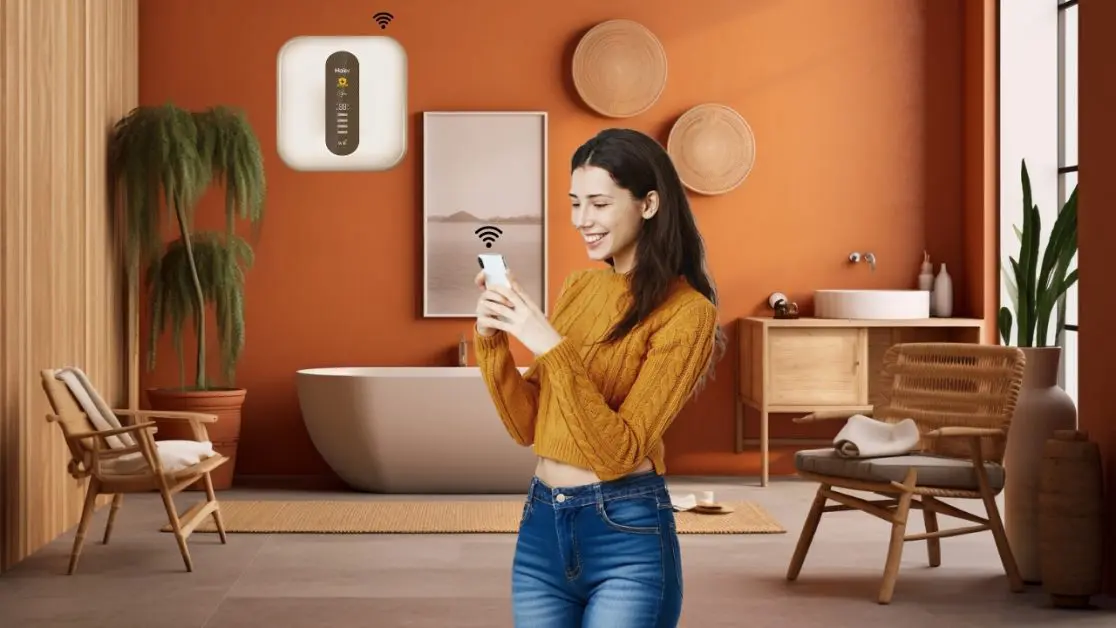
App-connected water heaters flip the equation. Instead of chasing the appliance, you tell it when, how, and how much to work.
With WiFi-enabled control (like Haier’s 15L Square 5 Star Smart Water Heater ES15V-SD WIFI
1. Schedule heating cycles
- Program the heater to start at 6:30 am so hot water is ready at 7.
- Set an evening slot for post-gym or late-night showers.
2. Switch on remotely
- Forgot to power it before leaving the office? Open the app, tap once, and it’s ready when you reach home.
3. Monitor usage patterns
- The smart timer and memory functions track how often and how long you heat water. This builds a clear picture of energy habits.
4. Optimise for energy savings
- Pair schedules with off-peak tariff hours. Heating when electricity is cheaper means visible monthly savings.
Control stops being manual. It becomes strategic.
The hidden costs of manual control

Think of hot water like Uber rides. They’re smooth until you start seeing the surge pricing.
A typical 2 kW water heater running for two hours a day consumes about 120 units per month. If you accidentally run it for four hours, that doubles. At ₹8 per unit, the difference is over ₹900 a month.
That’s not an error. That’s a system flaw.
Smart scheduling and auto cut-off solve this by keeping heating tied to need not to memory lapses.
Safety isn’t optional anymore
Convenience is only half the story. Indian households worry about two things: safety and durability.
Haier’s smart water heater layers protection systems in ways that matter for families:
- Dual Thermal Proof heating stops at 75°C, with a backup cut-off at 95°C if the first fails
- Shock Proof design converts voltage to safe levels in case of leakage.
- Anti-bacterial BPS mode heats water to 80°C to kill bacterial growth in stored tanks.
- 8 bar pressure resistance is crucial for high-rise apartments in Mumbai, Pune, or Bengaluru.
These aren’t brochure bullet points. They’re invisible guardians for kids, elderly parents, and anyone who uses the bathroom late at night.
Everyday scenarios that prove the difference
- The working couple in Gurgaon
They schedule the heater for 6 am and 9 pm. No need to keep it running all day. Result: time saved, power saved, no arguments about “who forgot to switch it off.” - Parents in Pune during exam season
Kids studying late at night can trigger heating from their phone. No waking up others to flip a switch. - Grandparents in a Chennai apartment
The anti-bacterial cycle reassures them that tanked water isn’t stagnant. Hygiene meets peace of mind.
Technology isn’t about fancy features. It’s about removing the micro-frictions of daily life.
How much money does smart scheduling really save?
Let’s map it out.
| Usage Pattern | Monthly Power Cost (at ₹8/unit) | With Smart Scheduling | Savings |
| Heater on 4 hrs daily | ₹1,920 | ||
| Heater optimised to 2 hrs | ₹960 | ₹960 |
Even if you shave just one extra hour daily, that’s ₹480 saved each month. Over a year, more than ₹5,700. That’s an EMI covered.
When a device pays back its premium through efficiency, it’s no longer a luxury. It’s a system upgrade.
Why app control fits the Indian household rhythm
Smart water heaters solve for three very Indian truths:
1. Shared bathrooms timing matters more when three people need hot water back-to-back.
2. Rising tariffs with energy costs climbing, any smart optimization goes straight to savings.
3. Hybrid work lifestyles we no longer bathe at fixed times. Control needs to be flexible.
It’s not about being fancy. It’s about being future-ready in the most practical way.
What makes Haier’s design stand out
While many brands promise connectivity, execution is what matters.
Haier adds system-level thinking to its smart water heater:
- Smart memory to remember preferred settings.
- PUF insulation that retains heat longer, reducing reheating cycles
- Glass-lined tank and Incoloy 800 heating element for corrosion resistance and long life.
- RSC U-turn flow technology to prevent stagnation and keep water fresh.
The result is not just an appliance. It’s a quietly intelligent partner in your home.
What this means for the future of smart homes
Every smart device teaches the same lesson:
Convenience without control creates dependency.
Control without convenience creates friction.
The sweet spot is both together.
Smart water heaters represent a bigger shift everyday appliances are becoming nodes in a connected ecosystem. A fridge that tracks groceries. An AC that optimises for weather. A water heater that syncs to your lifestyle.
It’s not technology for technology’s sake. It’s technology that dissolves into daily life until you forget how inconvenient things used to be.
The bottom line
Hot water feels small until it isn’t there. And when it arrives late, overheats, or costs double what it should, frustration piles up.
App-controlled smart water heaters remove that uncertainty. They save time by aligning to your schedule. They save money by cutting unnecessary heating. And they add safety, hygiene, and durability as standard.
For Indian households balancing work, family, and rising costs, that’s not an upgrade. That’s common sense.