

Smarter cooling with lower maintenance means your AC learns how your home lives, cools only when and where needed, and cleans itself quietly in the background.
It reduces manual effort, prevents energy waste, and cuts down service calls, all while keeping comfort steady across seasons.
That is the promise.
The real story lives inside Indian homes.
The summer problem no one talks about
It is 10:30 pm in May.
The house is finally quiet.
Dinner is done.
The fan is useless.
You turn on the AC.
Cold air comes out.
But so do doubts.
Did I clean the filter this year
Is it cooling slower than last summer
Will the bill explode again
Cooling, in India, has never been just about temperature.
It is about trust.
And trust breaks when maintenance becomes a second job.
Why cooling systems fail silently in Indian homes
Most AC problems do not announce themselves.
They accumulate.
Dust builds up.
Filters clog.
Outdoor units choke quietly under heat and pollution.
The AC still works.
But it works harder.
That invisible struggle shows up later as higher bills, uneven cooling, and service visits timed exactly during peak summer.
This is not neglect.
It is a design mismatch.
Traditional cooling assumes users will remember, monitor, and intervene regularly.
Modern homes do not work that way.
The shift from control to intelligence
The biggest upgrade in cooling is not speed.
It is my responsibility.
Smarter cooling systems now observe patterns instead of waiting for commands.
When the room heats up faster than expected.
When no one is inside.
When coils slowly lose efficiency.
The system notices first.
This is the hidden system shift behind lower maintenance.
Machines that manage themselves last longer.
What actually reduces AC maintenance
Lower maintenance is not magic.
It is design.
Smarter cooling reduces maintenance through three quiet changes.
1. Systems that clean themselves before problems appear
Dust is inevitable in Indian cities.
Waiting for manual cleaning is optional.
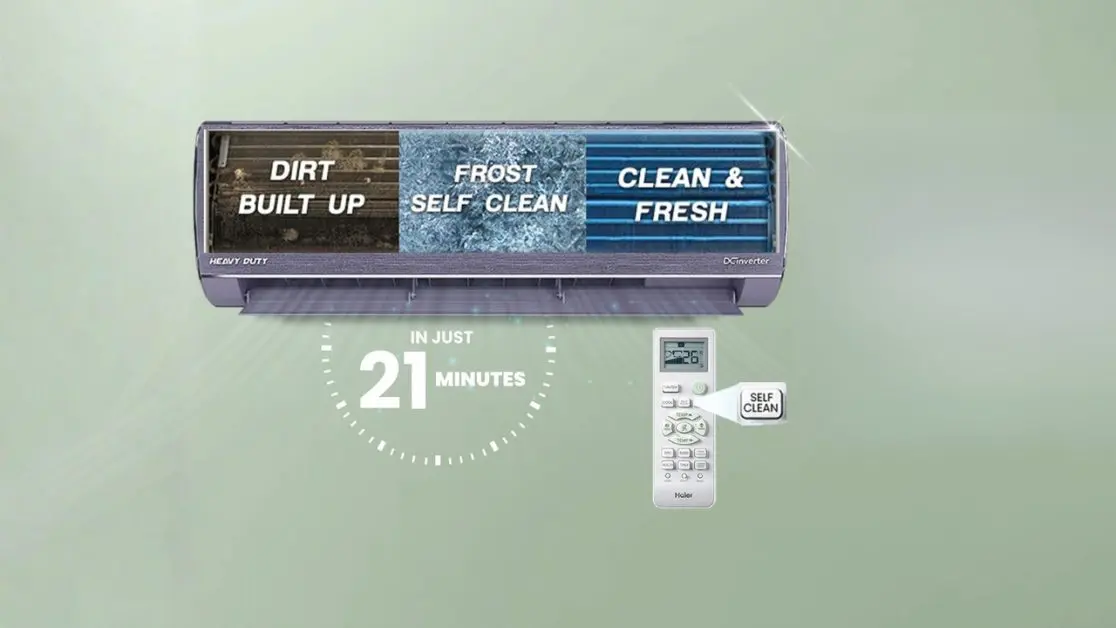
Modern ACs use internal frost-based cleaning cycles that remove moisture, dust, and residue from the indoor unit after fixed usage intervals.
Outdoor units now reverse airflow to blow out accumulated dirt instead of letting it bake onto coils.
Cleaner coils mean faster heat exchange.
Faster heat exchange means less strain.
Less strain means fewer breakdowns.
This is not convenient.
It is preventive care.
2. Cooling only when and where it is needed
Cooling an empty room is not a luxury.
It is leaking.
Smarter systems detect human presence and adjust automatically.
If the room empties out, cooling softens.
If no movement is detected, power reduces or shuts off.
Targeted cooling directs airflow to occupied zones instead of wasting energy on walls and corners.
This focused approach reduces run time.
Reduced run time reduces wear.
Wear reduction extends component life.
Efficiency and longevity share the same root.
3. Intelligence that learns habits instead of guessing
Manual settings assume static behavior.
Homes are not static.
Smart AC systems now learn usage patterns over weeks.
When you return from work.
How long rooms stay occupied.
Which temperatures feel comfortable at different times.
Once learned, cooling becomes predictive.
The system pre-cools before arrival.
It slows down when conditions stabilize.
It avoids constant on-off stress.
Consistency beats intensity in mechanical health.
Lower maintenance is also lower mental load
Maintenance is not just physical work.
It is cognitive effort.
Remembering service dates.
Tracking electricity spikes.
Wondering if something is wrong.
Smarter cooling reduces decision fatigue.
You stop checking.
You start trusting.
And trust changes behavior.
People stop overusing turbo modes.
They stop adjusting temperatures obsessively.
They stop pushing systems beyond design limits.
The system protects itself by guiding you gently.
What smarter cooling looks like in real homes
Not showrooms.
Not demos.
Real homes.
For working professionals living solo
You leave at 9.
Return at 8.
The room cools before you arrive.
Shuts down when you forget to turn it off.
No reminders.
No guilt.
Lower bills.
Fewer service calls.
Time saved is maintenance saved.
For families managing long summers
Different rooms.
Different needs.
The living room cools for gatherings.
Bedrooms settle into steady night modes.
The system adjusts capacity instead of blasting cold air.
Children sleep comfortably.
Parents sleep peacefully.
Gentle cooling preserves machines and humans alike.
For new homeowners
Everything feels expensive in year one.
Furniture.
Appliances.
Electricity.
Lower maintenance means predictable ownership.
No surprise servicing.
No mid-season failures.
Just quiet performance that fades into daily life.
Why smarter cooling saves money without feeling restrictive
Energy savings often feel like sacrifice.
Smarter systems avoid that tradeoff.
By adjusting in real time, they avoid overcooling.
By tracking electricity usage, they reveal patterns.
By visualizing costs, they change habits subtly.
You do not feel controlled.
You feel informed.
And informed users make gentler choices.
The overlooked link between maintenance and sustainability
A poorly maintained AC wastes energy every hour it runs.
Multiply that across millions of homes.
The impact becomes visible.
Self-cleaning systems reduce resource waste.
Targeted cooling lowers unnecessary load.
Predictive control avoids peak stress.
Sustainability is not just about efficiency ratings.
It is about systems that age gracefully.
Longer life cycles are the greenest upgrade.
Where Haier fits into this shift
Haier’s approach to cooling focuses on intelligence that works quietly.
Features like AI Climate Control, Auto Clean for indoor and outdoor units, targeted airflow, and Electricity monitoring 2.0 exist to reduce user intervention, not increase it.
The goal is not to make cooling smarter on paper.
It is to make ownership easier in practice.
That difference matters.
The broader lesson hidden inside smarter cooling
The future of appliances is not louder innovation.
It is quieter and reliable.
Systems that learn instead of demand.
Machines that protect themselves instead of waiting to fail.
Homes that feel calmer because fewer things need attention.
Smarter cooling with lower maintenance is not about ACs alone.
It is about designing life so fewer things break at the wrong time.
And when technology does that well, it disappears.
That is the real upgrade.
Frequently Asked Questions
Why does running my AC feel mentally exhausting, not just expensive?
Because traditional ACs demand constant supervision. You’re expected to remember filter cleaning, track bills, notice subtle cooling drops, and decide when something feels “off.” That mental load adds up. Smarter cooling shifts responsibility back to the system, reducing both effort and anxiety.
I keep wondering if my AC is working harder than it should. Is that normal?
Yes, and that’s the problem. Most ACs fail silently. Dust buildup, clogged filters, and stressed outdoor units don’t stop cooling immediately; they just make it inefficient. You notice only when bills rise or cooling becomes uneven.
I live in a dusty city. Is frequent AC cleaning unavoidable?
Dust is unavoidable. Manual cleaning is not. Modern ACs use frost-based indoor auto-clean cycles and reverse airflow for outdoor units, removing dust before it hardens onto coils. This prevents efficiency loss without relying on user memory.
What happens if I delay AC servicing every year?
The AC keeps running but under strain. Heat exchange slows, power consumption rises, and components wear out faster. Smarter systems reduce the damage by cleaning internally and flagging inefficiencies early.
Why does steady cooling matter more than fast cooling?
Mechanical systems last longer under stable conditions. Predictive cooling avoids sudden spikes, reduces compressor stress, and maintains efficiency across seasons.
What smart AC features genuinely lower maintenance, not just look impressive?
Three features matter most:
Self-cleaning indoor & outdoor units
Human presence detection with targeted airflow
Learning-based usage prediction
Together, they reduce runtime, prevent dust damage, and avoid mechanical stress.
How is AC maintenance connected to sustainability?
Poorly maintained ACs waste energy every hour they run. Smarter systems reduce waste by staying clean, cooling selectively, and aging gracefully. Longer lifespan is the most sustainable outcome.
As a new homeowner, why should I care about low-maintenance cooling?
Because predictability matters. Fewer surprise repairs, stable bills, and quiet reliability make ownership less stressful especially in the first year.