
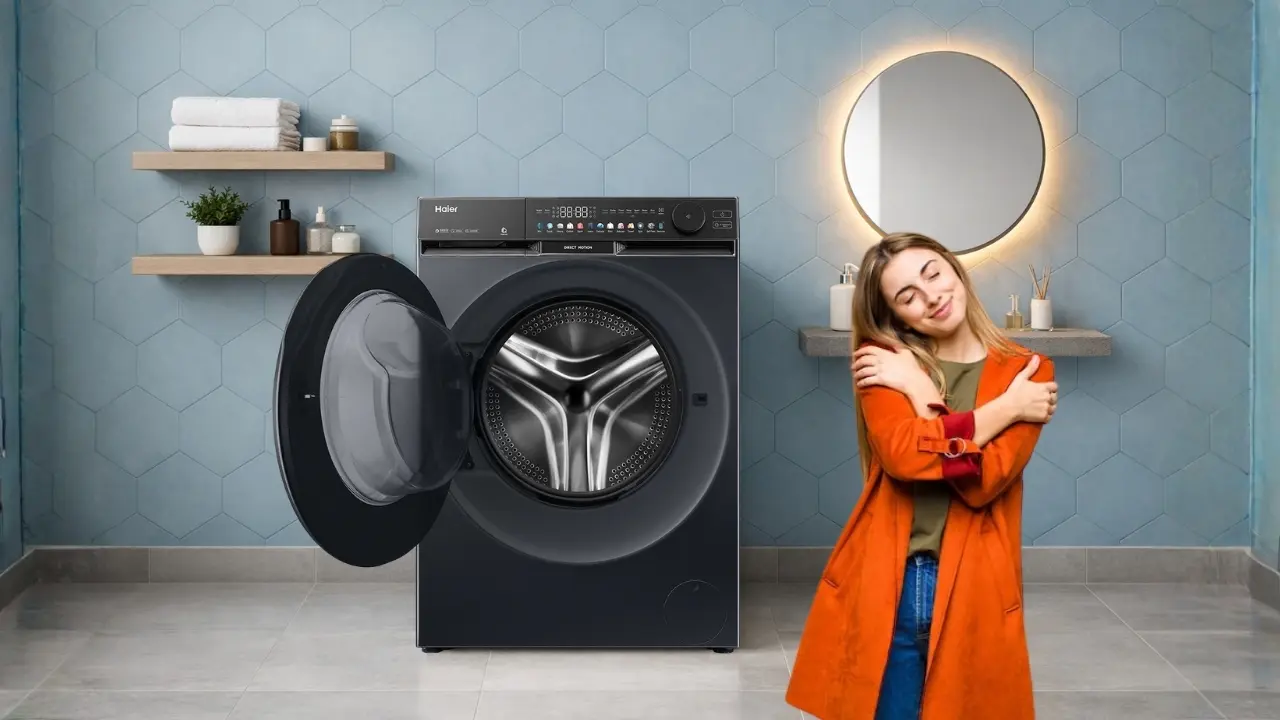

Smarter laundry today is about less effort, less waste, and more time for life.
It means washing clothes in a way that protects fabrics, saves water and energy, and quietly fits into busy Indian homes without demanding constant attention. The smartest care does not shout. It simply works, wash after wash.
The laundry moment nobody talks about
It usually starts the same way.
A basket full of mixed clothes. Office shirts, gym tees, a favourite kurta, maybe a child’s uniform with mystery stains. You stand there, wondering which cycle, how much detergent, and whether this wash will slowly ruin something you like.
Laundry is not difficult.
It is mentally tiring.
And that is the real problem modern homes are trying to solve.
When routines become guesswork, stress creeps in. When systems become intelligent, life feels lighter.
That shift is where smarter clothing care begins.
Clothes last longer when decisions get simpler
Every fabric tells a story.
Cotton likes water but hates rough handling.
Wool wants gentleness.
Activewear hates leftover detergent.
Delicates punish shortcuts.
Most washing damage does not come from one bad wash.
It comes from small, repeated mistakes.
Wrong water levels.
Excess detergent.
Overloading.
Harsh spins for soft fabrics.
Smarter machines reduce these mistakes by design.
Instead of asking users to think harder, they think for the user.
That is a quiet upgrade most households underestimate.
Why modern homes are rethinking washing habits

Indian homes are changing fast.
- More dual-income households
- More apartment living
- Less time for trial-and-error chores
- Higher electricity and water awareness
Laundry has moved from a background task to a system problem.
One option is to keep doing things manually and hope experience fills the gaps.
The second option is to outsource thinking to technology that learns patterns and responds in real time.
The third option is to delay the upgrade and accept friction as normal.
Only one of these actually scales with modern life.
What smart washing really means in daily life
Smart washing is not about flashy screens or complicated apps.
It is about three core ideas working together.
1. Machines that sense, not guess
Modern front-load washing machines use sensors to detect load size, fabric type, and dirt level.
That means:
- Water adjusts automatically
- Wash time adapts to the load
- Energy use stays controlled
In practical terms, this reduces water consumption significantly compared to traditional fixed-cycle washing. Studies from appliance efficiency programs globally show front-load machines can use up to 40 percent less water per wash compared to older top-load models.
The benefit is invisible.
The savings add up quietly.
2. One-touch decisions beat complicated controls
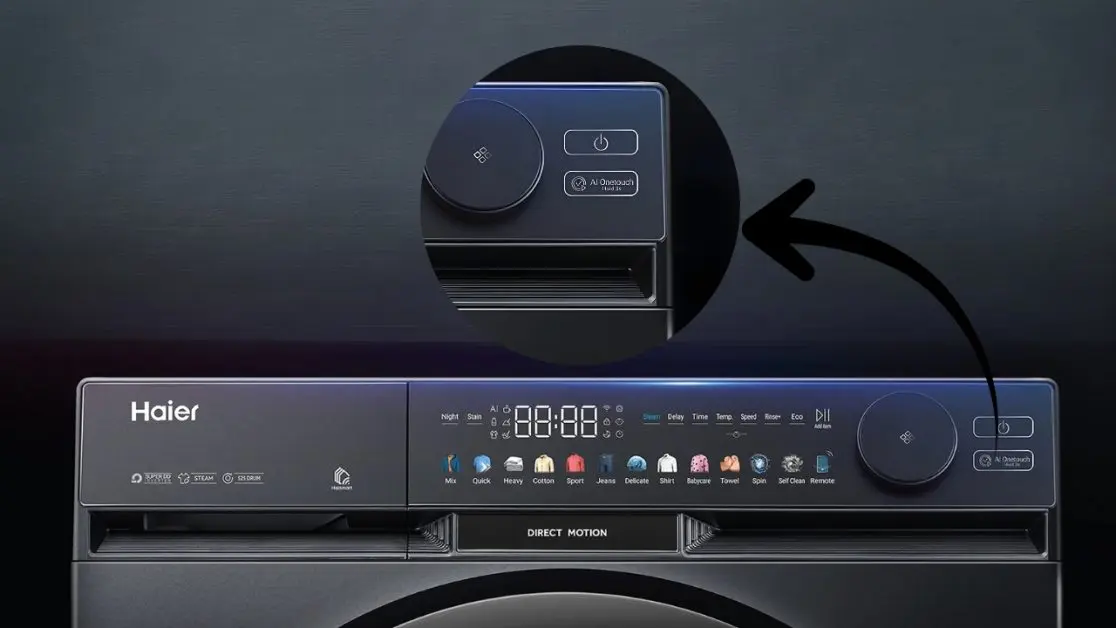
People do not want 16 buttons at 10 pm.
They want one clear choice.
Smart wash programs work because they remove decision fatigue. One-touch AI-based washing systems automatically select optimal settings once the load is detected.
That means fewer errors and consistent results.
The Haier F9 series, for example, uses One Touch AI Wash to match fabric care with load conditions without manual tweaking, reducing wear caused by over-washing or wrong spin speeds .
Good systems respect human attention.
3. Fabric care is about motion, not force
Most damage inside a washing machine comes from how clothes move, not how long they stay inside.
Modern drum designs matter.
Pillow-shaped drums and larger drum diameters allow clothes to lift, fall, and rotate with less friction. That reduces tangling, stretching, and fibre breakage.
The SuperDrum 525 design found in newer Haier front-load machines increases usable drum space while improving wash coverage, which leads to better cleaning with less mechanical stress .
Less stress equals longer fabric life.
That is the system at work.
Energy saving is no longer a bonus feature
Energy efficiency used to be a selling point.
Now it is table stakes.
Smart washing machines optimise electricity use by:
- Matching spin speed to fabric needs
- Reducing unnecessary heating
- Limiting excess rinses
A 5-star rated front-load washing machine can save thousands of litres of water annually in a mid-sized Indian household. Over the lifespan of the appliance, this is not just environmentally responsible. It is economically sensible.
Efficiency is not a feature.
It is a philosophy.
Night washes and the new rhythm of Indian homes
Homes no longer follow one schedule.
Children sleep early.
Adults finish work late.
Electricity tariffs vary by time.
Noise sensitivity matters.
Quiet motors and vibration control enable washing cycles during off-peak hours without disturbing sleep.
Direct Motion motors connect directly to the drum, reducing noise and vibration significantly compared to belt-driven motors. This allows night washes to become normal rather than risky.
Laundry adjusts to life.
Life does not adjust to laundry.
Smart care is also about what happens after the wash
Clean clothes are not always ready to wear.
Wrinkles form.
Odours linger.
Clothes sit too long in the drum.
Steam refresh programs address this gap.
Short steam cycles can reduce odours and loosen wrinkles between washes, extending time between full laundry cycles. That means fewer washes overall and less fibre fatigue.
Smarter care sometimes means not washing at all.
That insight changes behaviour.
The real cost of over-washing
Over-washing feels productive.
It is not.
Every unnecessary wash:
- Uses water
- Uses electricity
- Breaks fibres
- Fades colours
Smart systems prevent this by offering refresh, quick wash, and load-optimised cycles.
When machines encourage restraint, sustainability becomes effortless rather than forced.
Good design nudges better habits.
What to look for when choosing smarter laundry care
Before buying, it helps to ask better questions.
Not just capacity or price.
But how the system behaves in daily life.
Here is a simple framework.
- Does it adapt automatically to different loads?
- Does it protect clothes rather than just clean them?
- Does it reduce thinking, not add to it?
- Does it save water and energy consistently?
- Does it stay quiet when homes are quiet?
If the answer is yes across most of these, the machine is doing its job.
Everything else is decoration.
Smarter homes are built on quiet decisions
The best appliances do not announce themselves.
They reduce friction.
They remove uncertainty.
They fade into the background.
A washing machine that gets clothes right every time does more than clean. It gives time back. It removes stress from routines. It respects fabrics that matter.
That is why smarter care is not about technology alone.
It is about designing systems that understand how people actually live.
And when that happens, laundry stops being a chore.
It becomes just another thing that works.
Quietly.