
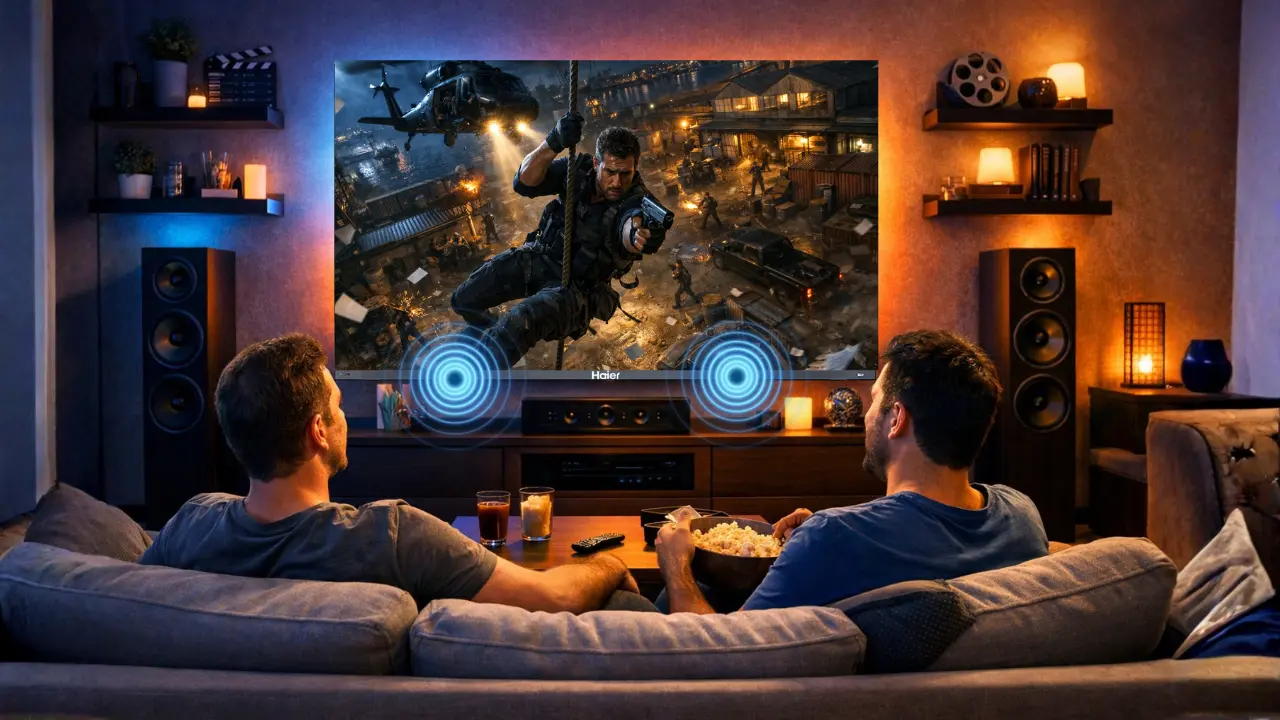

Studio-quality sound at home means hearing every detail exactly where it belongs.
Every cheer in a stadium.
Every whisper in a film.
Every instrument in a song.
Sound by KEF brings decades of acoustic expertise into your living room, turning everyday TV watching into something deeper. More balanced. More immersive.
It is not about louder sound.
It is about a truer sound.
And once you hear it, ordinary television speakers start to feel incomplete.
Why does most TV audio feel flat, even on a big screen?
Picture this.
It is India versus Australia.
The last over.
The bowler runs in.
The stadium erupts.
But your TV sounds thin.
You increase the volume.
The commentary becomes harsh.
The bass feels artificial.
You reduce it again.
The issue is not loudness.
The issue is design.
Modern televisions are incredibly slim. That slimness leaves very little space for proper acoustic chambers. According to industry surveys, more than 70 percent* viewers say TV dialogue often sounds unclear at home.
That is why many households add a soundbar.
But there is another option.
Design the television itself with serious audio engineering.
That is where Sound by KEF changes the equation.
What exactly is Sound by KEF in Haier TVs?
Sound by KEF integrates the acoustic engineering of Sound by KEF directly into Haier televisions.
KEF is a British audio company with over 60 years of experience designing high-fidelity speakers used in studios and premium home audio systems around the world.
In televisions like the Haier M80F Mini LED 165cm (65) Google TV Sound by KEF (H65M80FUX), the sound system includes:
- 2.1 channel stereo speakers
- Dedicated woofer for deeper bass
- 50W audio output
- Dolby Atmos support
- HDMI 2.1 eARC for advanced audio transmission
The same design philosophy appears in the New M92 Series, including:
- New M92 Series 164cm (65) QD-Mini LED AI Smart Google TV (H65M92FUX)
- New M92 Series 189cm (75) QD-Mini LED Smart AI Google TV (H75M92FUX)
Both models integrate Sound by KEF, 2.1 channel speakers with subwoofer, and Dolby Atmos, producing richer bass, clearer dialogue, and more immersive sound than standard TV audio systems.
This is not decorative branding.
It is engineering inside the television itself.
And engineering changes everything.
The hidden system behind great sound
High-quality audio follows three simple principles.
1. Balance across frequencies
Treble should sparkle.
Mid-range should stay natural.
Bass should support rather than overpower.
When these frequencies stay balanced, sound feels effortless.
2. Precision in detail
You notice subtle things.
The echo inside a stadium.
The texture of a violin.
The emotion in a voice.
Great sound reveals details that ordinary speakers hide.
3. Spatial depth
Sound should not feel trapped inside the screen.
It should spread across the room.
Sound by KEF addresses all three.
The dedicated woofer handles bass separately. That reduces distortion. Dialogue becomes clearer. Instruments stay distinct.
The sound feels organised instead of crowded.
What does Dolby Atmos actually do in daily life?
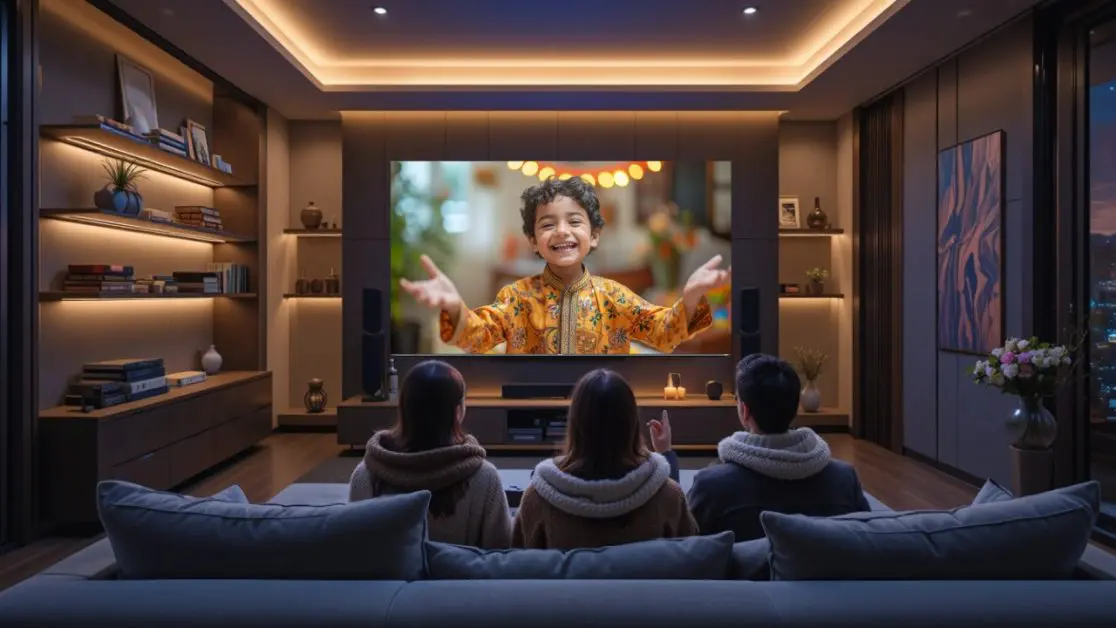
Traditional television audio works horizontally.
Left channel.
Right channel.
Dolby Atmos introduces vertical sound layers.
Audio can move around you.
Above.
Behind.
Across the room.
In models like the Haier M80F Mini LED 189cm (75) Google TV Sound by KEF (H75M80FUX) and the M92 Series, Dolby Atmos works alongside the 2.1 channel Sound by KEF-tuned speakers to create a more immersive environment.
Imagine a few familiar situations.
Cricket night
The stadium atmosphere surrounds you. The crowd does not feel boxed inside the television.
Weekend movie
Rain scenes feel layered. You sense depth in the environment.
Music streaming
Vocals stay clean while instruments spread naturally across the soundstage.
It is the difference between watching a scene and feeling inside it.
Is great audio only about bass?
Many people chase bass.
But bass without control becomes noise.
Sound by KEF focuses on acoustic tuning instead.
Research in audio engineering shows that mid-range clarity, where human voices sit, influences perceived sound quality more than raw loudness.
That means:
- Dialogues remain clear
- Conversations stay natural
- Volume does not need constant adjustment
This matters in Indian homes.
Televisions rarely operate in silence.
Pressure cookers whistle.
Ceiling fans spin.
Children talk.
Traffic exists outside.
Clear sound cuts through background noise without forcing you to increase the volume.
How Sound by KEF scales across larger screens
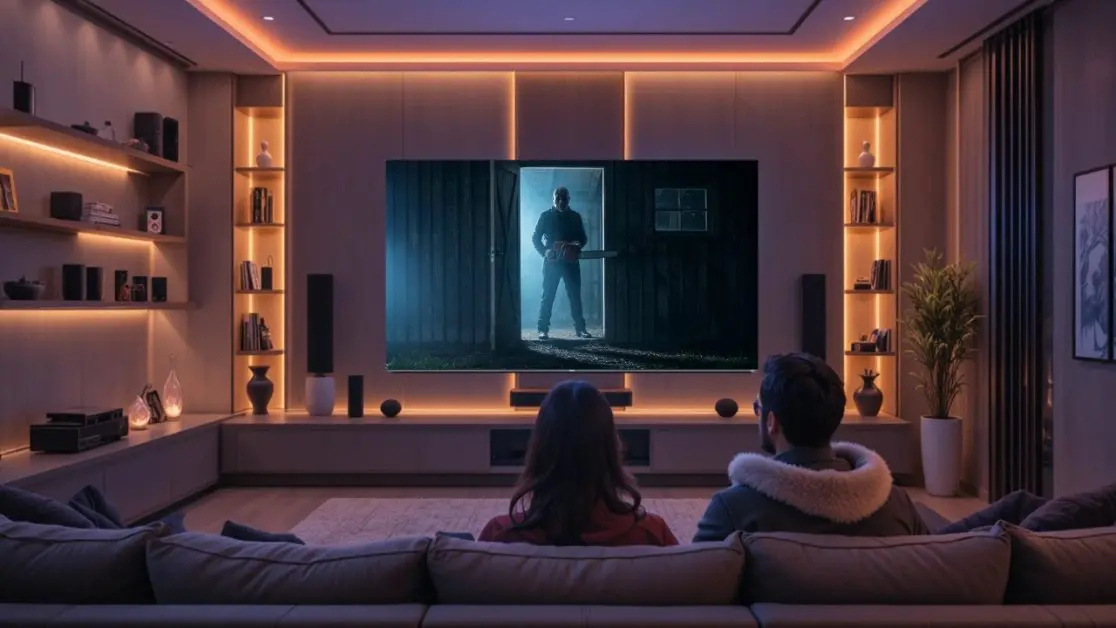
As television size increases, sound demands grow.
A bigger screen creates a wider visual field. Audio must expand accordingly.
The Haier M80F Mini LED 215cm (85) Google TV Sound by KEF (H85M80FUX) continues using the 2.1 speaker architecture with 50W output and Dolby Atmos support, ensuring clarity even in larger rooms.
For dedicated entertainment spaces, the New M96 Series 254cm (100) QD-Mini LED AI Smart Google TV (H100M96FUX) pushes further.
It introduces:
- Sound by KEF audio system
- 6.2.2 channel speaker architecture
- 90W audio output
- Dolby Atmos immersive sound
Six horizontal speakers.
Two height channels.
Two bass units.
That is not amplification.
That is structural sound design.
A quick comparison: How sound evolves across models
| Model | Screen Size | Speaker Setup | Audio Output | Experience |
| H65M80FUX | 165cm (65) | 2.1 Channel | 50W | Compact cinematic |
| H65M92FUX | 164cm (65) | 2.1 Channel | 50W | AI powered immersive |
| H75M92FUX | 189cm (75) | 2.1 Channel | 50W | Larger room immersion |
| H75M80FUX | 189cm (75) | 2.1 Channel | 50W | Enhanced room fill |
| H85M80FUX | 215cm (85) | 2.1 Channel | 50W | Large space clarity |
| H100M96FUX | 254cm (100) | 6.2.2 Channel | 90W | Theatre grade sound |
The pattern is simple.
As screens grow, sound architecture evolves.
That is systems thinking applied to home entertainment.
Integrated sound or external setup?
When people upgrade audio at home, they usually consider three approaches.
Option 1: Add a soundbar later
Pros
- Upgradable
Costs
- Extra cables
- Additional remote
- Setup complexity
Option 2: Choose integrated premium audio
Pros
- Cleaner setup
- Balanced acoustics
- Designed as a unified system
This is the philosophy behind Sound by KEF.
Option 3: Ignore sound entirely
Costs
- Weak immersion
- Higher volume required
- Dialogue clarity suffers
Integrated sound systems remove friction.
Less clutter.
Less guesswork.
More harmony.
How AI now improves sound and picture together
Modern Haier televisions combine audio tuning with AI picture processing.
For example, processors like AI Ultra Sense analyse scenes in real time and adjust performance dynamically.
That means:
Action scenes stay powerful.
Quiet drama remains subtle.
Sports commentary stays clear.
Sound adapts.
An adaptation defines modern home entertainment.
What does this mean for Indian homes?
It changes everyday evenings.
Movie nights feel richer.
Sports matches feel louder and more exciting.
Parents hear dialogues clearly without asking, “What did he say?”
Gamers experience smoother audio synchronisation with HDMI 2.1 eARC support.
Entertainment becomes simpler.
Complete from the start.
The deeper truth about sound
Think about the moments you remember.
The roar of a crowd.
The echo inside a temple.
The opening notes of a favourite song.
Sound creates emotional memory.
Psychology research shows audio cues strengthen recall more than visuals alone.
Screens show you the story.
Sound makes you feel it.
That is the philosophy behind Sound by KEF in Haier televisions.
Whether it is the 165cm (65) M80F, the AI-powered M92 Series, or the 254cm (100) M96 home theatre screen, the goal stays the same.
Precision over noise.
Balance over boom.
Immersion over excess.
And sometimes, the difference between a good evening and a memorable one is not what you watch.
It is what you hear.
Frequently Asked Questions
Do I really need a soundbar, or can a TV with built-in premium speakers like Sound by KEF be enough for my living room?
TVs with integrated systems like Sound by KEF are designed with tuned speaker architecture, dedicated woofers, and Dolby Atmos support. For many households, this eliminates the need for a separate soundbar while keeping the setup cleaner.
I’m upgrading to a 165cm (65) or 189cm (75) TV. Will the built-in speakers still sound good, or should I plan external speakers too?
Larger TVs like Haier’s M80F and M92 Series include 2.1 channel speakers and 50W output tuned by Sound by KEF, designed specifically to scale with bigger screens and fill larger rooms.
Is integrated audio actually better, or is it just branding on premium TVs?
Sound by KEF is not just branding. Sound by KEF engineers design the speaker architecture and tuning inside the TV, which improves balance, clarity, and bass control compared with standard TV audio.
If I already have a decent soundbar, does Sound by KEF still make a difference?
Yes. Even when using external audio later, TVs with better internal tuning still provide clearer baseline sound and integrate well with advanced audio connections like HDMI 2.1 eARC.
Why does my TV sound thin even though the picture looks amazing?
Modern TVs are extremely slim, leaving little space for proper speaker chambers. This design limitation often results in weaker audio.
Why do I keep changing the volume during movies because dialogues are quiet but explosions are loud?
Poorly balanced audio systems exaggerate bass and effects while weakening mid-range frequencies where voices sit. Sound by KEF focuses on balanced tuning to keep dialogue clear.
Why does commentary sound harsh when I increase the volume during cricket matches?
Increasing volume on poorly tuned speakers amplifies distortion. Sound by KEF tuning maintains clarity across frequencies, reducing harshness.