
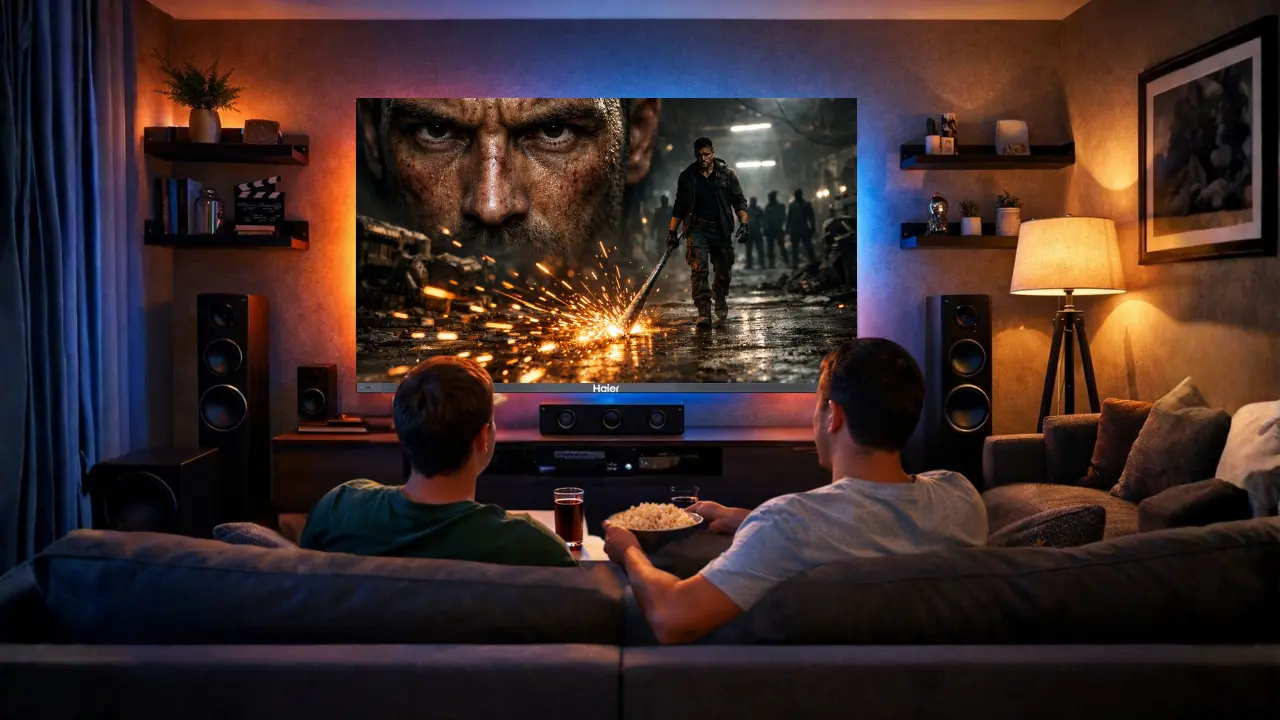

Sound that moves above, around, and through you is not louder. It is a layered sound.
It surrounds your body instead of sitting in front of you, uses height and depth instead of flat volume, and turns everyday viewing into something spatial, emotional, and immersive.
This is what modern surround sound does when it is designed properly.
Now let us slow down.
Because this is not really about speakers.
It is about how Indian homes experience stories today.
The moment you realise sound has been missing
It usually happens accidentally.
You are watching a late-night match.
Or a thriller after dinner.
The screen looks great. The colours pop. The action moves fast.
But something feels thin.
The stadium crowd sounds like a loop.
Rain sounds like static.
Dialogues float without weight.
You do not complain. You adjust the volume.
You live with it.
Until one day, sound starts moving.
Above you.
Around you.
Through you.
And suddenly, you realise what has been missing all along.
A good sound is not heard. It is felt.
Why flat sound no longer works for modern screens
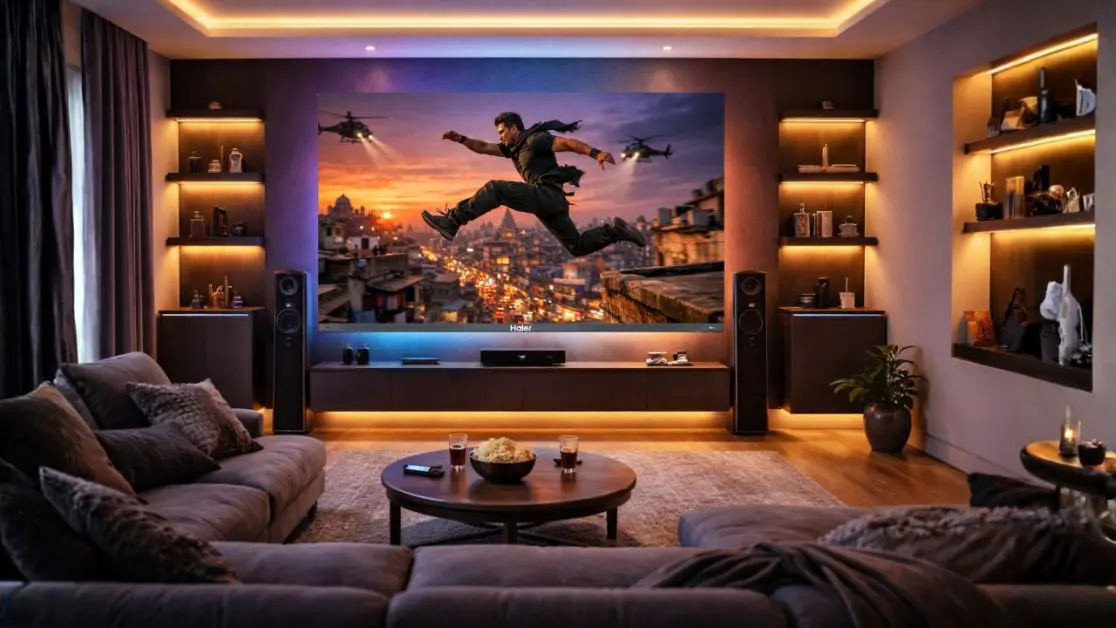
Screens have changed faster than sound.
TVs today are massive.
Bright. Detailed. Cinematic.
But most audio systems are still designed for a time when screens were small and rooms were quiet.
This creates a mismatch.
- Big visuals demand spatial sound
- Action demands direction
- Dialogue demands clarity
- Atmosphere demands depth
Flat sound cannot do all four at once.
That is why modern sound systems move in layers, not lines.
What does “above, around and through” actually mean?
This is where most explanations fail.
So let us make it simple.
Modern immersive sound works in three dimensions.
Around you
This is a horizontal sound.
Crowd noise spreading across the room.
Vehicles passing left to right.
Music filling space instead of pointing forward.
Above you
This is a vertical sound.
Rain falling.
Helicopters hovering.
Fireworks rising.
Your brain registers height, not just direction.
Through you
This is a low-frequency impact.
Bass that does not shake walls, but anchors moments.
Footsteps feel heavier.
Explosions feel grounded.
When these three work together, sound stops behaving like output.
It starts behaving like an environment.
Why Indian homes feel the difference immediately
Indian homes are not silent boxes.
There is traffic outside.
Fans running.
Pressure cookers hissing.
Children moving.
Flat sound gets lost here.
Layered sound adapts better because it distributes audio across space instead of pushing it forward.
The result is simple.
- Dialogues stay clear at lower volumes
- Effects feel immersive without being noisy
- Background details remain audible even during chaos
Good sound respects real homes. It does not fight them.
The system behind immersive sound

Immersive sound is not one feature.
It is a system.
Here is what actually makes it work.
1. Multiple physical channels
Not one speaker is doing everything.
Dedicated channels handle:
- Front sound
- Side sound
- Height sound
- Bass sound
Each has a job.
2. Intelligent sound processing
Modern processors read scenes in real time.
They know when dialogue matters.
They know when movement matters.
They know when silence matters.
Sound adjusts dynamically instead of staying fixed.
3. Content that supports spatial audio
Most modern streaming platforms now encode sound spatially.
Movies. Sports. Games.
They already carry depth. The system just needs to unlock it.
Why this matters beyond entertainment
Here is the hidden system most people miss.
Immersive sound reduces fatigue.
When sound comes from the right place, your brain works less.
You do not strain to follow dialogue.
You do not keep adjusting volume.
Over time, this matters.
For parents watching at night.
For professionals unwinding after work.
For couples sharing quiet moments.
Comfort is a sound design problem.
A quick comparison that explains everything
| Sound Type | How it behaves | How it feels |
| Stereo sound | Comes from the front | Loud but flat |
| Virtual surround | Simulates space | Inconsistent |
| True multi-channel surround | Moves in layers | Natural and immersive |
The difference is not volume.
It is placement.
Where Haier fits into this shift
Haier did not approach sound as an add-on.
It treated it as architecture.
In premium TVs like the Haier New M96 Series QD Mini LED AI Smart Google TV, sound is built as a multi-layered system with 6.2.2 channel speakers, Dolby Atmos, and Sound by KEF, designed to move sound horizontally, vertically, and through bass channels together .
What this means in real life is simple.
- Dialogues feel anchored to faces
- Stadium sound spreads instead of blasting
- Rain, wind, and movement gain height
- Bass adds weight without distortion
No soundbar required.
No extra boxes.
Just a sound that belongs to the screen.
Why bigger screens demand better sound systems
A 254cm(100) screen changes expectations.
Your eyes already feel surrounded.
Your ears need to match.
Otherwise, immersion breaks.
This is why large-format TVs today integrate advanced sound systems instead of relying on external accessories.
Sound becomes part of the display experience, not an afterthought.
Three choices most households face today
When upgrading sound, homes usually pick one path.
Option one: Louder sound
Turn up the volume.
Cheap. Immediate. Fatiguing.
Option two: External soundbars
Better direction.
More wiring. More clutter.
Option three: Integrated immersive sound
Designed with the screen.
Balanced. Clean. Future-ready.
Each has a cost.
Only one has long-term comfort.
The future of sound is invisible

Here is the real insight.
The best sound systems do not announce themselves.
They disappear.
You stop noticing speakers.
You stop adjusting settings.
You stop thinking about audio.
You just feel present.
That is where sound is headed.
The larger pattern at play
This is not just about TVs.
Appliances today are becoming systems, not products.
- ACs learn usage patterns
- Refrigerators manage freshness intelligently
- TVs balance picture, sound, and energy together
Sound that moves above, around, and through you is part of this shift.
Technology that adapts quietly.
Design that respects real life.
Decisions that reduce friction instead of adding complexity.
The insight worth remembering
Great sound does not impress. It integrates.
When sound matches how humans perceive space, homes feel calmer, experiences feel richer, and technology fades into the background.
That is not a feature.
That is a thoughtful design.
And once you experience it, flat sound feels impossible to return to.
Frequently Asked Questions
I just bought a big TV. Do I really need to upgrade my sound too?
If your screen is large and cinematic, flat stereo sound will likely feel disconnected. Bigger visuals create spatial expectations. Without layered sound (around + above + bass depth), immersion breaks.
Is immersive sound just marketing, or will I actually feel a difference in my living room?
You feel it immediately. Dialogues become clearer, background sounds gain depth, and effects move naturally. It’s less about loudness and more about placement.
Should I get a soundbar or invest in a TV with built-in immersive sound?
Soundbars improve direction but add wires and clutter. Integrated multi-channel systems are calibrated for the screen, offering cleaner design and better long-term balance.
Will my family even notice the difference, or is this just for audiophiles?
Everyone notices. Even non-tech users feel clearer dialogue and more natural sound movement especially in sports, thrillers, and concerts.
My house has noisy traffic, fans, and kids. Will immersive sound even help?
Yes. Layered sound distributes audio across space instead of pushing it forward. Dialogue stays clear at lower volumes, reducing strain in busy environments.
I watch TV late at night. Will immersive sound mean blasting volume?
Actually the opposite. Spatial sound reduces fatigue because voices come from the correct direction. You don’t need to increase volume to understand speech.
I left my TV on low volume during a match and struggled to hear commentary. Will this fix that?
Multi-channel systems separate dialogue from crowd noise, keeping commentary anchored and intelligible.
Will bass shake my walls and disturb neighbours?
Proper low-frequency channels anchor moments without distortion. Good bass supports scenes instead of vibrating the room uncontrollably.