
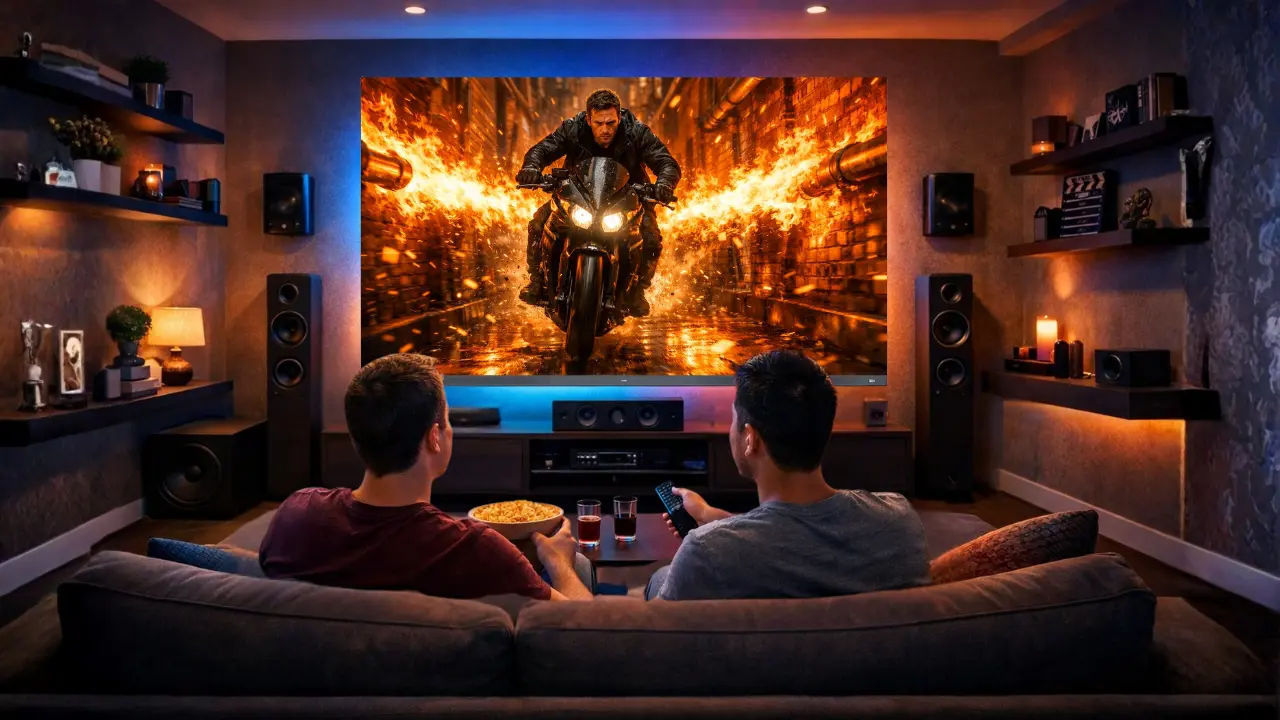

Standard TV sound usually uses basic stereo speakers that push sound forward from the television.
A 6.2.2 sound system adds multiple horizontal speakers, dedicated subwoofers for bass, and upward-firing speakers for height.
The result is three dimensional audio that surrounds the viewer, making movies, sports, and music feel spatial rather than flat.
Why TV sound suddenly matters more in modern homes.
Imagine a typical evening in an Indian home.
Dinner plates cleared.
The sofa becomes the family meeting point.
Someone opens Netflix. Someone else checks cricket scores.
The television turns on.
The picture looks stunning. The screen is massive. Colors feel cinematic.
But the sound?
Flat.
Voices feel thin. Stadium noise feels distant. Explosions sound like someone dropped a steel bowl in the kitchen.
This is the quiet gap most households notice but rarely explain.
Screens improved rapidly.
Sound systems did not.
That mismatch is exactly why understanding the difference between standard TV sound and 6.2.2 audio matters today.
Because sound is not just volume.
It is space.
The hidden limitation of standard TV speakers
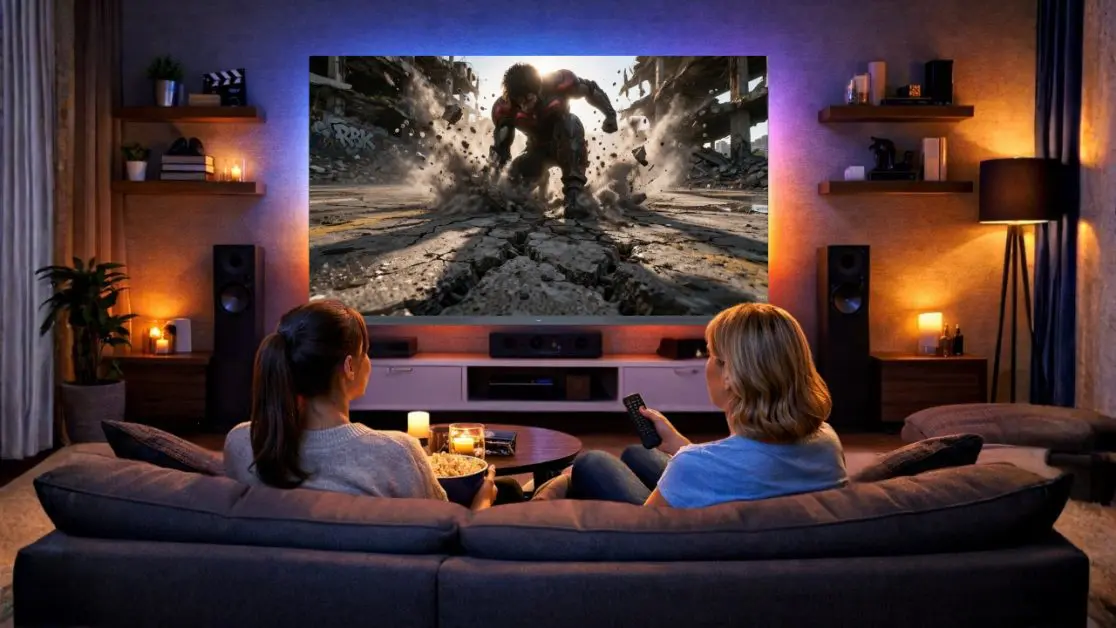
Most televisions still rely on a simple system.
Two small speakers placed inside the TV body.
That setup works for basic viewing. But it has physical limitations.
Why standard TV sound feels limited
| Factor | Standard TV Sound |
| Speaker Count | Usually 2 speakers |
| Direction | Sound comes only from the front |
| Bass | Limited because speakers are small |
| Spatial Effect | Minimal |
| Dialogue Clarity | Often mixed with background noise |
Modern televisions are extremely thin. Often under 5 cm.
Thin design creates a simple physics problem.
Small speakers cannot move enough air.
And sound is air movement.
That is why explosions feel weak.
Crowd noise feels distant.
And music lacks depth.
The TV is trying to recreate a cinema using two tiny speakers.
It is like trying to recreate a concert using a phone speaker.
What does 6.2.2 actually mean?
The numbers in 6.2.2 audio follow a simple structure.
They describe how sound is distributed around the room.
Understanding the structure of a 6.2.2 system
| Number | Meaning | Purpose |
| 6 | Six Main speakers | Surround sound around the listener |
| 2 | Two subwoofers | Deep bass and low-frequency impact |
| 2 | Two height speakers | Sound from above for immersive effects |
Each layer adds a new dimension.
- Subwoofers add vibration and bass energy.
- Height speakers simulate overhead movement.
This turns audio into a three dimensional field instead of a flat layer.
The difference becomes obvious the moment sound moves.
A helicopter now passes overhead.
Rain falls above you.
Crowds roar around you.
Sound starts behaving like real life.
Why 6.2.2 audio changes how we experience movies
Movies are mixed using dozens of sound channels.
Directors design audio like architects design buildings.
Footsteps come from behind.
Thunder rolls across the sky.
Dialogue stays centered.
When televisions play this content through stereo speakers, the system compresses everything into two channels.
Important detail disappears.
What happens when a 6.2.2 system plays the same scene
- Dialogue stays centered and clear.
- Background sounds move around the room.
- Explosions carry bass energy.
- Music expands across space.
The scene becomes easier to follow.
Not louder.
Clearer.
That difference is why formats like Dolby Atmos exist. They allow sound to be placed in three dimensional space rather than locked into fixed channels.
Think of it like this.
Stereo sound paints with two colors.
6.2.2 paints with an entire palette.
Where the difference becomes obvious in everyday life
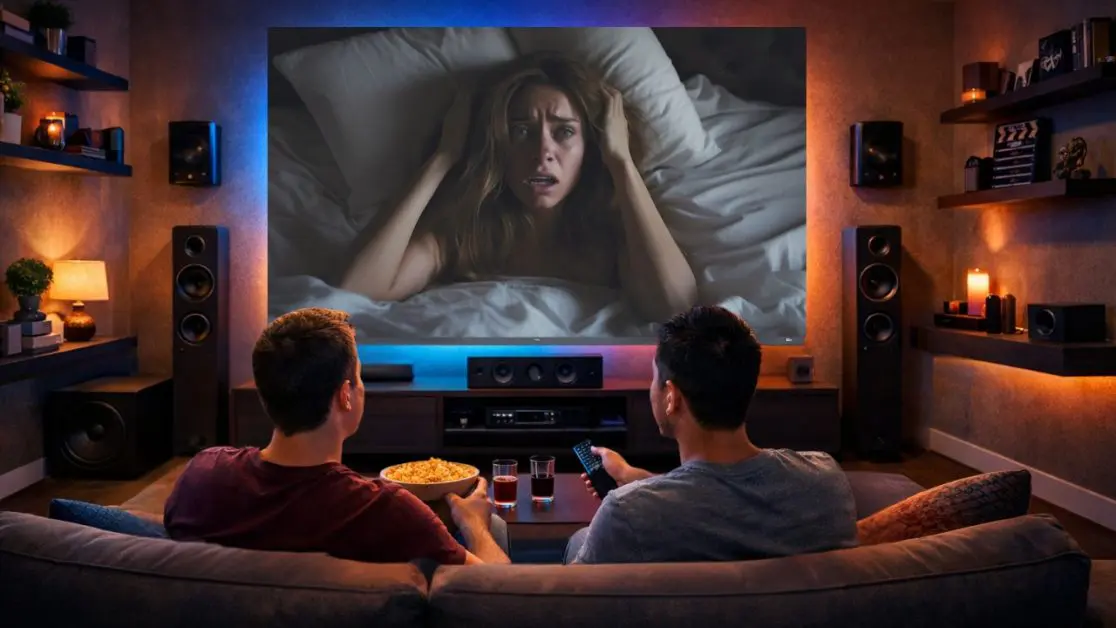
Not every scene requires immersive sound.
But certain moments reveal the gap immediately.
1. Cricket matches
Indian homes run on cricket seasons.
With standard TV sound:
- The comment sounds fine.
- Crowd noise feels muted.
With 6.2.2:
- Stadium ambience fills the room.
- Bat impact feels sharper.
- Crowd roars spread around you.
The living room feels closer to the stadium.
2. Action movies
Action scenes rely heavily on directional sound.
With stereo speakers, everything collapses into one direction.
With 6.2.2:
- Cars move across the screen and across the room.
- Bullets travel from behind to front.
- Helicopters pass overhead.
Your brain instantly understands movement.
3. Music concerts
Concert recordings highlight the difference clearly.
A stereo TV gives you a recording.
A 6.2.2 system gives you an audience seat.
You hear instruments from different directions. Applause surrounds you.
The architecture of immersive television audio
Modern televisions increasingly integrate advanced sound systems.
For example, premium models like the Haier M96 Series 254 cm (100) QD Mini LED AI Smart Google TV include Sound by KEF and a 6.2.2 channel speaker architecture designed for layered sound distribution.
That architecture creates three distinct layers.
1. Horizontal layer
This layer recreates traditional surround sound.
Sound travels left, right, and behind.
2. Bass layer
Subwoofers handle low frequencies.
Bass adds weight.
Without bass, the sound feels thin.
3. Vertical layer
Upward firing speakers bounce sound from the ceiling.
This simulates height.
Rain. Aircraft. Storms. Stadium noise.
All feel elevated.
The result is an audio field rather than a sound source.
Why immersive sound works better on large TVs
Indian households are rapidly upgrading television sizes.
165cm (65) screens are common.
189cm (75) models are rising.
254cm(100) displays are entering premium living rooms.
Large screens increase visual immersion.
But without stronger sound systems, the experience breaks.
The big screen paradox
| Screen Size | Audio Expectation | Problem with Basic Sound |
| 43–140cm (55) | Moderate immersion | Stereo works reasonably well |
| 55–165cm (65) | Cinematic viewing | Sound feels underpowered |
| 75–254cm(100) | Theater level visuals | Audio must scale with picture |
The larger the screen, the more spatial sound becomes essential.
Otherwise the brain notices the mismatch.
The image feels massive.
The sound feels tiny.
Three ways households approach TV sound today
Different families solve the sound problem in different ways.
Option 1: Stay with standard TV sound
Cost: Zero additional expense.
Benefit:
- Simple setup
- No extra devices
Tradeoff:
- Limited immersion
- Weak bass
- Flat audio field
This works for casual viewing.
Option 2: Add an external soundbar
Cost: Moderate.
Benefit:
- Better bass
- Wider sound stage
- Easier installation
Tradeoff:
- Limited height effects
- Not full surround sound
Option 3: Use televisions with built-in immersive systems
Cost: Higher.
Benefit:
- Integrated design
- Multi-layered audio
- Cinema style experience
Tradeoff:
- Higher initial investment.
But no additional wiring or speakers.
Each option solves the problem differently.
But the core principle remains the same.
Sound should scale with screen size.
The psychology of immersive sound
There is another reason 6.2.2 audio feels powerful.
The brain processes sound faster than visuals.
Humans evolved using hearing to detect danger, movement, and direction.
When sound moves naturally through space, the brain accepts the scene as real.
This is why cinema halls rely on complex audio systems.
A simple insight explains the effect.
When sound surrounds us, stories feel believable.
Without spatial audio, scenes feel distant.
With immersive sound, scenes feel immediate.
The quiet shift happening in Indian living rooms
Televisions used to be devices.
Today they are environments.
Streaming platforms run constantly.
Sports events stream live.
Music concerts arrive through OTT platforms.
Living rooms are slowly turning into hybrid theaters.
That shift changes expectations.
Picture quality improved first.
Now audio is catching up.
Systems like 6.2.2 channel sound architectures combined with Dolby Atmos processing are part of that shift. They distribute sound across horizontal, vertical, and bass channels to create immersive listening environments.
The real difference between standard sound and 6.2.2
In technical terms, the difference is simple.
More speakers.
More directions.
More depth.
But emotionally, the difference is bigger.
Standard sound tells you what is happening.
Immersive sound makes you feel where it is happening.
A final thought about how we experience stories
Technology rarely changes habits overnight.
But sometimes it quietly improves the moments we already value.
A late night movie.
A World Cup match.
A concert streamed on a Sunday evening.
The screen shows the story.
Sound places you inside it.
And that is the real difference between standard TV audio and a 6.2.2 system.
One plays sound.
The other builds space.
Frequently Asked Questions
Do I really need better sound if my TV picture already looks great?
Yes because your brain expects sound to match visuals. A large, cinematic screen with weak audio creates a noticeable mismatch that reduces immersion.
Is 6.2.2 overkill for a normal living room?
Not necessarily. It depends on your screen size and usage. For 65”+ TVs and regular OTT viewing, the difference becomes very noticeable.
Should I choose a soundbar or a built-in 6.2.2 TV system?
Soundbars are simpler and cheaper. Built-in 6.2.2 systems offer deeper integration, true spatial layering, and fewer setup hassles.
Will I actually notice the difference, or is this just marketing?
You will notice it most in movies, sports, and concerts especially when sound moves (crowds, vehicles, rain, explosions).
How is this different from Dolby Atmos?
Dolby Atmos is the processing technology.
6.2.2 is the physical speaker configuration that helps deliver that effect.
Do upward-firing speakers really work?
Yes they bounce sound off the ceiling to simulate height, creating overhead effects.
Why does my expensive TV still sound average?
Thin TVs limit speaker size. Even premium displays may prioritize visuals over audio hardware.
Can room size affect sound quality?
Yes. Larger rooms benefit more from multi-channel systems, while small rooms may need tuning.
Do I need special content for 6.2.2 sound?
For full effect, yes content mixed in formats like Dolby Atmos delivers the best experience.