


The modern Indian kitchen and laundry room have a new obsession: steam.
Not just for cooking idlis or momos, but for keeping clothes, linens, and even babywear germ-free.
The question is why now? Why has steam sanitisation quietly moved from hospital wards and five-star hotel laundries into everyday Indian households?
The answer lies in a simple truth. Our definition of “clean” has changed.
Clean isn’t enough anymore

For generations, detergent foam and lemony fragrances were the shorthand for cleanliness. If your shirt smelled fresh, it was “clean.”
But the pandemic cracked that illusion wide open. Suddenly, invisible threats bacteria, viruses, and allergens mattered as much as visible stains. Today, “fresh” isn’t enough. We want to be safe.
Steam has become the bridge. Because it doesn’t just wash. It sanitises.
What makes steam different from ordinary washing?
Think of it this way: detergent attacks dirt, but steam attacks the microscopic.
- High-temperature penetration – Steam goes deep into fibres, reaching spots detergents sometimes miss.
- Allergen reduction – Dust mites, pollen, pet hair steam weakens their grip on fabrics.
- Chemical-light cleaning – Less reliance on harsh chemicals, more natural sterilisation.
- Wrinkle relief – An underrated benefit: clothes look freshly ironed straight out of the drum.
It’s not about replacing washing. It’s about adding a new layer of protection.
Why Indian homes are embracing steam

The Indian lifestyle makes steam sanitisation more relevant than ever.
- Festival clothing: That silk saree or sherwani needs more than a quick rinse it needs safe handling without damage.
- Urban pollution: Clothes trap dust, smoke, and allergens that detergent alone may not neutralise.
- Children and elders: Their immunity is delicate. Parents and caregivers are demanding safer washes.
- Time-poor households: Wrinkle reduction and faster refresh cycles mean less ironing, less hassle.
This isn’t luxury anymore. It’s everyday practicality.
The emotional comfort of steam
Beyond science, there’s psychology. Steam gives peace of mind.
When you pull out freshly steamed clothes for a child’s school day, or set the bed with steam-sanitised sheets, you’re not just chasing hygiene you’re buying reassurance.
In a country where home is often the first line of defence against illness, that reassurance matters.
Haier’s role in shaping the steam story
Here’s where Haier steps in not with loud claims, but with quiet, practical solutions.
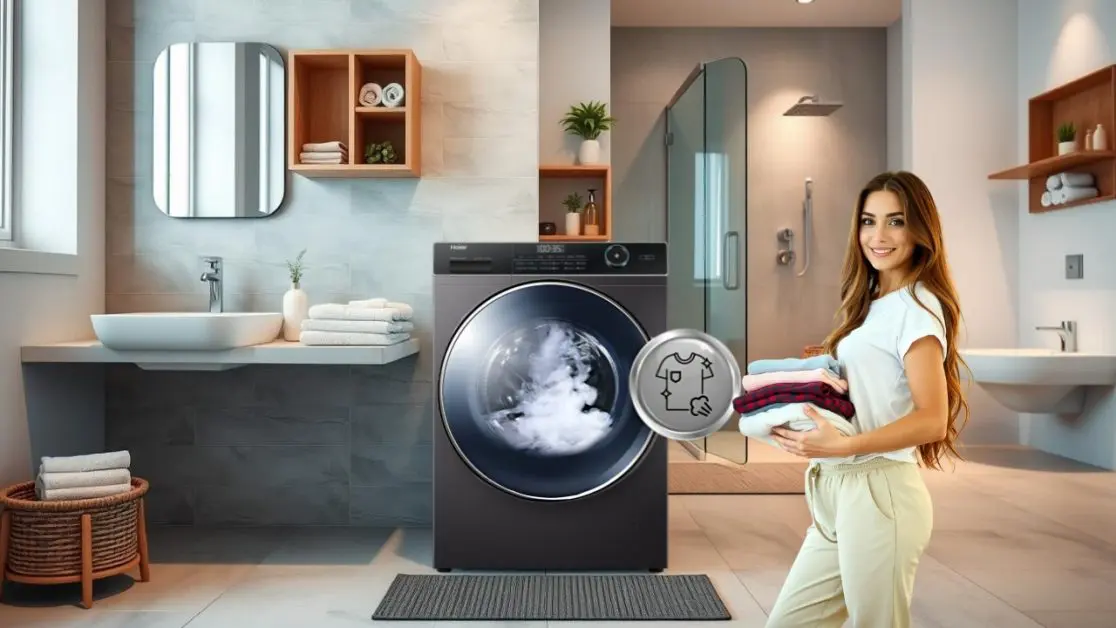
New front-load washing machines with Steam Wash programs show what this shift looks like in action. A cycle that doesn’t just clean, but reduces germs and allergens by up to 99.9%. Clothes come out softer, fresher, and visibly smoother.
For Indian parents, it means baby clothes that feel safer. For working professionals, it means office wear that looks pressed without spending Sunday mornings at the ironing board. For families, it means one less worry on their long list.
This isn’t selling a feature. It’s solving anxiety.
Why this is becoming the “new normal”
Let’s step back. Every big lifestyle shift in India follows a pattern:
- Refrigerators weren’t always a given. Today they’re non-negotiable.
- Microwave ovens began as luxuries, but are now “time machines” for working families.
- Purifiers moved from niche to necessity once air pollution became unavoidable.
Steam sanitisation is following the same arc. What was once optional is becoming expected. Because once you’ve felt the confidence of sanitised clothes, going back feels like lowering your guard.
But is steam for everyone?
Let’s be systematic.
- Option one: Stick with traditional washes. It’s cheaper upfront, but doesn’t meet the rising bar of hygiene.
- Option two: Outsource to dry cleaners. Effective, but inconvenient and costly long-term.
- Option three: Bring steam home with modern appliances. Higher initial investment, but daily convenience and peace of mind.
When viewed through cost-benefit, option three wins. It’s efficient, repeatable, and future-ready.
A hidden pattern in Indian consumer choices
Look closely and you’ll see a larger system at work. Indian families tend to adopt technologies that blend three things:
- Health and safety assurance
- Time-saving convenience
- Cultural adaptability
Steam checks all three. It secures health, cuts chores, and adapts beautifully to Indian fabric culture delicate silks, heavy cottons, embroidered kurtas.
The aphorism worth remembering

Clean clothes are visible. Sanitised clothes are invisible. But in the invisible lies the comfort.
That’s why steam isn’t just another feature, it’s the quiet revolution in our homes.
So what does this mean for us?
It means the way we define hygiene in Indian households is shifting. Soon, “Does your machine have steam?” will be as routine a question as “Does it have inverter technology?”
It also means brands like Haier aren’t just selling machines they’re selling new standards of living. Standards that respond to our changed world, our heightened expectations, and our hunger for smarter, safer, more stylish homes.
Closing thought
Every generation redefines what “normal” means at home. For our parents, it was refrigerators. For us, it’s high-speed internet. For the next wave, it’s going to be steam sanitisation.
Because in a country where family gatherings stretch long, festivals run late, and the monsoon lingers, hygiene is not just a routine. It’s culture. And steam is fast becoming the silent guardian of that culture.