
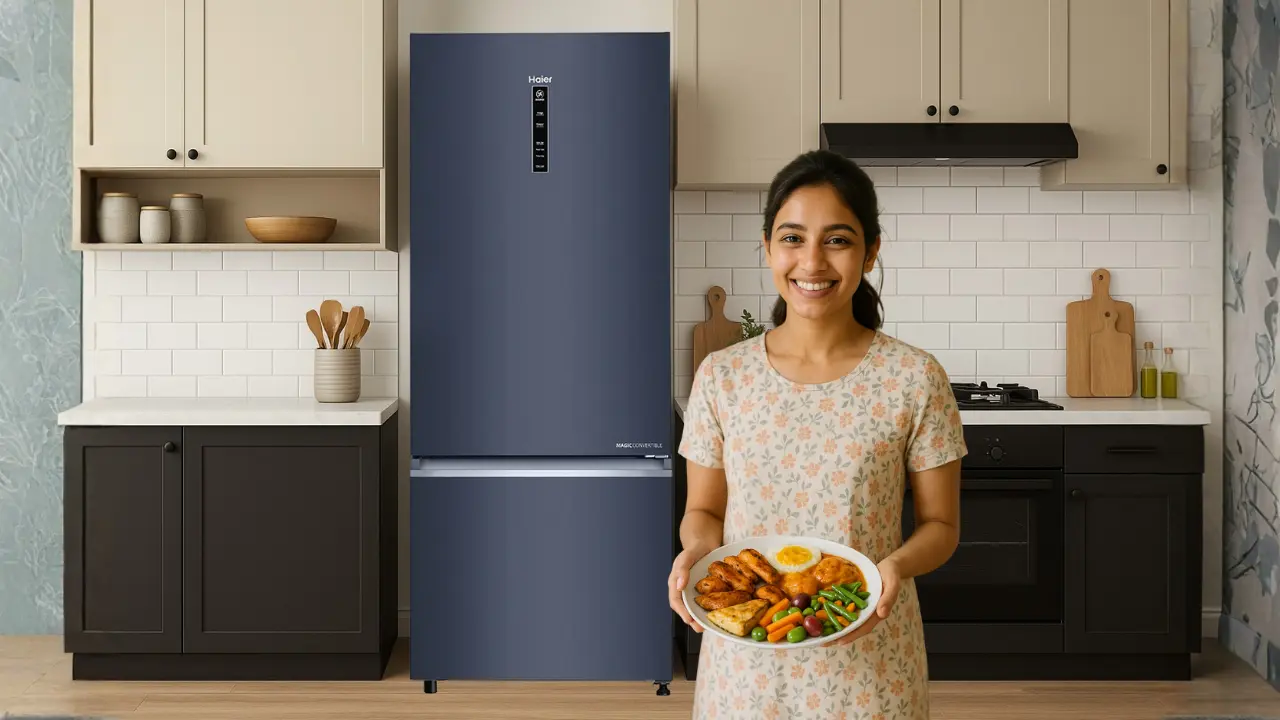

Festival leftovers are best stored in airtight containers, separated by type, and kept in a well-organised fridge with dual-fan cooling to prevent smell mixing and maintain freshness.
The secret lies in a combination of smart storage habits and appliances designed for Indian kitchens.
Why Festival Leftovers Are a Joy and a Headache

Every Indian festival ends the same way. A table filled with food, laughter echoing in the house, and then dozens of steel dabbas and plastic boxes crammed into the fridge.
The problem? Smells don’t stay where they belong. Yesterday’s kheer started picking up traces of garlic tadka. The samosas lose their crispness. By morning, the fridge feels like a food court, everything blending into everything else.
Leftovers aren’t just food. They’re memories of the festival, tokens of love from relatives, and a way of extending the celebration into the next day. That’s why losing their taste and aroma feels like a small heartbreak.
So how do you store them without this chaos?
The Science of Smell Mixing
Food smells mix because of two things:
- Moisture and oils release volatile compounds that travel easily.
- Single-flow cooling circulates air across compartments, carrying odours everywhere.
Think of your fridge like a library. If the books aren’t organised and the shelves are shared, everything blurs into clutter. The same happens with food unless you design systems that keep order.
Step One: Airtight Containers Are Non-Negotiable
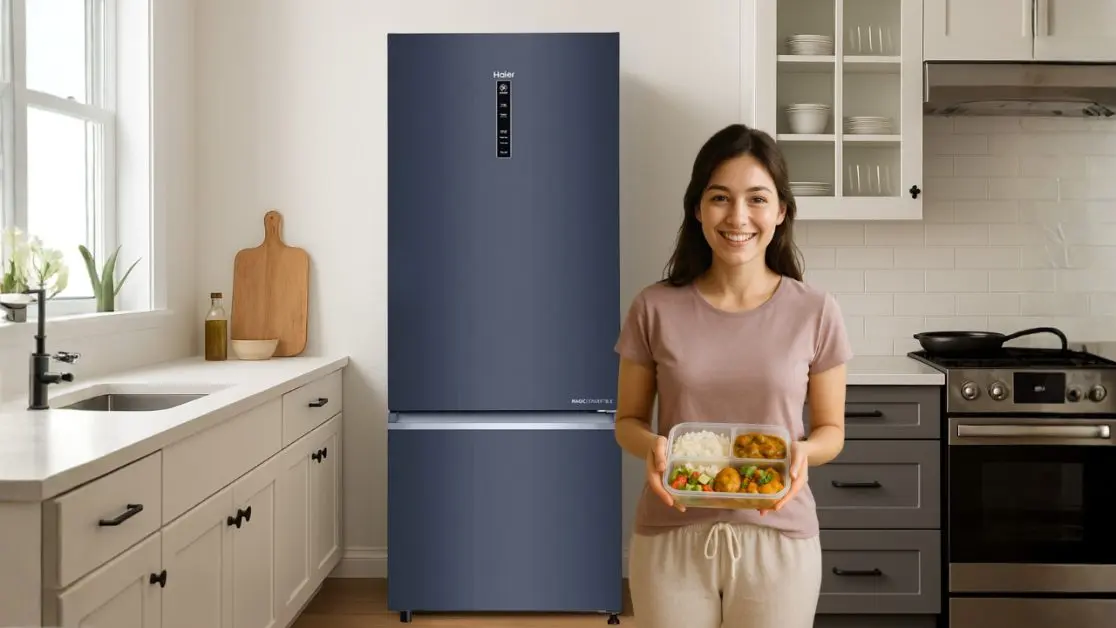
The first line of defence is simple: use airtight containers.
- Glass containers keep both smell and stains at bay.
- Steel dabbas with silicone lids are great for oily curries.
- Small portion boxes prevent reheating the same dish multiple times.
It’s tempting to just cover with foil or cling film, but that’s like locking your main door and leaving the windows open. Smells find their way in.
Step Two: Group by Category, Not by Shape
Stacking by “what fits” is the quickest route to smell mixing. Instead:
- Keep sweets together. Rasgulla and gulab jamun deserve their own zone.
- Segregate savouries. Biryani, cutlets, and curries shouldn’t share air with kheer.
- Use drawers wisely. The vegetable case can double up as a safe space for delicate mithai boxes.
When you store by category, you’re creating invisible walls that block cross-contamination.
Step Three: Temperature Is Not One-Size-Fits-All
Not all leftovers enjoy the same climate.
- Curries and dals stay best at 2–4°C.
- Sweets with milk need cooler zones closer to 1–2°C.
- Dry snacks like chakli or namak para actually prefer airtight tins outside the fridge.
Here’s where modern refrigerators make life easier. The Haier 445L Bottom Mounted Refrigerator (HRB-4952BGK-P) comes with 14-in-1 convertible modes. This means one compartment can be tuned into exactly the climate your food needs: extra freezer space for ice-creams one day, or a low-chill zone for mithai the next.
Step Four: Stop the Smell at the Source
Even the strongest containers can’t fix what starts inside the fridge. That’s why airflow matters.
Older fridges often rely on single-flow cooling. Cold air circulates everywhere, taking onion smells to your barfi tray.
New-age refrigerators, like Haier’s HRB-4952BGK-P, use dual fan technology. One fan for the fridge, another for the freezer. This separation ensures smells don’t cross paths. It’s like giving sweets and savouries to different changing rooms with no awkward overlaps.
Step Five: Organisation as a Daily Ritual

Festive chaos can tempt us to stuff things in randomly. But a little discipline goes a long way.
Here’s a quick framework:
- Label everything with a date leftovers rarely deserve more than 48 hours.
- Create a “use-first” zone near the front shelf.
- Stack vertically, not horizontally. This reduces forgotten containers hiding at the back.
Think of it as fridge mindfulness. Each box has a purpose, each shelf has a story.
The Hidden Role of Energy Efficiency
Festive fridges work overtime. More food, more opening and shutting, more cooling needed. Without the right design, this means higher bills and inconsistent freshness.
The HRB-4952BGK-P uses a triple inverter and inverter compressor; it adapts cooling to usage. That’s like having a car that drives smoothly whether you’re stuck in Diwali traffic or cruising on an empty highway.
Result? Food stays fresh longer, without adding to the stress of your electricity bill.
When Leftovers Become Tomorrow’s Meals
Storing well is not just about preservation. It’s about transformation.
- Yesterday’s puris can be turned into masala puri chaat.
- Dry sabzi can roll into a frankie for kids’ tiffin.
- Halwa can fold into pancakes the next morning.
The better you store, the more creative you can get the next day.
Table: Do’s and Don’ts for Storing Festival Leftovers
| Do’s | Don’ts |
| Use airtight containers | Leave food in open plates covered with foil |
| Group sweets and savouries separately | Mix mithai with garlic curries |
| Label boxes with storage date | Keep leftovers “just in case” beyond 48 hrs |
| Adjust fridge modes for different needs | Assume one temperature suits all |
| Use dual fan/convertible fridges | Rely on old single-fan models for everything |
Why This Matters for Modern Indian Homes
Festivals are a collision of tradition and modernity. On one hand, we’re preparing age-old recipes. On the other hand, we’re using global appliances to keep them fresh.
Millennial and Gen Z households are especially sensitive to food waste, energy bills, and smart living. The right fridge habits and the right fridge bridge that gap.
Haier’s bottom-mounted models, for instance, not only prioritise freshness but also design placing the fridge section (used 80% of the time) at eye level, reducing the bending that Indian kitchens know all too well.
The Broader Implication: Leftovers as a System

Look closely and leftovers teach us something about life itself.
- Systems fail when we mix what should stay apart.
- Small daily habits prevent bigger problems later.
- Tools matter but only when paired with mindful use.
A good fridge is an enabler, not a replacement for care. The combination of airtight boxes, smart organisation, and dual-fan cooling creates not just fresher food but calmer mornings.
Final Thought
Festival food is joy stretched across days. But only if it tastes the same on day two as it did on day one.
The best way to store festival leftovers without smell mixing is a mix of habit and technology: airtight containers, organised zones, and refrigerators designed for freshness like the Haier 445L Bottom Mounted Refrigerator (HRB-4952BGK-P) with its 14-in-1 convertible modes and dual-fan cooling.
Because celebrations deserve to linger in taste, not in fridge odours.