
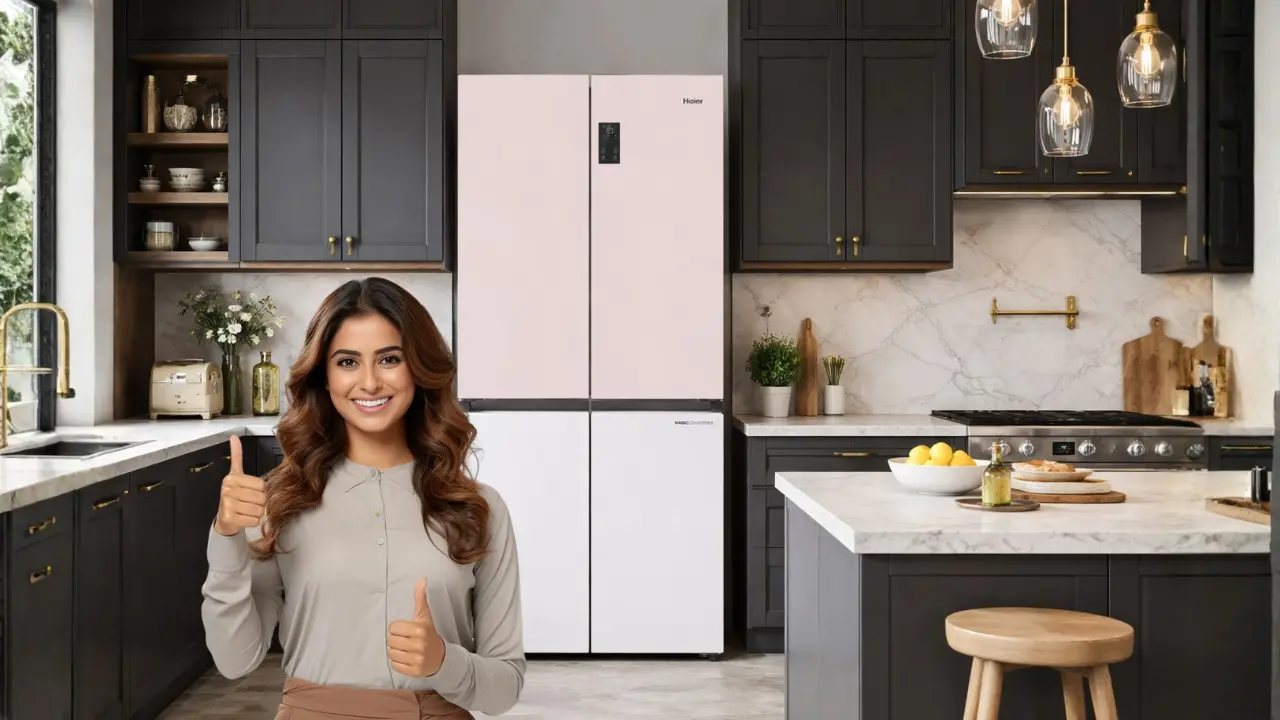

When style meets smart engineering, everyday appliances stop being background objects and start becoming quiet partners in how homes function.
Good design makes things look right. Smart engineering makes things work right. When the two come together, life feels lighter without demanding attention.
That is the shift modern Indian homes are experiencing right now.
Not louder technology.
Not more features for the sake of it.
Just better decisions built into the objects we live with.
Why does style suddenly matter so much in Indian homes?
Walk into a new apartment today and you will notice something immediately.
The kitchen is open.
The living room flows into the dining area.
Appliances are no longer hidden behind doors.
They are visible. Always.
This changes the role appliances play.
Earlier, function mattered first. Looks came later.
Now, appliances sit in the middle of daily life. They are seen during morning chai, weekend hosting, late night leftovers, and festival cooking marathons.
Style is no longer decoration.
It is integration.
An appliance that looks awkward breaks the rhythm of the space.
An appliance that looks intentional blends in without asking for permission.
That is why design has become practical.
Smart engineering starts where convenience usually fails
Most people think smart engineering means apps, screens, and notifications.
It does not.
Smart engineering solves the small frictions people stopped complaining about because they assumed nothing could change.
The fridge that needs rearranging every three days.
The AC that cools unevenly.
The washing machine that demands timing your day around it.
These are not dramatic problems.
They are persistent ones.
And persistent problems shape daily stress far more than rare breakdowns.
Smart engineering is not about adding complexity.
It is about removing decisions.
The hidden system behind stress free living
There is a pattern most people miss.
Stress does not come from big failures.
It comes from repeated micro adjustments.
Lowering the temperature.
Reorganising shelves.
Shifting food because space runs out.
Checking if something will spill.
Each action is small. Together, they add up.
The smartest homes are not the ones with the most automation.
They are the ones where fewer decisions are required.
That is the invisible system behind calm living.
When appliances adapt instead of demanding attention
There are three broad ways appliances behave in homes.
One option is static appliances.
They do one thing. Always. Users adapt around them.
The second option is configurable appliances.
They offer settings. Users manage them.
The third option is adaptive appliances.
They adjust to changing needs without reminders.
The third category changes the relationship entirely.
During festive seasons, storage needs expand.
During regular weeks, efficiency matters more.
During summers, cooling patterns shift.
Appliances that understand these cycles quietly support the household rhythm.
That is smart engineering at work.
Why flexibility beats maximum capacity every time
Indian families rarely need the same storage every day.
A regular weekday looks nothing like a festival week.
A working couple stores differently from visiting relatives.
A growing family changes habits every year.
Static capacity fails in dynamic homes.
What works better is convertible space.
Space that shifts purpose instead of sitting unused.
This is where thoughtful design and engineering intersect.
For example, modern four door refrigerators with convertible zones allow sections to switch roles based on need.
More fridge when groceries arrive. More freezer during batch cooking weeks. Balanced zones when life returns to routine.
It is not about having more space.
It is about having useful space.
The Haier Vogue Lumiere series illustrates this idea well, with fridge conversion and clearly defined storage zones that reduce clutter and wasted volume.
Style is not about colour. It is about confidence
Many people misunderstand appliance style as colour choice.
But style runs deeper.
Style is about proportion.
About how doors align.
About how handles feel.
About how light behaves inside a space.
A fridge that opens smoothly in a tight kitchen.
A finish that does not show fingerprints after every use.
Lighting that helps you actually see what is inside.
These are design decisions grounded in engineering.
Good style never asks for attention.
It earns it by staying out of the way.
How smart cooling quietly saves energy
Energy efficiency often gets discussed like a moral choice.
Switch it off.
Lower the setting.
Be responsible.
But responsibility works best when systems support it.
Smart cooling systems use inverter technology to adjust output instead of running at full blast and stopping repeatedly.
This stabilises temperature, reduces wear, and lowers energy use over time.
The result is not just savings on paper.
It is comfort that does not fluctuate.
And when cooling stays consistent, people stop adjusting settings constantly. That behavioural shift saves energy too.
Engineering shapes behaviour more than instructions ever will.
The overlooked role of hygiene in appliance design
Clean appliances last longer. Everyone knows that.
But most cleaning depends on motivation.
And motivation is unreliable.
Smart engineering builds hygiene into the system.
Odour absorption.
Moisture control.
Even cooling distribution that prevents spoilage.
These features reduce the need for frequent deep cleaning and protect food quality without effort.
Clean design is not about shine.
It is about prevention.
What modern buyers actually optimise for
Talk to first time homeowners and you hear the same priorities repeat.
They want things to look good.
They want things to last.
They want fewer surprises.
That leads to a simple decision framework.
- Does this appliance reduce daily effort?
- Does it adapt as life changes?
- Does it age gracefully in both performance and appearance?
When the answer is yes to all three, trust builds naturally.
That is when brands stop selling and start belonging.
Design is the interface. Engineering is the promise
Think of style as the invitation.
It welcomes the appliance into the home.
It aligns with the furniture, the walls, the lifestyle.
Engineering is what keeps the promise.
It ensures that months later, the appliance still feels reliable.
That it does not demand more from you as time passes.
The best appliances feel better in year three than they did in month one. Because they were designed for reality, not showroom perfection.
The bigger picture most people miss
This shift is not limited to appliances.
It reflects how people approach work, homes, and decisions today.
People want systems that support them quietly.
They want tools that adapt without noise.
They want beauty that serves function.
Style without engineering fades fast.
Engineering without style feels cold.
When the two meet, trust forms.
And trust is what makes a house feel like a home.
The insight worth remembering
Good appliances do not impress you once. They support you every day.
That is what smart engineering paired with thoughtful style delivers.
Not drama.
No noise.
Just everyday life, slightly easier, calmer, and more considered.
And in a world full of decisions, that quiet support matters more than ever.