
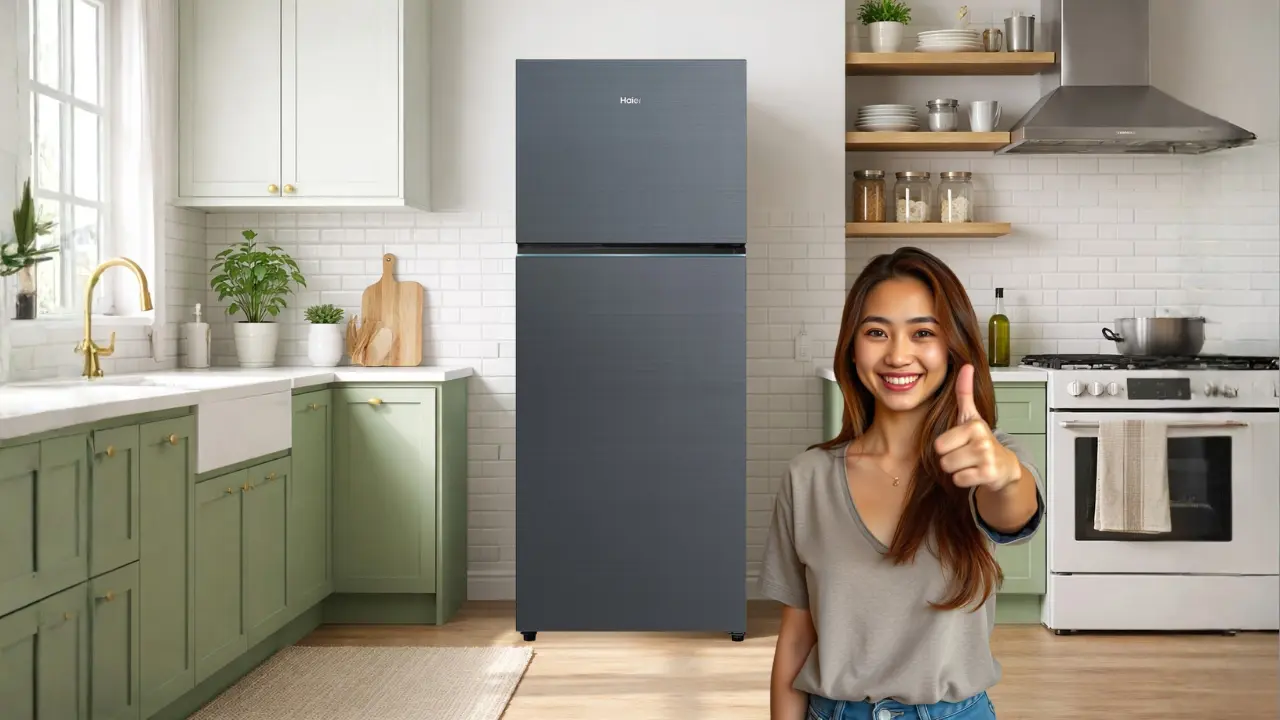

What is Sustainable Cooling with Solar Connect Technology?
Sustainable cooling with Solar Connect Technology means running your refrigerator using solar energy support while maintaining stable, energy efficient performance.
It reduces dependence on grid electricity, lowers long term power costs, and aligns your home with India’s growing rooftop solar movement.
Cooling in India is not seasonal.
It is constant.
Walk into any kitchen in June. The air is warm. The gas stove radiates heat. The refrigerator hums in the background, protecting milk, curd, vegetables, leftovers.
Now pause.
What powers that protection?
Electricity bills tell a bigger story.
Refrigerators run 24 hours a day. According to the Bureau of Energy Efficiency, they account for roughly 10 to 15 percent of household electricity consumption in urban homes.
In peak summer, usage climbs.
Add air conditioners. Add ceiling fans. Add longer appliance usage during school vacations. The meter never rests.
Cooling is permanent.
Electricity supply is not.
Voltage fluctuations. Load shedding. Rising tariffs. Urban grid pressure.
The hidden system behind cooling starts to show cracks.
That is where Solar Connect Technology enters.
Solar Connect Technology: Cooling That Adapts to Sunlight
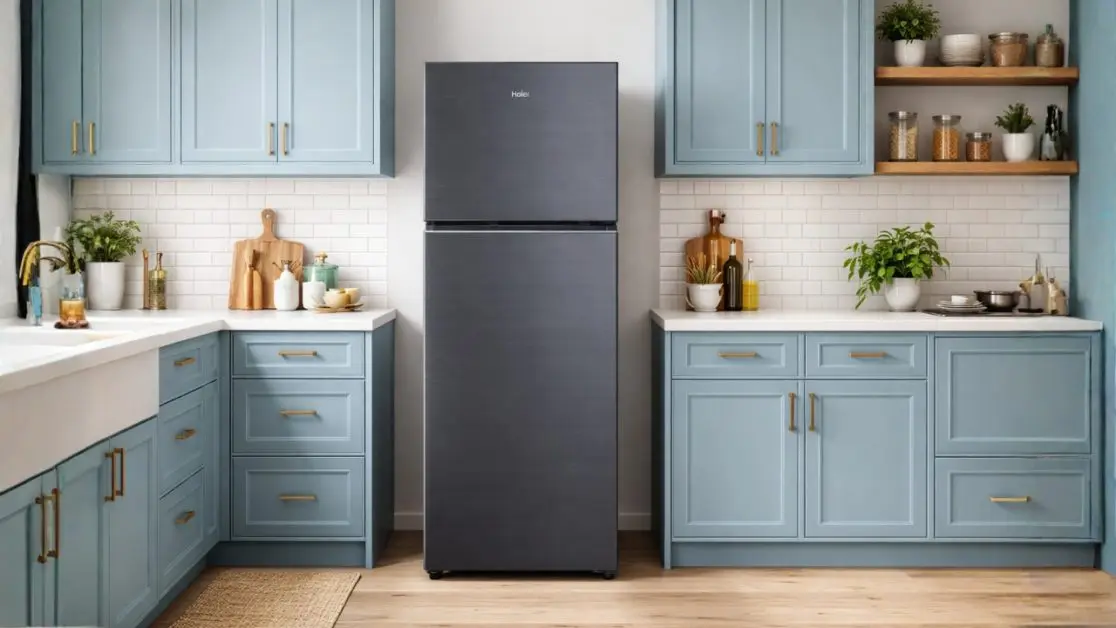
Solar Connect Technology allows compatible refrigerators to operate using solar power when connected to rooftop solar systems. It reduces daytime grid dependency and improves energy resilience.
The Haier 475L 2 Star Black Glass Double Door Refrigerator HRF-5251PKGA-N and the Haier 475L 2 Star Graphite Black Double Door Refrigerator HRF-5251BGKA-N both feature Solar Connect Technology, designed for solar powered operation and energy saving.
This is not about replacing electricity entirely.
It is about sharing the load.
How the System Actually Works
Sustainable cooling is a layered system:
- Rooftop solar panels generate power during daylight hours.
- The refrigerator draws compatible power input.
- Twin inverter compressors optimise consumption.
- Eco Mode reduces excess energy use.
- Wide voltage range supports fluctuating supply.
Each layer supports the other.
Efficiency is never one feature. It is architecture.
Why Solar Cooling Makes Sense in Indian Homes
India receives 4 to 7 kWh per square metre of solar radiation daily, according to MNRE data. Rooftop solar adoption is accelerating across tier 1 and tier 2 cities.
Yet many appliances still operate as if sunlight does not exist.
There is a mismatch.
Homes generate solar energy. Appliances remain grid dependent.
Solar Connect Technology corrects that imbalance.
The Tangible Benefits
Let us look at this clearly.
| Factor | Conventional Refrigerator | Solar Connect Refrigerator |
| Power Source | Grid only | Solar adaptable + Grid |
| Daytime Load | Full grid dependency | Reduced grid usage |
| Voltage Fluctuation Risk | Higher | Wide voltage tolerance |
| Energy Efficiency | Standard | Enhanced via inverter + Eco Mode |
| Carbon Impact | Fixed | Lower operational footprint |
Eco Mode in these models can save up to 6 percent energy .
Six percent per year becomes meaningful over a decade.
Sustainability compounds.
Twin Inverter Technology: Stability Creates Efficiency
Solar compatibility works best when cooling remains stable.
Both HRF-5251PKGA-N and HRF-5251BGKA-N feature Twin Inverter Technology for lower noise and efficient performance .
Traditional compressors switch on and off sharply.
Inverter compressors adjust gradually.
The impact?
- Stable internal temperature
- Lower power spikes
- Reduced wear and tear
- Better food preservation
The product specification visual, twin inverter cooling shows smoother temperature control compared to conventional systems.
Consistency saves energy.
Energy saved reduces strain.
Reduced strain extends lifespan.
Sustainability works quietly.
Freshness Is Also Climate Responsibility
Cooling is not just about electricity. It is about food waste.
Globally, food waste contributes nearly 8 percent of greenhouse gas emissions. When food spoils, the energy used to grow and transport it is wasted.
The Haier 475L refrigerators feature 360 Degree Surround Cooling to ensure even airflow across shelves.
Even cooling prevents hotspots.
Hotspots cause early spoilage.
Spillage increases waste.
The H Deo Fresh technology eliminates up to 99.99 percent bacteria and foul smell inside the refrigerator.
Clean air supports longer freshness.
Freshness reduces waste.
Reduced waste supports sustainability.
It is all connected.
Design That Encourages Responsible Habits
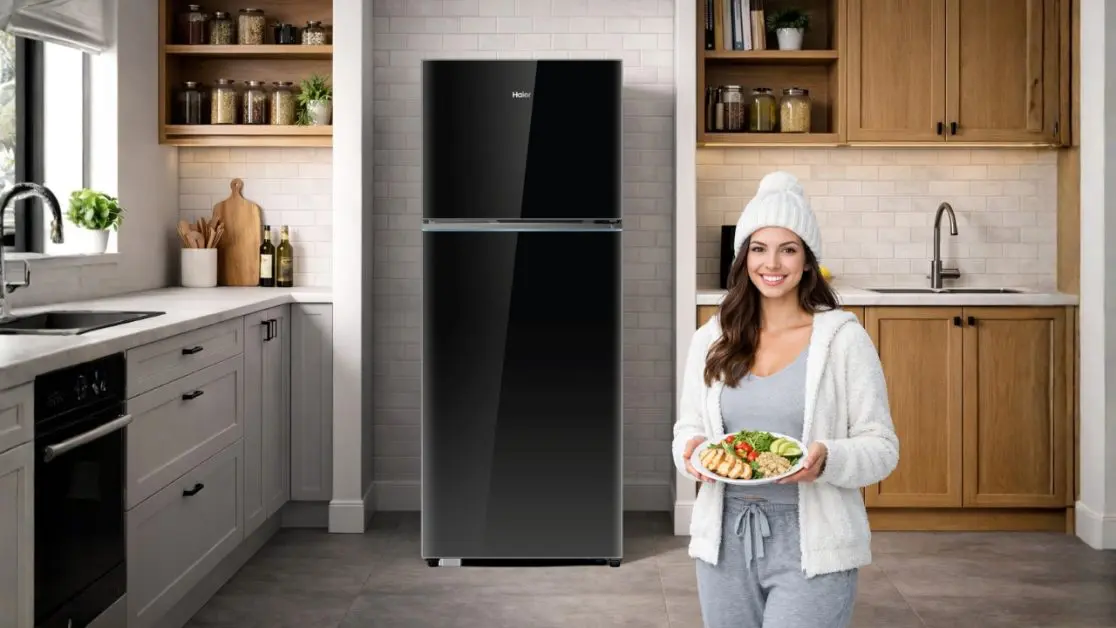
Open the door of the Haier 475L 2 Star Black Glass Double Door Refrigerator HRF-5251PKGA-N.
You see structure.
Seven storage zones and a 480L organised layout help separate dairy, beverages, vegetables, and non vegetarian items.
The Double Magic Zone maintains ideal temperature settings for specific food types .
Organisation changes behaviour.
When food is visible and sorted, consumption becomes mindful.
Mindful homes waste less.
Three Real Life Scenarios
1. Working Professional in a Studio Apartment
- Relies on weekly meal prep.
- Benefits from inverter stability.
- Solar support lowers daytime electricity costs.
2. Family with Children
- Needs consistent milk storage.
- Requires protection during voltage fluctuations.
- Solar connect reduces peak load impact.
3. Couple Building a Solar Powered Home
- Installs rooftop panels.
- Chooses solar compatible appliances.
- Aligns energy production with energy usage.
Different stories.
Same pattern.
Alignment creates resilience.
Cooling Demand Is Rising. Systems Must Evolve.
The International Energy Agency estimates that India’s cooling demand could triple by 2050.
If cooling demand rises without efficiency, electricity demand surges.
If electricity demand surges, infrastructure strains.
Solar connected appliances distribute load locally.
They reduce peak grid pressure.
They create decentralised resilience.
This is not just about a refrigerator.
It is about infrastructure thinking inside the home.
Clear Cost and Benefit Breakdown
Costs
- Investment in rooftop solar installation
- Premium for solar compatible appliances
- System planning
Benefits
- Reduced daytime grid dependency
- Lower long term electricity expenses
- Better voltage fluctuation protection
- Enhanced food preservation
- Reduced carbon footprint
One cost is upfront.
The other repeats monthly.
Smart households calculate both.
The Bigger Insight: Cooling as an Energy Decision
The refrigerator used to be a passive appliance.
Now it can be an energy partner.
The Haier 475L 2 Star Graphite Black Double Door Refrigerator HRF-5251BGKA-N and the Haier 475L 2 Star Black Glass Double Door Refrigerator HRF-5251PKGA-N represent this shift toward adaptive cooling systems.
Solar Connect Technology does not shout.
It integrates.
It adapts to sunlight during the day and stabilises performance through inverter control.
Sustainability is not about sacrifice.
It is about alignment.
Align energy production with energy consumption.
Align design with climate reality.
Align everyday habits with long term resilience.
The refrigerator is no longer just cold storage.
It is a node in your home’s energy ecosystem.
And when homes evolve into ecosystems, the future feels quieter, lighter, and more sorted.
Frequently Asked Questions
What exactly does “sustainable cooling with Solar Connect Technology” mean in my daily life?
It means your refrigerator can use electricity generated from your rooftop solar panels during the day instead of relying entirely on grid electricity. This reduces electricity consumption from the grid, lowers power bills over time, and makes cooling more resilient during power fluctuations or high energy demand.
If my refrigerator runs 24/7, how much electricity does it usually consume in my home?
Refrigerators typically account for 10–15% of household electricity consumption in urban Indian homes. Because they operate continuously, even small improvements in efficiency such as inverter compressors or Eco Mode can significantly reduce long-term energy costs.
Why is cooling considered a constant need in Indian homes?
India’s climate keeps kitchens warm for most of the year. Heat from cooking, warm indoor air, and long summers mean refrigerators must work continuously to keep food safe. Cooling is not seasonal; it is an everyday requirement.
I’m planning to install rooftop solar panels. Should I choose a refrigerator that supports solar power?
Yes. A refrigerator with Solar Connect Technology can directly benefit from solar energy during daylight hours. This reduces daytime grid dependency and ensures your solar investment is actually powering your household appliances.
I already have solar panels. Will a solar-compatible refrigerator make a real difference to my electricity bill?
Yes, especially during the daytime. Solar-compatible refrigerators draw power from solar panels when sunlight is available. Over years of use, this can reduce cumulative electricity expenses and lower your household’s carbon footprint.
I often notice food spoiling unevenly in my fridge. How does advanced cooling help with this?
Technologies like 360° Surround Cooling distribute air evenly across all shelves. This prevents hotspots inside the refrigerator where food can spoil faster, helping maintain consistent temperatures throughout.
Does better refrigerator hygiene really matter for sustainability?
Yes. Food waste contributes significantly to global greenhouse gas emissions. When refrigerators maintain consistent temperatures and cleaner air environments, food lasts longer. Less spoilage means less waste and a smaller environmental footprint.