
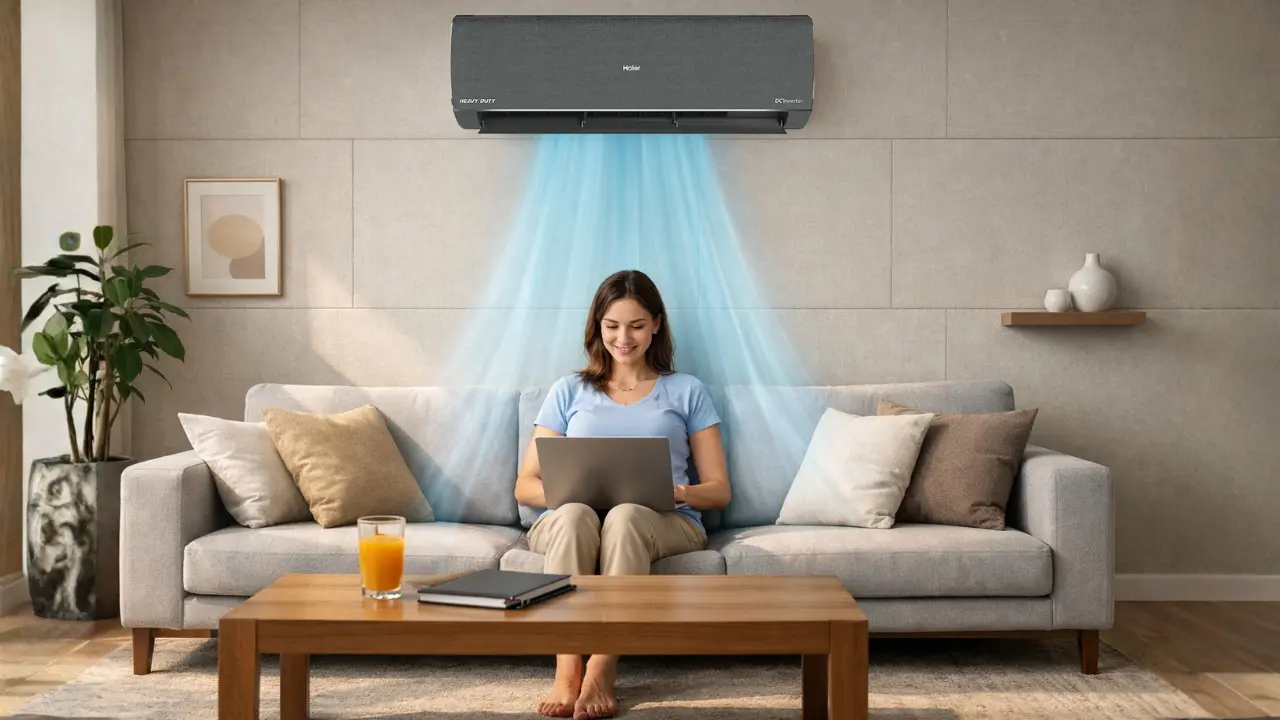

Targeted cooling works better because it only blows cool air where it’s needed to provide comfort.
Traditional central air conditioners cool empty rooms along with the areas you actually live in.
By concentrating cool air on where you need it, a modern AC technology eliminates waste, cools quicker and uses less electricity to deliver comfortable results.
Few things are less efficient than doing more of something.
Modern spot cooling does less … but does it accurately.
There’s a reason that cooling your home this way is so effective.
The everyday cooling problem most homes ignore.
Picture a familiar evening.
You return home after a long day. The living room still holds the warmth of the afternoon sun. The AC turns on. Within minutes, the entire room begins cooling.
But think about what actually happens next.
You sit on the sofa.
The AC cools the sofa.
It cools the dining table.
It cools the empty corner near the balcony.
It cools the ceiling.
Most of the cooling effort never touches the person who actually needs it.
That is the hidden inefficiency.
Traditional air conditioning works like watering an entire garden even when you only need to water one plant.
Why Cooling the Entire Room Is Often Wasteful
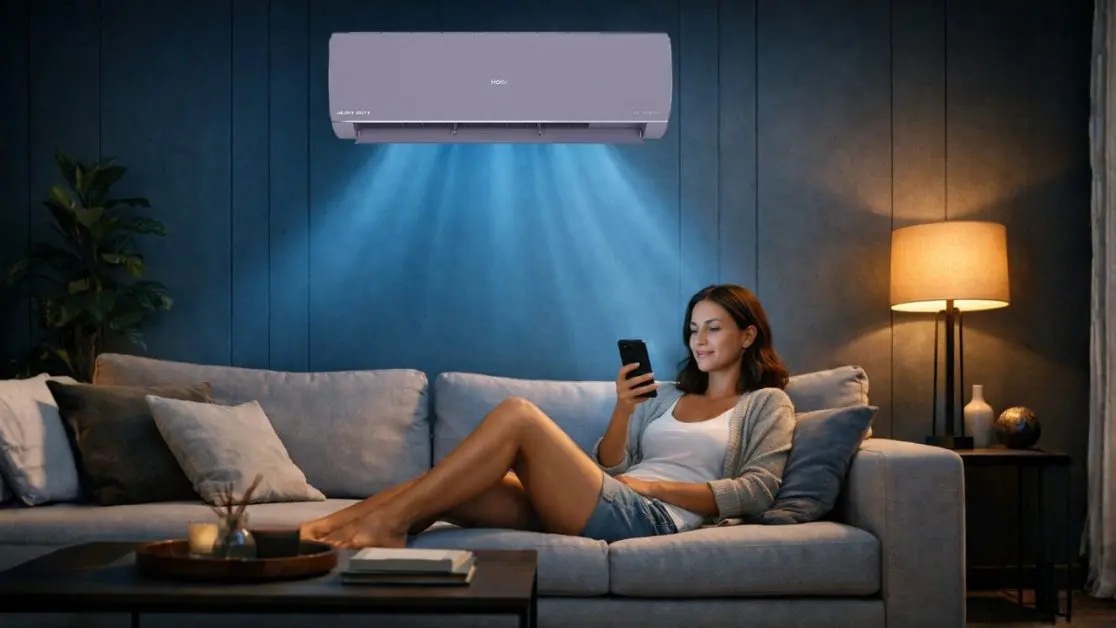
Most traditional air conditioners follow a simple rule.
Cool everything.
The assumption is straightforward. If the entire room becomes cold, people inside will feel comfortable.
But real homes rarely behave like controlled laboratories.
People move.
Families gather in specific spots. A child studies at the desk. Someone relaxes on the sofa. Another person scrolls through their phone near the window.
Yet the AC continues cooling every corner equally.
The result is predictable.
| Cooling Behavior | What Happens | Hidden Cost |
| Cooling entire room | Air spreads evenly | Higher energy consumption |
| Cooling empty spaces | Walls and furniture absorb cold air | Slower comfort |
| Overcooling environment | AC works longer | Higher electricity bills |
Cooling everything sounds logical.
But comfort rarely needs everything cooled.
It needs the right place cooled faster.
The Simple Principle Behind Targeted Cooling
Targeted cooling follows a different philosophy.
Instead of cooling an entire room blindly, it directs airflow to the specific zone where people are sitting or resting.
The principle is simple.
Comfort is personal.
If you are sitting on the couch, the air should reach the couch first.
If you are working at a desk, that zone should cool quickly.
The rest of the room can gradually follow.
That small shift in logic changes everything.
Because efficiency is not about more cooling.
It is about smarter cooling.
Three Cooling Strategies Most Homes Use Today
When it comes to cooling rooms, homes typically fall into one of three approaches.
Each one reveals something about comfort and efficiency.
1. Whole-Room Cooling
This is the traditional method.
The AC runs until the entire room reaches the desired temperature.
Benefits
- Simple operation
- Familiar behavior
- Predictable cooling pattern
Costs
- Higher electricity usage
- Longer cooling time
- Energy wasted on empty spaces
Whole-room cooling solves comfort by brute force.
It works. But it is not precise.
2. Manual Airflow Adjustment
Some users manually adjust the AC louvers to direct air.
You might tilt the vents toward the sofa or the bed.
Benefits
- Slightly faster cooling in one direction
- More personal control
Costs
- Requires manual effort
- Air direction does not adapt if people move
- Still cools unused parts of the room
Manual adjustment is like aiming a flashlight in the dark.
It helps, but it still lacks intelligence.
3. AI-Powered Targeted Cooling
Modern air conditioning technology introduces something new.
Intelligence.
Instead of cooling randomly, the AC analyzes the room layout and directs airflow to specific zones.
This approach is often called target cooling.
In Haier technology powered by AI Atmox technology, the air conditioner uses installation position data and cloud intelligence to deliver cool air exactly where it is needed.
That means the air reaches the person faster instead of spreading slowly across the room.
And when comfort arrives faster, energy usage drops.
Why Targeted Cooling Feels Faster Even When Temperature Is the Same
Here is something interesting.
Two rooms can have the same temperature.
Yet one feels cooler.
Why?
Because perception matters.
Consider this simple example.
| Scenario | Room Temperature | Perceived Comfort |
| Uniform cooling | 24°C everywhere | Cooling takes longer |
| Targeted cooling | 24°C near seating area first | Cooling feels immediate |
When cool air reaches your body earlier, your brain registers comfort sooner.
This is the psychology of cooling.
Temperature is a number.
Comfort is an experience.
Targeted cooling focuses on the experience.
The Energy Equation Behind Targeted Cooling
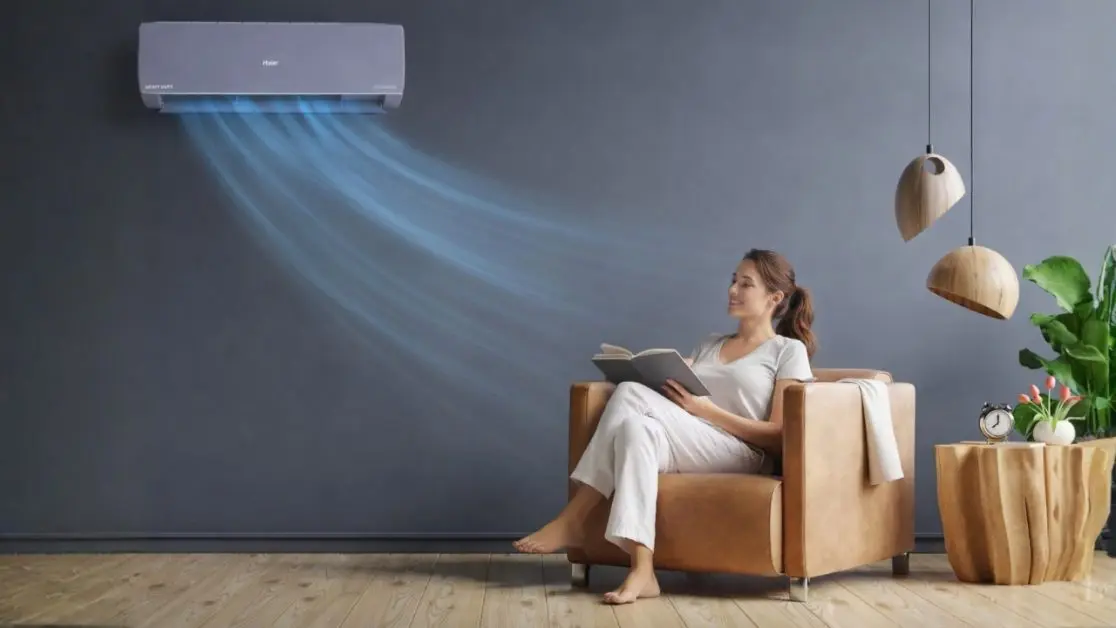
Cooling a room requires energy.
But where that energy goes makes all the difference.
Traditional AC technology distributes cooling energy evenly.
Targeted cooling distributes energy strategically.
Here is how the math changes.
| Cooling Method | Energy Usage | Cooling Speed | Efficiency |
| Whole-room cooling | High | Moderate | Medium |
| Manual airflow | Medium | Slightly faster | Medium |
| Targeted cooling | Lower | Faster | High |
When cool air reaches the user directly, the technology spends less time running at full power.
Less runtime.
Lower electricity consumption.
Smarter efficiency.
Where Targeted Cooling Matters Most in Real Homes
The real value of targeted cooling appears in everyday situations.
Not in theory.
In life.
Late-night movie sessions
A family sits together on the sofa watching a cricket match or a film. Cooling the seating area first creates comfort immediately.
Work-from-home setups
Many professionals now work from a desk inside the bedroom or living room. Targeted airflow keeps the workspace cool without overcooling the entire room.
Afternoon naps
Cooling the bed area first helps people relax quickly without waiting for the entire room to chill.
Small apartments
Urban homes often have compact layouts. Targeted cooling improves comfort while controlling electricity usage.
In each of these situations, the same principle appears.
Comfort is local.
How AI Is Quietly Changing Home Cooling
Cooling technology is evolving in subtle ways.
Instead of relying purely on mechanical airflow, modern AC technology now combines sensors, algorithms, and behavioral learning.
For example, AI-driven climate technology can analyze room conditions, track user behavior, and adjust cooling dynamically to prevent unnecessary energy usage.
Some technologies even detect human presence and automatically shift to energy-saving modes when rooms are empty.
This creates a new kind of relationship between homes and appliances.
Not manual.
Adaptive.
The Hidden technology Behind Comfortable Homes
Step back for a moment.
Look at the bigger pattern.
Modern homes increasingly operate on a simple idea.
Do less. But do it precisely.
Smart lighting illuminates only occupied rooms.
Smart refrigerators regulate temperature based on usage.
Smart washing machines optimize water levels.
Cooling now follows the same philosophy.
Targeted cooling is not just an AC feature.
It is a design mindset.
Precision replaces excess.
Why the Future of Cooling Is Personal
For decades, cooling technology chased power.
Bigger compressors. Stronger airflow. Lower temperatures.
But the future looks different.
The goal is not colder rooms.
The goal is smarter comfort.
Cooling that adapts to people.
Cooling reduces waste.
Cooling that understands how homes are actually used.
Targeted cooling represents that shift.
Because comfort should follow people.
Not empty corners.
A Final Thought: Efficiency Is About Focus
Think about a reading lamp.
You do not light the entire house just to read a book.
You illuminate the page.
Targeted cooling works the same way.
Direct comfort where it matters.
Let the rest follow naturally.
And suddenly, efficiency does not feel like sacrifice.
It feels like intelligence.
Frequently Asked Questions
Do I really need targeted cooling, or is my regular AC enough?
If your current AC cools the whole room slowly and wastes energy, targeted cooling can feel faster and more efficient because it prioritizes where you actually sit.
Why does my room feel hot even when my AC is running?
Because the cool air is spread everywhere including empty areas so it takes longer to reach you.
Is targeted cooling worth the extra cost?
Yes, especially if you value faster comfort and lower electricity bills over time.
Am I overthinking cooling, or is this actually a big efficiency issue?
You’re not overthinking it’s a common hidden inefficiency in most homes.
How does AI improve air conditioning?
It detects room conditions and user position, then adjusts airflow automatically.
What is AI-based targeted cooling?
A system that directs cooling exactly where people are instead of cooling everything equally.
Can my AC detect if I leave the room?
Some advanced systems can and switch to energy-saving mode automatically.
Is smart cooling complicated to use?
No, it’s usually automatic and requires minimal input.