

Technology that works in the background is technology that removes effort instead of adding instructions.
It quietly senses, learns, and adjusts so homes feel comfortable, efficient, and predictable without constant input. The best systems do not demand attention.
They return time, reduce friction, and let people focus on living.
That is the short answer.
The longer answer lives inside Indian homes.
The quiet frustration we all accept
It starts small.
You come home after work.
The room feels warmer than expected.
The AC is on, but not quite right.
You adjust the temperature.
Then the fan speed.
Then the mode.
Ten minutes later, you forget what you changed.
This ritual plays out across Indian households every day. In apartments, rented homes, independent houses, PG rooms. Not because people enjoy tweaking settings, but because systems still expect them to manage complexity.
Here is the hidden truth.
Most people do not want smart features.
They want fewer decisions.
Why effort is the real cost of modern living
We often talk about energy bills. Or appliance prices. Or efficiency ratings.
But the real cost shows up elsewhere.
- Mental load after a long day
- Repeated micro decisions that drain attention
- The feeling that technology needs supervision
In behavioural studies, decision fatigue is linked to reduced satisfaction and higher stress levels. At home, this shows up as irritation. Small, constant, invisible.
The best technology does not save time. It saves attention.
That is the system shift happening quietly inside modern homes.
Technology stopped being impressive. It started being useful
Earlier, technology tried to impress.
More buttons.
More modes.
More settings.
Now, the shift is different.
Good systems observe first.
Then act.
They understand that homes are dynamic spaces, not static rooms.
Morning sun hits differently than evening heat.
Monsoons behave unlike dry summers.
Families move. Children nap. Parents rest. Work-from-home changes airflow needs.
One setting never fits all.
Three approaches to home technology
Most households fall into one of these patterns.
Option one: Manual control
You manage everything yourself.
- Full control
- High effort
- Inconsistent comfort
This works when you have time and patience. Most people do not.
Option two: Scheduled automation
Timers and presets.
- Predictable
- Limited flexibility
- Breaks when routines change
Good for stable days. Weak during festivals, guests, late nights.
Option three: Adaptive intelligence
Systems that respond to real conditions.
- Learns behaviour
- Adjusts in real time
- Reduces intervention
This is where background technology lives.
What background intelligence actually does
It does not guess.
It measures.
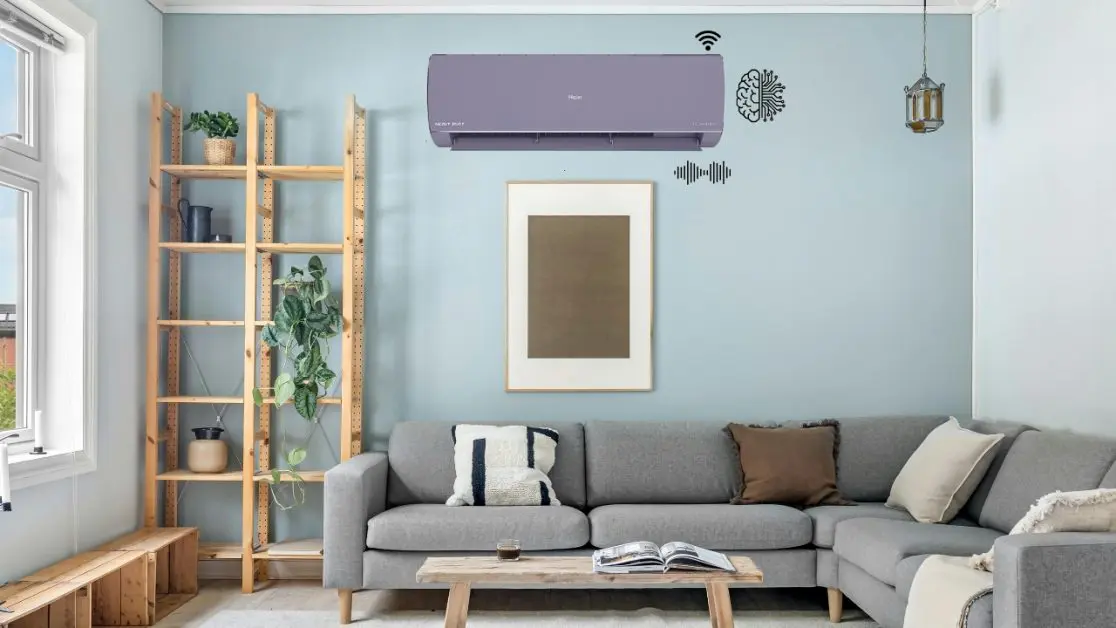
Modern AI-driven appliances rely on a combination of environmental data, usage patterns, and contextual signals.
In climate systems, this includes:
- Room temperature and humidity
- Outdoor weather shifts
- Occupancy and movement
- Time of day and duration of use
Instead of reacting after discomfort, the system predicts it.
According to a product from Haier’s AI-powered climate platform, systems like AI Climate Control analyse environmental and usage data continuously to optimize comfort and energy use without manual input .
The keyword is without.
Comfort feels better when it arrives before you notice
Think about this moment.
You walk into your home.
The room already feels right.
No blast of cold air.
No waiting.
No adjustment.
That experience feels magical, but it is actually systematic.
Pre-emptive comfort works because timing matters
Studies on thermal comfort show that people perceive cooling more positively when it aligns with arrival or activity rather than starting after discomfort sets in.
In simple terms:
Comfort delayed feels like inconvenience. Comfort anticipated feels like care.
AI-based pre-cooling systems work on this exact principle. They track patterns, locations, or schedules and prepare the environment ahead of time.
Not colder.
Just ready.
Targeted comfort beats blanket cooling
Traditional cooling treats rooms as empty boxes.
People do not live like that.
They sit.
They sleep.
They move.
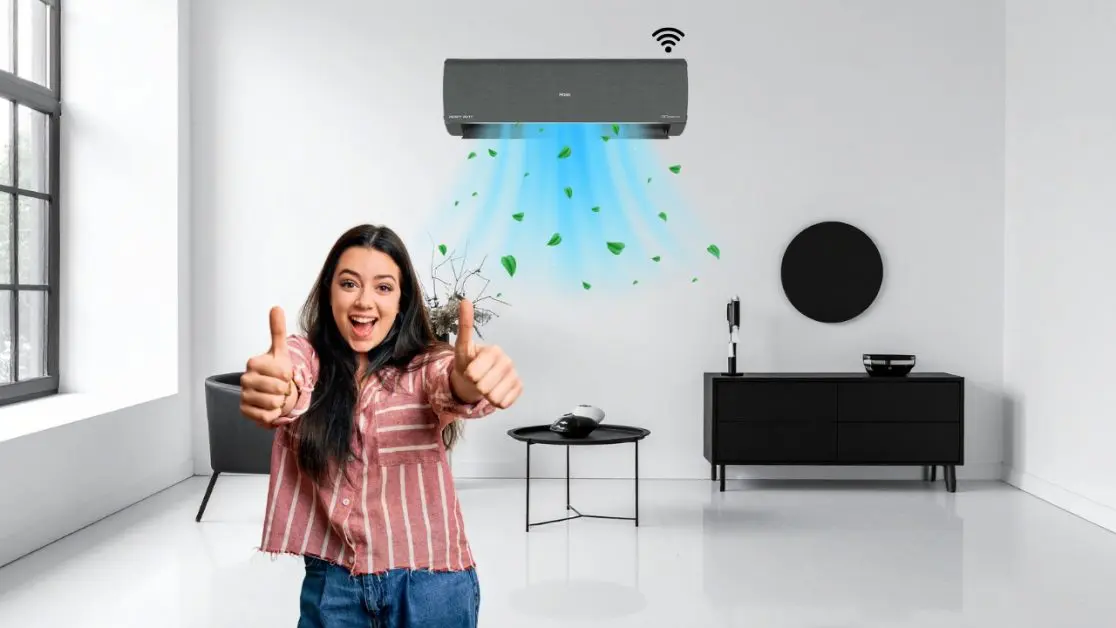
Targeted cooling focuses airflow where people actually are instead of cooling unused corners. This has two clear effects:
- Faster perceived comfort
- Lower energy consumption
According to energy efficiency studies, zonal or targeted cooling can reduce unnecessary power usage by up to 20 percent in residential environments under typical conditions.
Less waste.
More precision.
That is background efficiency.
Energy savings work best when you are not thinking about them
Most people want lower bills.
Very few want to monitor charts daily.
This is where automation changes the equation.
What intelligent energy management really does
Instead of fixed Eco modes, adaptive systems:
- Adjust capacity based on temperature gaps
- Shift modes automatically as conditions stabilise
- Reduce output when rooms are empty
- Balance comfort with consumption dynamically
The system does not ask you to sacrifice comfort. It removes excess.
Haier’s AI Eco 2.0 and Power Management systems, for example, are designed to shift operational intensity in stages based on real-time conditions, reducing overcooling while maintaining comfort .
The result is quieter savings.
The psychology of invisible efficiency
When savings are invisible, trust increases.
Why?
Because people stop feeling punished for comfort.
They stop choosing between sleep and bills.
Between guests and guilt.
Efficiency that demands behaviour change rarely scales. Efficiency that adapts quietly does.
This principle applies far beyond appliances. It is a systems insight.
Cleanliness is a system, not a reminder
Maintenance is where many smart homes fail.
Filters need cleaning.
Outdoor units collect dust.
Performance drops quietly.
Until it becomes a problem.
Why self-cleaning matters more than people admit
Indoor air quality studies show that unclean AC components reduce efficiency and airflow while increasing energy consumption over time.
Yet manual cleaning depends on memory and motivation.
Self-cleaning systems solve this structurally.
- Frost-based indoor cleaning cycles
- Reverse airflow to remove outdoor dust
- Automated reminders and completion alerts
The machine maintains itself because waiting for humans is unreliable.
That is not laziness.
That is design realism.
Homes are emotional systems, not technical setups
Technology fails when it ignores context.
Indian homes are layered spaces.
Parents wake early.
Children nap mid-day.
Evenings stretch late.
Festivals disrupt routines.
Add humidity, pollution, power variations, and space constraints.
Background technology respects this complexity.
It does not flatten life into presets.
It adapts.
Where this matters most
- Working professionals returning late
- Parents managing sleep cycles
- Elderly users avoiding complicated controls
- Renters who want simplicity without rewiring habits
In these moments, intelligence feels less like innovation and more like relief.
The larger pattern we are moving toward
Zoom out.
This is not about appliances.
It is about responsibility.
Earlier systems waited for commands.
New systems take ownership.
They sense.
They decide.
They act.
Without applause.
The future of technology is not smarter interfaces. There are fewer interruptions.
What this means for Indian homes
As homes get smaller and lives get busier, friction matters.
Every unnecessary adjustment compounds.
Every avoided decision adds calm.
Technology that works in the background creates space.
Space to rest.
Space to focus.
Space to live.
The insight worth remembering
The most advanced technology in your home should feel boring.
Not because it lacks power.
Because it works.
Quietly.
Reliably.
Without asking for your attention.
That is not magic.
That is respect.
And that is what modern Indian homes increasingly expect.
Frequently Asked Questions
Why do I feel tired adjusting my AC every day even though it’s a small task?
Because repeated micro-decisions drain attention. The effort isn’t physical, it’s mental load adding up after a long day.
Is it normal to forget what settings I changed on my AC?
Yes. When systems require constant tweaking, the brain stops tracking details. That confusion is a design problem, not a user problem.
Why do “smart” appliances still feel like extra work?
Many add features instead of removing decisions. Intelligence should reduce interaction, not increase it.
Is faster cooling always better?
No. Sudden, aggressive cooling often feels harsh and wastes energy. Gradual, targeted cooling feels more comfortable.
Why does blasting the AC still not feel comfortable?
Because comfort is about airflow placement and timing, not raw power.
Can gentler cooling actually feel faster?
Yes. When air is directed where people are, comfort is perceived sooner.
Why does AC performance drop over time even if I don’t change settings?
Dust buildup reduces airflow and efficiency silently.
Why don’t people clean filters regularly?
Because maintenance relies on memory and motivation both unreliable.
How do self-cleaning systems actually help?
They remove dependency on user discipline, keeping performance stable automatically.