


Home theater audio recreates the layered, immersive sound you associate with cinemas by using precise speaker placement, intelligent processing, and spatial formats like Dolby Atmos.
When done right, it turns everyday living rooms into spaces where dialogue feels closer, music feels fuller, and moments feel more real, without complicated setups or professional installs.
Why do most living rooms look cinematic but sound flat?
It is Friday night.
The lights are dimmed. Snacks are ready. The screen looks stunning.
And yet something feels off.
The explosions lack weight. Dialogues blur together. Music feels distant. You keep increasing the volume, but clarity never arrives.
This is the silent problem of modern homes.
We invested heavily in screens. Audio stayed an afterthought.
Cinema, however, never treats sound as secondary. Sound is the system that tells your brain where you are, what matters, and what emotion to feel next.
The picture shows you the scene.
Sound puts you inside it.
Theatre-like sound is not about loudness
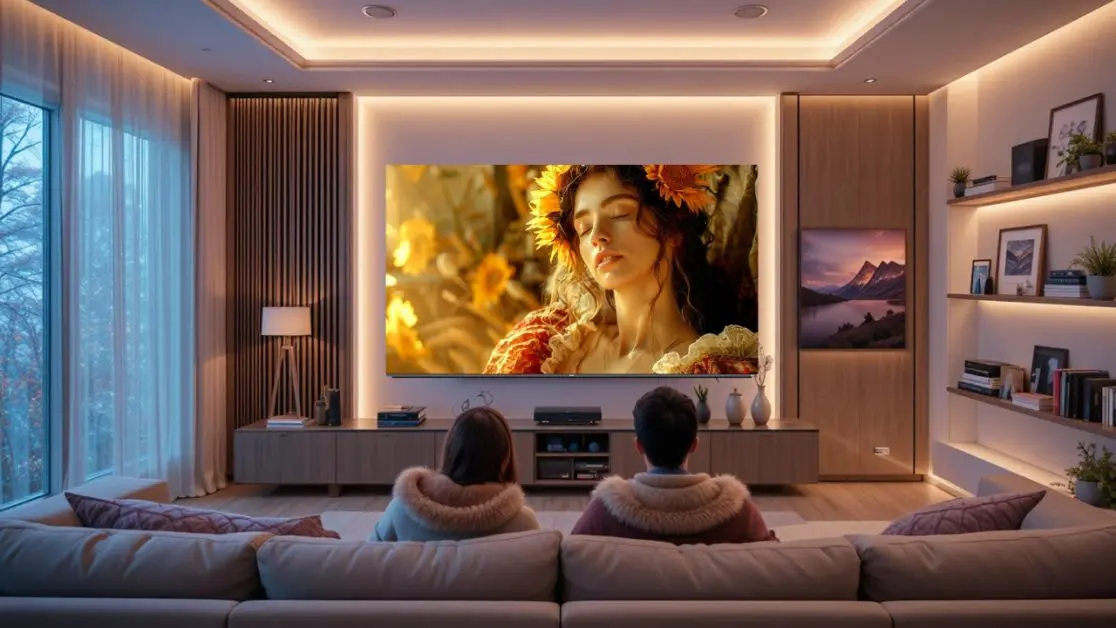
This is the biggest misunderstanding.
Great home theater audio is not about volume. It is about direction, separation, and depth.
In a cinema:
- Dialogues come from the screen, not the ceiling
- Background sounds feel layered, not mixed into noise
- Bass is felt in the body, not just heard
- Silence is intentional, not accidental
At home, theatre-like sound means replicating these patterns within real constraints like smaller rooms, shared walls, and everyday furniture.
The goal is presence, not power.
How cinematic sound actually works
Sound in movies is engineered as a three-dimensional experience.
Not left and right.
Not front and back.
But around you.
Modern home theater audio systems rely on three core principles.
1. Channel separation creates realism
Cinema sound is divided into distinct channels.
- Front channels handle dialogue and primary action
- Side channels carry movement and environment
- Height channels add vertical realism
- Subwoofers handle low-frequency impact
When channels are clearly separated, your brain stops guessing where sounds come from. It simply accepts the illusion.
This is why multi-channel systems feel more natural even at lower volumes.
2. Spatial audio adds height and distance
Formats like Dolby Atmos treat sound as objects, not fixed tracks.
A helicopter does not just get louder.
It moves above you.
Rain does not just play.
It falls around you.
This object-based audio is what gives theatre sound its signature immersion.
3. Processing adapts sound to your room
Every home absorbs sound differently.
Curtains, sofas, walls, ceilings. They all shape what you hear.
Smart audio systems now analyse the room and adjust balance, timing, and clarity automatically. This removes the need for manual tuning or acoustic panels.
Why Indian homes need smarter audio systems
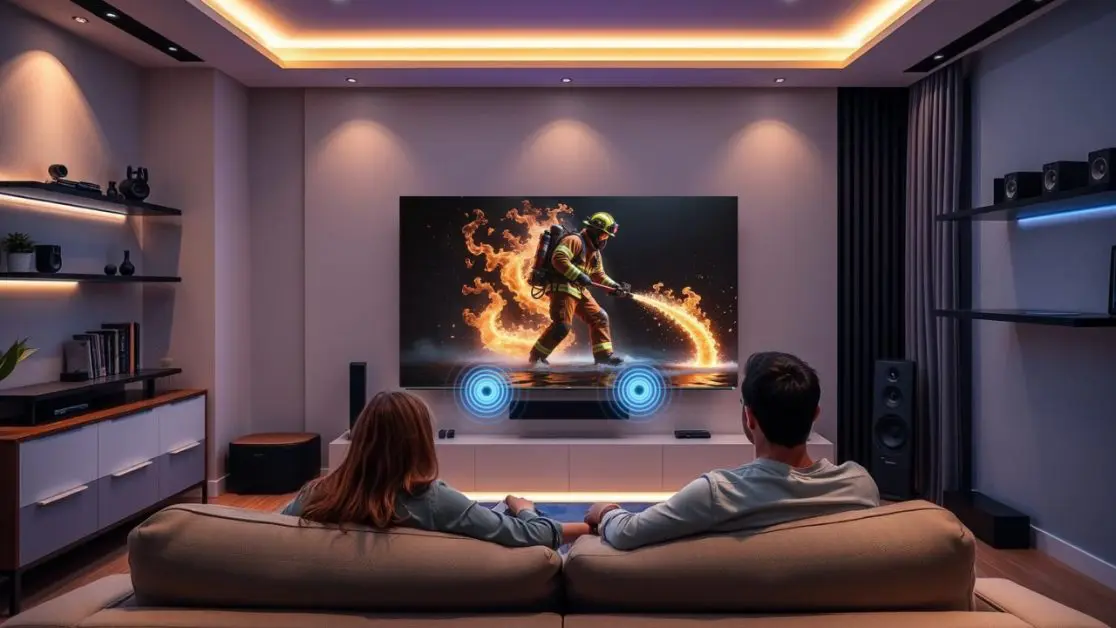
Indian homes are not designed like cinemas.
They are multi-use spaces.
- Living rooms double as dining areas
- TV volume competes with kitchen sounds
- Family members sit at different angles
- Apartments share walls with neighbours
This reality changes how home theater audio should behave.
What works in Indian living spaces
- Clear dialogue at moderate volumes
- Controlled bass that does not travel through walls
- Wide sound dispersion for off-angle seating
- Automatic adjustments for day and night viewing
The best systems respect these constraints instead of fighting them.
Good sound adapts to life, not the other way around.
Three ways people approach home theater audio
Most households fall into one of these paths.
Option 1: External soundbars and speakers
This option offers flexibility and upgrade paths.
Benefits
- Dedicated audio hardware
- Expandable configurations
- Strong bass performance
Costs
- Additional cables and remotes
- Space requirements
- Setup complexity
Best for users who enjoy tinkering and custom setups.
Option 2: Integrated TV audio systems
Modern TVs now integrate advanced speaker systems directly into the display.
Benefits
- Clean setup with no extra clutter
- Optimised tuning between picture and sound
- AI-driven sound processing
Costs
- Less modular than external systems
- Depends heavily on TV quality
This option suits homes that value simplicity without sacrificing immersion.
Option 3: Hybrid setups
Some users combine integrated TV audio with external subwoofers or rear speakers.
Benefits
- Balanced performance
- Flexible upgrades
- Cleaner front setup
Costs
- Higher investment
- Requires careful placement
This approach works well for medium-sized rooms.
What makes sound feel cinematic, not technical
Specifications matter. Experience matters more.
Theatre-like sound has recognisable traits.
- Dialogues stay clear even during action scenes
- Music feels anchored, not floating
- Sound moves smoothly across the room
- Bass supports emotion instead of overpowering it
This balance is difficult to achieve without precise tuning.
This is where collaboration between audio specialists and display engineers becomes critical.
Why speaker design expertise matters
Speaker design is not generic.
The way sound disperses, reflects, and reaches the listener depends on engineering choices that are invisible on spec sheets.
This is why brands partner with specialised audio companies.
For example, premium TVs that integrate Sound by KEF rely on decades of speaker research to deliver balanced highs, controlled mids, and grounded bass from slim enclosures.
Sound by KEF’s design philosophy focuses on clarity across listening positions, which suits Indian living rooms where viewers rarely sit perfectly centered.
In large-format TVs like the Haier M96 series, this collaboration enables multi-channel systems such as 6.2.2 channel layouts paired with Dolby Atmos to create height, width, and depth directly from the screen itself .
When audio expertise meets display engineering, the result feels intentional rather than amplified.
How AI changes home theater audio
AI in audio is not about automation. It is about adaptation.
Smart sound systems now analyse:
- Content type
- Ambient noise
- Room acoustics
- Listening distance
Then they adjust accordingly.
A late-night drama scene sounds intimate.
A cricket match feels expensive.
A music concert stays balanced.
You do not notice the adjustments. You notice comfort.
This invisible intelligence reduces the gap between cinema precision and home unpredictability.
Everyday moments that benefit from better sound

Home theater audio is not reserved for blockbuster nights.
It improves small moments too.
- Morning news feels clearer without higher volume
- Children’s cartoons stay energetic without harshness
- Background music fills the room evenly during gatherings
- Video calls sound natural during work-from-home days
When sound behaves well across use cases, it stops being noticed. That is success.
The emotional layer people underestimate
Sound is memory.
Think about the films you love.
You remember scenes, but you feel them through sound.
The pause before a reveal.
The swell of music during a climax.
The silence after a final line.
Good home theater audio preserves these emotional beats.
It respects timing.
It respects restraint.
Loudness impresses briefly. Balance lasts longer.
How to think about your own setup
Instead of asking, “How powerful is the system?” ask:
- Can I hear dialogue clearly at low volume?
- Does sound feel consistent across seating positions?
- Does bass add weight without vibration?
- Does audio change naturally between content types?
These questions reveal more than specifications ever will.
The bigger shift happening in Indian homes
Homes are becoming experience spaces.
Not just places to watch content, but places to feel it.
As screens get larger and living rooms get smarter, sound has to keep up. Not by becoming louder, but by becoming wiser.
Home theater audio is no longer a luxury upgrade. It is part of everyday comfort.
The future of sound is not about adding equipment. It is about integrating intelligence.
When sound fits your life quietly, you stop thinking about it.
You just enjoy the moment.
Frequently Asked Questions
Is theatre-like sound just powerful speakers?
No. Cinematic sound focuses on direction, separation, depth, and silence. Volume only amplifies what already exists.
Why does cinema sound feel comfortable even when loud?
Because sound is spread across multiple channels, reducing strain and allowing clarity at both low and high volumes.
What does spatial audio like Dolby Atmos really change?
Sounds become objects that move above and around you, instead of being locked to speakers.
Why does my room affect sound quality so much?
Furniture, walls, curtains, and ceiling height absorb and reflect sound differently. Smart processing adapts audio to these conditions automatically.
What matters most for Indian living rooms?
Clear dialogue at moderate volume, controlled bass, wide sound dispersion, and automatic day/night adjustments.