


Theatre-level brightness at home comes from a balance of panel quality, intelligent light control, and adaptive picture tech that adjusts to your room instead of forcing your eyes to adjust to it.
OLED panels with pixel-level dimming, HDR formats like Dolby Vision IQ, and ambient light sensing give you dramatic visuals without fatigue.
The real question behind every bright-screen purchase
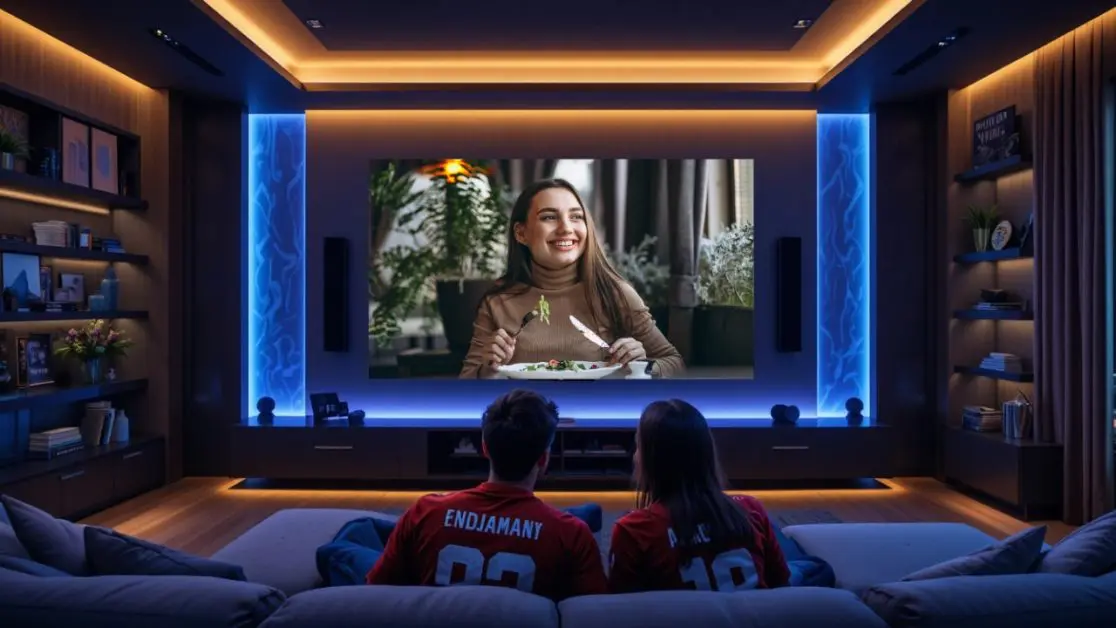
Every Indian household has lived this moment.
The lights are off. The popcorn is ready. The intro music begins.
And then someone says the line that resets the whole evening.
“Screen brightness thoda kam kar na… aankhon pe ja raha hai.”
This is the tension at the heart of home entertainment today. We want theatre-level brilliance. But we also want comfort. Eyes that last beyond one movie night. A screen that feels cinematic instead of overwhelming.
Brightness is a double edged sword. Used well, it brings out depth, detail, and drama. Used carelessly, it becomes a lightbulb staring contest.
So the real question becomes simple.
How do you get cinema-grade brightness without sacrificing eye comfort?
This article answers that.
Why brightness hurts some eyes and delights others
Brightness itself isn’t the problem.
Mismatch is.
A bright panel in a dark room.
A dim scene on a harsh screen.
A TV that pushes the same output whether it’s noon or midnight.
The human eye protects itself through adaptation. When the screen refuses to adapt, your eyes do. The strain you feel isn’t from too much light but from too much adjustment.
Once you understand this, everything changes.
Brightness becomes a tool rather than a threat.
The core principle: the screen should adjust to you

Theatre lighting works because it’s intentional. The screen is bright. The room is dim. Nothing glares. Nothing flashes unexpectedly. The system holds everything together.
Home setups rarely follow those rules.
That’s why modern screens use a different logic.
Ambient light sensing. Scene-by-scene tone mapping. Pixel-level dimming.
The Haier OLED C90 Series uses this system-first idea through:
- Dolby Vision IQ
- HDR10+
- Pixel Dimming
- 120 Hz motion clarity that prevents strain from fast scenes
These aren’t features.
They’re protective mechanisms disguised as picture upgrades.
What creates theatre-level brightness at home?
1. Peak brightness without peak discomfort
Brighter isn’t always better.
Controlled brightness is.
OLED panels achieve theatre-like pop because every pixel lights itself. When a pixel switches off, black levels deepen. When it lights up, brightness feels sharp but never harsh because the surrounding pixels counterbalance it.
A bright scene with true black borders is easier on the eyes than a washed-out scene with artificial white glow.
Eye comfort isn’t an on-off switch.
It’s a ratio.
2. Scene-by-scene intelligence
HDR10+ and Dolby Vision IQ do something simple but powerful.
They don’t apply brightness uniformly.
- Bright scenes get bright.
- Dark scenes get nuanced.
- Mixed scenes balance.
A research paper from the Society for Motion Picture and Television Engineers notes that dynamic metadata reduces light shock by adjusting luminance per scene, preserving details without overwhelming the viewer.
This is the secret behind cinema halls.
They respect contrast.
Modern TVs now do the same.
3. Ambient light sensing that protects your eyes
Your room changes.
Afternoon sun. Tube-light glare. Evening shadows.
Every environment needs a different brightness profile.
Dolby Vision IQ reads the room and adapts.
Not tomorrow. Not when you press a button.
Right now.
This is what prevents the classic Indian living room problem.
The screen looks stunning at night but too dim at noon… unless it adapts intelligently.
The invisible system becomes the comfort.
What causes eye strain on bright screens?
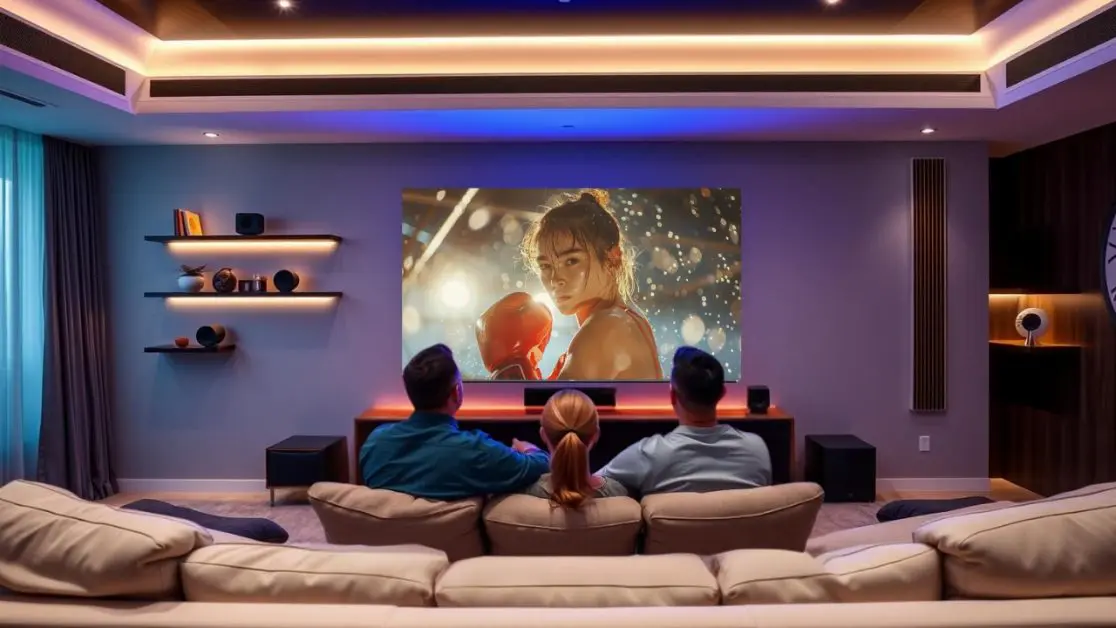
Sometimes it’s helpful to see the problem clearly.
Common triggers of eye fatigue
- Sudden contrast shifts
- White subtitles on glowing backgrounds
- Fast motion without smoothing
- Reflections from opposite windows
- High brightness on static scenes
- Watching in pitch-dark rooms
The solution isn’t to reduce brightness.
It’s to manage brightness.
A theatre does this through controlled lighting.
A good TV does it through controlled processing.
Three practical ways to achieve cinema clarity without hurting your eyes
One: Balance room light with screen light
The ideal setup isn’t a pitch-dark room.
It’s a softly lit room with a controlled light source.
A lamp in the corner.
A warm LED strip behind the TV.
Curtains that soften, not block, sunlight.
Your eyes relax when they don’t need to jump between extremes.
The principle is simple: reduce contrast shock.
The Haier OLED C90 Series complements this with Pixel Dimming and dynamic HDR formats that adjust automatically.
Two: Use adaptive modes instead of manual adjustments

Every movie buff knows the drill.
Halfway through the show, the brightness feels too high.
Someone grabs the remote.
The debate begins.
Adaptive Picture Modes exist for a reason.
They remove debate and add comfort.
The best modes for eye care:
- Cinema Mode
- Adaptive Brightness Mode
- Dolby Vision IQ
These modes use metadata and ambient sensors to find the sweet spot where detail stays intact but eyes stay relaxed.
Three: Choose panel technology designed for comfort
This is where hardware matters.
Here’s a quick comparison table:
| Feature | Standard LED | OLED with Pixel Dimming |
| Black Levels | Grey-ish | True black |
| Brightness Control | Panel-wide | Pixel-by-pixel |
| Eye Comfort | Moderate | Higher |
| HDR Accuracy | Limited | High |
| Contrast | Depends on backlight | Naturally deep |
| Room Adaptation | Manual | Intelligent (Dolby Vision IQ) |
OLED isn’t about luxury.
It’s about math.
More control equals less strain.
This is why premium cinema screens avoid uniform backlights.
Your home screen should too.
The invisible design choices that make brightness easier to watch
Eye comfort comes from a chain of smart decisions.
Subtle motion clarity
A panel running at 120Hz, like the Haier C90 OLED Series, reduces blur during cricket shots, chase sequences, and fast-moving scenes.
Less blur means less strain from refocusing.
Accurate color gradients
Soft gradients reduce flicker and noise, especially in dark scenes where your eyes work hardest.
Deep blacks that anchor the image
Black is resting.
Eyes recover in dark zones.
OLED provides those rest intervals naturally.
These aren’t features.
They’re recovery spaces your eyes depend on.
The human side of brightness
This part matters more than any spec sheet.
Think of the scenes Indian homes watch most:
- Late-night K-dramas
- Weekend Bollywood classics
- Cricket matches under harsh studio lights
- Animated movies with explosive color
- Wedding videos with bright lehengas and shimmering gold
Every one of these can look brilliant or uncomfortable.
The difference is never brightness alone.
It’s bright in context.
A theatre gives every scene its context.
A smart TV recreates that context at home.
Where Haier’s OLED C90 Series fits in
This article isn’t about selling a TV.
It’s about designing a better viewing environment.
Still, some technologies make that easier.
The Haier OLED C90 Series quietly brings together everything your eyes need for drama without discomfort:
- OLED panel with pixel-level dimming
- Dolby Vision IQ for room-aware luminance
- HDR10+ for scene-aware contrast
- 120Hz MEMC for motion clarity
- Deep blacks that prevent glare
These aren’t upgrades.
They’re safeguards.
They allow you to enjoy brightness as it was meant to be enjoyed.
Not as a floodlight.
But as a moment setter.
The bigger principle: brightness should invite you in, not push you away
Theatre-level brilliance at home isn’t about more brightness.
It’s about better brightness.
Brightness that responds instead of dominates.
Brightness that respects the room.
Brightness that adjusts before your eyes have to.
Aphorism worth remembering:
Comfort is the gap between what your screen demands and what your eyes can give. Reduce the gap, and everything becomes immersive.
This is the invisible system great screens follow.
This is the system modern Indian homes deserve.
Final thought
As homes evolve, so do the spaces where families unwind.
A cinema moment shouldn’t come with a compromise.
Your eyes deserve the same care your content receives.
When brightness adapts instead of overwhelming, the whole experience shifts.
Suddenly movie nights become longer, cricket matches become smoother, and your living room feels less like a battle of adjustments and more like a space of ease.
That’s the real goal.
That’s what theatre-level brightness at home should feel like.