
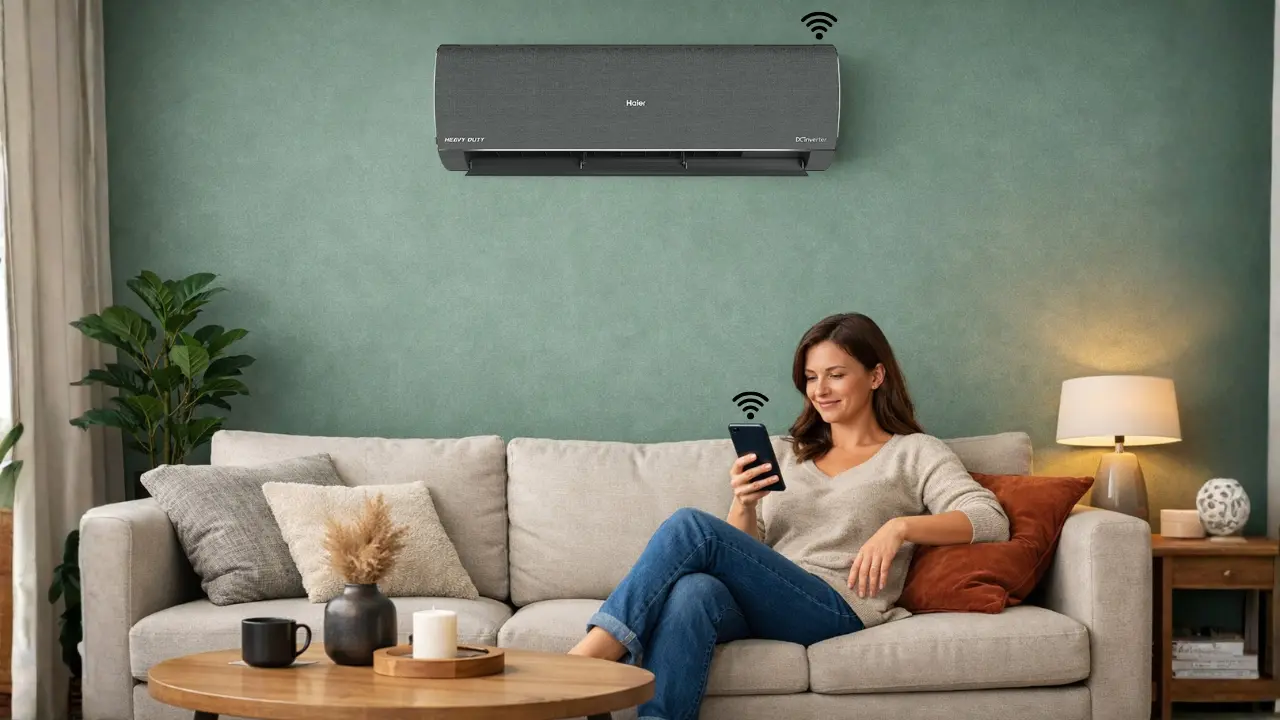

You track and understand your AC power consumption by watching three things together: how long it runs, how intelligently it cools, and how closely it aligns with your daily life.
Once those patterns are visible, electricity stops feeling unpredictable and starts feeling controllable.
Now let us slow this down.
Because AC power consumption is not an electrical problem.
It is a systems problem.
The moment every Indian home recognises
It is late evening.
Dinner is done.
Phones are charging.
The AC has been running since sunset.
Someone asks, “Why is the bill so high this month?”
Someone else says, “Summer, obviously.”
But summer is not the reason.
Lack of visibility is.
Power consumption hides when no one is watching it closely.
What AC power consumption really means

Most households think AC consumption depends on star ratings.
That is only one layer.
Actual power use is shaped by three systems working together:
- Electrical draw
The units your meter records every hour. - Thermal behaviour
Heat entering the room from sunlight, people, appliances, walls. - Decision logic inside the AC
How the machine decides when to work harder or ease off.
Miss the third system, and nothing adds up.
Why AC bills feel random even when habits stay the same
Bills feel random because feedback is delayed.
You are cool today.
You pay weeks later.
By then, the cause is forgotten.
Smart systems shorten this gap.
That is why tracking matters more than simply reducing usage.
Three ways Indian homes track AC power today
Option one: The monthly bill comparison
The most common approach.
You compare last year’s May with this year’s May.
What it shows
- Seasonal trends
- Overall household usage
What it hides
- Which appliance caused spikes
- Whether the AC was efficient or wasteful
- Daily usage patterns
This method is hindsight-driven.
Useful.
But blunt.
Option two: External meters and smart plugs
Some homes install plug-level or circuit-level meters.
What it shows
- Exact units consumed by the AC
- Total running time
What it hides
- Why consumption changed
- Whether comfort was achieved efficiently
Numbers without context rarely change behaviour.
Option three: Built-in Electricity monitoring 2.0 inside the AC
This is where modern AC design quietly changes habits.
Instead of treating electricity as an afterthought, it becomes visible.
In Haier ACs equipped with AI-powered power management, Electricity monitoring 2.0 is built into the system. Consumption is displayed through daily graphs, calendar views, mode-wise breakdowns, and real-time cost estimation, helping households see exactly when and how power is being used.
Electricity stops being abstract.
It becomes actionable.
The biggest myth that silently inflates bills
“Set it lower. It will cool faster.”
This belief survives every summer.
But cooling speed does not change with temperature settings.
What changes is runtime.
Here is the chain reaction:
- Larger temperature gap
- Compressor works longer
- Power draw increases
- Marginal comfort improvement
- Sharp efficiency drop
Lower temperature does not mean faster cooling.
It means longer cooling.
Where AC power is actually lost
1. Cooling empty rooms
Traditional ACs do not know when you leave.
They keep working.
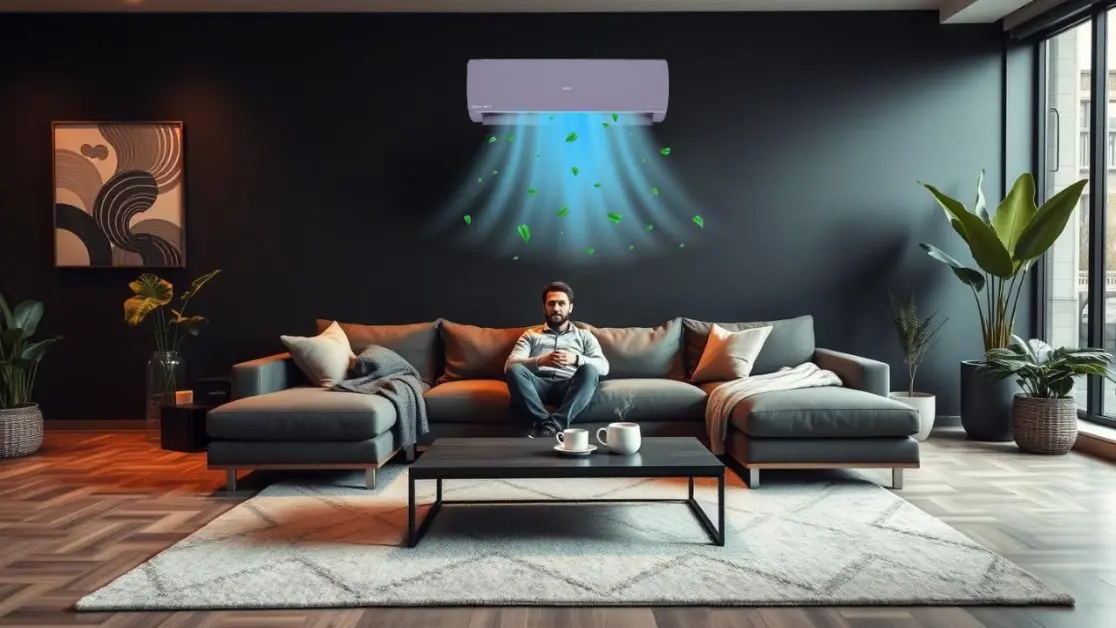
AI-enabled human detection changes this. When no movement is detected, the system automatically shifts to energy-saving modes or powers down after a defined period. Comfort returns instantly when someone re-enters.
Empty rooms stop consuming full power.
2. Cooling the entire room instead of people
Most of the time, people sit in one zone.
Yet the whole room gets cooled evenly.
Target cooling systems change this logic. Using layout data and airflow control, cooling is directed precisely where occupants are seated. This reduces compressor load and shortens cooling cycles.
Comfort improves.
Waste drops.
3. Running inefficient hardware longer than needed
Dusty coils reduce heat exchange.
Poor airflow increases load.
Self-cleaning technologies solve this quietly. Automated indoor frost cleaning and outdoor cyclone cleaning maintain coil efficiency without manual effort. Cleaner systems cool faster and consume less power over time.
Maintenance becomes an energy-saving feature.
Understanding AC power data without feeling overwhelmed
Good data answers simple questions.
Ask these four:
How many hours did the AC run today?
Runtime matters more than temperature.
Which mode ran the longest?
Normal vs Eco reveals efficiency behaviour.
When did power usage peak?
Time-of-day patterns expose waste.
Did comfort justify the consumption?
If not, something needs adjustment.
Modern AC dashboards visualise these answers instead of hiding them in numbers.
How AI reshapes power consumption decisions
Smart AC systems do not wait for manual input.
They learn.
Features like AI climate control continuously analyse:
- Room temperature changes
- Outdoor conditions
- User habits
- Time-based usage patterns
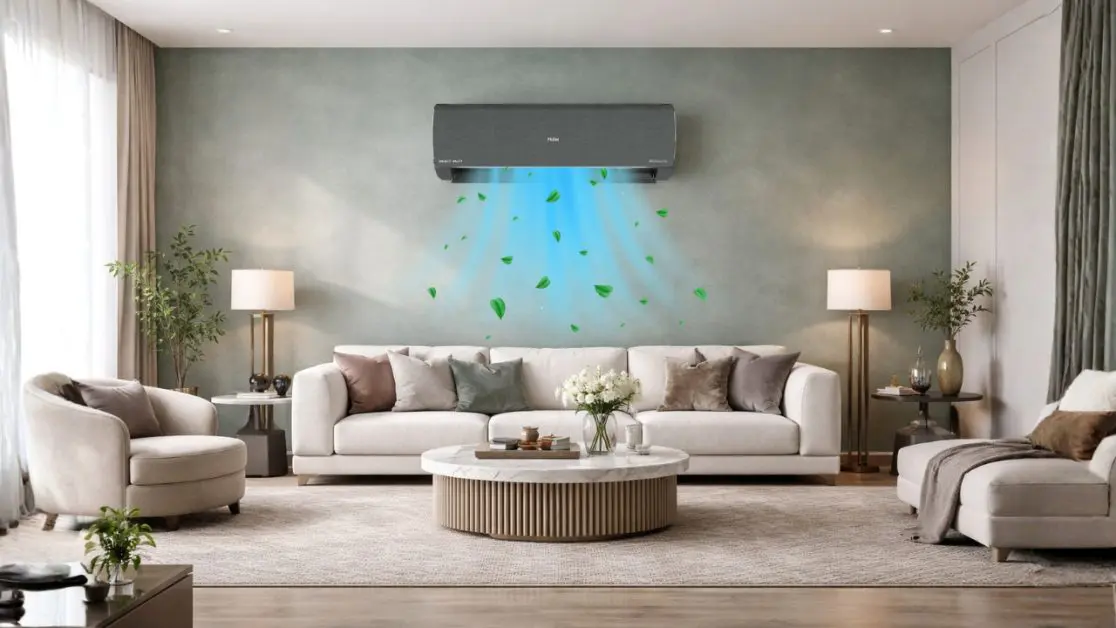
Based on this, the AC dynamically adjusts cooling intensity, shifts between Eco levels, and avoids overcooling. The result is stable comfort with lower average power draw.
Efficiency becomes automatic, not effort-driven.
The role of Eco modes in real savings
Eco modes are not one-size-fits-all.
Advanced systems use multiple Eco levels that respond to how close the room temperature is to the target.
- Larger gap: stronger cooling
- Smaller gap: reduced power
- Near target: minimal energy use
This step-down logic prevents unnecessary compressor strain while maintaining comfort.
Savings happen quietly, hour by hour.
A practical framework for reducing AC power consumption
Not rules.
Choices.
One option
Reduce heat entry using curtains, window films, and smart pre-cooling.
The second option
Reduce load using AI Eco 2.0 modes and targeted airflow.
The third option
Reduce waste with occupancy detection, auto shut-off, and self-cleaning systems.
Each option saves power differently.
Together, they compound.
What this means for modern Indian homes
Electricity will not get cheaper.
Summers will get harsher.
Homes will get smarter.
The difference will lie in awareness.
Homes that understand their cooling systems will not chase lower temperatures.
They will chase better alignment.
When your AC understands:
- When you are home
- Where you sit
- How your day flows
- How much power each decision costs
Cooling stops feeling expensive.
It starts feeling intentional.
And that is when power consumption becomes something you manage, not something that surprises you every month.