


Rain doesn’t just change the mood outside.
It reshapes the rhythm inside our homes.
In October, when the monsoon arrives in full force, something curious happens in Indian households. Families begin to schedule their laundry like they schedule office Zoom calls or kids’ tuition classes.
Not because they suddenly became more disciplined. But because the rains demand it.
Why October Rains Make Laundry a Family Discussion
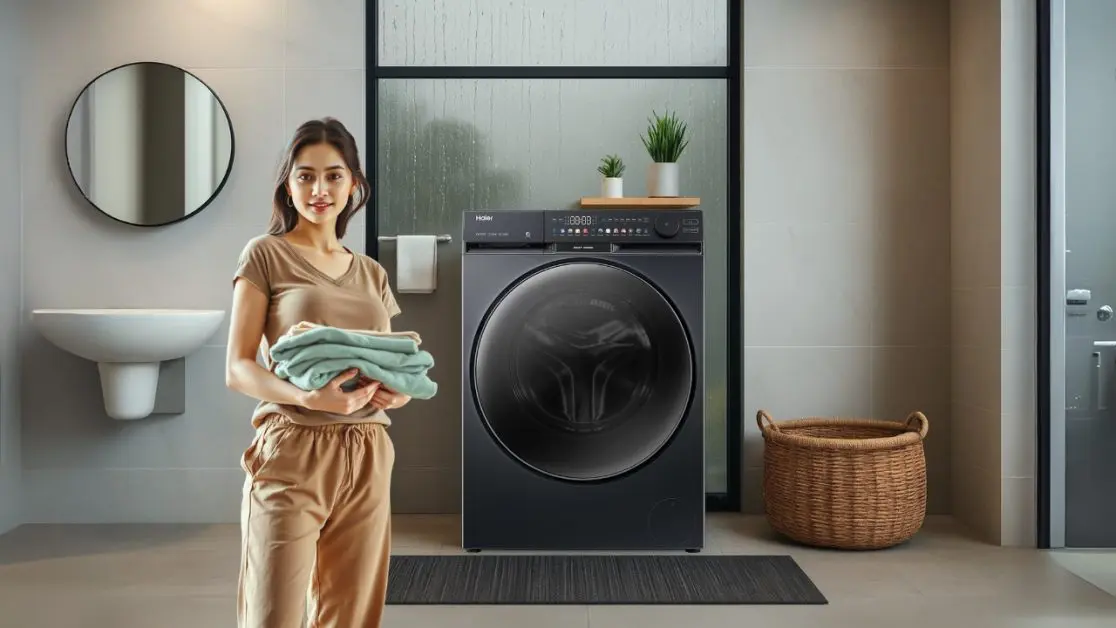
Think of a typical monsoon week in Delhi, Mumbai, or Guwahati.
Clothes refuse to dry. Dampness lingers in corners. The smell of wet denim or soggy school uniforms becomes part of the season.
So families start asking new questions:
- When will there be a few hours of sunshine to dry the bedsheets?
- Should we avoid washing woollens today because they’ll smell musty tomorrow?
- Can the washing machine itself handle the extra load without giving up mid-cycle?
The weather dictates the wash. And households adapt like clockwork.
The Old Way: Compromises and Chaos
Before modern machines entered the picture, laundry in October was a battle.
One option was to wash less often resulting in piles of dirty clothes stacked in corners.
The second option was to wash anyway and live with damp, smelly clothes.
The third option? Borrow a neighbour’s terrace or pray for a sudden patch of sun.
None of these felt like real solutions. They were coping strategies.
The New Way: Smarter Machines That Understand Rains

Here’s the shift.
Today’s top-load washing machines are no longer just tubs of water and soap. They’ve become weather-aware companions. Machines like Haier’s October-ready line bring features designed for exactly this season.
- In-built heaters that don’t just clean but kill germs critical when moisture invites bacteria.
- 2X Magic Filters that catch lint and micro-particles twice as efficiently, keeping clothes fresh and the drum clean.
- Oceanus Wave Drums that mimic gentle ocean currents, protecting fabrics while still cleaning deeply.
- Near Zero Pressure tech that ensures clothes get washed properly even when water supply is weak in monsoon season.
- Softfall lids that close gently, no more loud bangs in the quiet of a rainy afternoon.
These aren’t gimmicks. They are systems of thinking applied to everyday life. Small design choices that solve invisible seasonal problems.
A Family Scene You’ll Recognise
It’s 6 pm on a rainy Wednesday in Bengaluru.
Dad is working from home, logged into calls. Mom is planning the week’s groceries around unpredictable market hours. Kids are tracking homework deadlines. And in the middle of this, the washing machine becomes a quiet background operator.
One load runs with school uniforms thanks to quick wash modes. Another cycle uses the heater to kill the damp smell from towels. No one argues about “who’ll hang the clothes outside” because the spin cycle already left them nearly dry.
Laundry has stopped being a crisis. It’s become routine again.
Why Scheduling Washes Matters More Than Ever
Here’s the bigger principle, monsoon creates scarcity. Not of water, but of time.
When every chore takes longer, you need systems that give time back. A good washing machine doesn’t just clean, it gives families predictability in a season defined by unpredictability.
- Clothes dry faster indoors.
- Germs don’t get a chance to linger.
- Energy bills stay in check thanks to 5-star efficiency ratings.
That’s why families schedule washes around the rain. Not out of fear, but because the right machine makes scheduling effective.
Options for Different Households
Every family’s laundry rhythm is different. Haier’s range reflects that.
1. For nuclear families: An 8-kg model with Ultra Air Fresh and rear control panel fits tight spaces and delivers odour-free clothes.
2. For bigger families: A 9-kg unit with Anti-Scaling Tech keeps the drum clean despite heavy use, perfect for households with kids and grandparents.
3. For germ-free seekers: Machines with Butterfly-Design Heaters elevate water temperature to kill bacteria and dissolve detergent fully.
4. For low-water-pressure homes: Near Zero Pressure models ensure wash quality even in apartments with erratic supply.
Choice, after all, is the real luxury.
What This Teaches Us About Smart Living
The October rains remind us of a larger truth:
Good design anticipates inconvenience.
When Haier adds dual magic filters or memory backup that resumes cycles after power cuts, it isn’t just adding “features.” It’s acknowledging how Indian homes actually live. Power outages. Low pressure. Space crunch.
The machine becomes more than an appliance. It becomes a resilience tool.
Aphorisms to Remember

- Rains disrupt schedules. Systems restore them.
- A machine that adapts to your home is smarter than one that demands you adapt to it.
- Monsoon is not a problem to solve, it’s a rhythm to design around.
The Implication for Families
When households no longer argue over laundry, emotional space opens up. Parents can enjoy chai together without worrying about damp uniforms. Kids can focus on studies instead of hunting for dry socks.
The invisible load of managing the monsoon reduces. And that’s the true promise of technology to make the season feel lighter, not heavier.
Closing Thought
So yes, families are scheduling their washes around October rains. But the real story isn’t about the calendar. It’s about confidence.
Confidence that the clothes will come out clean, dry, and odour-free no matter what the skies decide.
In a country where the monsoon is both a blessing and a burden, that confidence is priceless.
And increasingly, it’s built inside the washing machine sitting quietly in the corner of the home.