
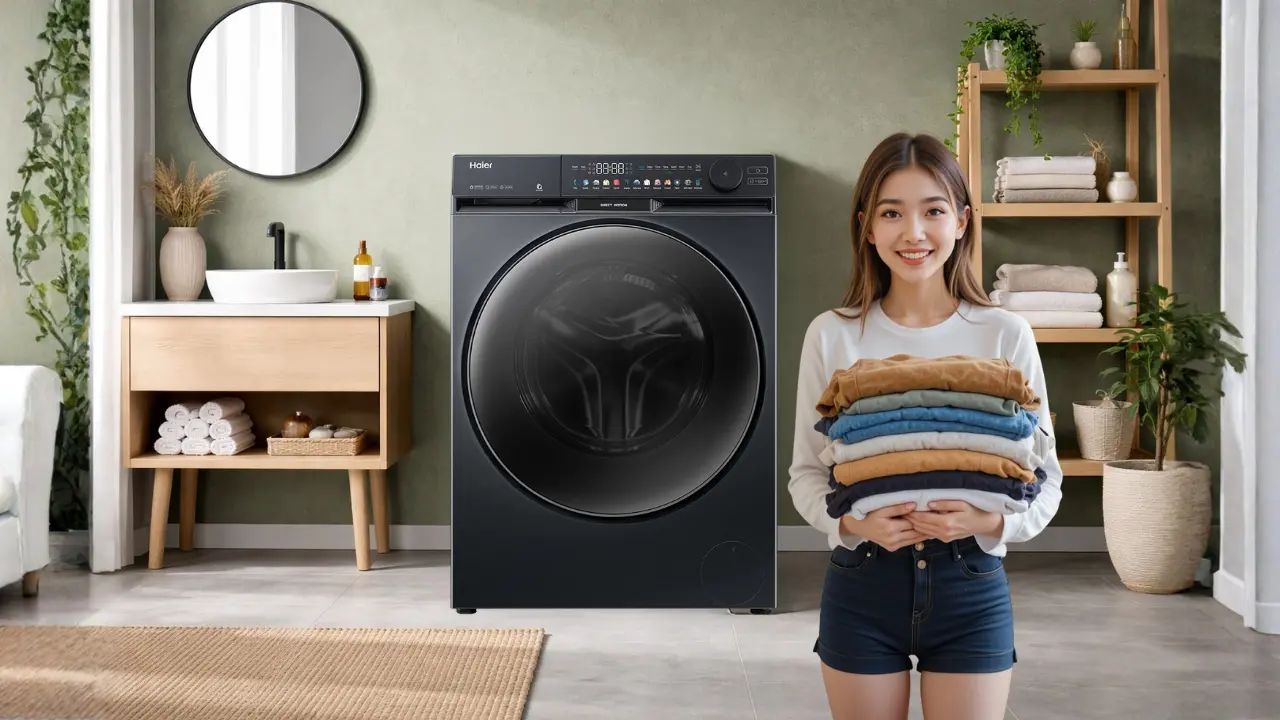

Washing machines need built-in hygiene protection because modern laundry habits create the perfect environment for bacteria, detergent residue, and moisture to build up inside the machine itself.
Without in-built hygiene systems, clothes may look clean but still carry odour, allergens, and microbes back into daily life.
Now the longer, lived-in answer.
When laundry smells clean but does not feel clean?
It usually starts small.
A towel that smells fine in the cupboard but turns musty after one use.
Baby clothes that feel soft but raise silent doubts.
Gym wear that needs a second wash even after a full cycle.
Most households blame detergent. Or water quality. Or humidity.
But the real issue often sits deeper.
Inside the washing machine.
Washing machines are closed systems. Hygiene breaks when systems are ignored
Laundry works as a loop.
Dirty clothes go in.
Water, detergent, heat, and motion do their job.
Clean clothes come out.
But there is an invisible rule most people learn late.
A washing machine can only clean as well as it stays clean.
Modern habits have changed the equation.
- More cold washes to save energy
- Shorter cycles to save time
- Daily usage with mixed fabrics
All good intentions. All tough on internal hygiene.
Low temperatures do not kill bacteria easily. Moisture stays trapped in door seals and pipes. Detergent residue builds up quietly.
Over time, the machine itself becomes part of the contamination cycle.
This is exactly why built-in hygiene protection matters today.
Why manual cleaning is no longer enough
Most homes rely on familiar routines.
Leaving the door open after a wash.
Running an empty hot cycle once a month.
Using home remedies occasionally.
These steps help. They do not solve the system-level problem.
Bacteria and biofilm form in areas you cannot see or reach. Inner pipes. Drum edges. Spray nozzles. Rubber gaskets.
Once buildup starts internally, surface cleaning does very little.
Built-in hygiene protection exists to clean where hands cannot reach.
What built-in hygiene protection actually means
Hygiene protection is not a single button.
It is a system working quietly in the background.
In advanced front-load washing machines, it usually includes:
- Dedicated Hygienic Wash programs using higher temperatures
- Self Clean cycles that flush the drum and internal pathways
- Extra Rinse functions that prevent detergent residue buildup
- Drum designs that reduce fabric trapping and moisture retention
The focus shifts from cleaning clothes once to protecting cleanliness over years.
How this shows up in real Haier washing machines
Haier’s newer front-load models are designed around this exact thinking.
Let us look at two examples that Indian households often consider.
Haier 10 Kg Fully Automatic Front Load Washing Machine (HW100-DM14F9BKU1)
This model is built for medium to large families with frequent laundry cycles.
Key hygiene-relevant features include:
- Hygienic wash programs that operate at temperatures up to 90°C, helping reduce bacteria and allergens
- Self Clean program that cleans the inner drum after repeated usage
- Extra Rinse option to remove detergent residue, especially useful in hard water areas
- Pillow-shaped drum design that reduces fabric damage while improving water flow
- Direct Motion Motor that delivers consistent washing with less vibration and residue buildup
It also includes programs like Baby Care, Underwear, and Daily Wash, which are designed with hygiene-sensitive loads in mind.
The machine does not ask users to manage hygiene manually. It builds protection into everyday washing.
Haier 12 Kg F9 Front Load Washing Machine (HW120-DM14F9BKU1)
Designed for larger households and heavier loads, this model takes hygiene protection a step further.
Key hygiene-focused features include:
- Allergy Care and Baby Care programs that use controlled heat and rinsing to reduce irritants
- Self Clean cycle that maintains internal drum hygiene over time
- Extra Rinse and Delay functions to manage residue and moisture retention
- Pillow-shaped drum technology that improves circulation and prevents dirt trapping
- Direct Motion Motor with stable, low-vibration operation for consistent hygiene results
With programs like Bedding, Refresh, and Hygiene-oriented washes, this machine is built for homes that run laundry frequently and cannot afford hygiene slip-ups.
The hidden cost of ignoring internal hygiene
Poor internal hygiene does not always show up as a problem immediately.
It appears gradually.
Skin sensitivity and discomfort
Residual detergent and bacteria can irritate sensitive skin, especially for babies and elderly family members.
Fabric fatigue
Clothes lose softness and absorbency faster when residue keeps redepositing.
Higher rewash frequency
When clothes do not feel fresh, they get washed again. That means more water, more power, and more detergent.
The machine looks efficient.
The system quietly wastes effort.
Built-in hygiene protection fixes this at the source.
Why Indian households feel this problem more intensely
Indian conditions amplify hygiene challenges.
- Humid climates encourage mould growth
- Hard water increases residue buildup
- Daily mixed loads stress internal components
- Compact homes reduce ventilation around appliances
Machines designed without hygiene protection struggle faster under these conditions.
Machines designed for these conditions last cleaner for longer.
Three everyday benefits hygiene protection delivers

One option is to clean manually and remember routines.
Another is to automate hygiene quietly.
The third is to ignore it until problems surface.
Only one option scales with busy lives.
1. Less mental load
No reminders. No special cleaning days. The machine manages itself.
2. Consistency during high-usage weeks
Festivals, school seasons, and work deadlines increase laundry volume. Hygiene systems prevent buildup when usage spikes.
3. Safer washing for vulnerable users
Homes with infants, elderly parents, or pets benefit the most from consistent internal cleanliness.
Good appliances save time.
Thoughtful appliances save worry.
Why hygiene protection is now a buying decision
Earlier, buyers compared washing machines by capacity and spin speed.
Today, the questions are different.
- Will the machine stay clean after years of use
- Will it protect sensitive skin consistently
- Will it reduce maintenance effort quietly
Built-in hygiene protection answers all three.
That is why it has moved from a bonus feature to a baseline expectation.
The larger insight most people miss
Hygiene is not a setting.
It is a system.
The best systems do not demand attention. They quietly protect outcomes.
When washing machines take care of their own cleanliness, everything else works better. Clothes last longer. Skin feels safer. Homes feel easier to run.
Once you see laundry this way, hygiene protection stops being optional.
It becomes obvious.
The cleanest clothes come from machines that know how to clean themselves first.
Frequently Asked Questions
What does “built-in hygiene protection” mean in real use?
It usually includes:
1. High-temperature hygienic wash programs
2. Self Clean cycles for drum and internal pathways
3. Extra Rinse options to reduce detergent residue
4. Drum designs that prevent moisture trapping
The goal is long-term cleanliness, not occasional fixes.
How does hygiene protection reduce my mental load?
No reminders. No monthly drum-clean anxiety. Hygiene runs automatically in the background.
Who benefits the most from hygiene-focused machines?
Homes with:
1. Infants
2. Elderly family members
3. Pets
4. Sensitive skin
Consistency matters more than occasional deep cleaning.
Does it help during heavy laundry weeks?
Yes. Festivals, school seasons, and guests increase load frequency. Built-in systems prevent sudden hygiene breakdowns during peak usage.