


Because some stories are too big for small screens.
Mirai, the fantasy epic starring Teja Sajja, isn’t just another weekend release. It’s a tale that demands space, the kind of space only a big screen can give. When a warrior battles for nine sacred scriptures that could turn mortals into deities, the last thing you want is to miss the detail on a cramped display.
So, why is everyone suddenly talking about upgrading their TV for Mirai? The answer is both cultural and personal. Let’s unpack it.
Mythology Meets Modern Living Room

India has always had a taste for stories larger than life. From Ramayana serials in the 80s to the Marvel boom of the 2010s, we’ve seen how epic tales reshape living-room culture. Mirai continues this lineage blending sage wisdom, fantasy action, and emotional conflicts about compassion, greed, and dharma.
Watching it on a phone or laptop? That shrinks the myth. Watching it on a 215cm (85) TV? That restores its scale.
Why Big Screens Make Sense for Mythical Action
Three reasons stand out:
Detail in the Drama
Mirai’s fight sequences aren’t just about swords clashing. They’re about the play of shadows, the contrast of fire and water, the flicker of doubt on a warrior’s face. Big screens make subtlety visible.
Shared Viewing
Epics are meant to be watched together. Parents, kids, cousins all squeezed onto the sofa. A big screen keeps everyone equally immersed, no matter where they’re sitting.
Sound That Fills the Room
What is mythology without music, chants, or the boom of battle? TV speakers often flatten this. Systems tuned with Sound by KEF or Dolby Atmos bring back the weight of those moments.
The principle is simple: scale changes experience. A large story needs a large canvas.
What Haier’s 215cm (85) Mini LED Brings to Mirai Nights
Here’s where technology and storytelling converge. M80F Mini LED 215cm (85) Google TV | Sound by KEF is designed for exactly this type of content:
- Mini LED with Dolby Vision: Makes colors pop and shadows deepen, so every mythical landscape feels alive.
- 60Hz Motion Rate: Smooths out fast-paced action, like sword fights or chase scenes.
- Sound by KEF with Dolby Atmos: Surrounds you with 50W audio, from whispers of a sage to the thunder of a demon’s arrival.
- Hands-Free Voice Control & Google TV: So you can just say “Play Mirai” and settle in.
- Solar Remote: A small but thoughtful detail charged by sunlight, it feels like carrying a piece of sustainability into your home.
These aren’t luxury add-ons. They’re enablers of immersion. And when a film like Mirai arrives, they transform your living room into a theatre.
The Social Side of Epic Viewing
In India, a big TV isn’t just about movies. It becomes the backdrop for:
- Cricket matches during Asia Cup.
- Bigg Boss family debates.
- Weekend OTT binges with friends.
Mirai adds to this mix. Imagine Ganesh Chaturthi holidays, cousins staying over, and everyone gasping together as Vedaa (Teja Sajja) realises his true power. A big screen makes it communal, not individual.
The Psychology Behind the Shift

Here’s the hidden system: entertainment is no longer solitary. Post-pandemic, Indians want experiences that feel collective, safe, and premium all at once. Big-screen TVs hit this sweet spot:
- Affordable Theatre at Home: With ticket prices soaring, families see a one-time investment as smarter.
- Hybrid Lives: Work on laptops all day, but watch big at night.
- Generational Bonding: Parents nostalgic for Ramayana, kids excited for fantasy graphics both get satisfied.
As one critic wrote, Mirai proves that even on a modest budget, conviction can create spectacle. The same applies at home: conviction in upgrading your screen can create lasting moments.
Big Screen vs Small Screen: A Quick Comparison
| Experience | Small Screen (Laptop/Phone) | Big Screen (215cm (85) TV) |
| Visual Detail | Missed shadows, limited scale | Full HDR, vibrant contrast |
| Audio | Flat, compressed sound | Dolby Atmos with depth |
| Social Viewing | One or two people | Entire family or friends |
| Immersion | Task-like viewing | Theatre-like transport |
The cost difference feels smaller when you see the experience gap.
What This Means for the Future of Home Viewing
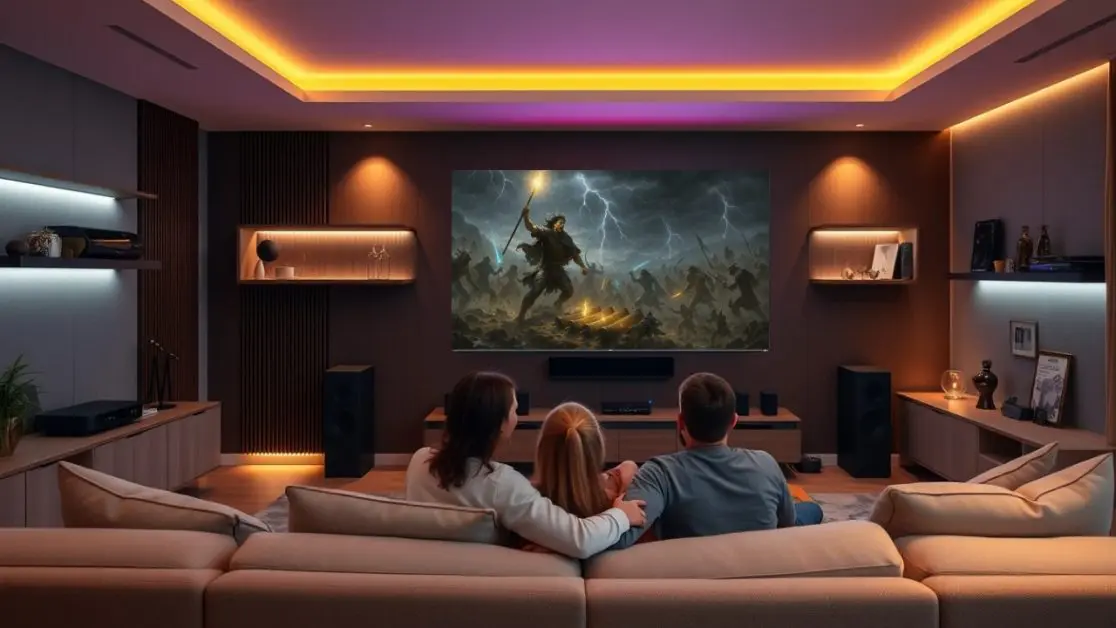
The upgrade isn’t just about Mirai. It’s about a broader truth:
We’re moving from watching content to living content.
Tomorrow, it could be FIFA, an Apple keynote, or the next mythological epic. The stories will keep growing. The screens need to keep pace.
Closing Thought
Mirai asks what happens when mortals touch divinity. The home-viewing question is similar: what happens when everyday screens touch cinematic scale?
The answer is simple. Nights feel bigger. Families feel closer. And living rooms turn into shared memory factories.
And if there’s one thing Indian homes love, it’s turning a film into a festival.