

Water flow design directly affects how fast water heats, how evenly it stays hot, and how much electricity you use.
When water moves correctly inside a heater, it avoids cold pockets, reduces scale build-up, improves safety, and delivers consistent temperature. Heating is not just about power. It is about movement.
Most people blame the heating element when showers turn unpredictable.
The real reason often sits inside the tank.
Flow.
The morning shower problem nobody talks about.
It is 7:45 am.
One person just finished a shower. The second person steps in. The water starts hot, then suddenly dips. Someone shouts from inside. Someone else turns off the kitchen tap.
This is not just a pressure issue.
It is a water flow design issue.
In most traditional heaters, water enters, heats, and stays still. Over time, layers form inside the tank. Hot water floats. Cooler water settles. When fresh cold water enters, it disrupts this layering. The result feels inconsistent.
A heater is not just a container with a coil.
It is a small ecosystem.
And ecosystems fail when flow stops.
Why Water Flow Design Impacts Heating Performance in Real Homes
Let us break this down clearly.
Heating performance depends on three invisible forces:
- How water circulates inside the tank
- How fresh water enters and exits
- How stagnation is prevented
When water moves intelligently, heating becomes predictable.
When water stays stagnant, performance drops.
The Bureau of Energy Efficiency notes that water heaters account for 15 to 25 percent of household electricity consumption in urban India. If flow design wastes even 5 percent extra heating time, that adds up across a year.
Poor flow increases:
- Heat-up time
- Energy consumption
- Bacterial growth risk
- Scale deposition
Good flow improves:
- Faster heating
- Consistent output
- Lower stress on the heating element
- Longer tank life
Performance is not about power alone.
It is about circulation.
The Hidden Cost of Stagnant Water Inside Tanks
Water that does not circulate becomes problematic.
Stagnation creates three specific issues:
1. Uneven temperature layers
The top stays hot. The bottom remains cooler. Mixing feels erratic.
2. Mineral sediment deposition
Hard water minerals settle at the base. Heating slows.
3. Bacterial growth risk
Warm, stagnant zones create ideal conditions for bacteria.
According to the World Health Organization, stagnant warm water environments increase microbial growth risk, especially between 20°C and 50°C. Flow disrupts that stability.
This is why water flow design impacts heating performance beyond speed.
It impacts hygiene.
RSC Technology and Why Movement Matters
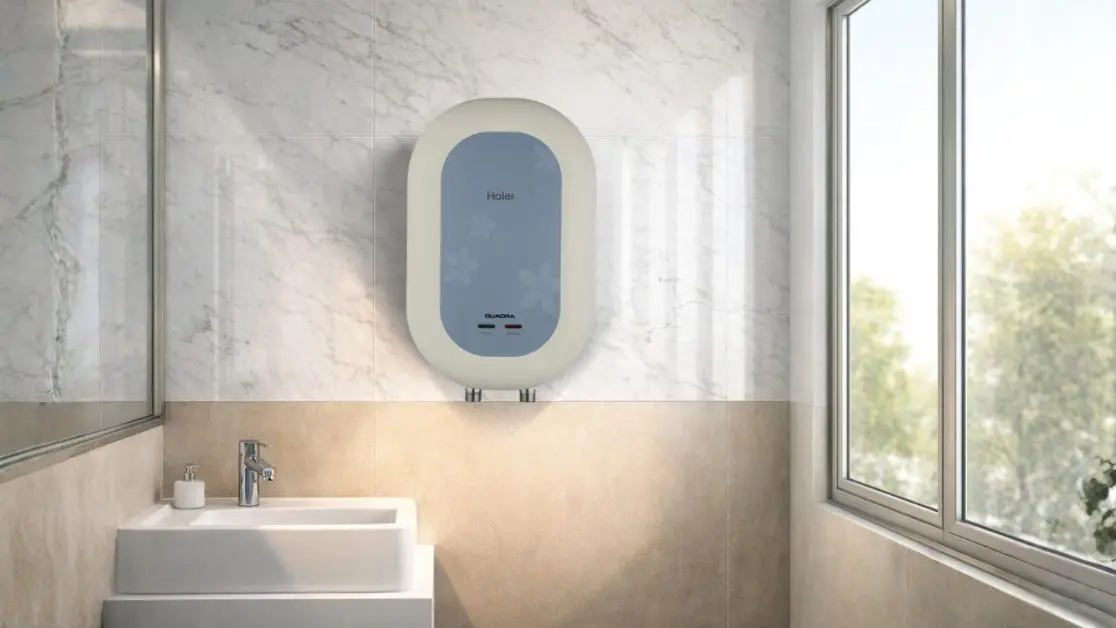
Haier’s instant water heaters use RSC U-turn Flow Technology, designed to prevent stagnant water deposition and activate internal circulation
Instead of allowing water to sit idle, the flow path ensures movement.
Think of it like stirring tea.
If you drop sugar and do not stir, sweetness concentrates at the bottom.
The flow is stirring.
Heating improves when movement exists.
In models like the Haier 3L IPX4 Ivory Instant Water Heater ES3V-C1(I)-P, this design ensures consistent flow while supporting high-rise compatibility with 8 bar rated pressure
Movement and pressure work together.
One without the other creates imbalance.
Three Design Approaches to Water Flow
Not all water heaters manage flow the same way.
Let us compare.
| Flow Type | How It Works | Heating Impact | Long-Term Effect |
| Static Tank | Water heats in one place | Slower recovery | Higher sediment |
| Direct Pass | Water passes quickly over element | Fast, uneven | Temperature swings |
| Circulated U-Turn Flow | Water moves within tank before exit | Balanced, stable | Lower stagnation |
The third option costs more in engineering.
But it saves performance.
Constraints shape better design.
Pressure, Flow, and High-Rise Living
Modern Indian homes increasingly sit in vertical buildings.
Higher floors mean higher incoming pressure variation.
Haier instant water heaters are designed with 8 bar rated pressure compatibility
Why does this matter?
Because flow rate changes heating behaviour.
If pressure spikes and flow accelerates, heating time reduces. If flow slows too much, overheating risk rises.
That is why safety systems like Dual Thermal Proof technology cut off heating at defined thresholds
Flow and safety are connected.
Heating performance is not isolated.
It is systemic.
Heating Element Strength Means Nothing Without Flow

Many buyers focus on wattage.
3 kW. 4.5 kW. Bigger sounds better.
The Haier 3L models offer rated power options up to 3000W or 4500W
Power matters.
But here is the truth.
Heat applied to stagnant water works harder.
Heat applied to circulating water works smarter.
An Incoloy 800 or copper heating element performs best when water keeps moving
Otherwise, localised hotspots form.
Hotspots shorten element life.
Flow protects performance.
Glass-Lined Tanks and Why Internal Movement Preserves Them
Inside the tank, surfaces matter.
Haier uses glass-lined or enamel-coated tanks to resist corrosion and rust
But coatings alone are not enough.
When water stagnates:
- Minerals stick
- Thermal stress increases
- Micro cracks expand
Circulated water distributes heat evenly.
Even heat reduces expansion stress.
Even stress extends tank life.
Design is preventive, not reactive.
Flow, Hygiene, and Anti-Bacterial Heating
Modern heaters include anti-bacterial heating modes.
Haier’s BPS mode heats water to 80°C to inhibit bacteria
But hygiene is not temperature alone.
It is movement plus temperature.
Heat kills bacteria.
Flow prevents breeding grounds.
Both are required.
Hygiene is engineered.
How to Think About Water Flow When Buying a Heater
Most buyers ask:
- What capacity?
- What wattage?
- What price?
Few ask:
- How does water move inside?
That question defines long-term performance.
Here is a simple decision framework.
Option 1: Basic Static Heater
- Lower upfront cost
- Slower recovery time
- Higher long-term scaling
Option 2: High Wattage Only Focus
- Fast heating
- Higher power draw
- No stagnation prevention
Option 3: Smart Flow + Safety Integration
- Balanced heating
- Lower energy waste
- Better durability
- Improved hygiene
The third option feels invisible daily.
But it shows up in monthly bills.
And fewer service calls.
Why Water Flow Design Impacts Heating Performance in Organisational Terms
Homes are small organisations.
Morning routines resemble production lines.
One delay creates ripple effects.
A poorly designed heater disrupts workflow:
- Shower delay
- Kitchen delay
- School delay
Flow efficiency inside a heater mirrors process efficiency inside companies.
Stagnation anywhere increases friction everywhere.
Systems succeed when movement remains constant.
Real Numbers That Matter
Let us ground this practically.
- A 3L instant heater heats water in under 5 minutes at 3kW under optimal flow.
- Hard water areas in India can increase scale formation by 30 percent faster without circulation.
- High-rise water pressure can exceed 6 bar in upper floors, demanding stable internal flow management.
When flow design compensates for these realities, heating performance stabilises.
Without it, performance fluctuates.
Consistency is a design choice.
The Bigger Insight
Heating performance is not a feature.
It is a consequence.
A consequence of how water enters.
How it moves.
How it exists.
When people say a heater is “good,” they often mean:
- It heats quickly
- It stays consistent
- It feels reliable
Reliability comes from internal design no one sees.
That is the quiet engineering behind products like the Haier 3L instant water heater range, where RSC circulation, dual safety thermostats, anti-bacterial heating, and pressure handling combine into one system
Not louder.
Smarter.
What This Means for Modern Indian Homes
Millennial and Gen Z homeowners value efficiency.
Young parents value hygiene.
Working professionals value speed.
Water flow design sits at the intersection of all three.
It saves seconds.
It saves energy.
It saves stress.
And here is the insight worth remembering:
Power heats water. Flow defines experience.
The next time a shower feels consistent, quick, and quietly reliable, it is not luck.
It is a movement.
And movement, when designed well, makes homes feel sorted.
Frequently Asked Questions
Why does my shower start hot and then suddenly turn cold when someone else uses water?
This usually happens because of water flow disruption inside the heater tank, not just pressure issues. When cold water enters a tank that has poor internal circulation, it mixes unevenly with hot water. This breaks the temperature layers inside the tank and causes sudden cold bursts during showers.
I live in a busy household. Why does hot water run out faster than expected?
If a heater has static water storage, the heated water sits in layers. When multiple people use water, cold water entering the tank disturbs those layers. A heater with circulated water flow design distributes heat more evenly, so hot water remains consistent for longer usage.
My morning routine gets delayed because the water heater takes time to recover. Is this normal?
It depends on the heater’s flow design and heating recovery system. In static tank designs, water remains still, which slows heat distribution. Circulation-based designs allow heated water to move inside the tank, which reduces recovery time and stabilizes temperature faster.
I bought a powerful heater, but my shower temperature still fluctuates. Why?
Wattage alone does not guarantee consistent heating. If water inside the tank does not circulate properly, localized hot spots and cold zones form, causing temperature fluctuations even with high-power heating elements.
I heard bacteria can grow inside water heaters. Should I be worried?
Bacteria can grow in warm stagnant water, especially between 20°C and 50°C. Tanks where water remains still for long periods can create ideal microbial growth conditions. Circulating water flow and high-temperature anti-bacterial heating modes help reduce this risk.
I left water sitting in my heater for days while traveling. Is that a problem?
Not necessarily, but stagnant water increases sediment buildup and microbial growth risk. Running hot water for a few minutes or using anti-bacterial heating modes helps flush the system and restore safe conditions.
Why does scale or sediment build up inside water heaters?
Hard water minerals naturally settle when water sits still. In tanks with poor flow design, minerals accumulate at the bottom and form scale layers, which reduce heating efficiency and increase energy consumption.